Enhance your child's comprehension skills with our "Understanding Directions Worksheets" designed for ages 4-5. These engaging and interactive worksheets help little learners develop essential abilities in following simple instructions, recognizing spatial relationships, and using directional language. Each activity is tailored to ignite curiosity and encourage exploration, making it a fun way for children to learn crucial skills for their everyday lives. By practicing directional concepts through playful illustrations and activities, kids build a strong foundation for effective communication and problem-solving. Join us in fostering your child's learning journey and instilling confidence through our thoughtfully crafted worksheets! Explore now!

Check out this FREE "Understanding directions" Trial Lesson for age 4-5!

Distinguish Shades of Meaning Among Verbs Describing the Same General Action by Acting out the Meanings

Favorites
With answer key
Interactive
  • 4-5
  • Understanding directions
Going up or Down? Worksheet

Going up or Down? Worksheet

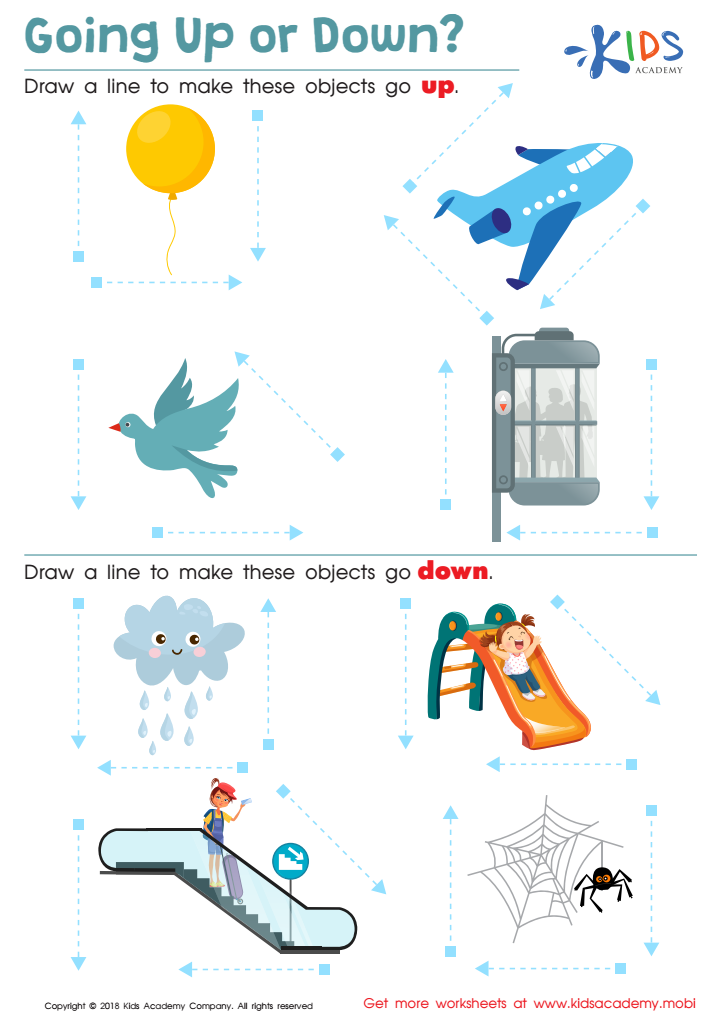
Young students learn the concept of up and down with this geometry worksheet. They trace lines to identify relative positioning as an object travels. Kids can use position words to describe an object's movement, enhancing their spatial relationship skills - an important geometry foundation.
Going up or Down? Worksheet
Worksheet
Amusement Park Word Problems Worksheet

Amusement Park Word Problems Worksheet

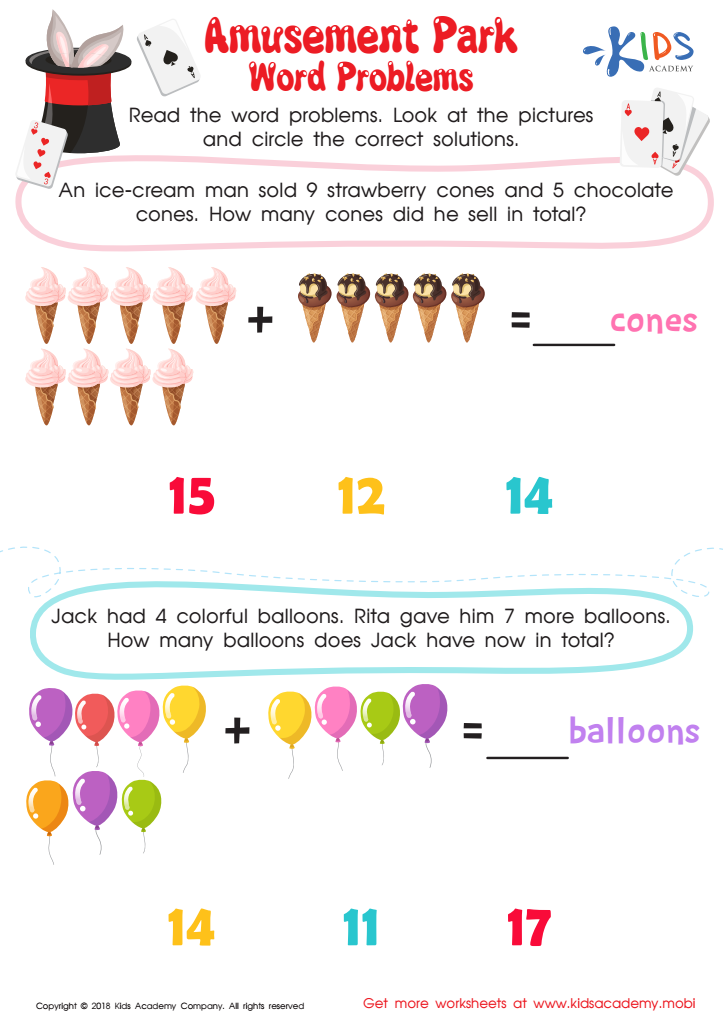
Engage kids with math by making it realistic and incorporating manipulatives or pics they like! This worksheet helps kids understand word problems. Read the problem, note numbers and key phrases like "in total," then count the pics to find the total!
Amusement Park Word Problems Worksheet
Worksheet
Rhyming Words PDF Worksheets, Map

Map Rhyming Words Worksheet

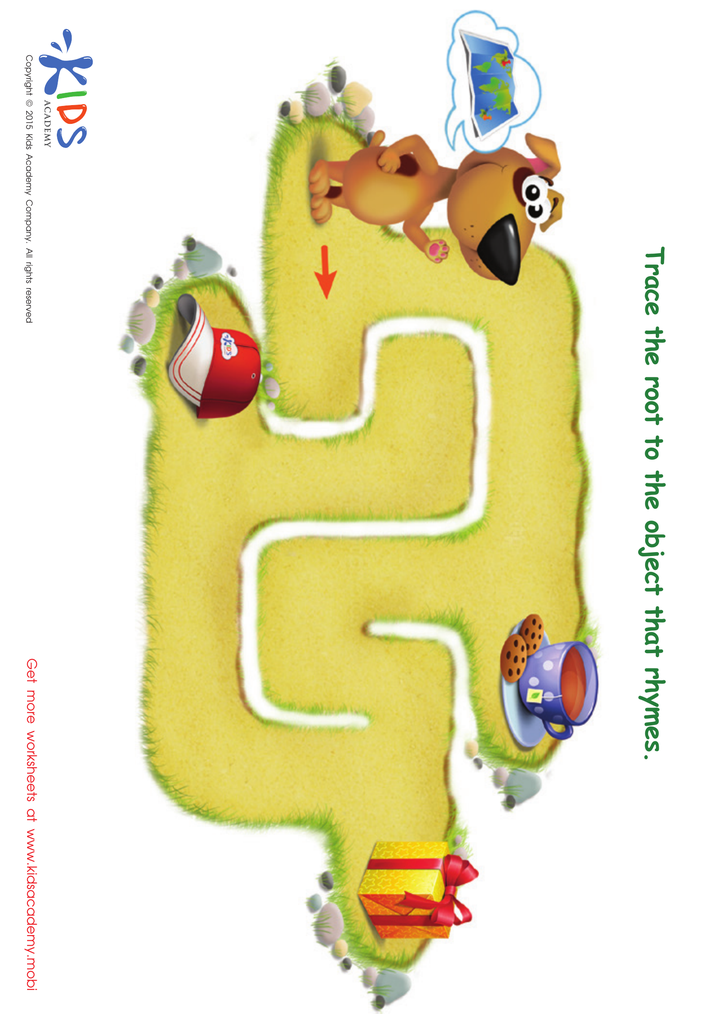
Get them now and practice your skills while having fun playing. Find words that rhyme, trace the roots and enjoy the journey!
Map Rhyming Words Worksheet
Worksheet
Where Is the Ant? Worksheet

Where Is the Ant? Worksheet

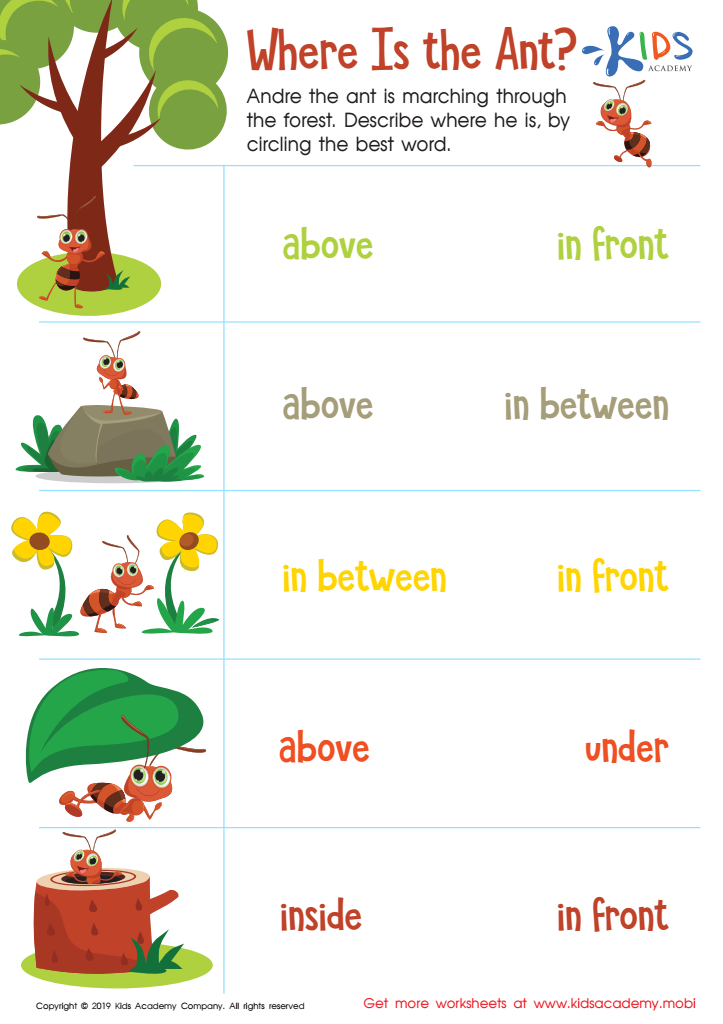
Kids are captivated by ants. Andre is a busy ant, marching through the forest. Help your child circle the best word that best describes what he's doing in each picture. This colorful printout will show them the way.
Where Is the Ant? Worksheet
Worksheet
The Movement Maze Worksheet

The Movement Maze Worksheet

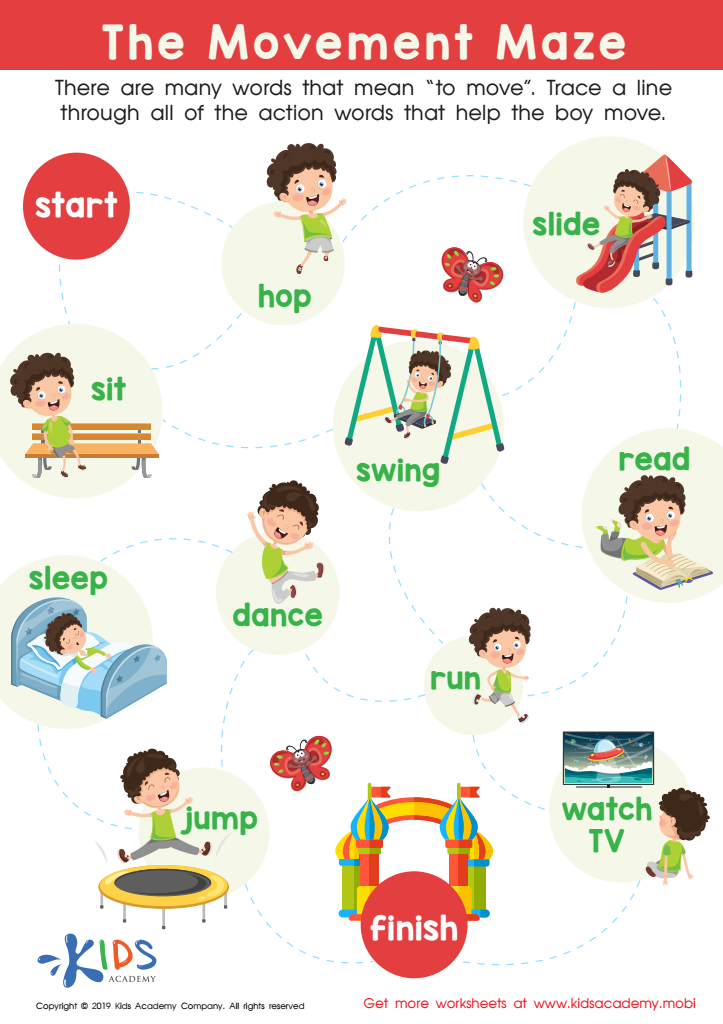
Let your child have fun with this interactive PDF download. Kids will learn movement words with cute pictures, plus practice fine motor skills as they trace. A fun way to reinforce vocabulary. Jump, hop and sit – it's all here!
The Movement Maze Worksheet
Worksheet
Which Direction Will it Go? Worksheet

Which Direction Will it Go? Worksheet

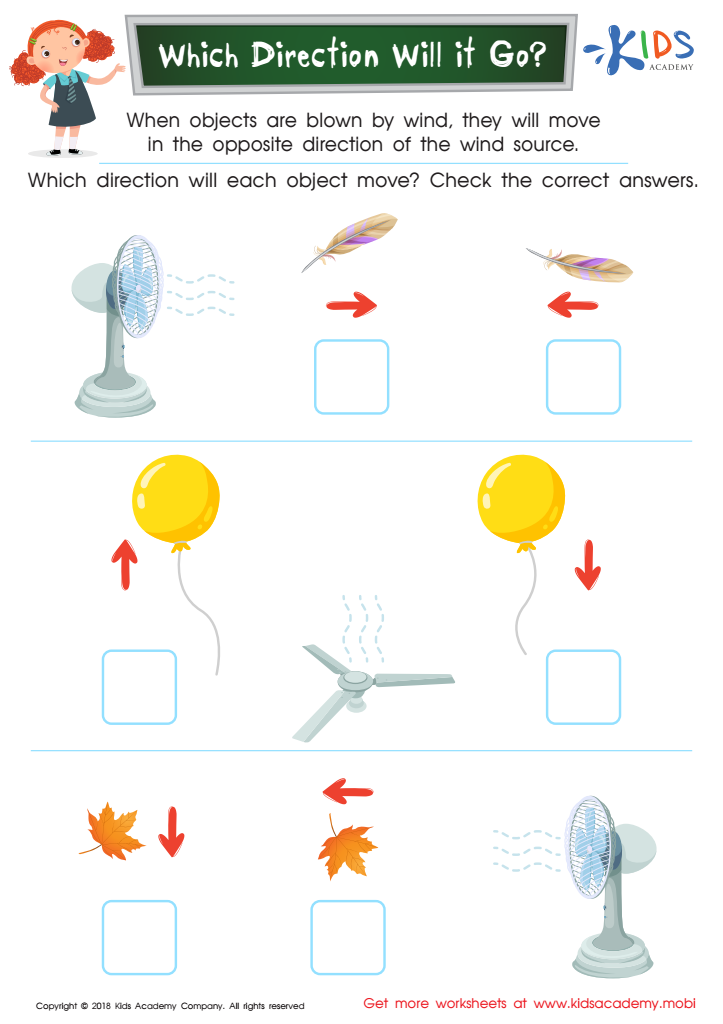
Explain to your students: when objects are blown by wind, they will move in the opposite direction. In the worksheet, there are pictures of wind sources and objects being blown by the wind. Ask your child to identify and check the direction each object will move.
Which Direction Will it Go? Worksheet
Worksheet
Where Is 3? Worksheet

Where Is 3? Worksheet

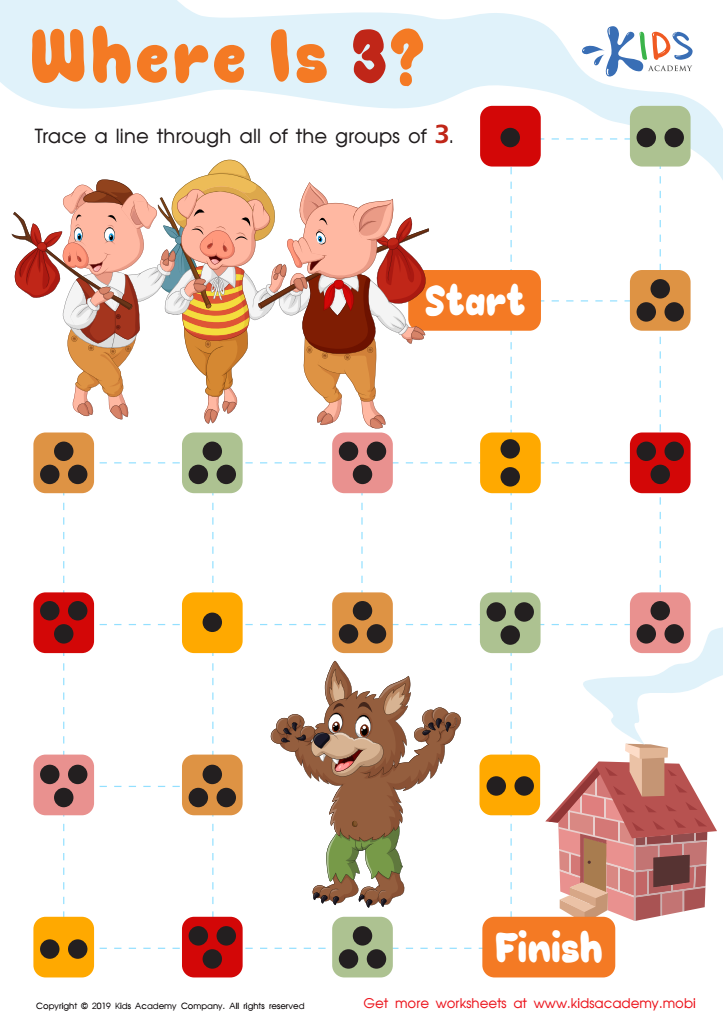
Let your little mathematician join the Three Little Pigs on an adventure! With this free worksheet, they'll guide the pigs through a maze of numbered bricks, using one-to-one representation to get to the sturdy house. Have fun helping the piggy friends past the wolf!
Where Is 3? Worksheet
Worksheet
Bugs on Top or Bottom? Worksheet

Bugs on Top or Bottom? Worksheet

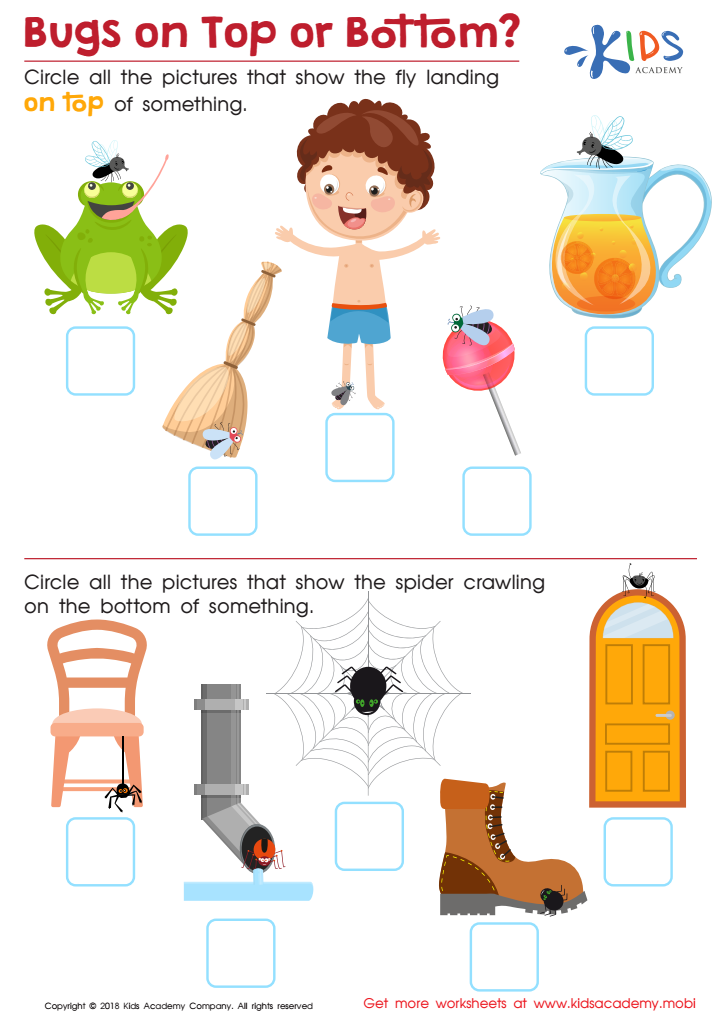
Preschoolers need to learn directional skills such as top and bottom. This PDF worksheet helps them recognize bugs on the top or bottom using fun visuals. It builds their spatial reasoning while teaching prepositional words in an engaging way.
Bugs on Top or Bottom? Worksheet
Worksheet
Knight and Pawn Worksheet


Knight and Pawn Worksheet

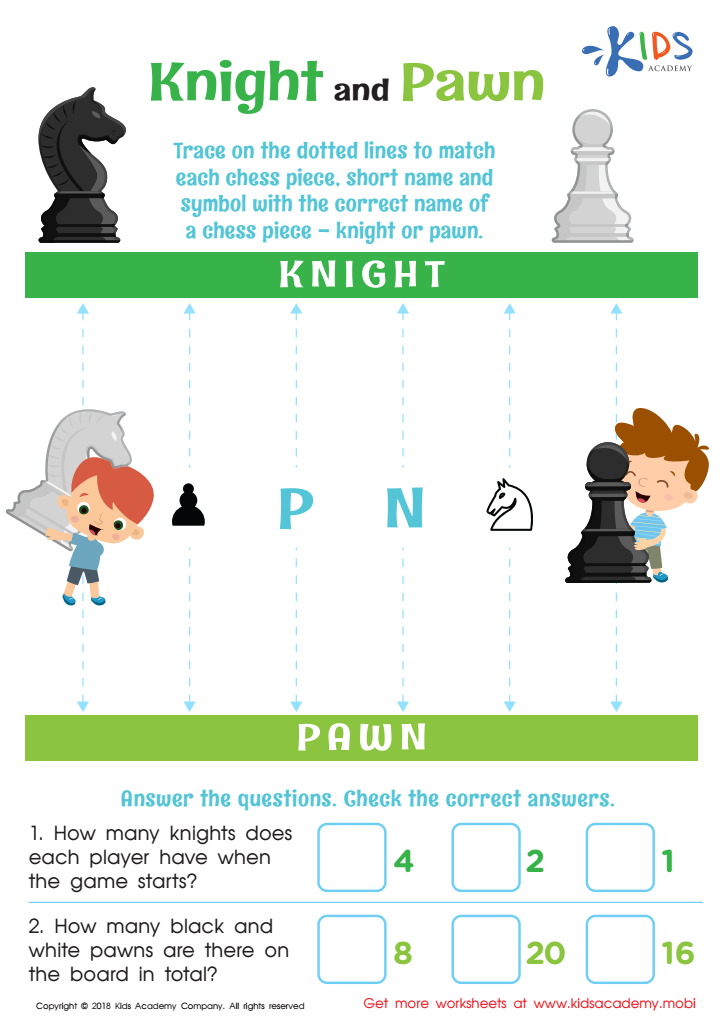
This tracing worksheet teaches kids about chess. They trace the dotted lines to match pieces, names and symbols to the correct chess piece. Questions at the bottom test their understanding. It's a simple exercise for a fun way to learn.
Knight and Pawn Worksheet
Worksheet


Understanding directions is crucial for children aged 4-5 as it lays the foundation for their cognitive and social development. At this age, children are beginning to hone their listening skills and processing abilities, which are essential for effective communication and learning. When children comprehend directions, they can follow instructions, participate in group activities, and engage in cooperative play, enhancing their social skills and teamwork.

Furthermore, understanding directions promotes independence. As children learn to navigate tasks, from simple requests at home to classroom instructions, they gain confidence in their abilities. This resilience fosters a love for learning and equips them with problem-solving skills they’ll use throughout their lives.

For parents and teachers, promoting direction-following skills sets a benchmark for effective teaching and learning. It helps manage behavior, increases focus, and improves classroom dynamics, allowing for smoother lesson delivery. Ultimately, fostering this skill in early childhood creates a supportive environment where children feel secure and empowered to explore their surroundings, ensuring they are well-prepared for the subsequent academic challenges ahead. By prioritizing directional understanding, adults shape confident and capable learners for a lifetime of discovery.