Understanding number patterns Worksheets for Ages 4-5
3 filtered results
-
From - To
Discover engaging "Understanding Number Patterns" worksheets for ages 4-5, designed to build essential early math skills. These fun and interactive activities help young learners recognize, create, and extend number patterns, fostering critical thinking and problem-solving abilities. Our worksheets incorporate colorful visuals and age-appropriate exercises that capture children's attention and encourage independent practice. Perfect for pre-school or at-home learning, these resources support early numeracy development while making learning enjoyable. Equip your child with foundational math skills and sparking a lifelong love for numbers. Access our comprehensive collection of worksheets today and watch your child flourish in understanding number patterns!
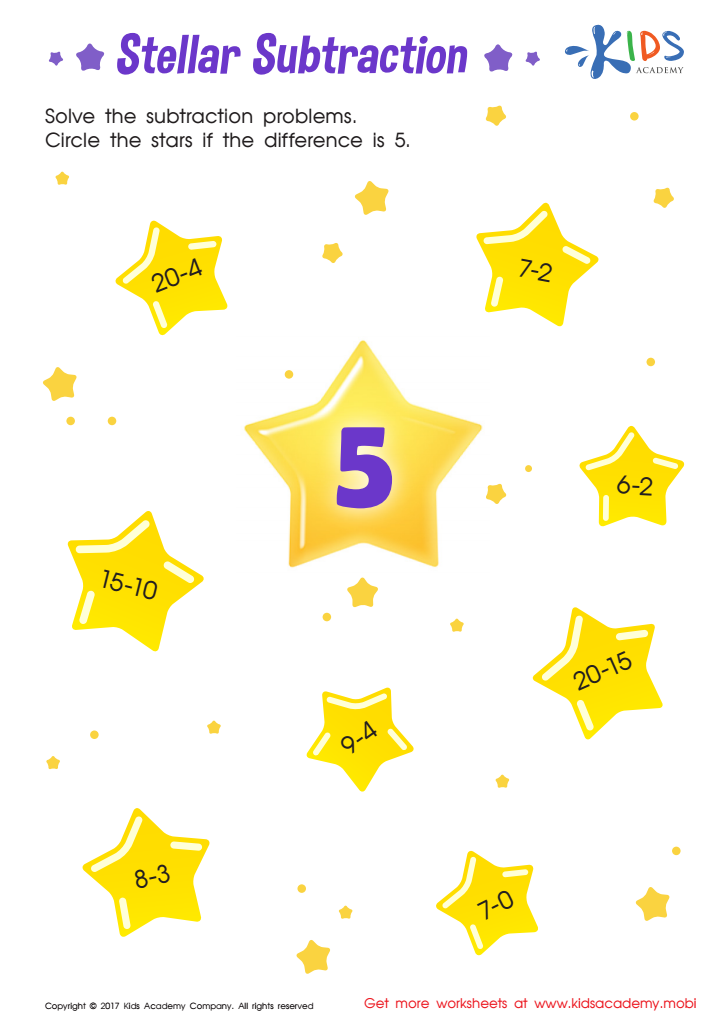
 Assign to My Students
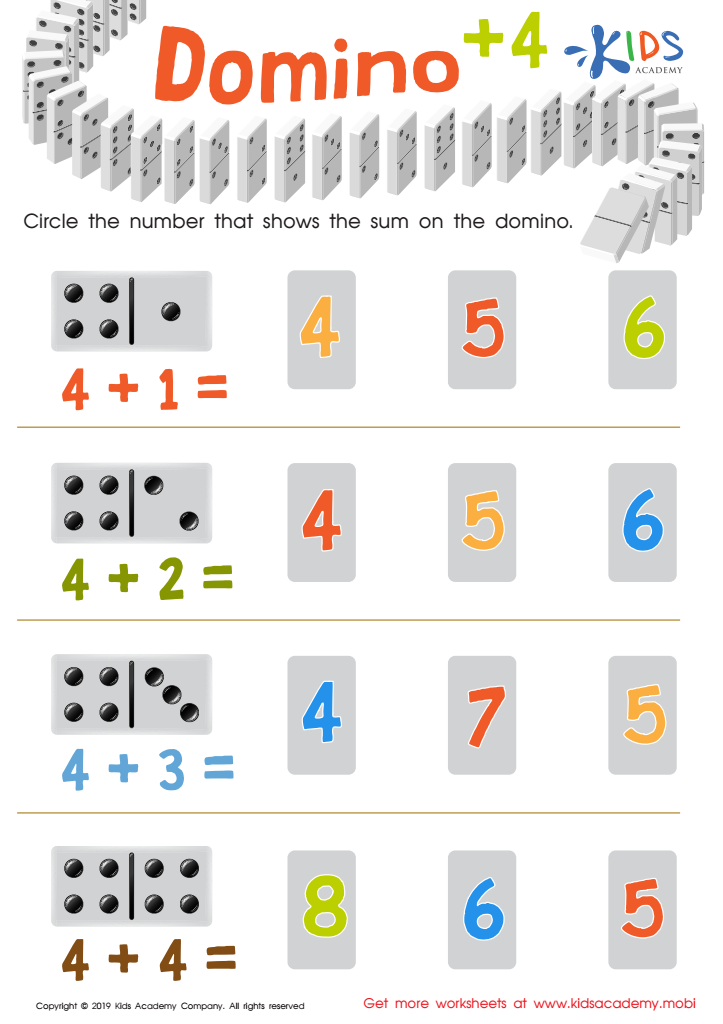
Domino +4 Worksheet
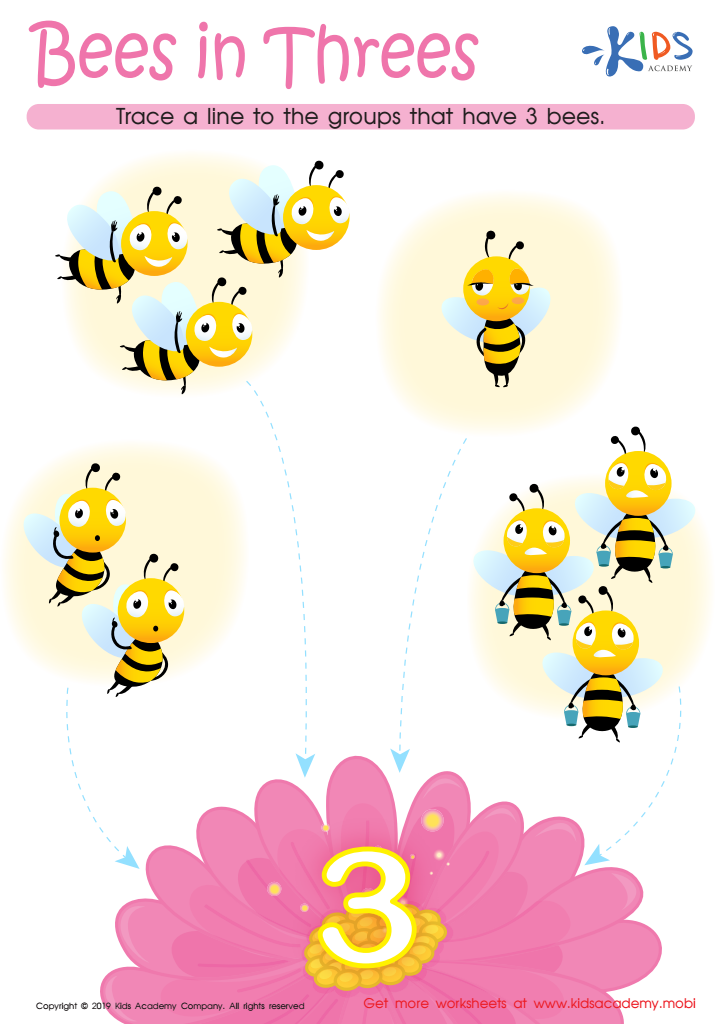
Bees in Threes Worksheet







Understanding number patterns is crucial for children aged 4-5 as it lays the foundation for their future mathematical abilities and problem-solving skills. During this developmental stage, children are naturally curious and eager to explore their surroundings. Introducing them to number patterns encourages critical thinking, as they learn to recognize sequences and relationships between numbers.
By identifying patterns—such as even and odd numbers, counting by twos or fives, or simple addition sequences—children develop a stronger number sense, which is essential for more complex math concepts later on. These skills also enhance their ability to predict outcomes, which is not only vital in math but in everyday situations as well.
Furthermore, recognizing and creating patterns fosters creativity and cognitive flexibility. It provides opportunities for children to engage in hands-on activities, like sorting objects or completing pattern sequences, which promote fine motor skills.
Lastly, when parents and teachers support children in understanding number patterns, they build confidence in their mathematical abilities, setting the stage for enjoyable learning experiences. As math becomes a positive journey rather than a challenge, children are more likely to appreciate mathematics in their future education.








