Understanding shapes Worksheets for Ages 4-5
4 filtered results
-
From - To
Discover our engaging "Understanding Shapes Worksheets for Ages 4-5" designed to help young learners identify and explore basic shapes through fun activities. Perfect for preschoolers, these printable worksheets feature vibrant illustrations and interactive exercises that encourage children to recognize circles, squares, triangles, and more. Each worksheet aims to build essential early math skills, promote problem-solving, and enhance fine motor development. Parents and educators can seamlessly incorporate these resources into their lessons, making shape learning enjoyable and effective. Start fostering your child's spatial awareness and creativity with our specially crafted worksheets, tailored for little hands and bright minds! Download now!
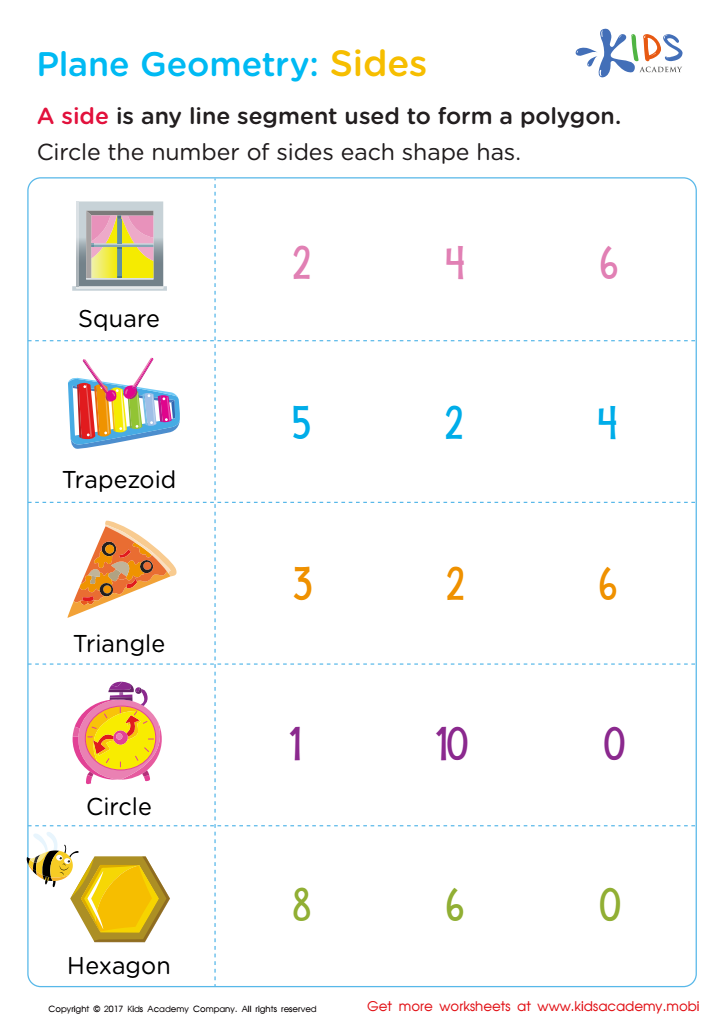
 Assign to My Students
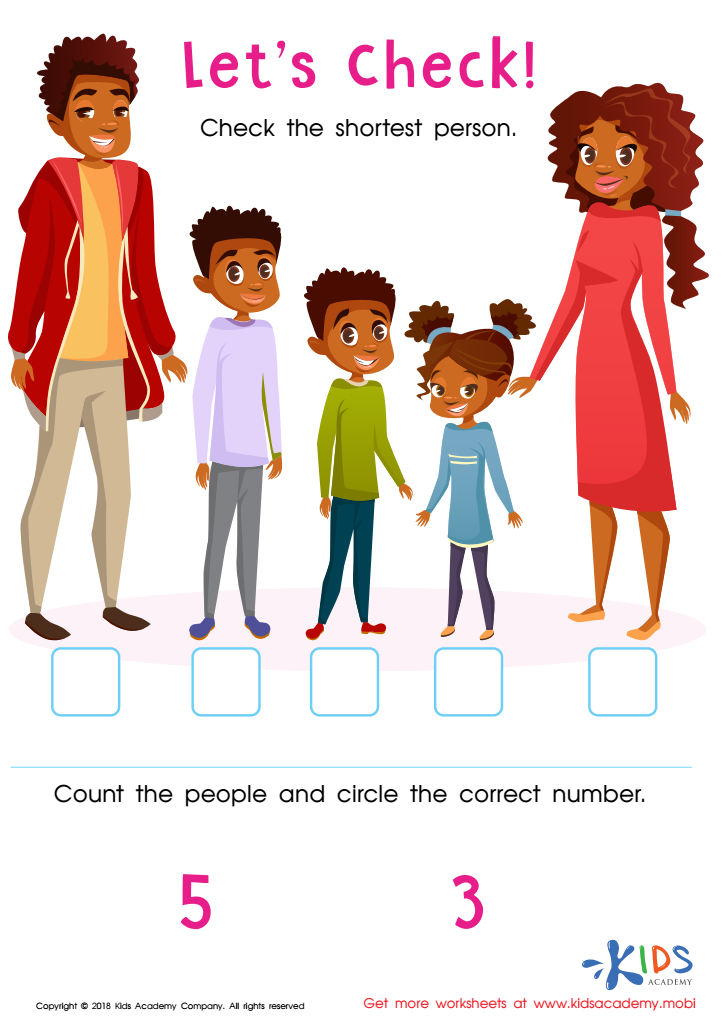
Let's Check! Assessment Worksheet
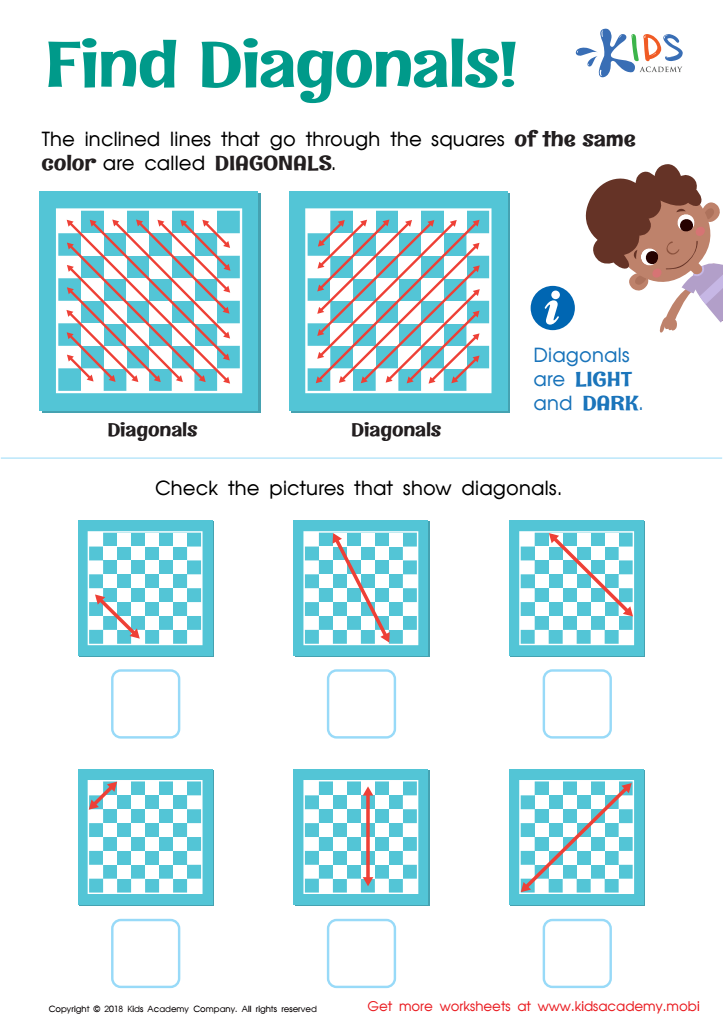
Find Diagonals Worksheet
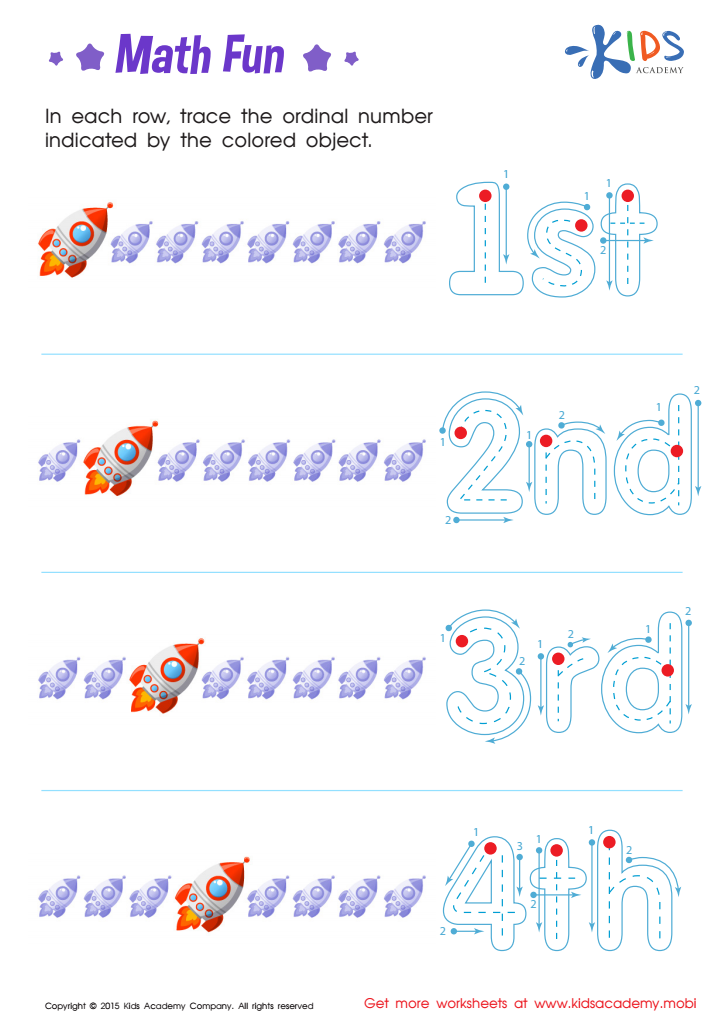
Ordinal Numbers: Math Fun Worksheet






.jpg)

Understanding shapes is a fundamental aspect of early childhood education that significantly impacts a child's cognitive development. For children aged 4-5, shape recognition lays the groundwork for a variety of important skills. Firstly, it enhances their ability to classify and organize objects, which fosters critical thinking and problem-solving abilities. When children learn to differentiate between shapes like circles, squares, and triangles, they begin to grasp concepts such as geometry and spatial awareness.
Moreover, shape recognition is crucial for language development. Describing shapes helps expand a child’s vocabulary and improves their communication skills. Educators and parents should also recognize the role of shapes in everyday life, from recognizing traffic signs to understanding patterns in clothing, which fosters practical awareness of their environment.
Additionally, engaging with shapes through hands-on activities promotes fine motor skills, as children manipulate objects in various ways. This interaction enhances their creativity and encourages exploration. By nurturing an understanding of shapes, parents and teachers not only aid in foundational math skills but also support overall intellectual growth, preparing children for future academic challenges. Thus, a focus on shapes can yield lasting benefits that contribute to a child's success during their formative years and beyond.








