Verb identification Worksheets for Ages 4-5
3 filtered results
-
From - To
Introduce your young learners to the world of verbs with our dynamic Verb Identification Worksheets designed specifically for ages 4-5. These engaging printables from Kids Academy are perfect for early grade students, fostering essential grammar skills through fun activities. Each worksheet offers vibrant images and simple sentences to help children easily identify action words in everyday contexts. Tailored lessons ensure a solid understanding of verbs, enhancing their language development and reading comprehension. Explore our curated collection, and watch your child’s confidence and enthusiasm for learning soar with every completed worksheet. Start their grammatical journey today!
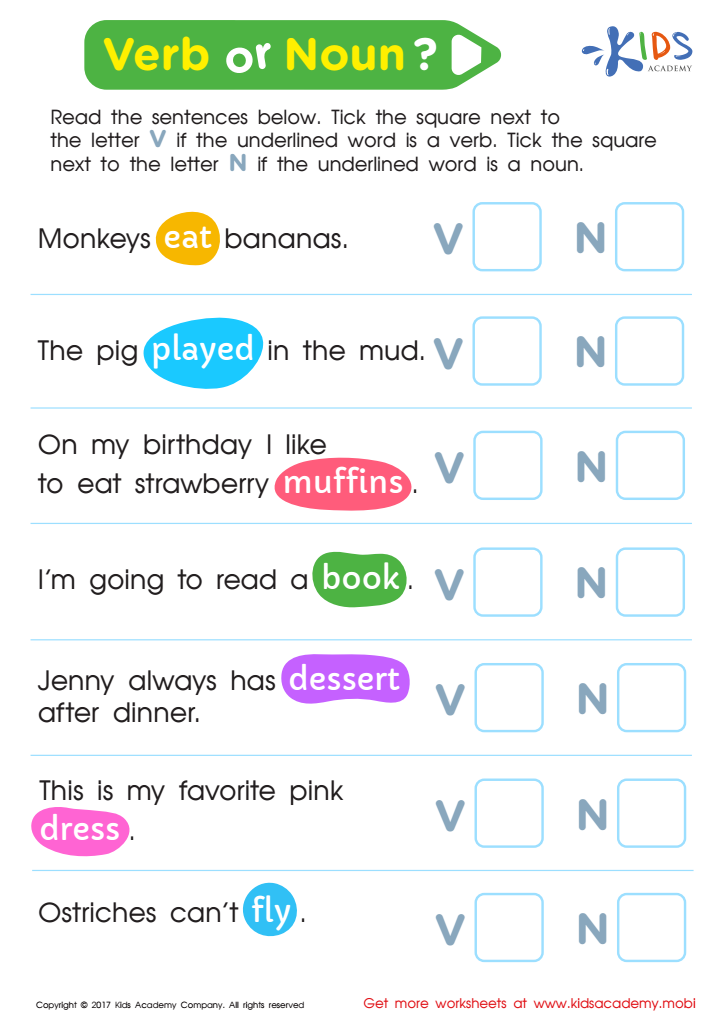
Verb or Noun Worksheet
 Assign to My Students
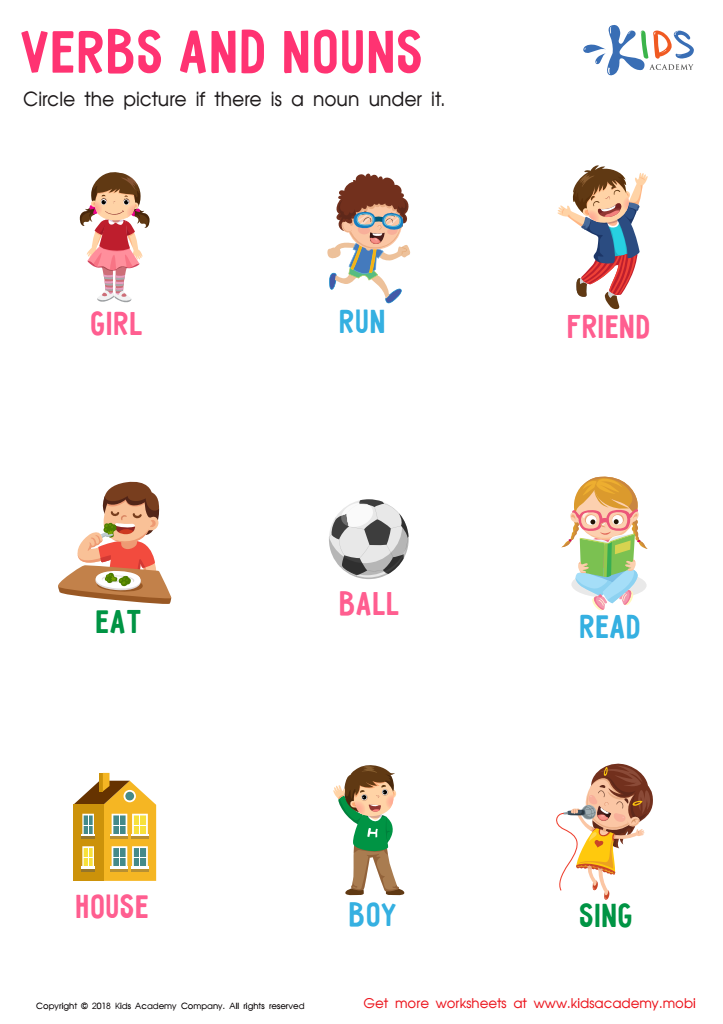
Verbs and Nouns Worksheet
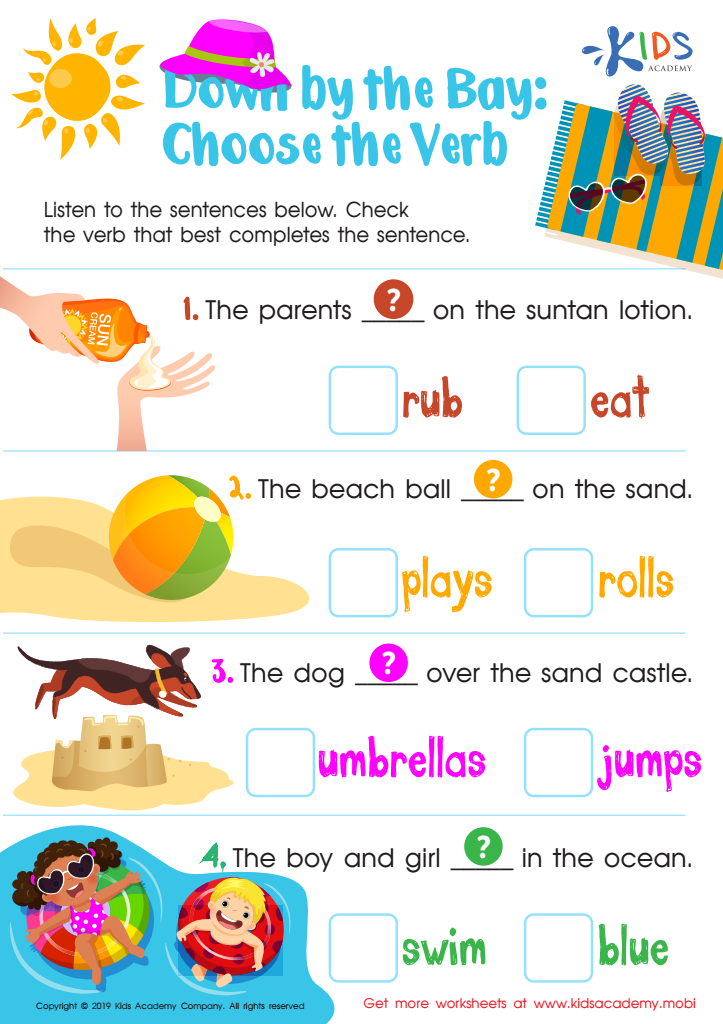
Down by the Bay: Choose the Verb Worksheet




.jpg)



Understanding verbs is essential for the linguistic development of children aged 4-5 as they begin to form more complex sentences and express ideas more clearly. Verbs are the action words in a sentence, and they allow children to communicate actions, events, and states of being. When parents and teachers focus on helping children identify and use verbs correctly, they lay the foundation for effective communication skills.
At this age, children are in the crucial stage of vocabulary expansion and sentence structure understanding. Knowing verbs improves their ability to describe daily activities, which enhances their social interactions and helps them make sense of the world around them. For example, being able to use a verb like "run," "eat," or "play" helps them tell others what they or someone else is doing, fostering clearer and more engaging conversations.
In an educational context, the ability to identify verbs also aids early reading skills. Being proficient in recognizing and understanding verbs helps children comprehend stories and instructions better, contributing to improved reading comprehension. This skill also promotes cognitive development by encouraging analytical thinking and the ability to follow sequences of events.
Overall, emphasizing verb identification supports language richness, which is crucial for both learning and personal growth in young children.








