
Weather Vocabulary Worksheets for Ages 4-5
4 filtered results
Difficulty Level
Grade
Age
-
From - To
Subject
Activity
Standards
Introduce your young learners to essential weather terms with our "Weather Vocabulary Worksheets for Ages 4-5." These engaging and colorful worksheets are designed to help children understand and identify different weather conditions. Each worksheet features simple activities like matching, coloring, and tracing to reinforce learning while keeping it fun. Perfect for preschool and kindergarten students, these printables focus on enhancing vocabulary, fine motor skills, and cognitive development. Teachers and parents will appreciate the structured yet playful approach these worksheets offer to build a strong foundation in weather-related vocabulary. Download today for endless educational fun!
Favorites
With answer key
Interactive
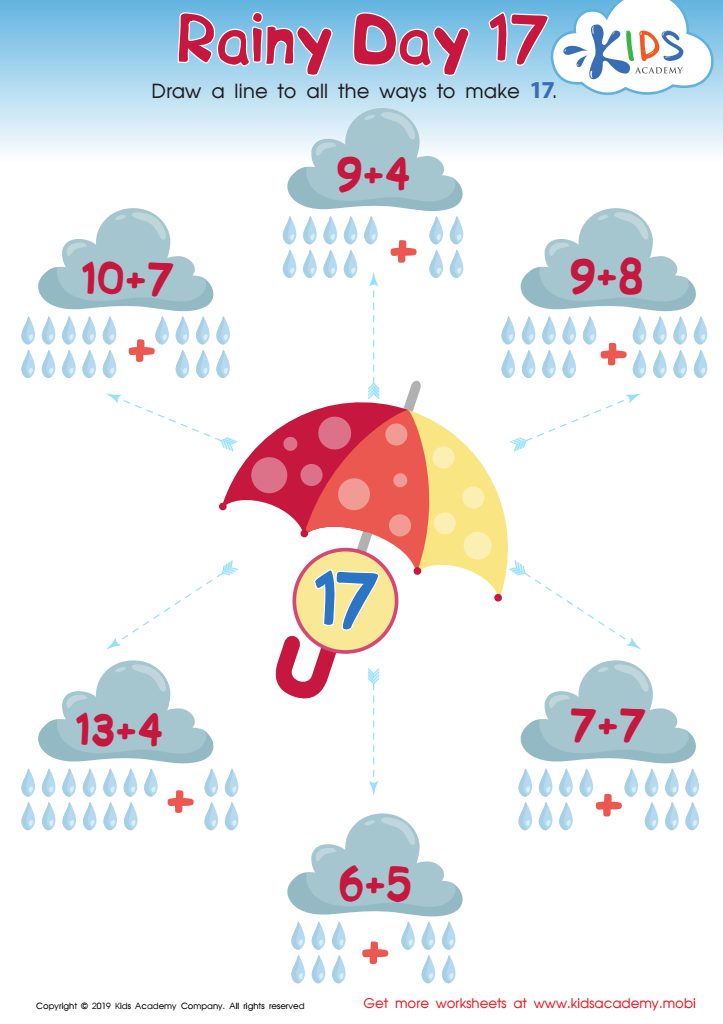
Rainy Day 17 Worksheet
Assist your kids with the 6 equations given. Each cloud displays the sum of two numbers, some of which make 17. Guide them to figure out the total of both numbers when added and draw a line to the umbrella in the center to illustrate the different ways to make 17. This activity will sharpen their addition skills.
Rainy Day 17 Worksheet
Worksheet
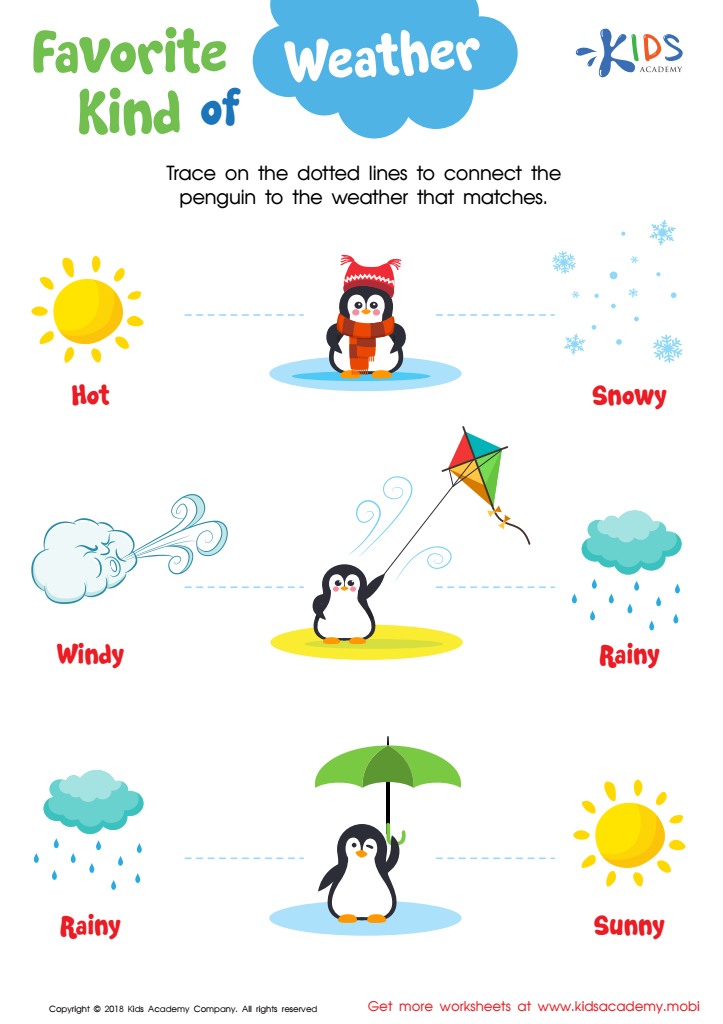
Favorite Kind of Weather Worksheet
!
Help your child understand weather and seasons with this fun worksheet featuring a cute penguin. They'll learn to recognize types of weather and associate them with seasons. To practice their fine motor skills, they'll trace lines to select the right seasons and weather. Kids will make a new friend while broadening their knowledge of nature.
Favorite Kind of Weather Worksheet
Worksheet
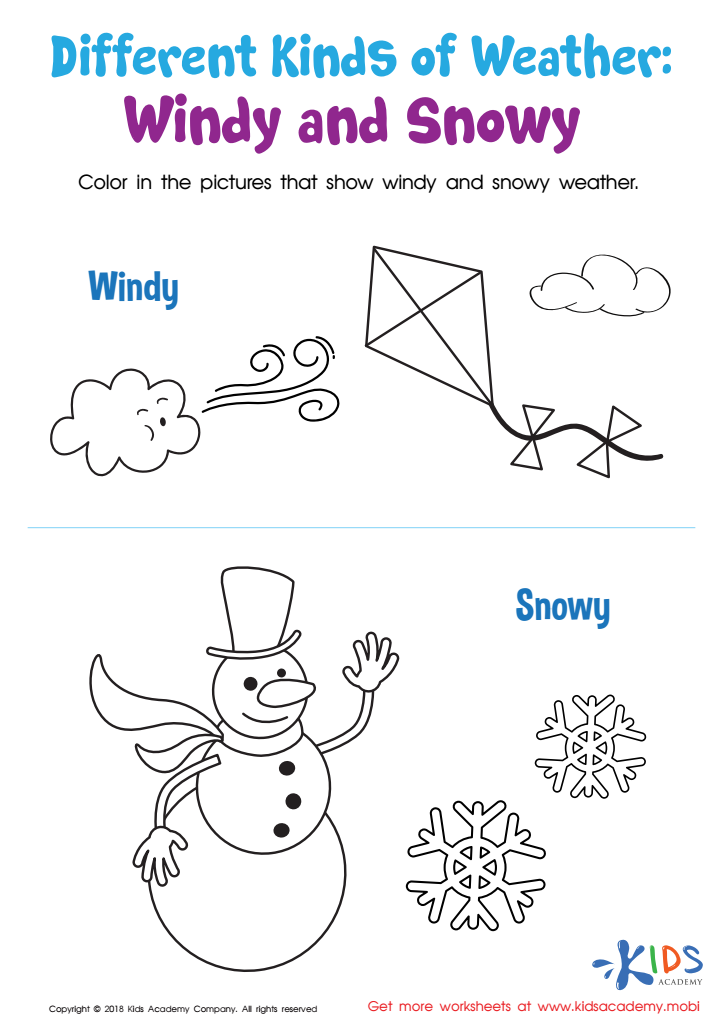
Different Kinds of Weather: Windy and Snowy Worksheet
Invite your little learner to practice their fine motor skills and learn about nature with this fun and charming PDF worksheet! Reinforce weather patterns and examine their environment as they color, giving them a foundation for understanding how weather affects them. No matter the weather, your learner will have a blast!
Download (PDF)
 Assign to My Students
Assign to My Students
Different Kinds of Weather: Windy and Snowy Worksheet
Worksheet
Join Kids Academy for Free
Who is primarily going to use this learning content?








Understanding weather vocabulary is important for children ages 4-5 because it supports their language development, scientific curiosity, safety awareness, and practical living skills. At this formative age, children are naturally curious about the world around them, and weather is a prominent, dynamic aspect of their daily lives. Learning terms like "sunny," "cloudy," "rain," and "windy" can help them articulate what they observe and how they feel about different weather conditions.
Using weather-related vocabulary helps enhance cognitive development by introducing concepts of cause and effect, time, and sequence. For example, understanding that rain can lead to wet environments emphasizes the relationship between events and their outcomes.
Safety is another crucial aspect. Young children who recognize terms like "storm" or "lightning" learn the importance of taking appropriate precautions, fostering a sense of governance over their surroundings.
Moreover, familiarizing children with weather terms can enhance their practical living skills. Knowing that it's rainy may encourage them to grab their raincoat and boots, promoting independence.
Finally, discussing weather promotes social interactions and connections, as it's a universal experience. Conversations about weather play a part in developing communication skills and can lay the groundwork for lifelong learning and curiosity about the natural world.








