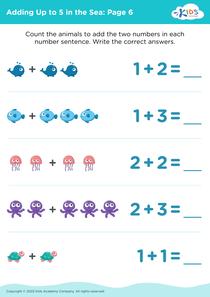
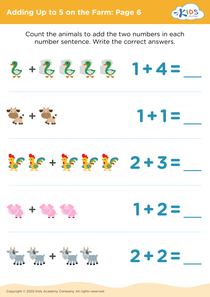
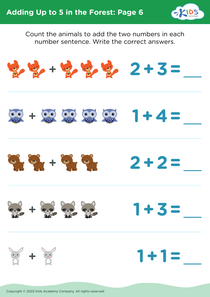
Basic addition practice Adding at the Zoo Worksheets for Ages 4-5
3 filtered results
-
From - To
Introduce your little ones to the exciting world of math with our "Basic Addition Practice: Adding at the Zoo Worksheets" designed for ages 4-5! These engaging worksheets combine fun zoo animal themes with beginner-friendly addition problems, helping young learners develop essential math skills while enjoying colorful and captivating images. Perfect for early graders, these activities foster a love for learning and build foundational addition competence in an entertaining, hands-on way. Ideal for both classroom settings and at-home practice, our worksheets ensure your child gains confidence in their math abilities through interactive and enjoyable exercises. Explore the zoo now with basic addition practice!
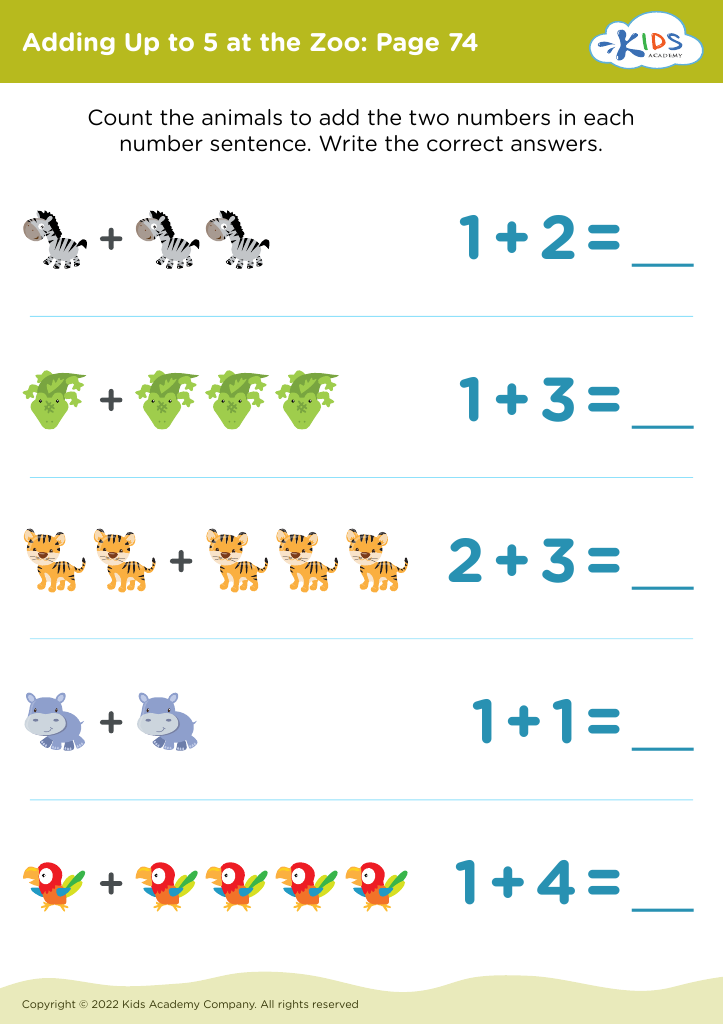
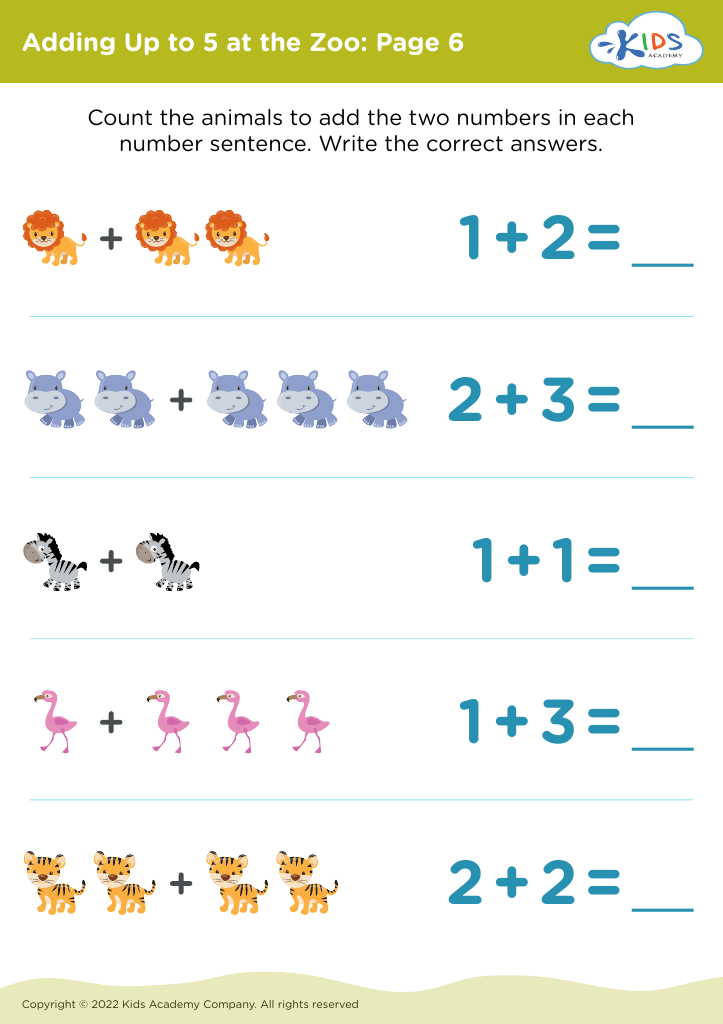
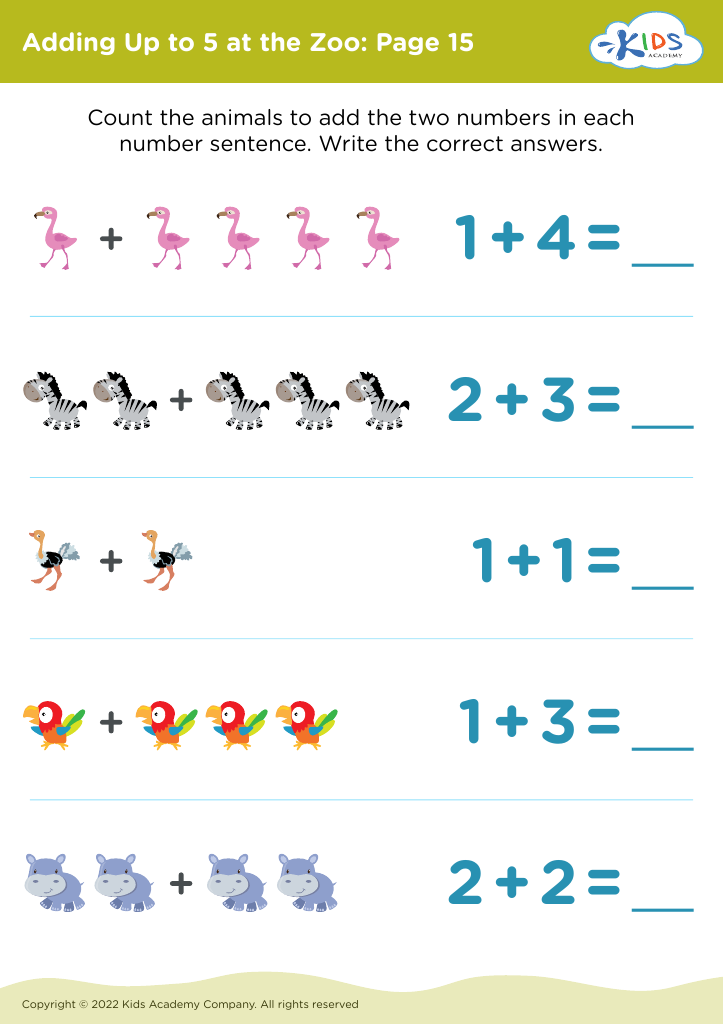



Parents and teachers should prioritize basic addition practice for children aged 4-5 for several reasons, particularly using engaging and relatable contexts like "Adding at the Zoo." Early math skills lay the groundwork for future academic success, and mastering addition at a young age fosters numerical fluency essential for more complex math concepts. By integrating addition into an enjoyable theme like a zoo, children are more likely to remain interested and engaged.
Practicing addition with zoo-themed problems captivates young learners' imaginations and makes learning enjoyable. For example, counting lions or adding together various animals helps children visualize quantities and understand abstract concepts concretely. Fun, context-rich problems bridge the gap between numbers and real-world applications, promoting better understanding and retention.
Moreover, early proficiency in addition boosts children's confidence, allows them to feel more comfortable handling numbers, and nurtures a positive attitude towards math overall. Participating in such activities can also enhance fine motor skills and improve cognitive abilities like problem-solving, attention to detail, and logical thinking.
In summary, basic addition practice using themes like "Adding at the Zoo" is crucial for early childhood development. It fosters foundational math skills, engages children meaningfully, builds confidence, and prepares them for future educational challenges.