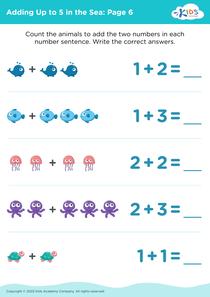
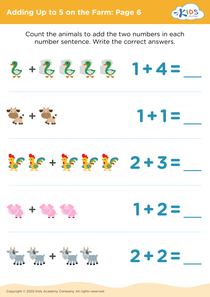
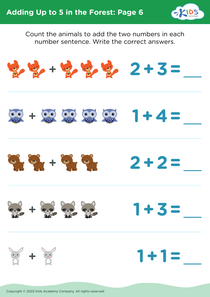
Basic Arithmetic Adding at the Zoo Worksheets for Ages 4-5
7 filtered results
-
From - To
Introduce your little learners to the exciting world of math with our "Basic Arithmetic Adding at the Zoo Worksheets" designed specifically for ages 4-5! These engaging worksheets combine fun animal themes and colorful illustrations to make learning to add an enjoyable experience. Children will boost their early math skills as they solve simple addition problems featuring their favorite zoo animals. Perfect for home or classroom use, these worksheets foster a love for math while enhancing fine motor skills through interactive activities. Give your child a head start in arithmetic with our adorable and educational resources that are sure to inspire budding mathematicians!
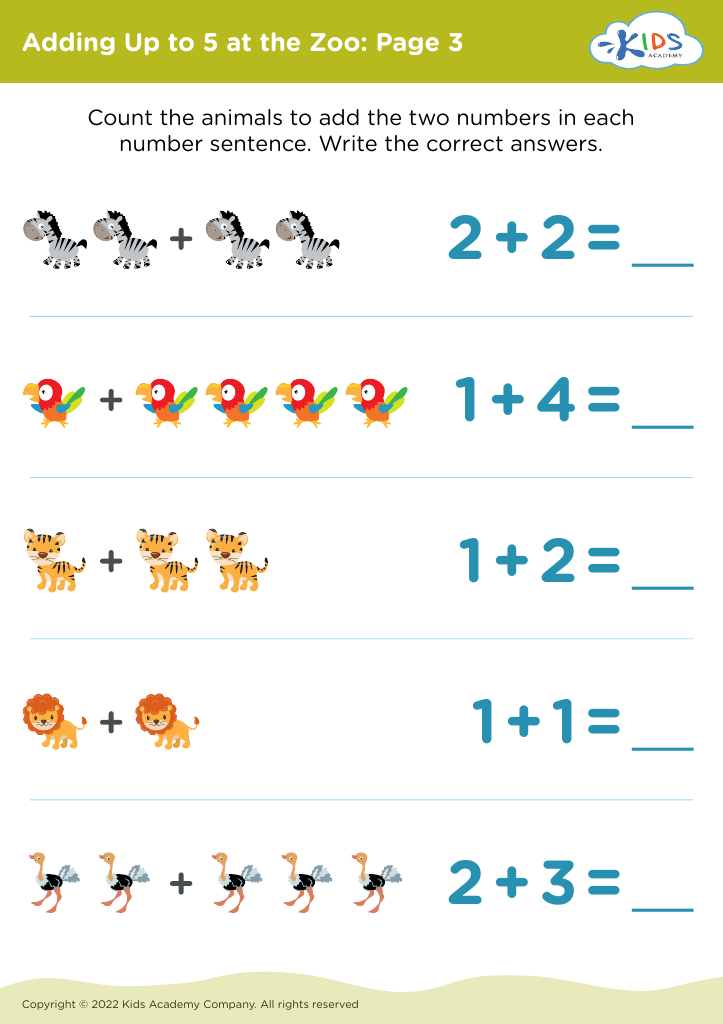
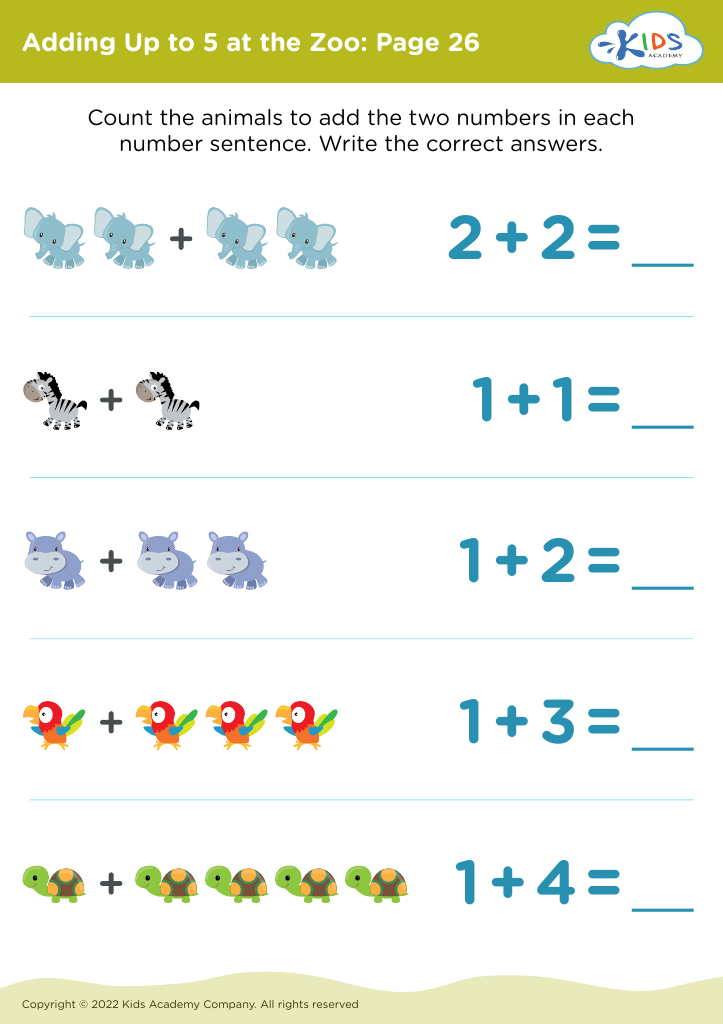
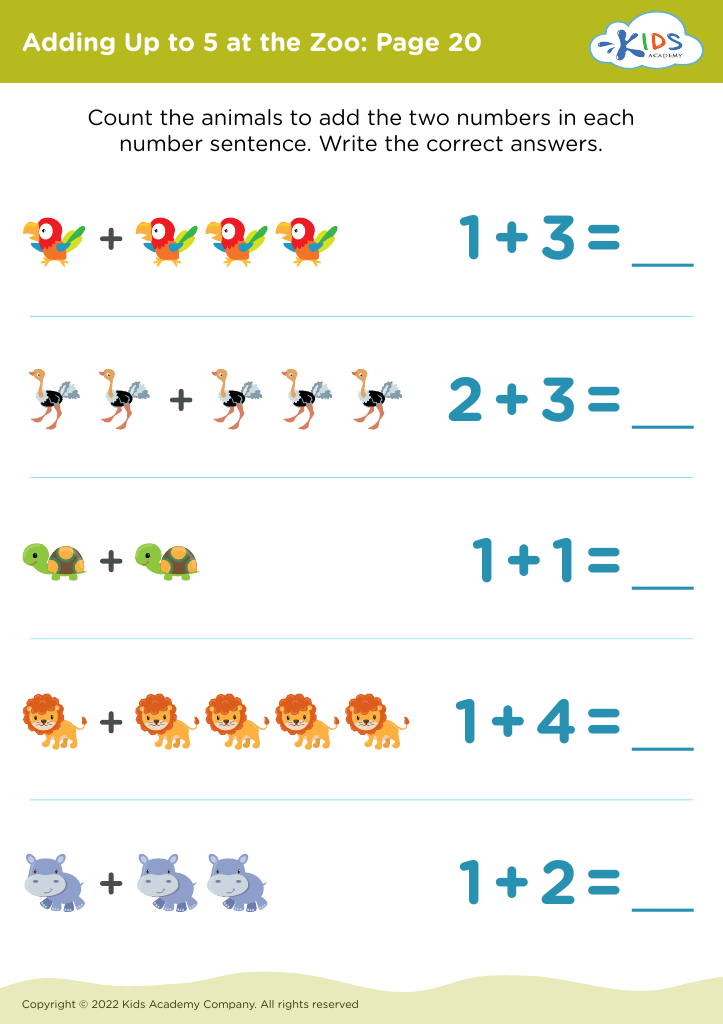
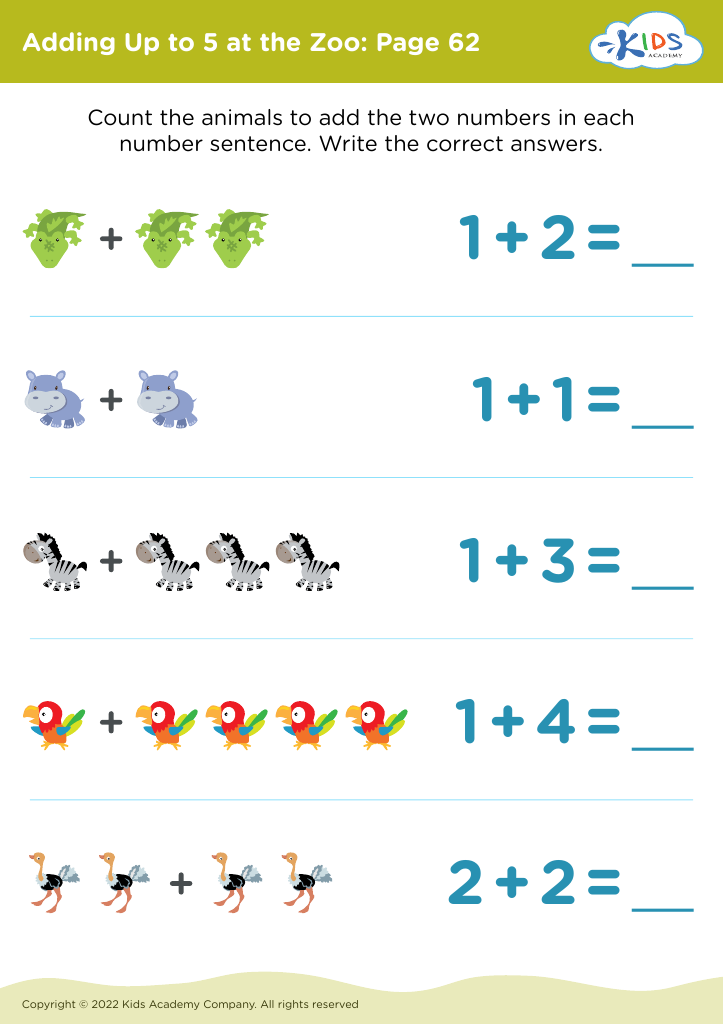
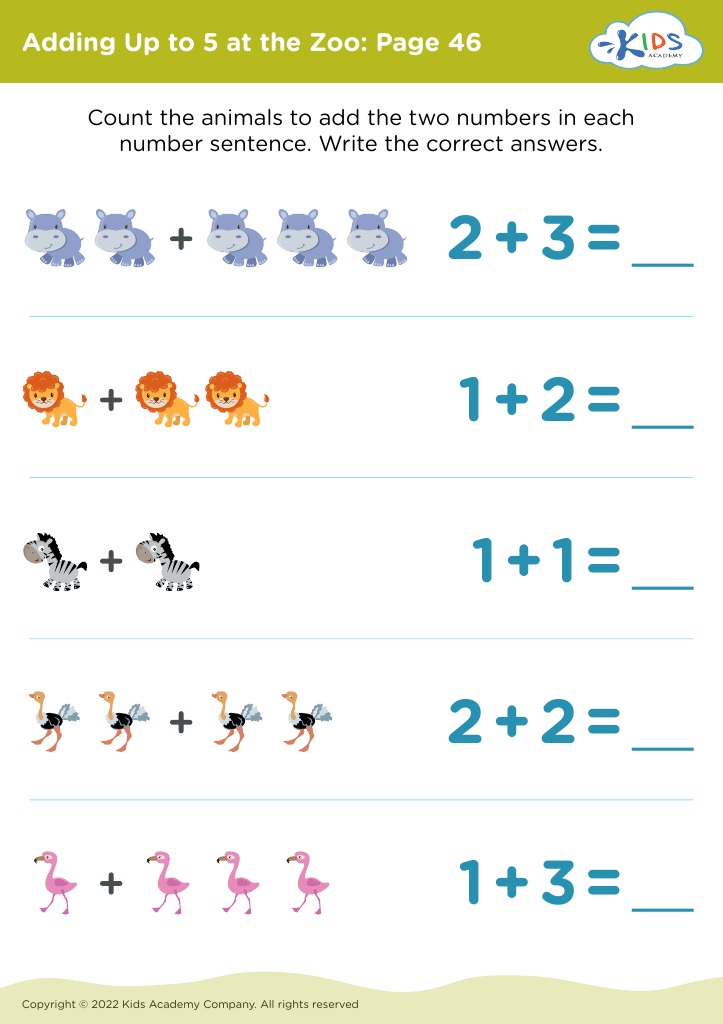
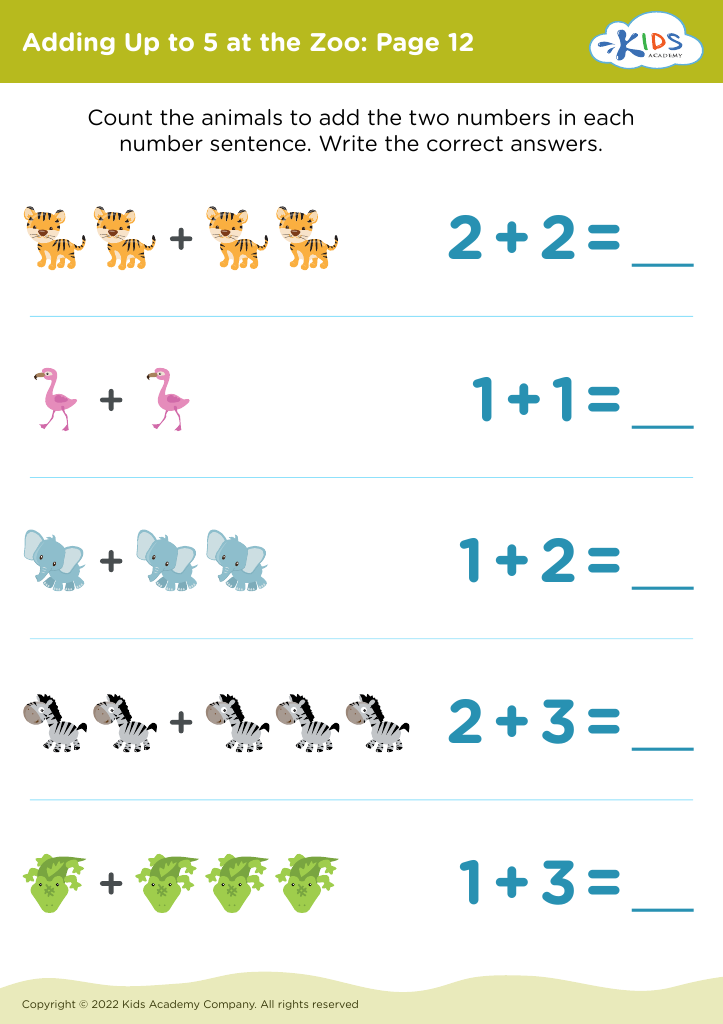
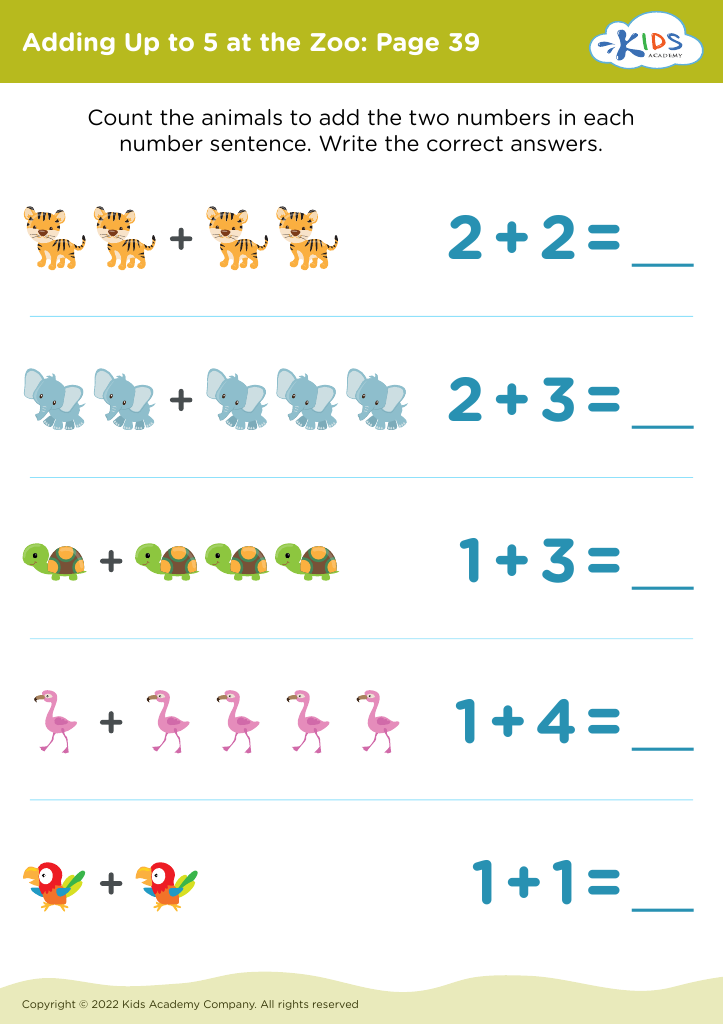



Basic Arithmetic Adding at the Zoo is an engaging way for young children, particularly ages 4-5, to learn foundational math skills. At this age, children are naturally curious and eager to explore their surroundings, which makes a zoo setting an ideal environment for experiential learning. Integrating basic arithmetic with the exciting context of animals and their habitats helps capture children's attention and makes learning enjoyable.
Parents and teachers should care about this type of interactive learning for several reasons. First, it fosters a positive attitude towards math by associating it with fun experiences. Secondly, it aids in developing critical cognitive skills such as counting, problem-solving, and logical reasoning, which are essential for future academic success. Incorporating elements of storytelling and visuals, like animal counters or pictures, reinforces comprehension and retention of concepts.
Additionally, it encourages social interaction and cooperative play, enhancing communication skills among peers. Observing and demonstrating group activities allows educators and parents to track progress and promote active participation. In this way, Basic Arithmetic Adding at the Zoo not only addresses essential early math concepts but also supports overall emotional, social, and cognitive development in young learners. Thus, it represents a holistic approach to education that benefits both children and adults.