Problem-Solving Skills Adding at the Zoo Worksheets for Ages 4-5
4 filtered results
-
From - To
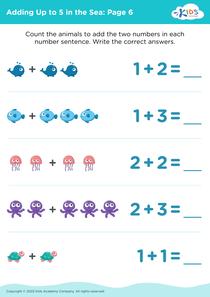
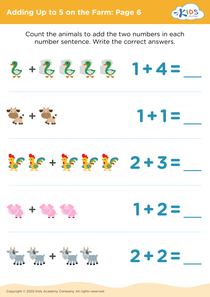
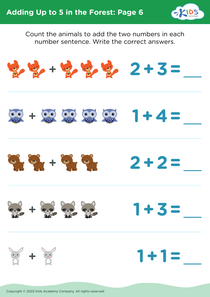
Discover our engaging "Problem-Solving Skills Adding at the Zoo" worksheets, designed specifically for children ages 4-5! These printable activities introduce young learners to basic addition concepts through fun and relatable zoo-themed scenarios. As they count playful animals and solve simple math problems, children develop critical thinking and problem-solving abilities in a playful, supportive environment. Perfect for preschool or homeschool settings, these worksheets encourage collaboration and creativity while ensuring that your little ones gain confidence in their mathematical skills. Stimulate curiosity and foster a love for learning with our expertly crafted resources today! Ideal for parents and educators alike.
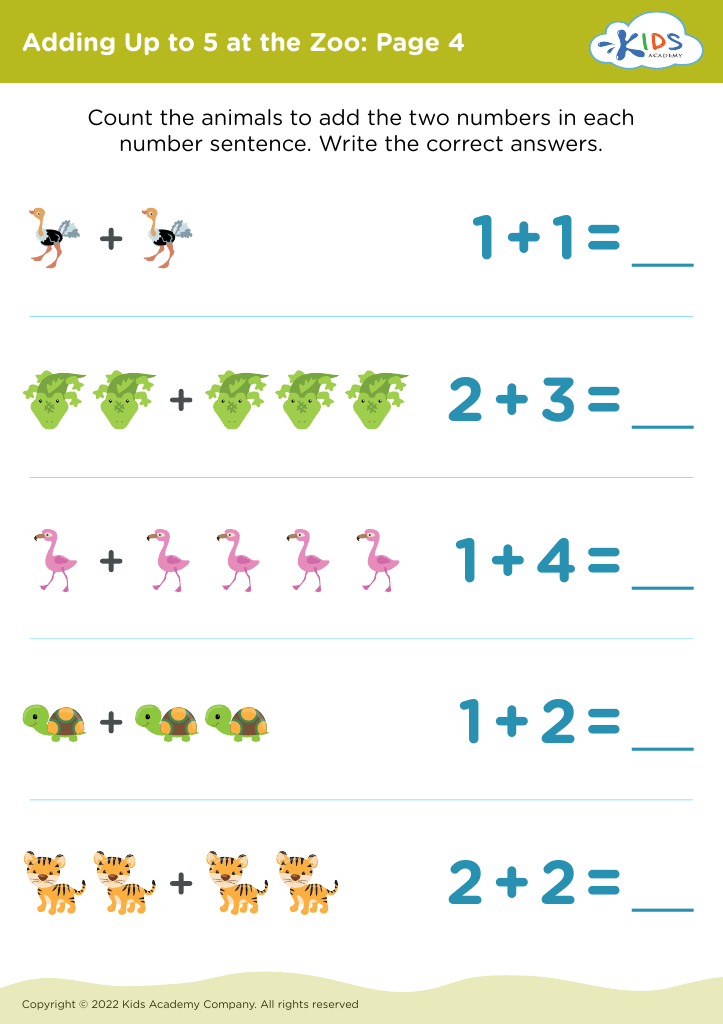
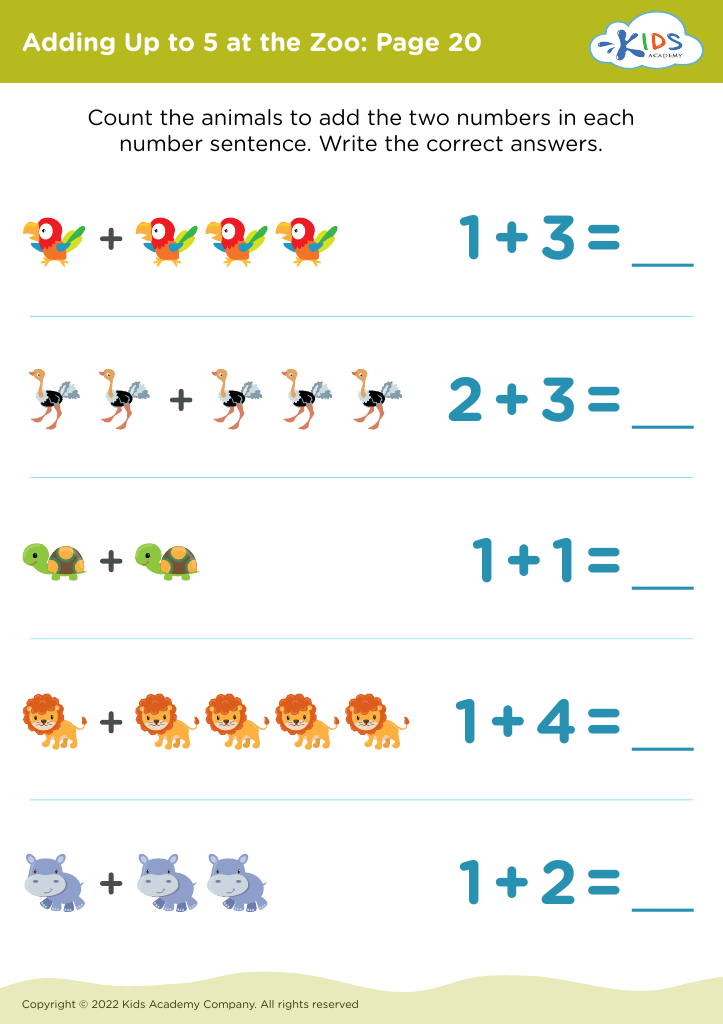
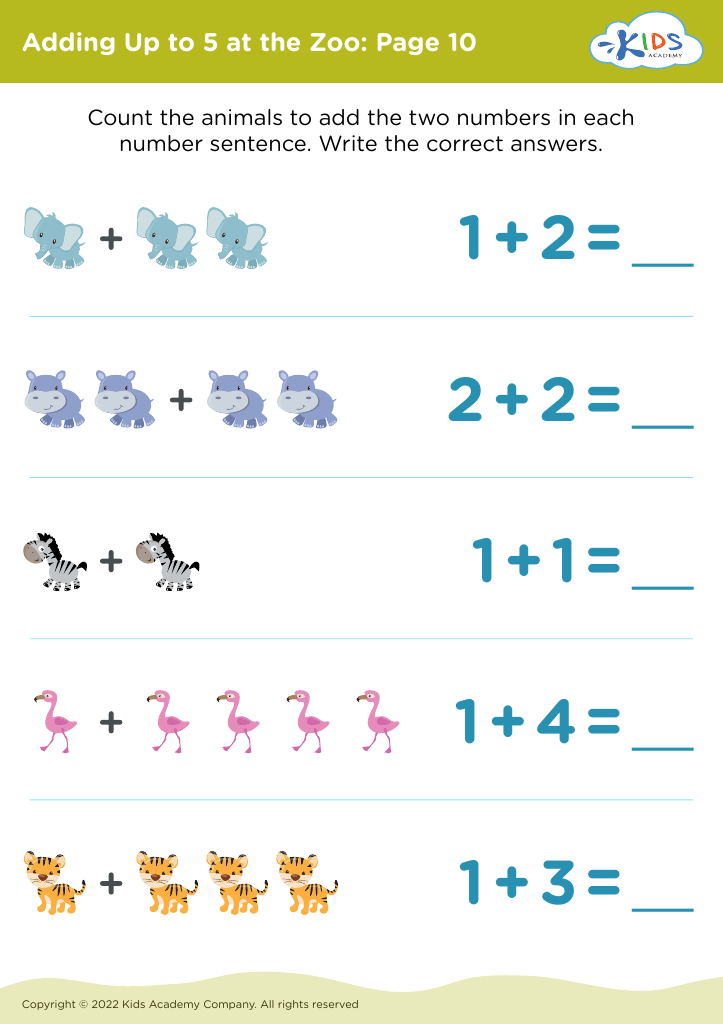
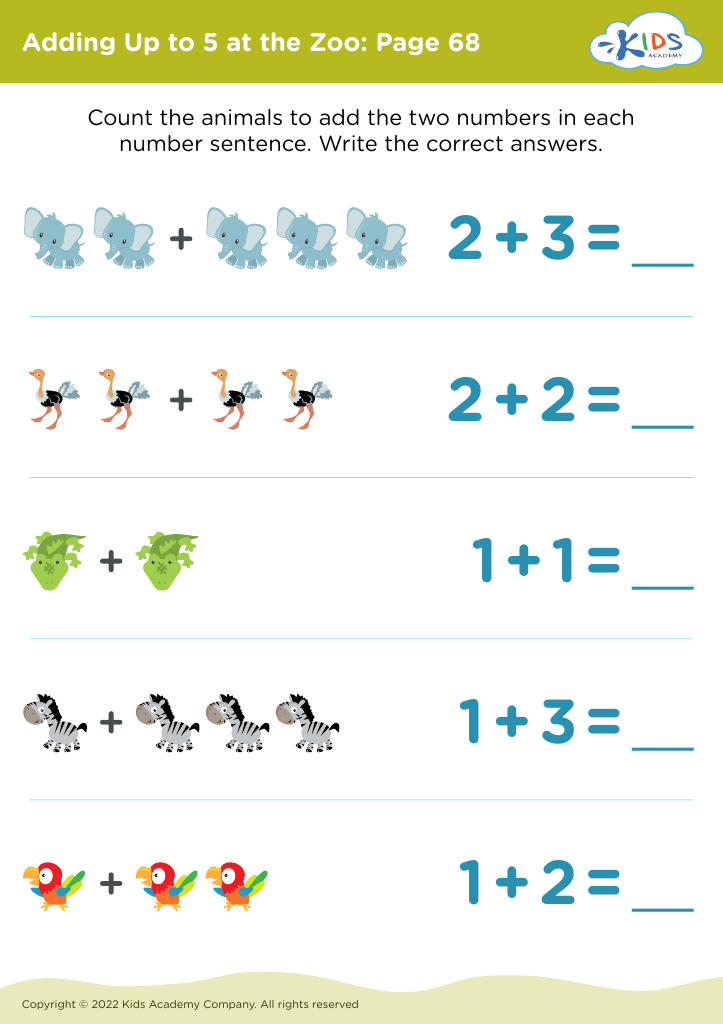



Parents and teachers should prioritize developing problem-solving skills in children aged 4-5, particularly through engaging activities like "Problem-Solving Skills Adding at the Zoo." At this age, children are naturally curious and eager to explore their surroundings, making it an ideal time to introduce foundational mathematical concepts in a playful manner.
By integrating real-life contexts, such as a zoo environment, children can learn to apply simple addition and subtraction through interactive scenarios. For example, they can solve problems involving the number of animals, their habitats, or food needed for different exhibits. This not only reinforces their math skills in a fun way but also enhances critical thinking, enabling them to analyze situations and make logical decisions.
Moreover, fostering problem-solving abilities lays the groundwork for lifelong skills, inspiring creativity, resilience, and teamwork. These activities can also promote social interactions when children work together to find solutions. As young learners develop confidence in their problem-solving capabilities, they build a positive attitude toward learning. Therefore, activities like "Adding at the Zoo" are vital, combining education and enjoyment, while cultivating well-rounded, skilled individuals ready to face future challenges.