Understanding Quantities Adding at the Zoo Worksheets for Ages 4-5
6 filtered results
-
From - To
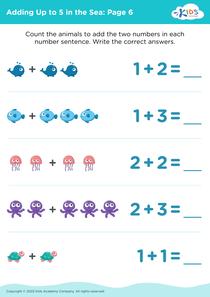
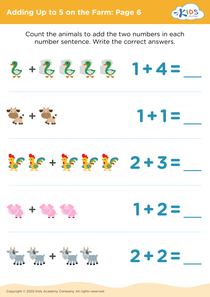
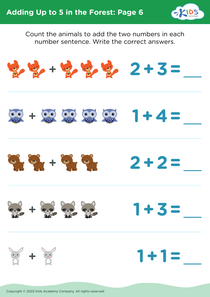
Discover the fun and engaging "Understanding Quantities: Adding at the Zoo" worksheets designed for children aged 4-5! These interactive resources help early learners explore basic addition concepts through vibrant zoo-themed illustrations. Each worksheet encourages young minds to count and visualize quantities while enhancing their math skills in an enjoyable way. With captivating zoo animals as the focus, children will develop a solid foundation in understanding numbers and addition, making learning a delightful experience. Perfect for preschoolers and kindergarteners, these worksheets ensure that your child builds essential math skills while enjoying their adventure at the zoo! Unleash their inner mathematician today!
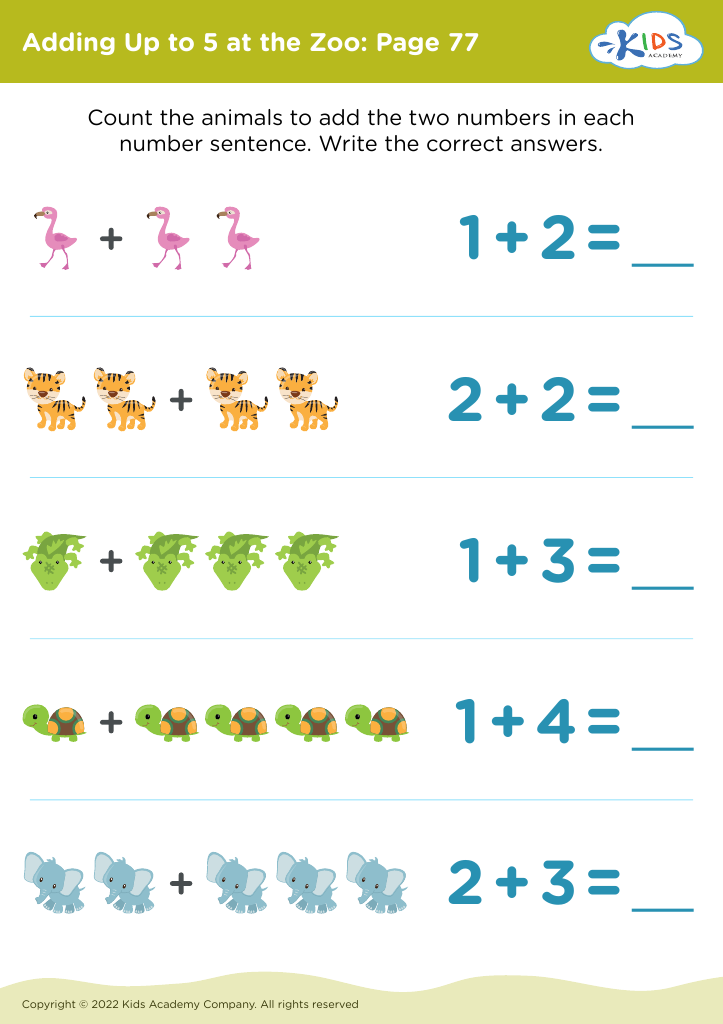
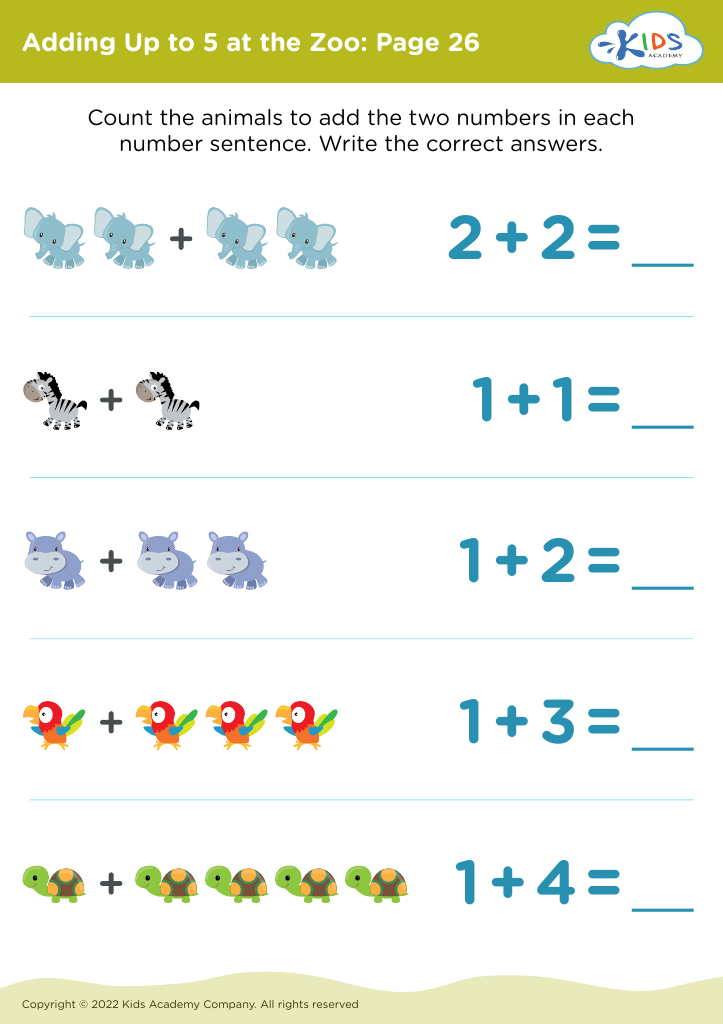
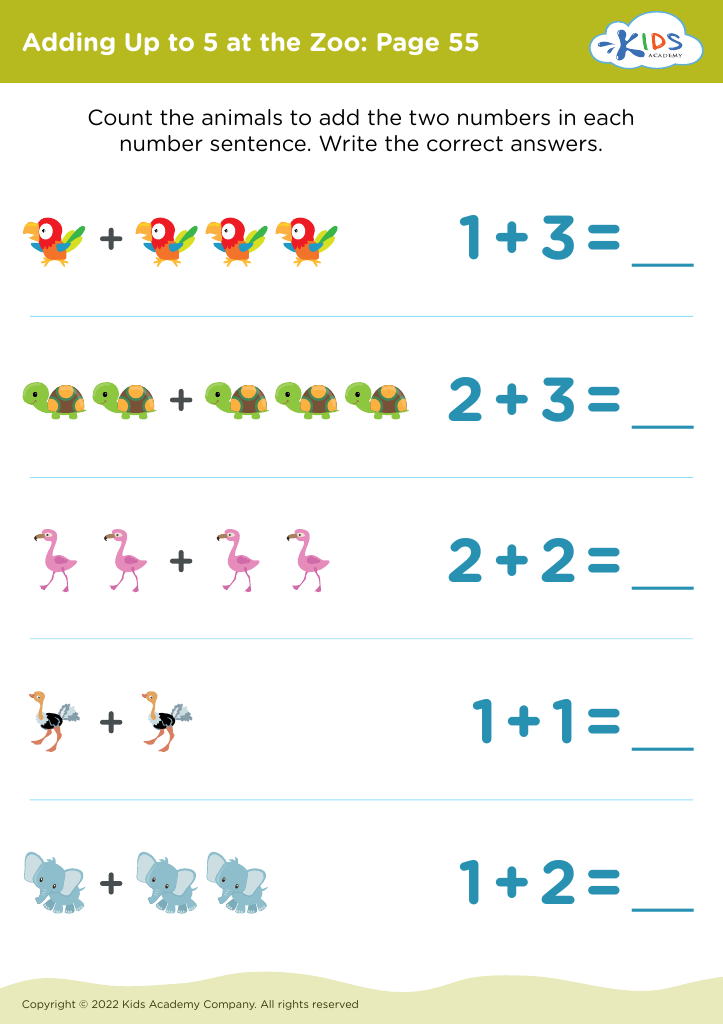
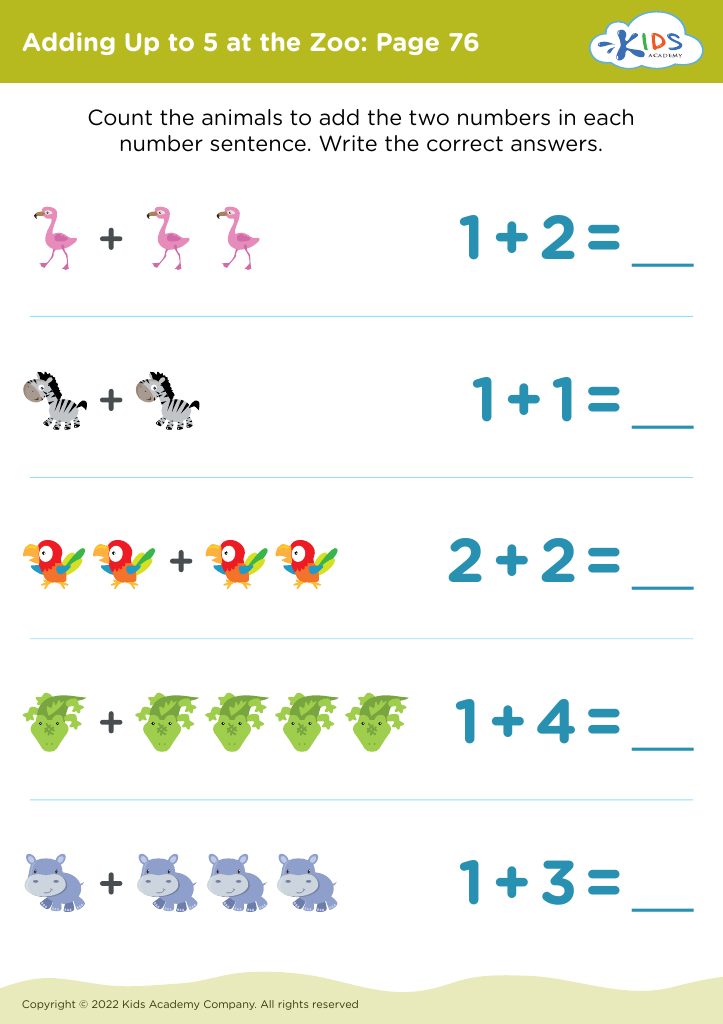
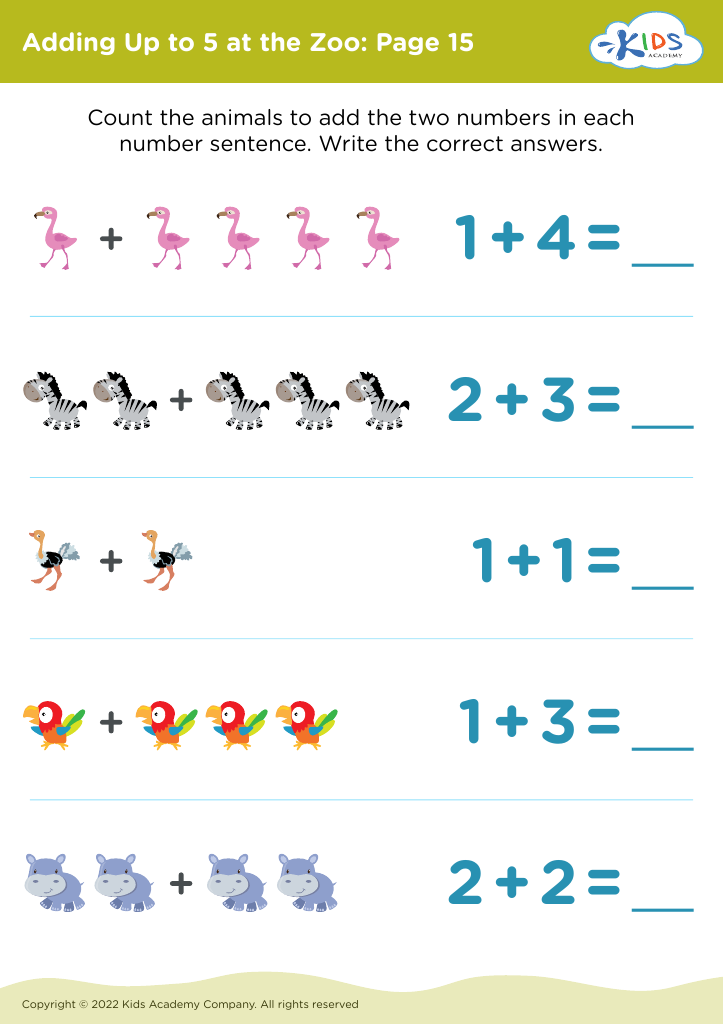
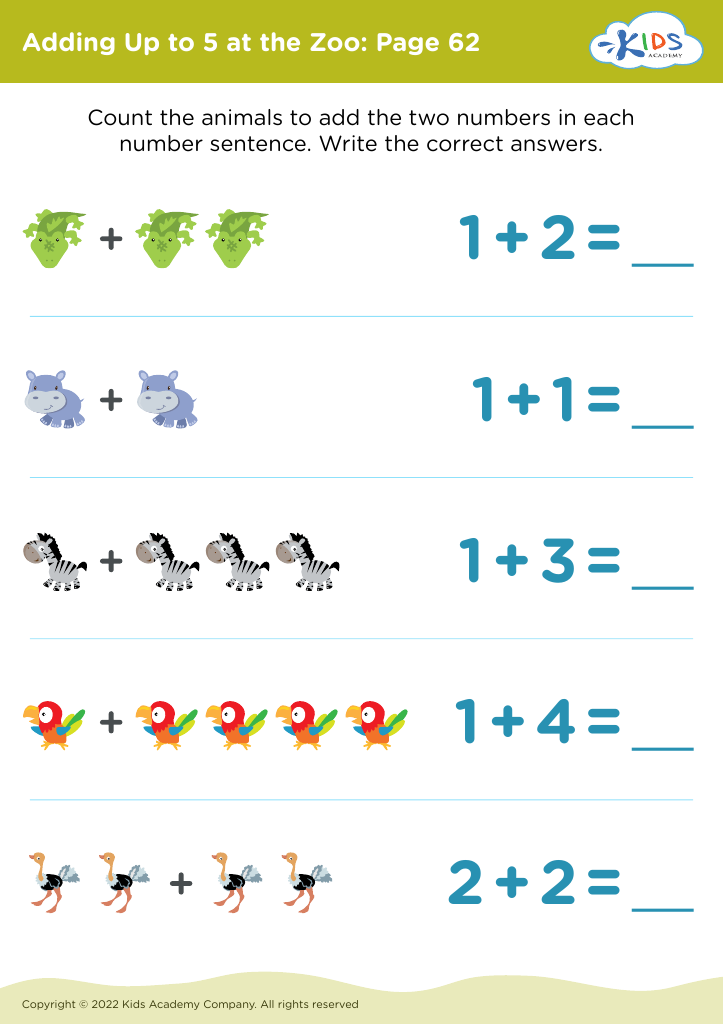



Understanding quantities and the concept of addition is crucial for young children ages 4-5, particularly in engaging settings like a zoo. Activities such as “Adding at the Zoo” provide hands-on, interactive experiences that make learning math enjoyable. When children relate math concepts to familiar and exciting environments—like counting animals or feeding them—they develop a deeper understanding of numbers and quantities.
Parents and teachers should care about this approach because early math skills form the foundation for future academic success. Engaging with concepts through play encourages critical thinking and problem-solving skills, fostering a positive attitude toward learning. Additionally, incorporating real-world examples, such as those found in a zoo, helps children grasp abstract concepts in a concrete manner.
Furthermore, discussions about quantities in social contexts can enhance language development, as children learn vocabulary related to math and animals. It promotes social skills through collaborative play, allowing children to work together, share ideas, and build confidence. By prioritizing such interactive learning experiences, educators and parents help lay the groundwork for lifelong learning, ensuring that children not only understand math but also appreciate its relevance and application in the world around them.