Visual comprehension Adding at the Zoo Worksheets for Ages 4-5
3 filtered results
-
From - To
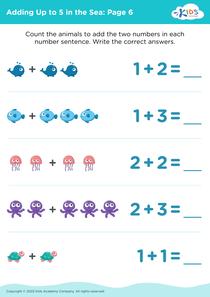
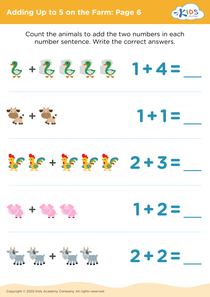
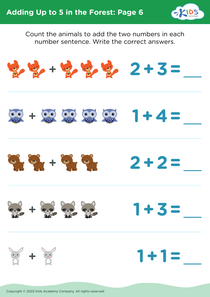
Ignite your child’s love for math with our "Visual Comprehension Adding at the Zoo Worksheets for Ages 4-5." These engaging, colorful worksheets seamlessly blend fundamental addition skills with a vibrant zoo theme to keep young learners excited and focused. Perfectly designed for preschoolers, each activity enhances visual comprehension by using adorable animal illustrations and straightforward exercises. Watch as your child joyfully learns to count and add, developing a strong mathematical foundation while having fun. Perfect for home or classroom use, these worksheets are a delightful way to make early math adventures enjoyable and educational!
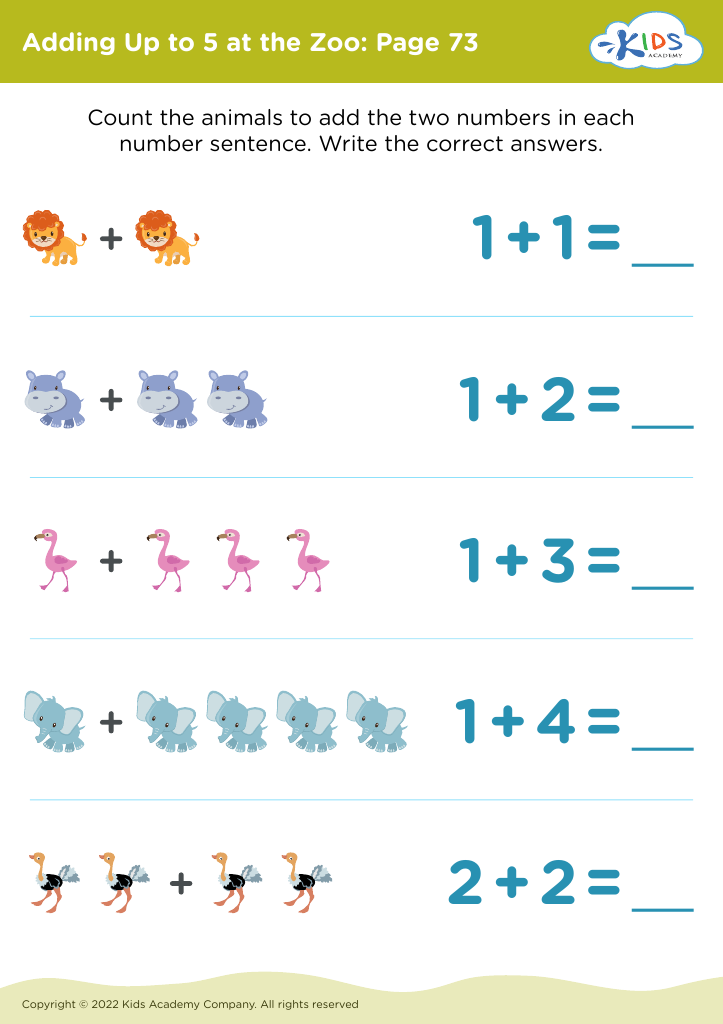
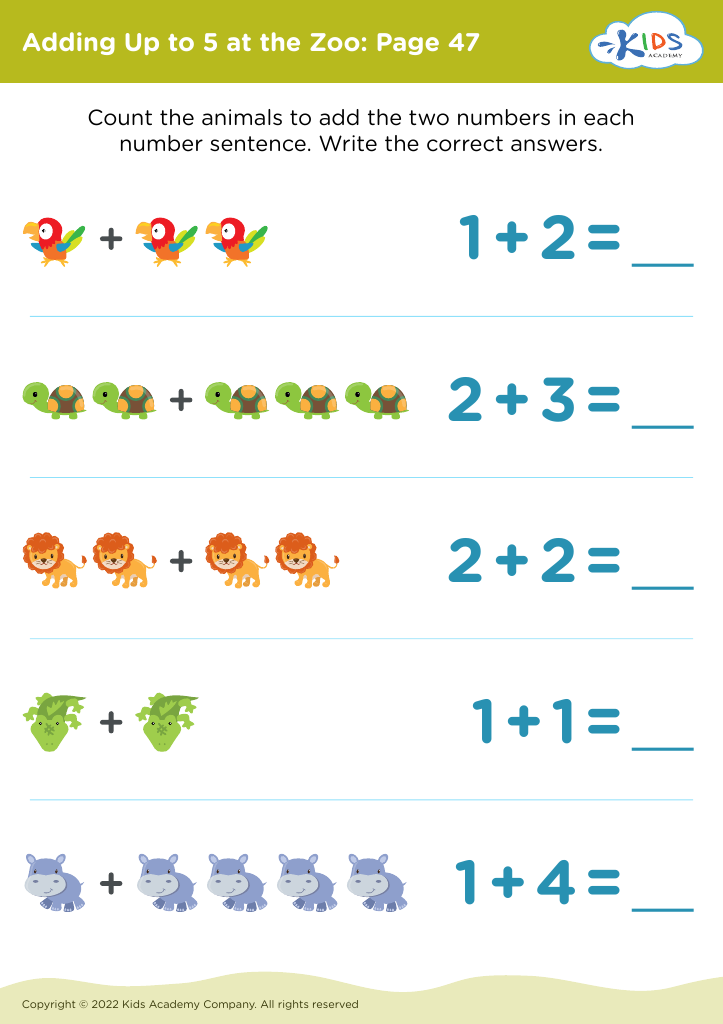
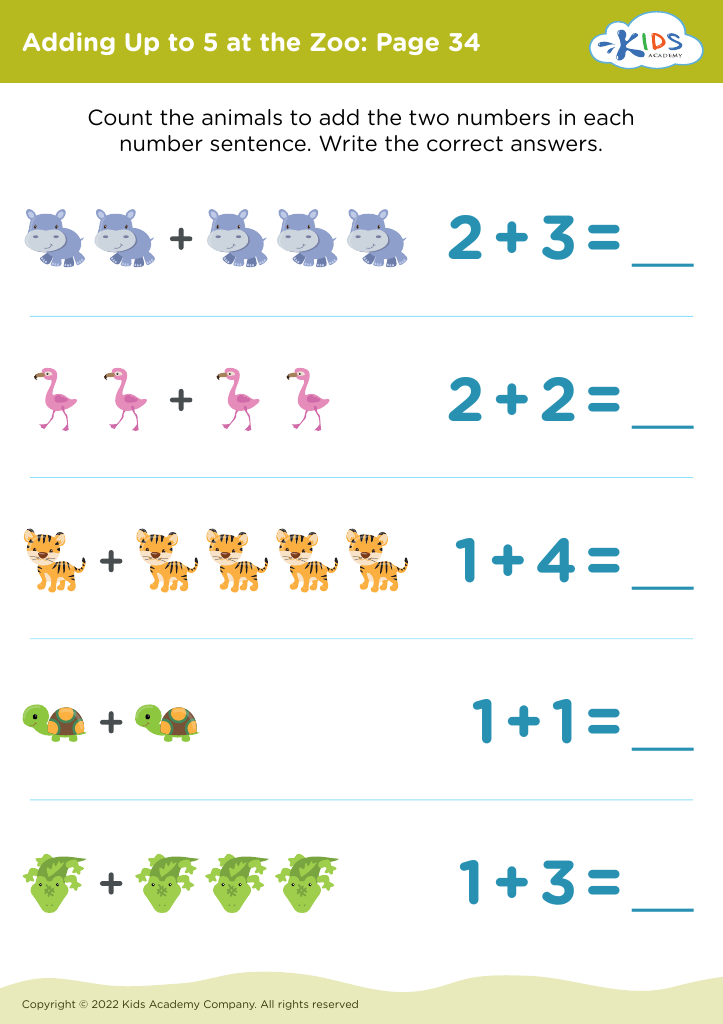



Visual comprehension is a critical aspect of early childhood education, especially for children aged 4-5. At this developmental stage, young learners are beginning to make sense of the world through their senses, with vision playing a pivotal role. "Adding at the Zoo" provides an engaging and practical framework to hone these skills by combining visual stimuli with foundational math concepts.
Firstly, visual tools and interactive experiences capture the attention and imagination of children. The zoo setting adds an element of fun and familiarizes children with diverse animals, enhancing their engagement and curiosity. This heightened interest fosters a love for learning that can be carried into more complex subjects.
Moreover, the visual representations of adding animals, such as counting elephants or giraffes, turn abstract concepts into something tangible. This hands-on, visual learning helps solidify foundational math skills like counting and basic addition, crucial for later academic success.
Additionally, such activities support multiple learning styles, particularly visual and kinesthetic learners who benefit from seeing and manipulating objects to understand numbers and quantities.
In conclusion, parents and teachers should care about visual comprehension activities like "Adding at the Zoo" because they effectively combine fun and learning, laying a strong foundation in math and promoting critical cognitive development.