Basic Addition Skills Adding in the Forest Worksheets for Ages 4-5 - Page 3
55 filtered results
-
From - To
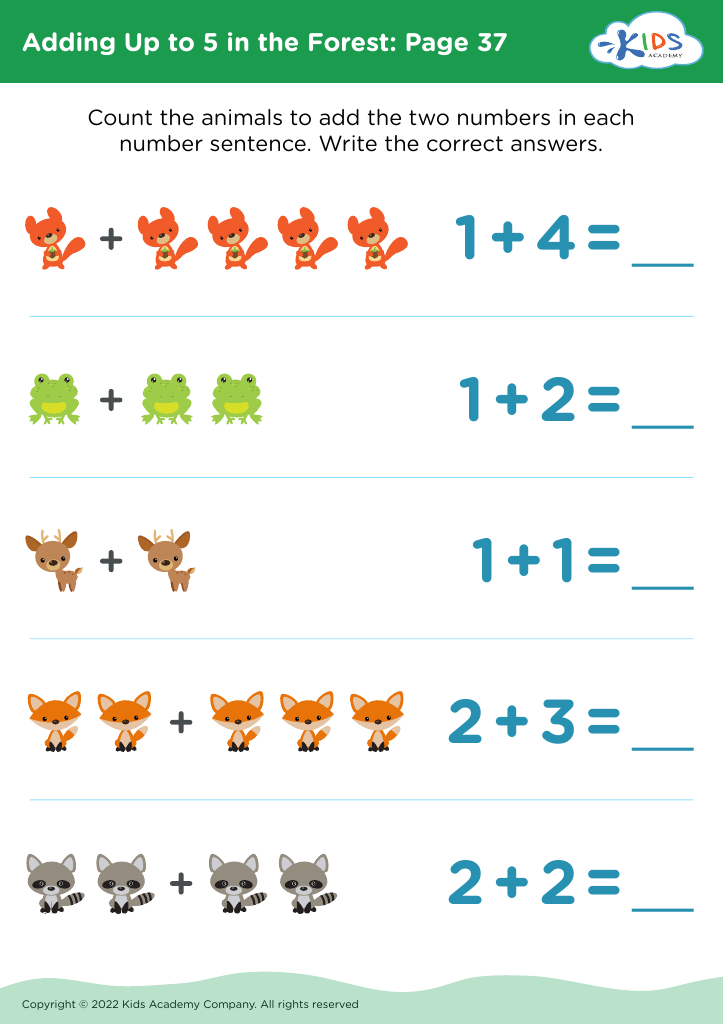
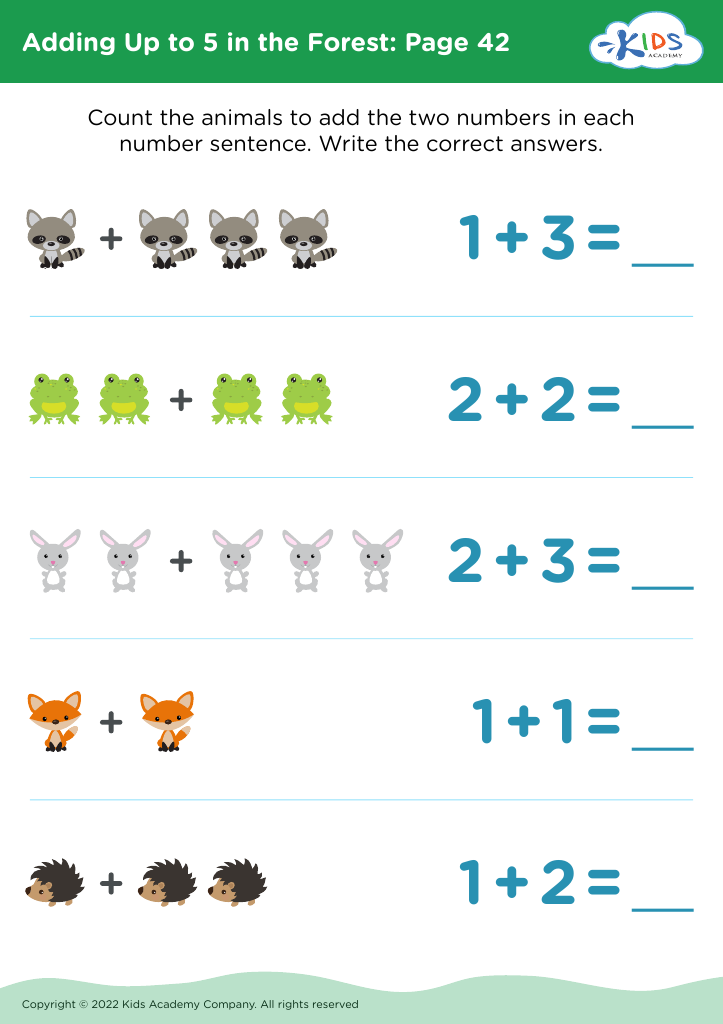
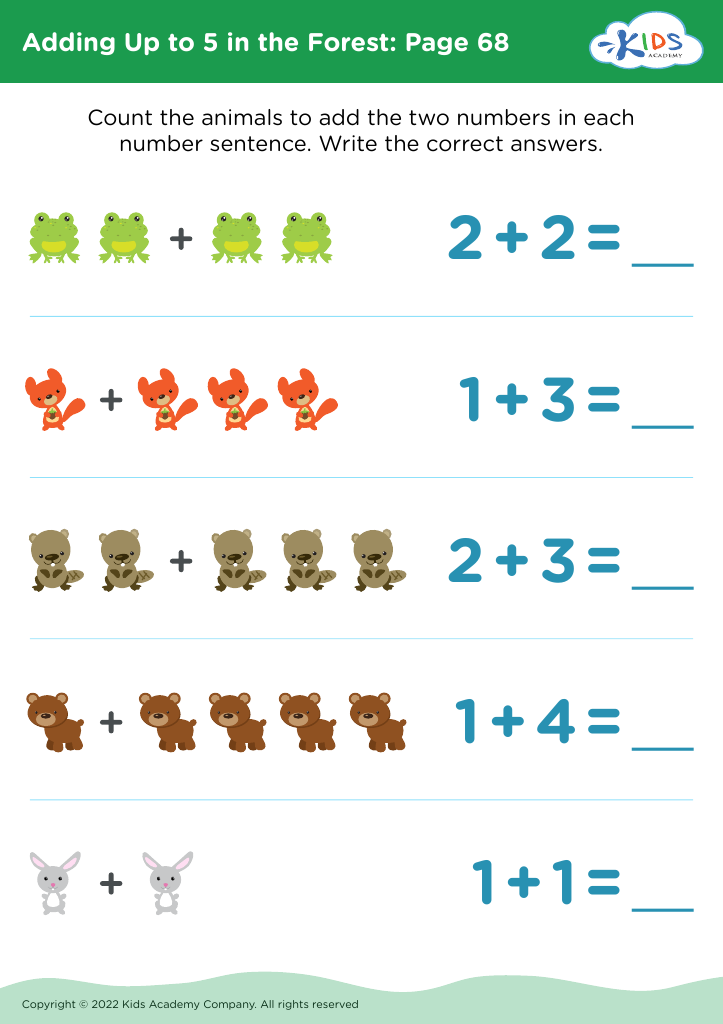
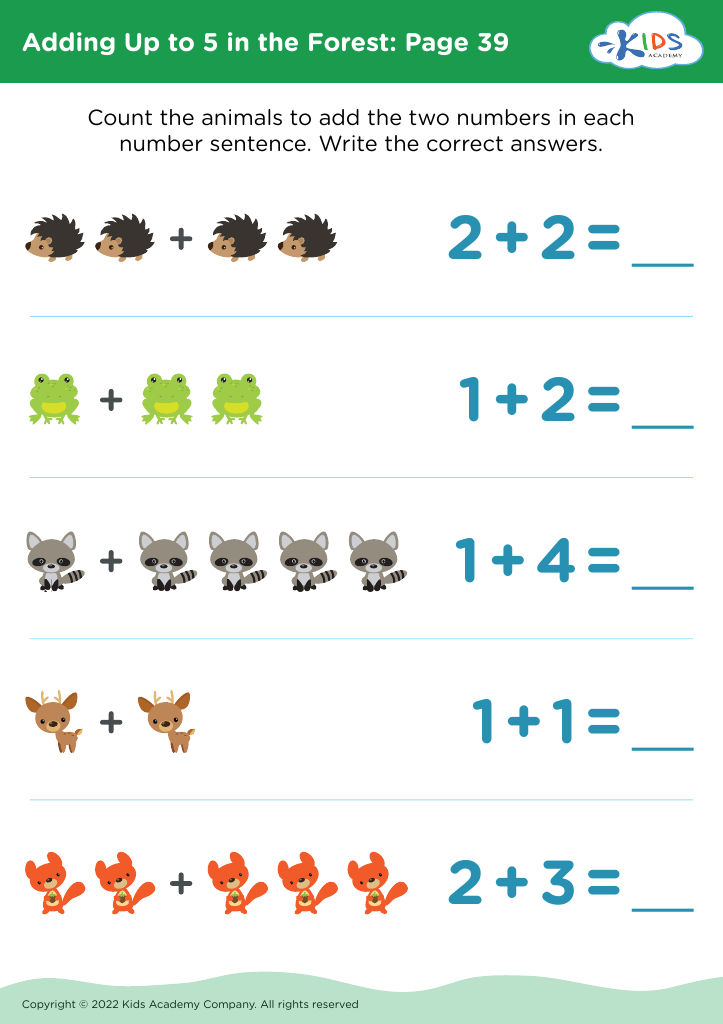
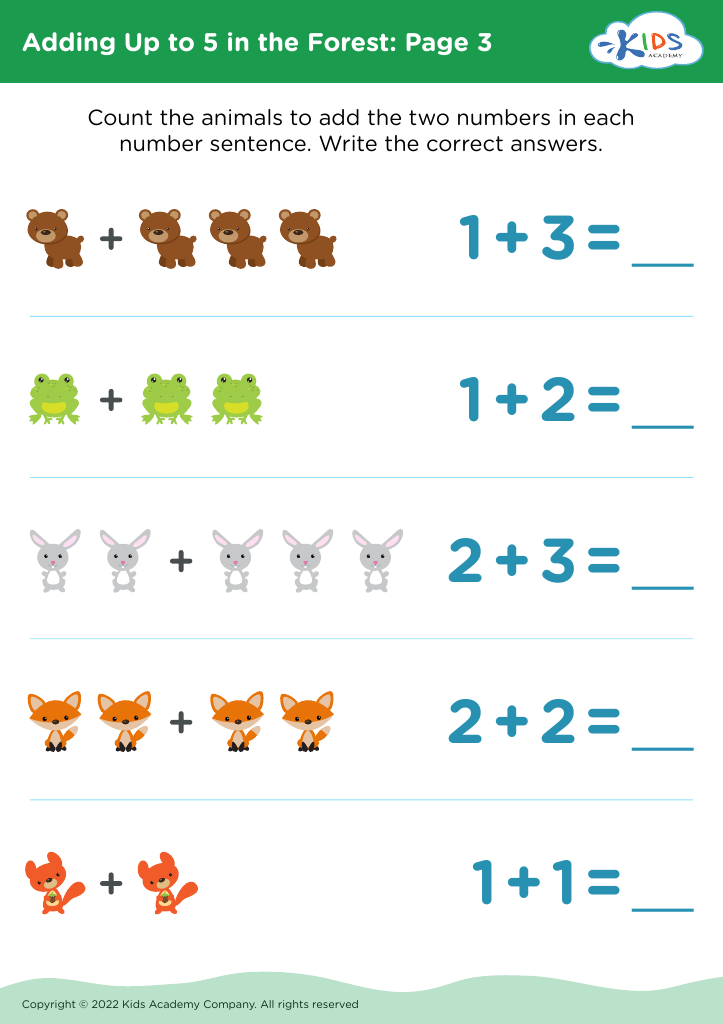
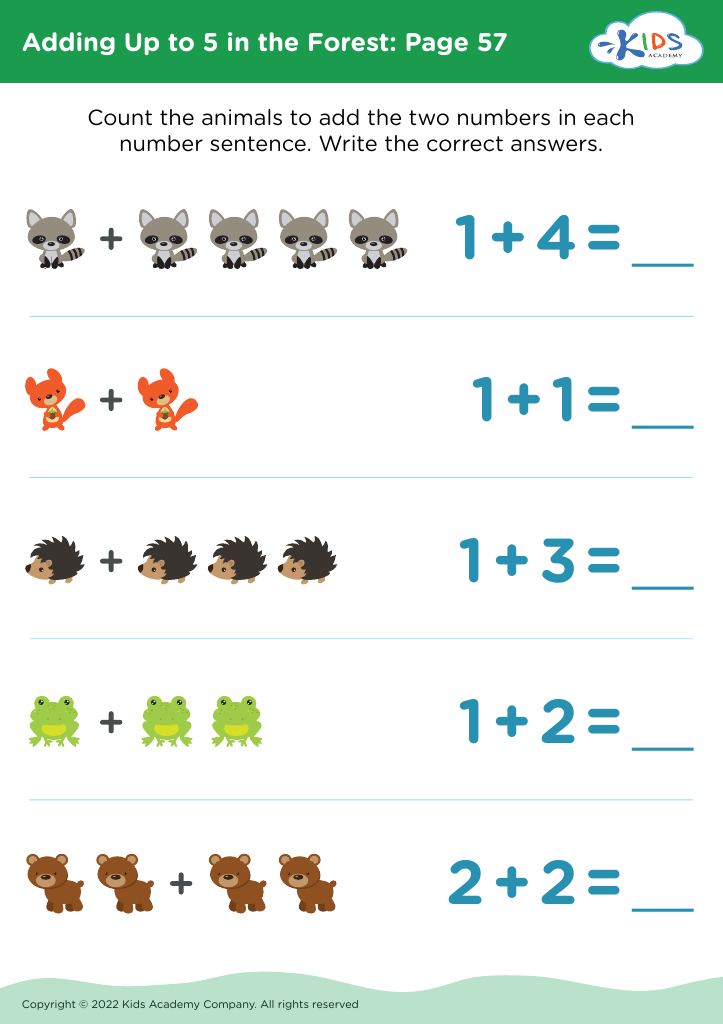
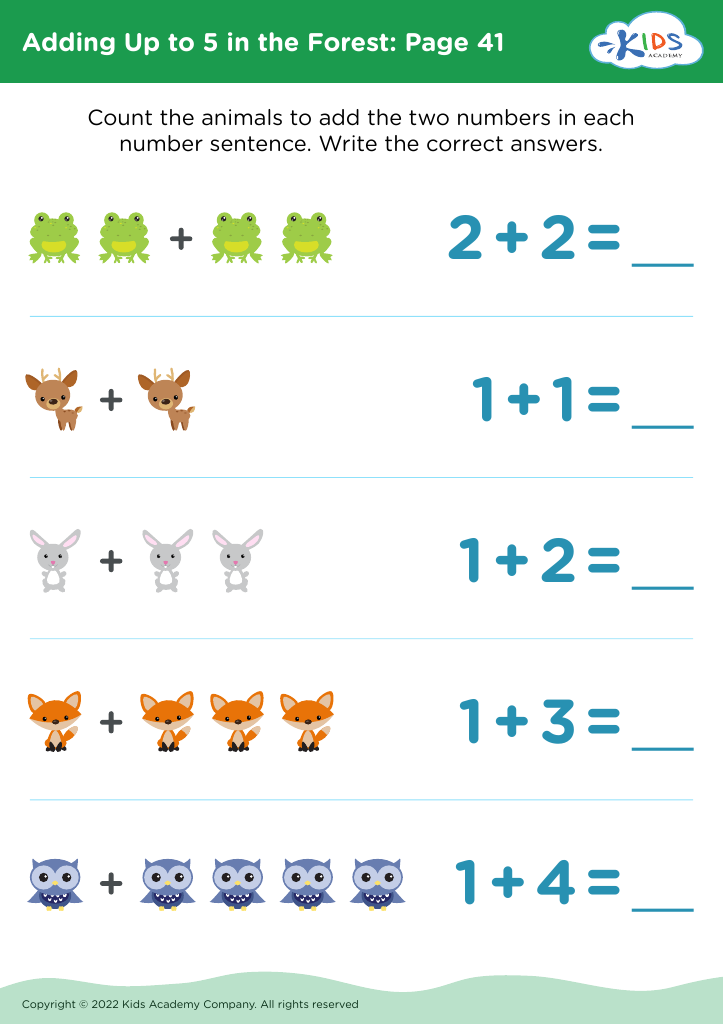




Teaching basic addition skills to young children, especially ages 4-5, is crucial for several reasons. First, early mathematical skills lay the foundation for future learning. Introducing addition in a fun and engaging context, like "Adding in the Forest," allows children to make connections between numbers and the world around them. Using a thematic approach sparks curiosity and makes abstract concepts tangible.
Moreover, developing these skills enhances cognitive abilities, including problem-solving and critical thinking. Engaging with addition through interactive activities encourages children to experiment and explore, fostering a love for math from an early age. Instilling these foundational skills helps boost a child's confidence, making them more likely to persevere when faced with challenges in math later on.
Additionally, participating in group activities, such as counting forest animals or adding leaves, encourages social interaction and communication among children. It also allows parents and teachers to observe each child's learning style and progress, facilitating tailored support based on individual needs.
By focusing on basic addition through enjoyable experiences, parents and teachers can nurture a positive attitude about math, ensuring children view it as an exciting and useful part of their everyday learning journey.