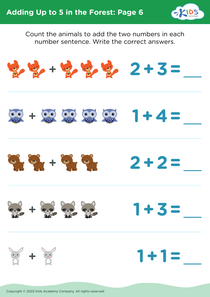
Basic Math Skills Adding in the Sea Worksheets for Ages 4-5
4 filtered results
-
From - To
Explore the exciting world of "Basic Math Skills Adding in the Sea" worksheets designed for ages 4-5! Our thoughtfully crafted resources blend engaging ocean-themed visuals with essential addition practice. These worksheets help young learners develop foundational math skills through playful activities, perfect for home or classroom use. Kids will enjoy counting and adding colorful sea creatures while enhancing their number recognition and problem-solving abilities. Ideal for early childhood education, these worksheets promote concentration, boost confidence, and make learning math a fun underwater adventure. Dive into teaching today and instill a love for math through joyful, hands-on experiences!
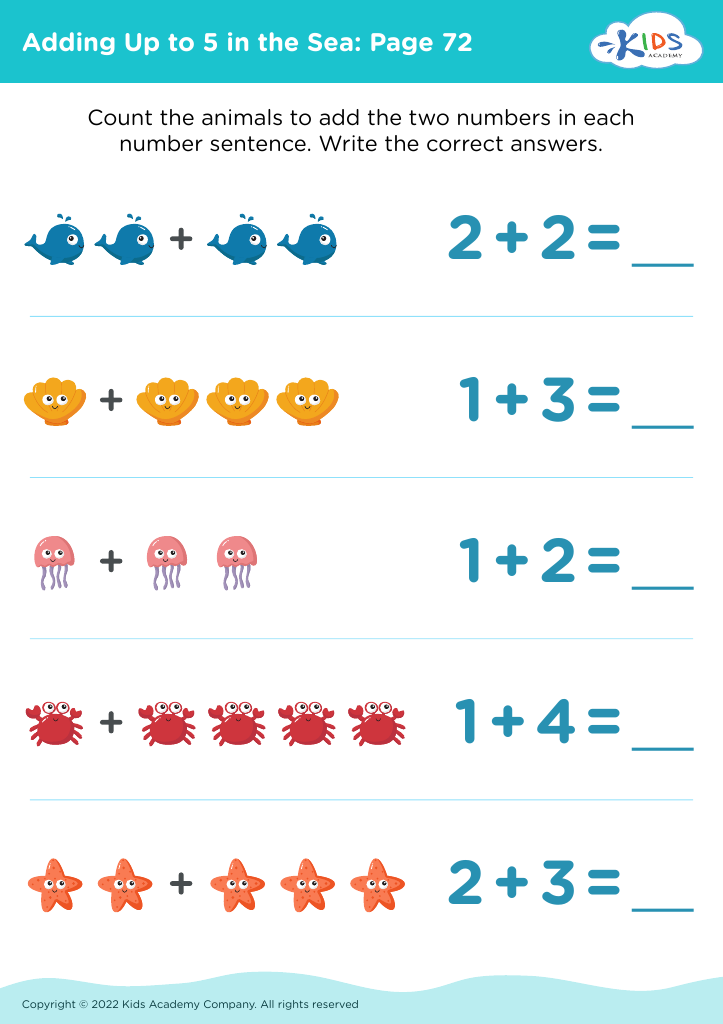
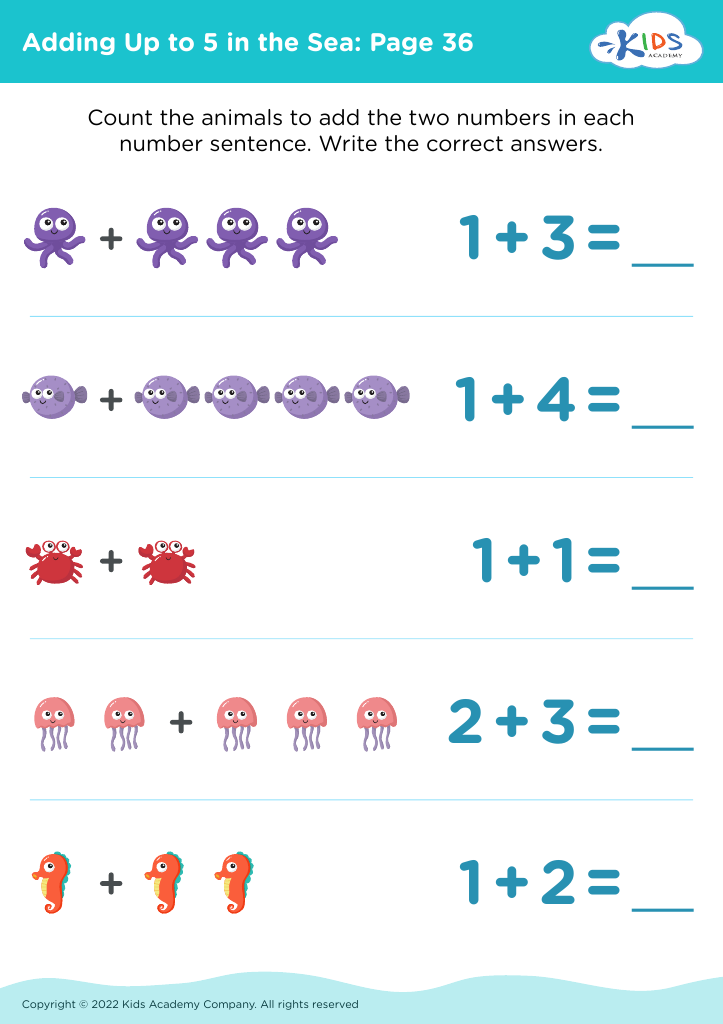
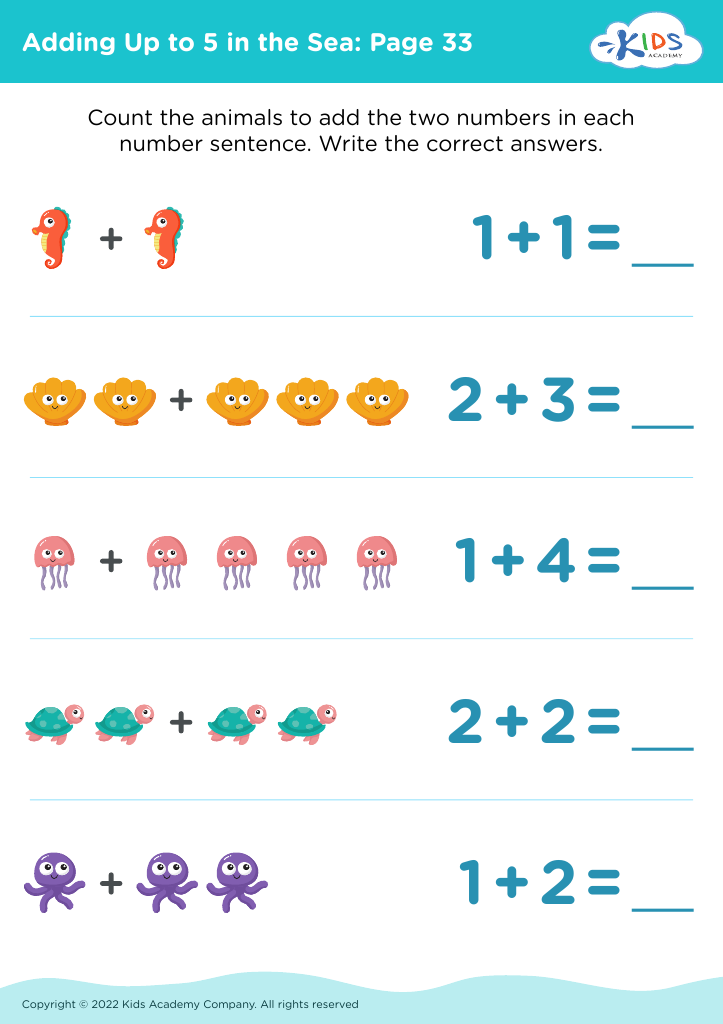
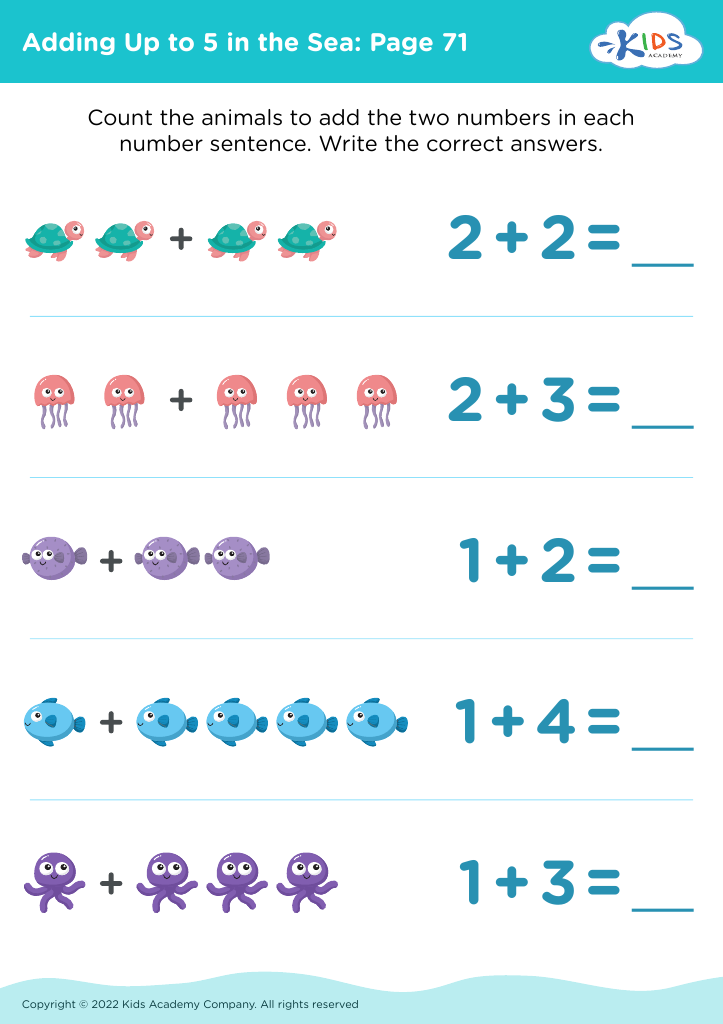



Basic math skills, such as adding, are crucial for children aged 4-5 as they lay the foundation for future learning. Teaching these skills can spark early interest in math, helping to develop critical thinking and problem-solving abilities. Incorporating playful themes like "Adding in the Sea" can make learning engaging and memorable. Using imaginative contexts—such as counting sea creatures or adding waves—can transform abstract concepts into exciting, relatable experiences.
Parents and teachers have a vital role in creating a positive learning environment that fosters enthusiasm for math. Early mastery of addition boosts confidence, helping children overcome anxieties about math later in their education. Moreover, basic math skills enhance cognitive development; for instance, children learn to categorize, compare, and identify patterns, essential skills for broader academic success.
Additionally, integrating basic math with lifelong lessons, such as sharing and cooperation found in group activities, gives these skills relevance beyond academics. Ultimately, helping young learners develop their math abilities sets them on a path toward academic achievement, equipping them with the tools they need for their future educational endeavors and everyday problem-solving. Investing in these foundational skills is an essential step in nurturing a generation of confident learners.