Basic Math understanding Adding in the Sea Worksheets for Ages 4-5
3 filtered results
-
From - To
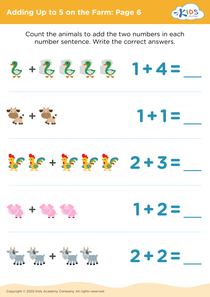
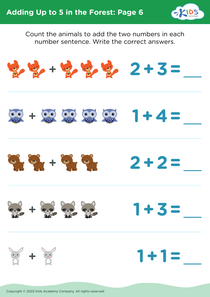
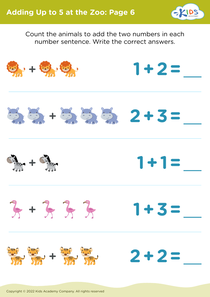
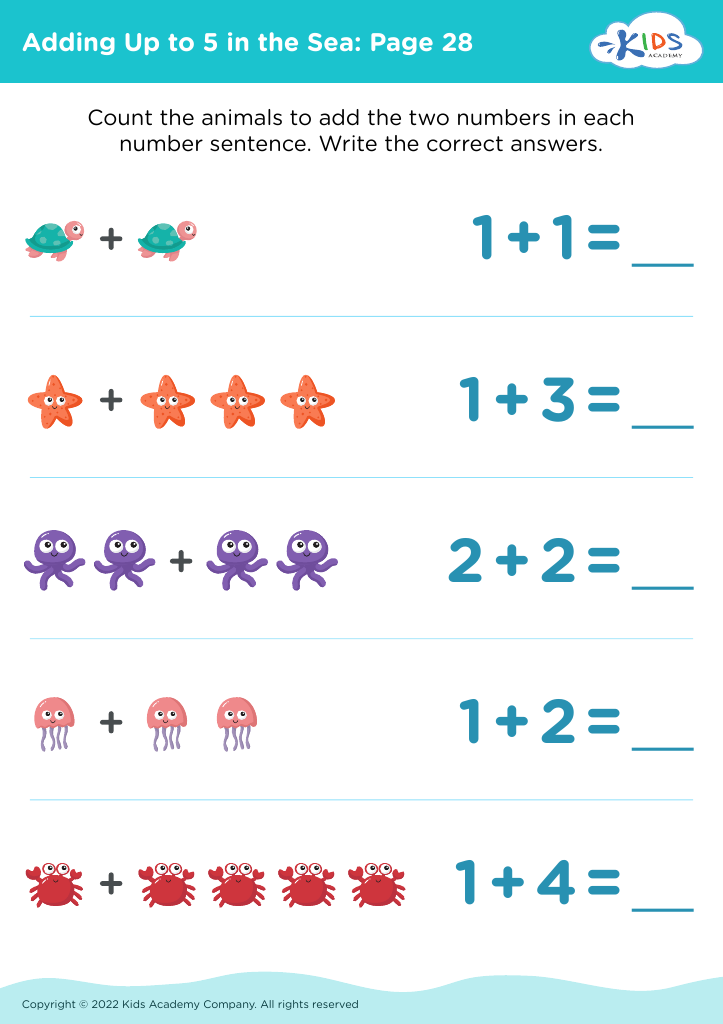
Welcome to our "Adding in the Sea Worksheets" designed specifically for children aged 4-5! These engaging, themed worksheets make learning basic math concepts fun and enjoyable. Through interactive sea-inspired activities, young learners will explore addition by counting various sea creatures, enhancing their understanding of numbers in a playful context. Each worksheet encourages early math skills development, promoting critical thinking and problem-solving abilities. Perfect for classroom use or at-home learning, these worksheets create a vibrant and captivating learning environment. Dive into the world of basic math with our creatively crafted resources and make counting an exciting adventure for your little ones!
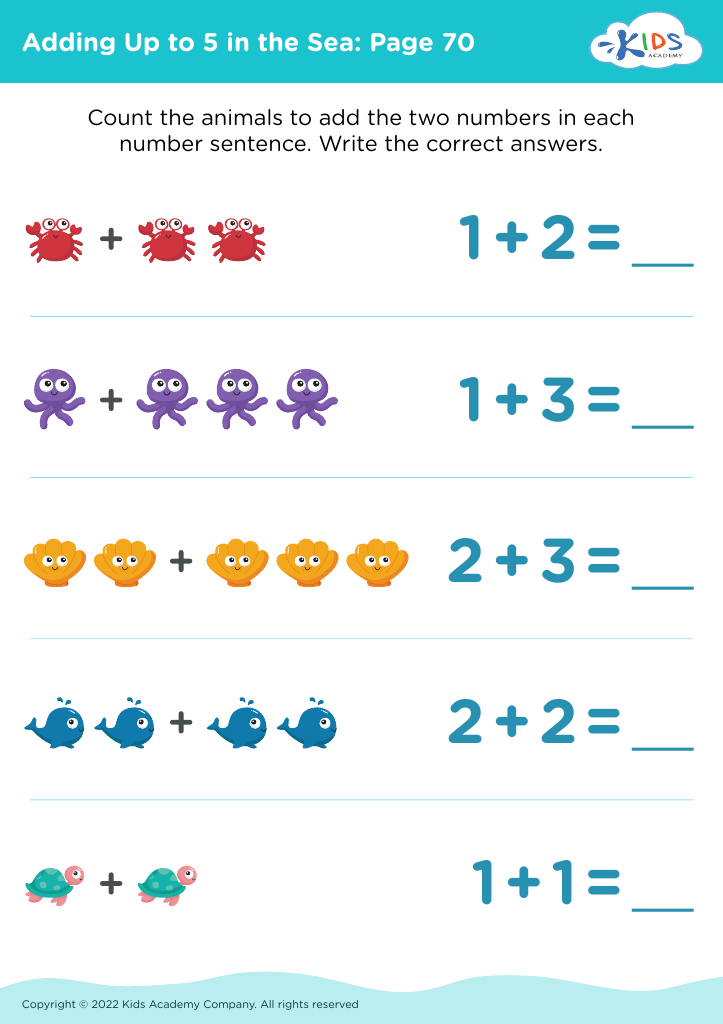
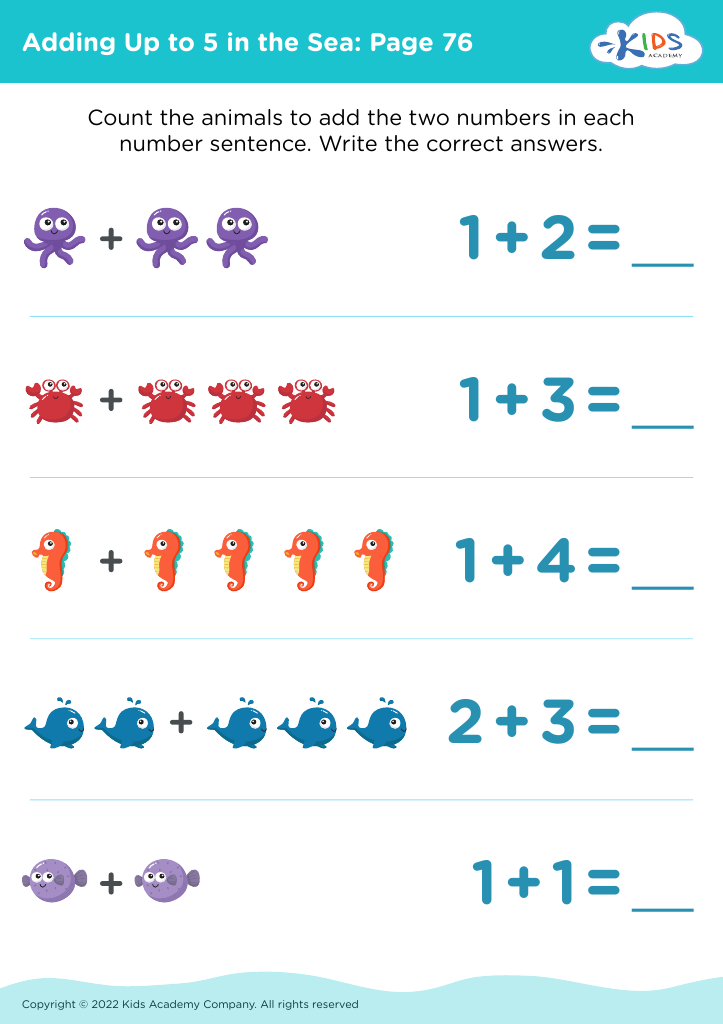



Building a solid understanding of basic math concepts, such as addition, is crucial for children aged 4-5. At this developmental stage, children are naturally curious and eager to explore the world around them, making it an ideal time to introduce foundational math skills that will support their ongoing education.
Basic math, including addition, helps in several areas: cognitive development, problem-solving, and critical thinking. By introducing addition through engaging themes such as "Adding in the Sea," where children learn to count and combine marine elements like fish or shells, we can foster their interest while teaching them essential skills.
Moreover, early math understanding contributes to academic success later in life. Proficiency in math has been linked to better performance in subjects such as science and technology. Engaging children in playful, interactive scenarios enhances their comprehension and retention of math concepts.
By drawing connections between math and everyday experiences, parents and teachers help kids see the relevance of math in their lives. The enjoyment of learning through play fosters a positive attitude towards mathematics, laying the groundwork for lifelong learning and confidence in their abilities. In essence, cultivating a love for math during these formative years can shape a child’s educational journey profoundly.