Hand-eye Coordination Adding in the Sea Worksheets for Ages 4-5
4 filtered results
-
From - To
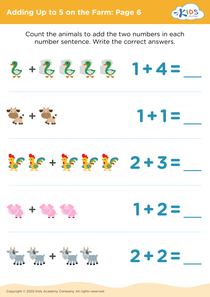
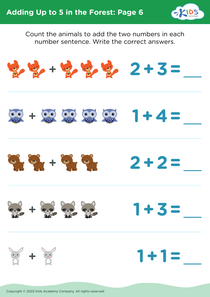
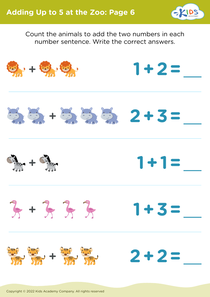
Enhance your child's development with our "Hand-eye Coordination Adding in the Sea Worksheets" designed for ages 4-5. These engaging activities combine ocean-themed fun with essential math skills. By connecting eye movements with hand actions, our worksheets help young learners improve their addition skills while boosting their hand-eye coordination. Each colorful page invites kids to embark on an underwater adventure, where counting sea creatures turns into an exciting learning experience. Perfect for preschoolers, these printable exercises ensure a playful yet educational approach, promoting both cognitive and fine motor skills. Download now to make math magical under the sea!
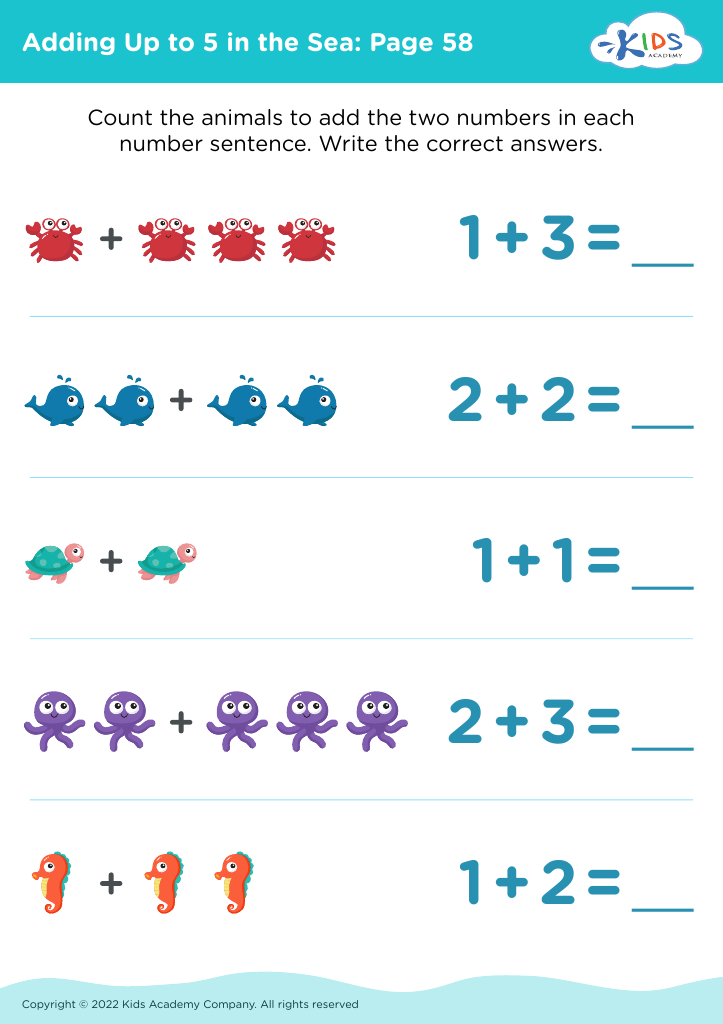
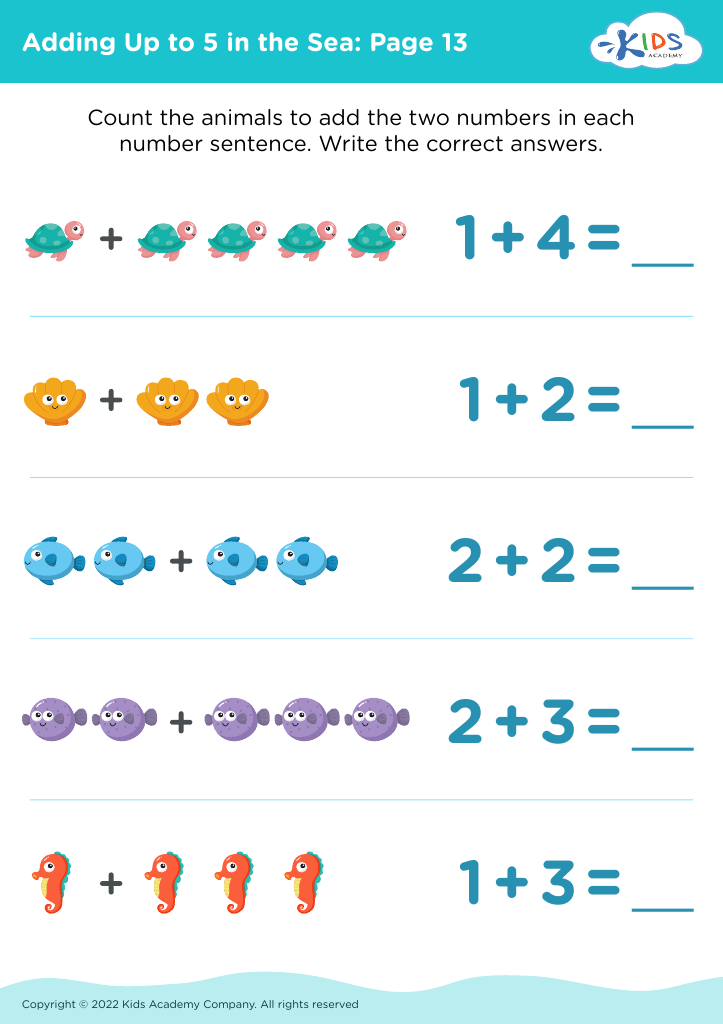
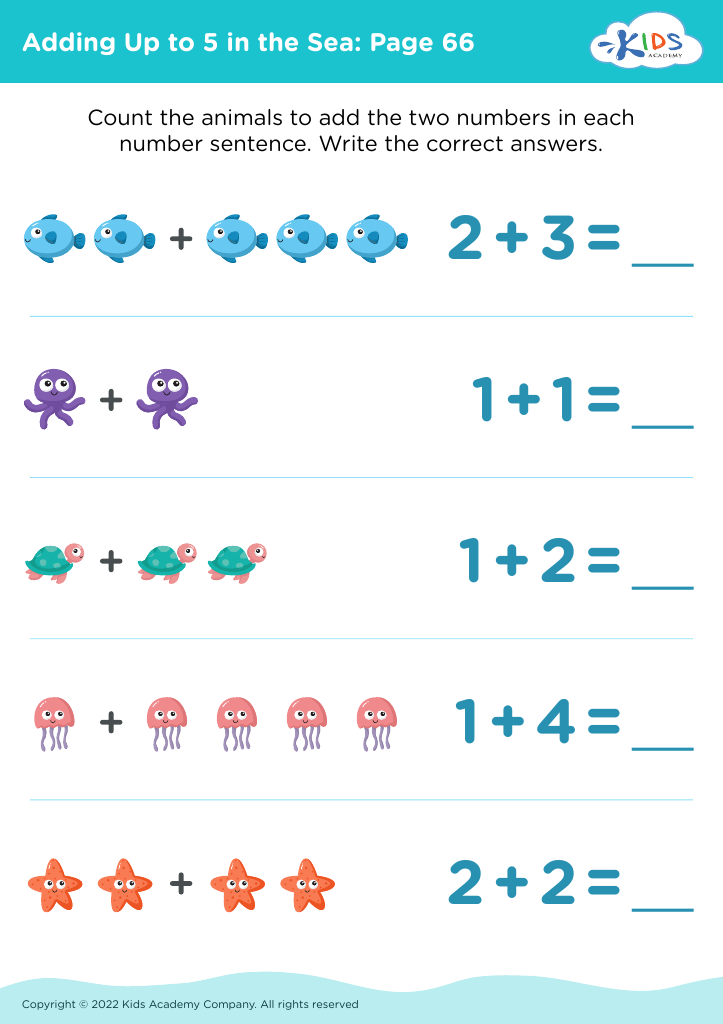
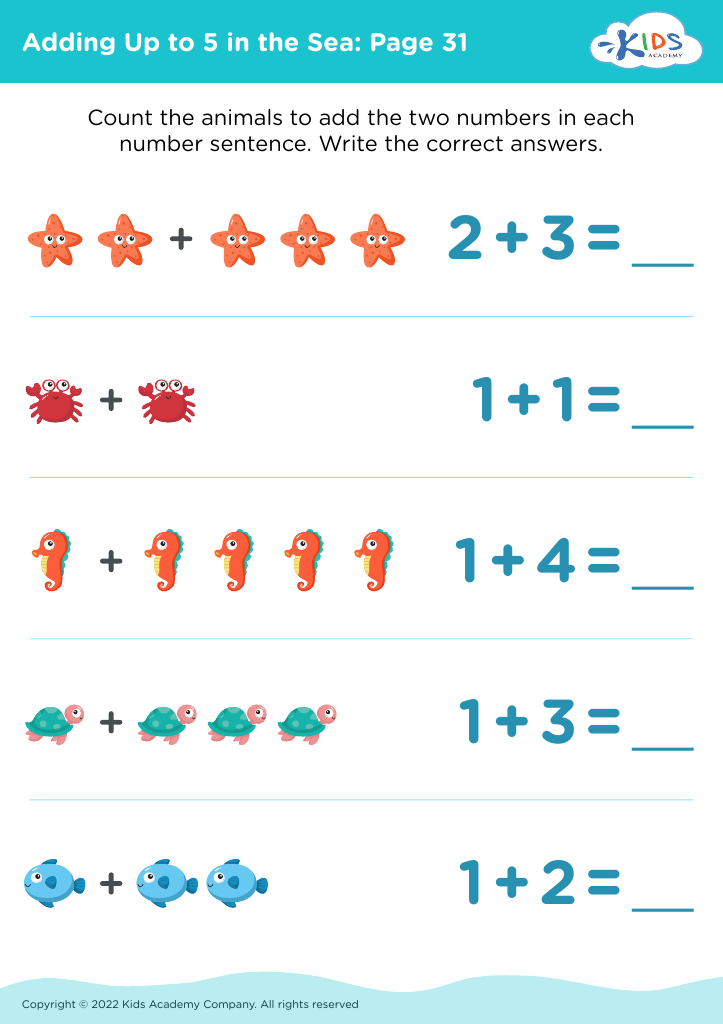



Hand-eye coordination is an essential skill that significantly contributes to a child's overall development, particularly in the early years, ages 4-5. Activities such as "Hand-eye Coordination Adding in the Sea" are not only engaging and fun but also educational for young children. Understanding why this is important can help parents and teachers be more intentional in encouraging such activities.
Firstly, hand-eye coordination relates to a child's ability to synchronize their visual input with their hand movements, a crucial skill for everyday tasks. Developing this coordination improves fine motor skills, which are necessary for writing, cutting, and other precision-based activities. Engaging in themed activities like "Adding in the Sea" turns skill-building into a captivating adventure, holding the child’s attention better and making learning enjoyable.
Moreover, such activities lay a foundation for academic growth. Math concepts introduced in an interactive format not only deepen understanding but also spark curiosity about numbers and problem-solving. The thematic elements, like sea creatures, contribute to a rich sensory experience that reinforces learning through visual and tactile stimuli.
Parents and teachers should invest time in these activities to enhance cognitive development, prepare children for academic challenges, and build their self-confidence. These early skills set the stage for lifelong learning and effective functioning in daily life.