Improving concentration Adding in the Sea Worksheets for Ages 4-5
4 filtered results
-
From - To
Discover our "Improving Concentration: Adding in the Sea Worksheets" designed specifically for ages 4-5! These engaging worksheets encourage young learners to practice simple addition while enhancing their focus and attention skills. With vibrant sea-themed illustrations, children are drawn into a world of fun and learning, making math enjoyable! Each activity promotes cognitive development and supports early math skills crucial for future success. Our user-friendly format equips parents and teachers with effective tools to foster concentration in young minds. Dive into interactive learning with these delightful worksheets and help your child build essential skills while exploring the wonders of the ocean!
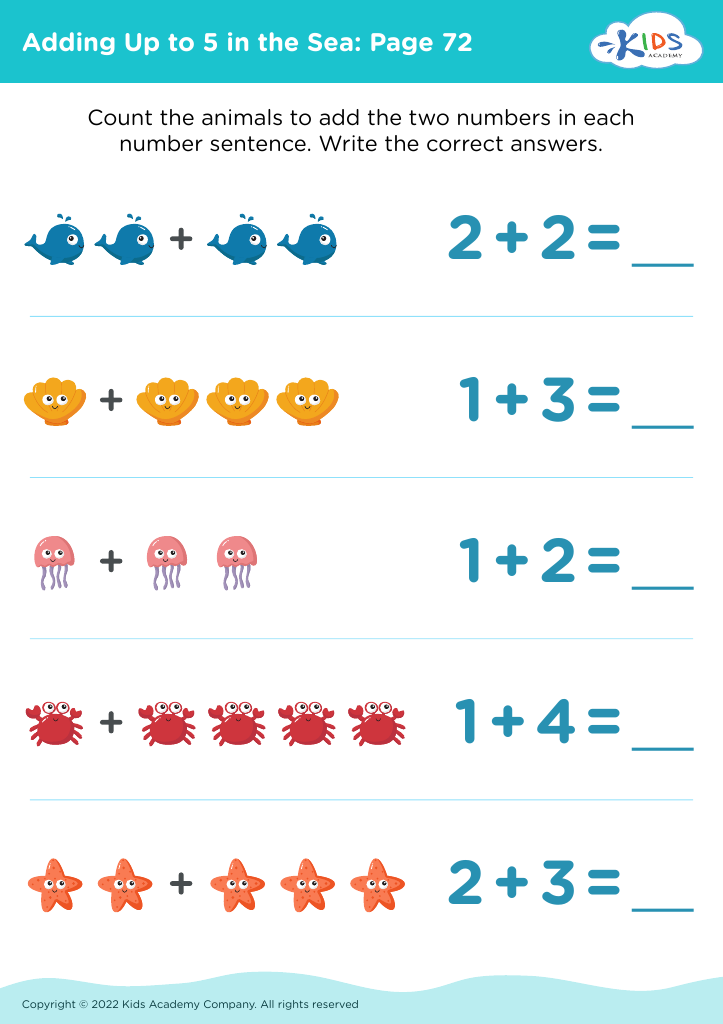
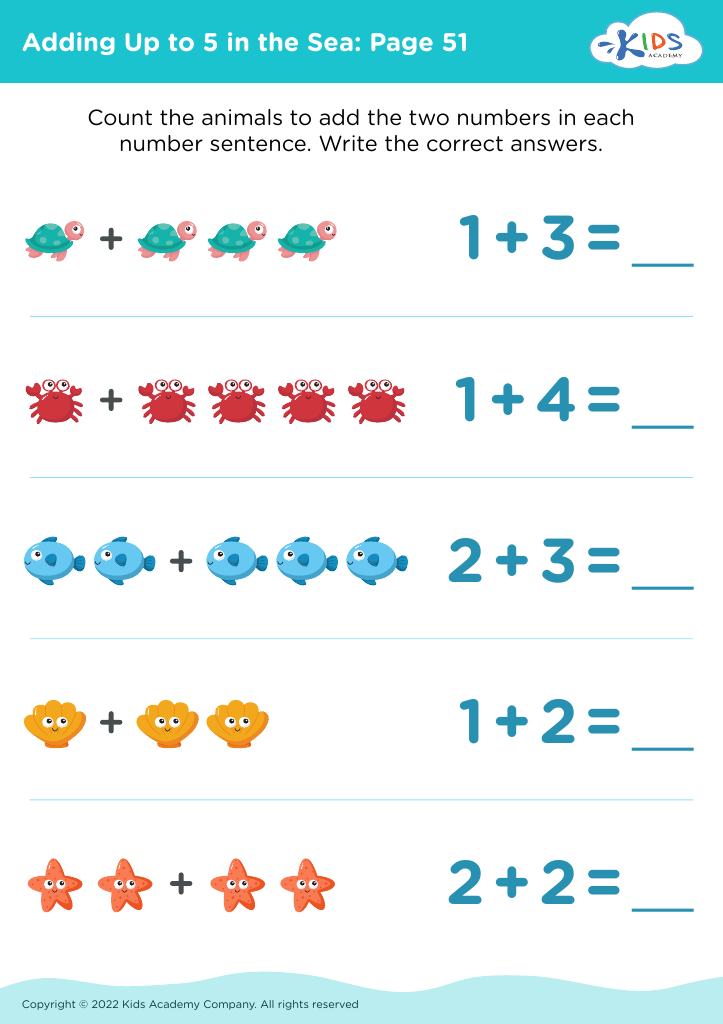
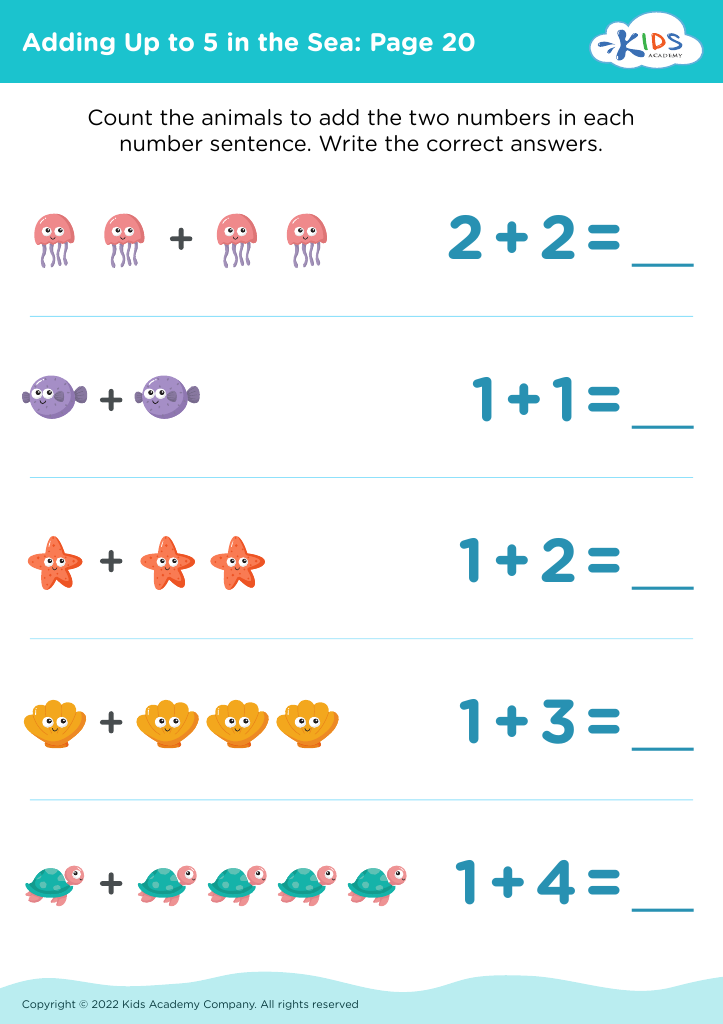
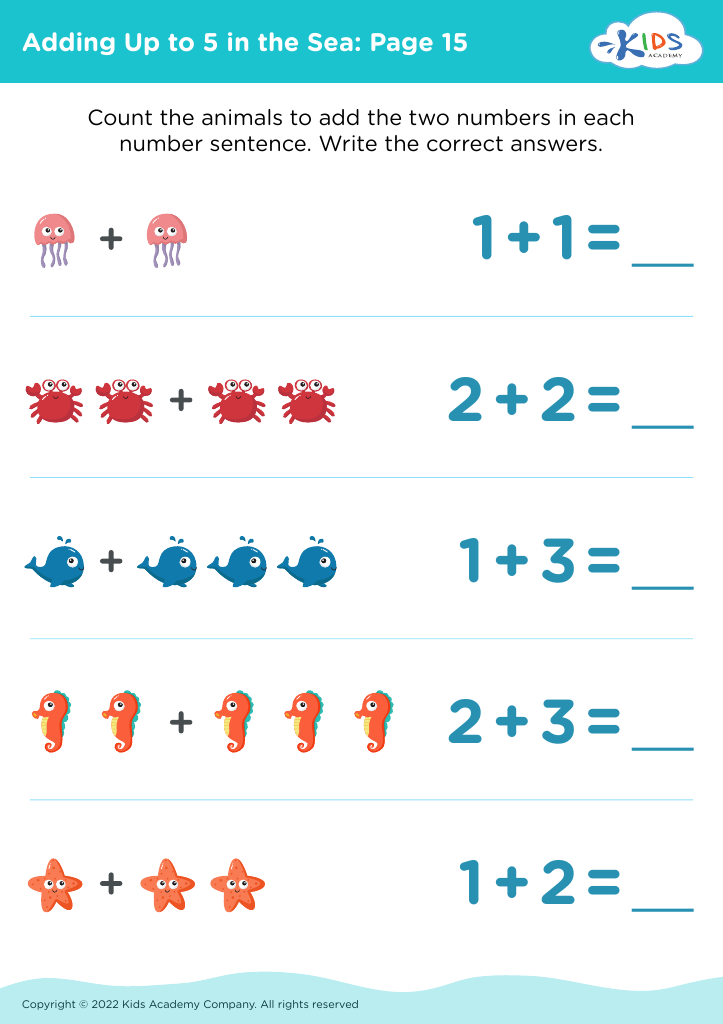



Improving concentration in young children, particularly ages 4-5, is crucial for their early development and future learning experiences. At this stage, children are naturally curious and eager to explore their environment. Enhancing their concentration skills lays a solid foundation for academic success and the ability to engage with complex ideas later on. Activities that encourage focused attention, such as the "Adding in the Sea" game, can make learning enjoyable while promoting cognitive skills.
Engaging in interactive and hands-on activities helps young learners develop critical thinking and problem-solving skills. Specifically, "Adding in the Sea" combines play with learning, drawing children's attention to basic math concepts like addition in a fun, relatable context. Through thematic play, children can connect abstract mathematical ideas to the real world.
Moreover, fostering concentration early on promotes self-regulation, allowing children to manage their attention and emotions—a critical aspect of social interactions and classroom behavior. When parents and teachers emphasize concentration, they are investing in not only the child's immediate learning but also their lifelong ability to focus, learn, and succeed. In a nurturing environment that prioritizes these skills, children build confidence, resilience, and a love for learning that lasts a lifetime.