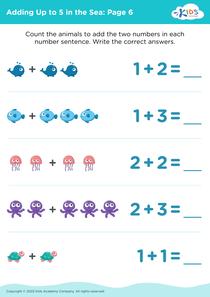
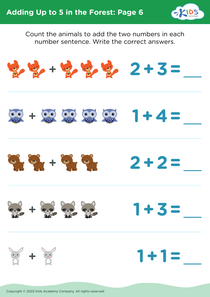
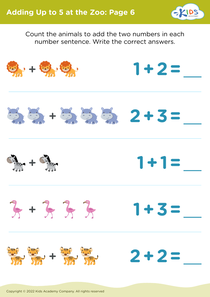
Animal recognition Adding on the Farm Worksheets for Ages 4-5 - Page 2
31 filtered results
-
From - To
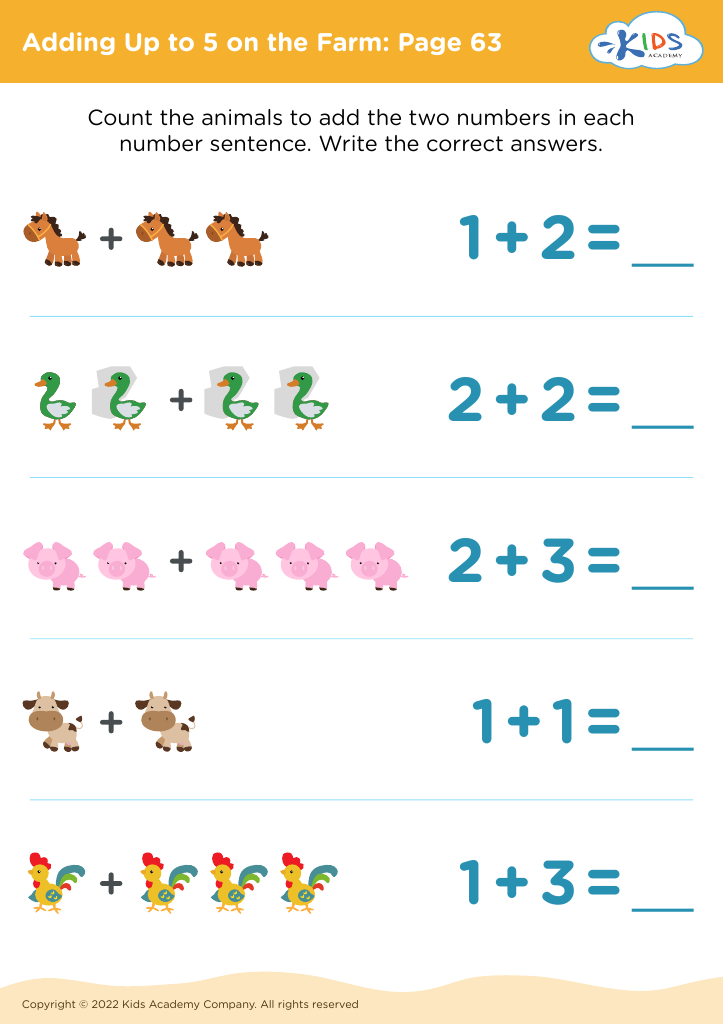
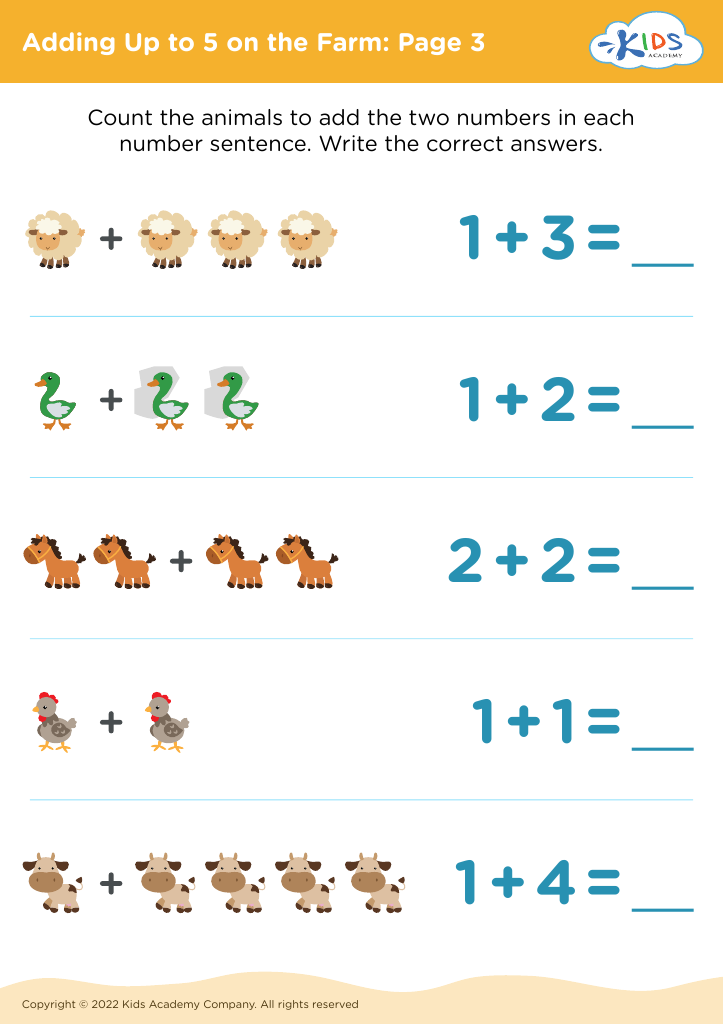
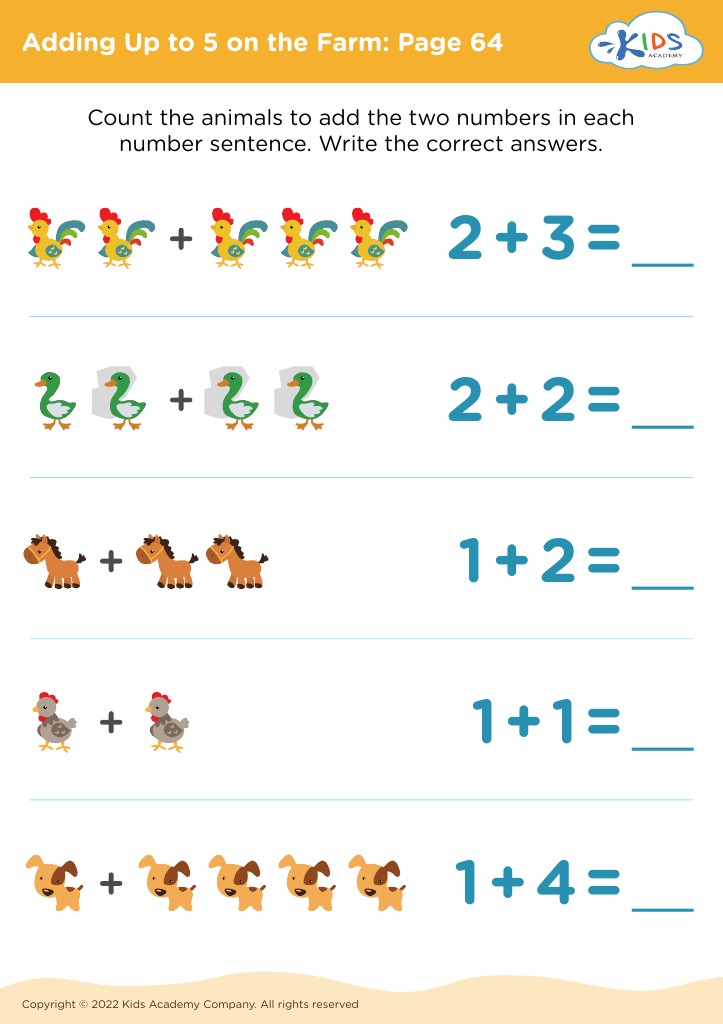
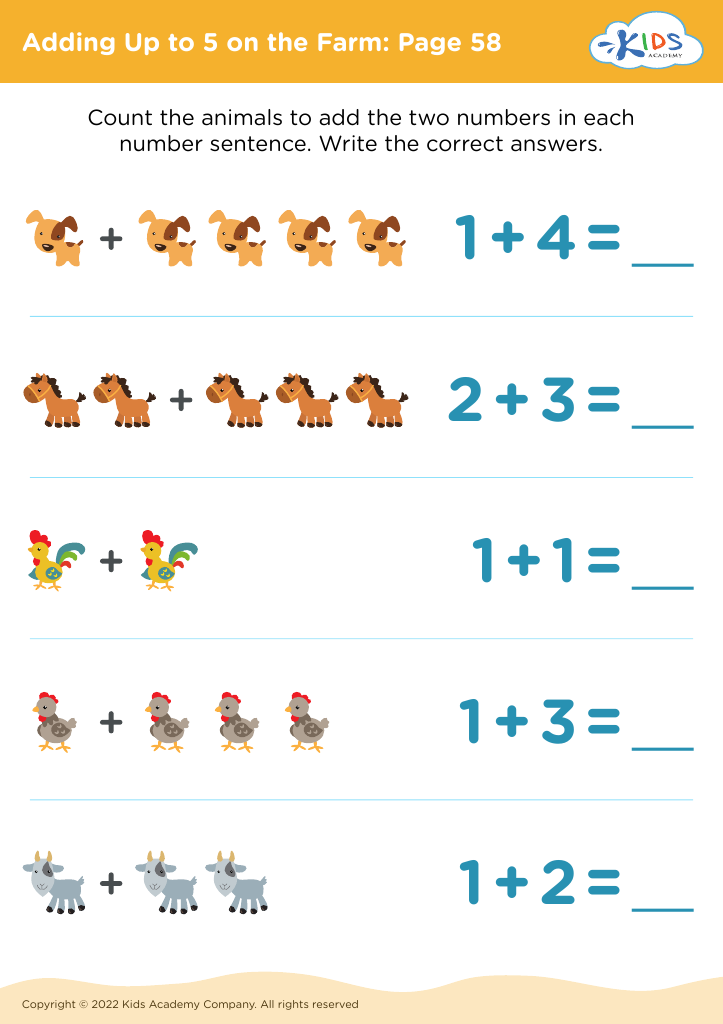
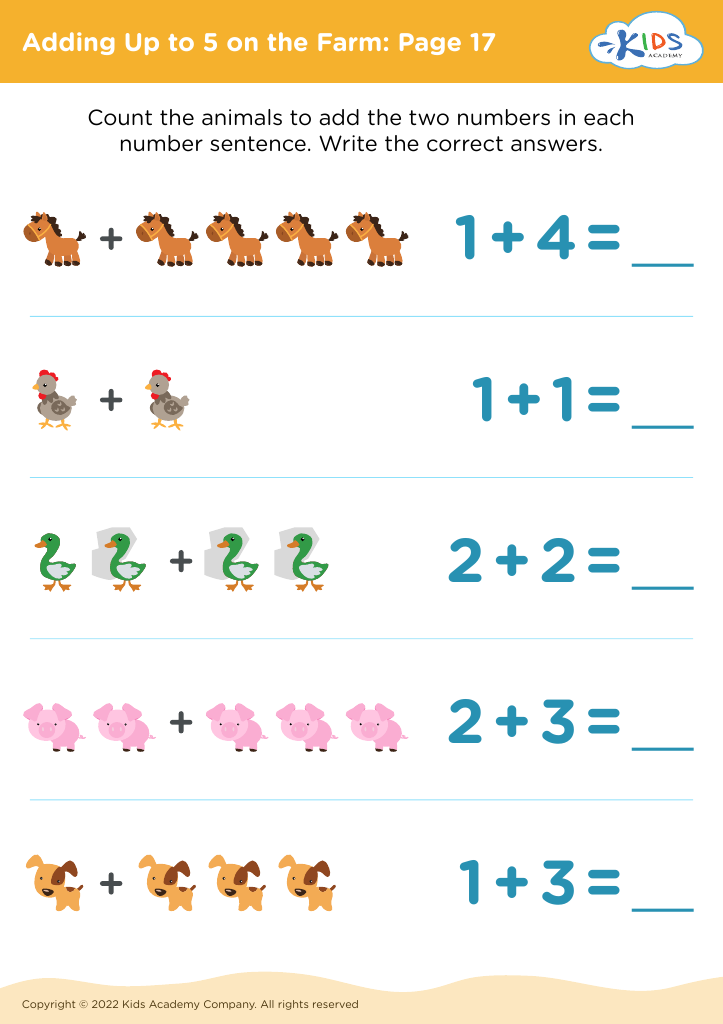
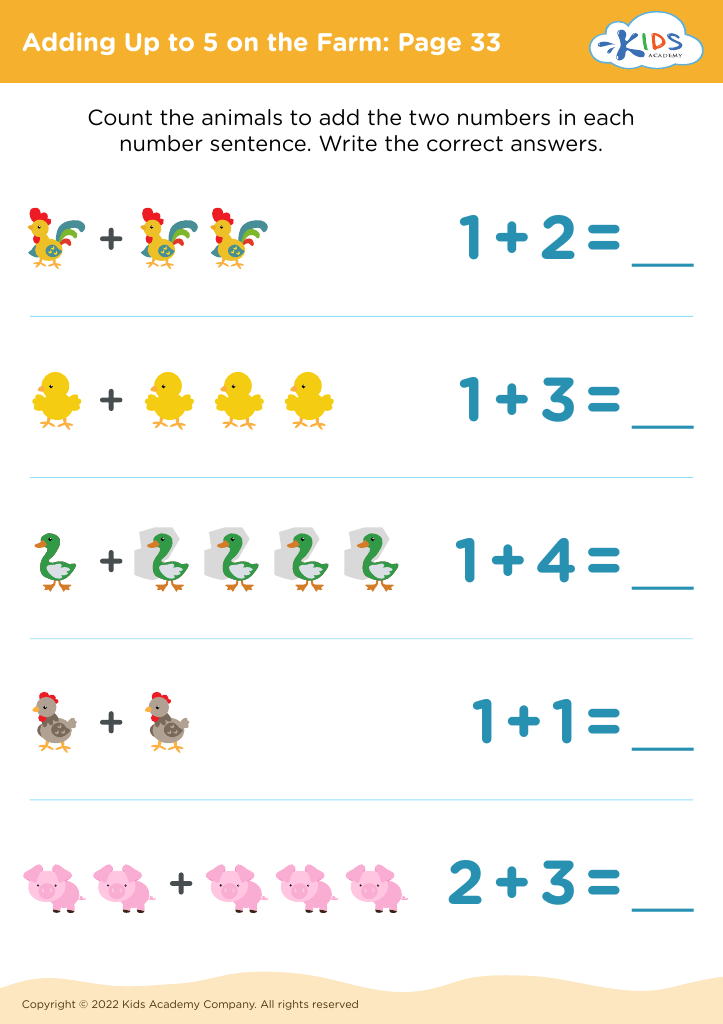
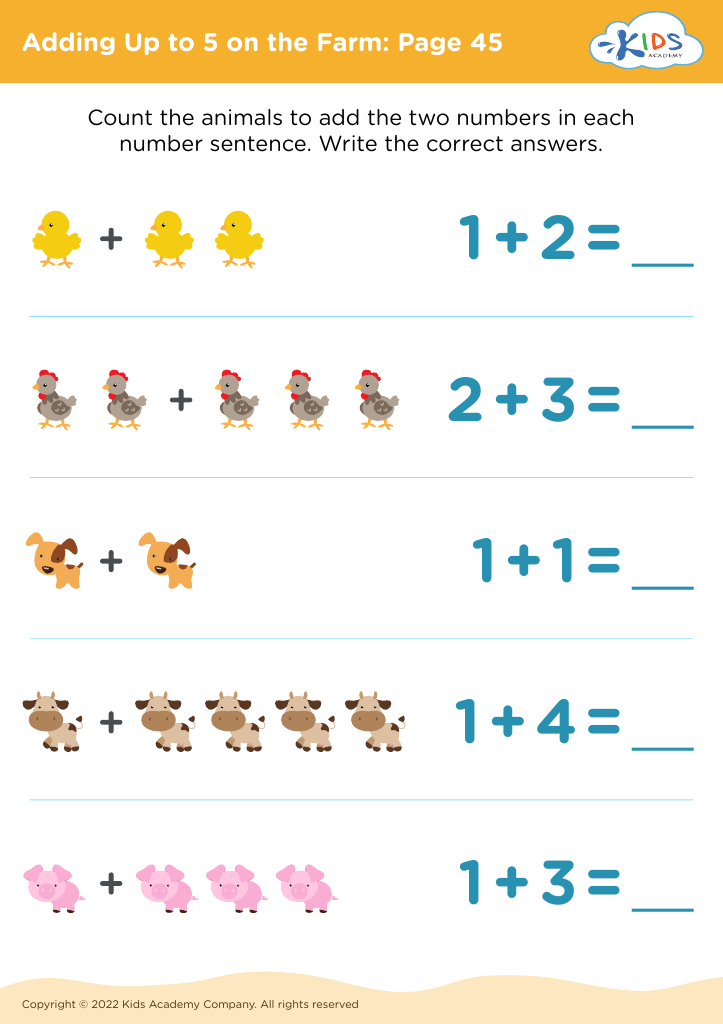



Animal recognition is an essential part of early childhood education, especially for children aged 4-5. Understanding animals on the farm not only fosters curiosity but also helps develop cognitive skills through engagement with their environment. Parents and teachers should care about this topic for several reasons.
Firstly, teaching children about farm animals enhances their vocabulary. As they learn to identify animals like cows, sheep, and chickens, they also acquire related words like "milk," "wool," and "egg." This enriches language development and communication skills.
Secondly, animal recognition promotes empathy and respect for life. By learning about how farm animals contribute to our lives, children begin to appreciate the importance of caring for these creatures. This fosters a sense of responsibility and compassion, essential traits for developing socially aware individuals.
Additionally, farm animals present opportunities for hands-on learning through activities such as crafts, songs, and field trips. These experiences can create stronger connections to food sources and the agricultural industry, laying the foundation for future discussions about healthy living and sustainability.
Ultimately, integrating animal recognition into early education encourages holistic growth and helps shape well-rounded, informed individuals who are respectful of the world around them.