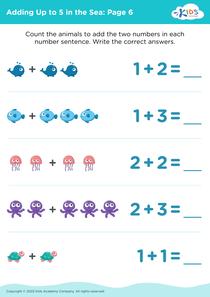
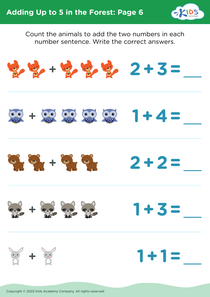
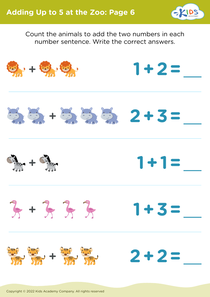
Problem Solving Adding on the Farm Worksheets for Ages 4-5
3 filtered results
-
From - To
Discover engaging Problem Solving Adding on the Farm worksheets designed for children ages 4-5. Our fun and colorful activities introduce young learners to essential math concepts through the playful backdrop of farm life. These worksheets encourage kids to practice addition in a hands-on, interactive way while enhancing their problem-solving skills. Each activity features friendly farm animals and relatable scenarios, making math feel approachable and exciting. Perfect for preschool and kindergarten settings, these resources develop critical thinking and numeracy in early learners. Download today to boost your child’s confidence in math and inspire a love for learning through the joys of the farm!
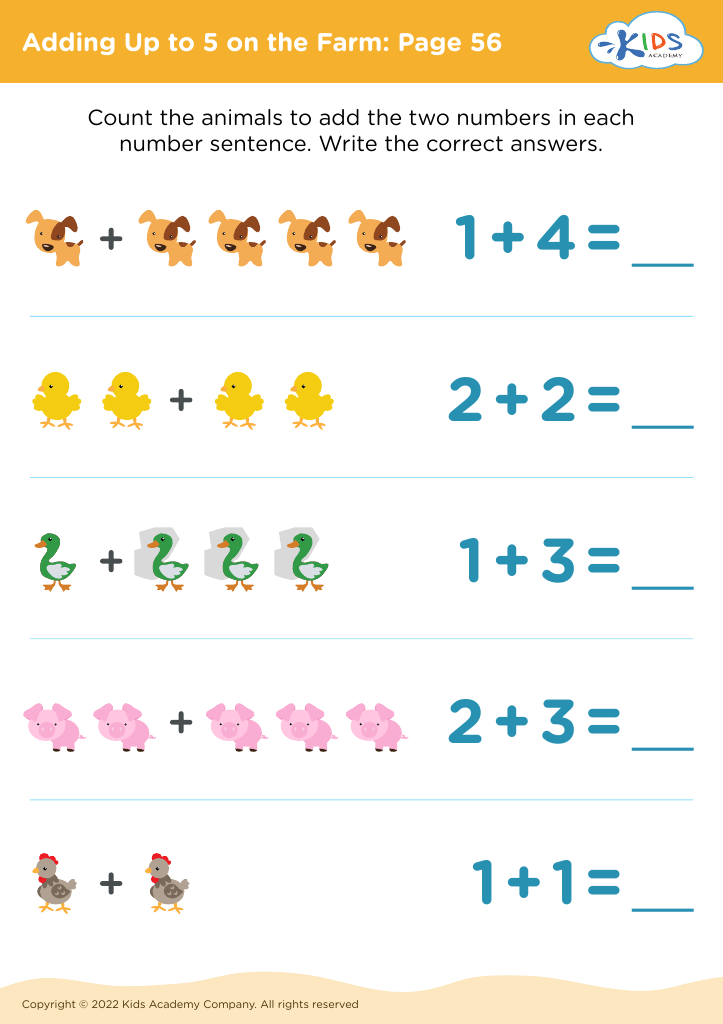
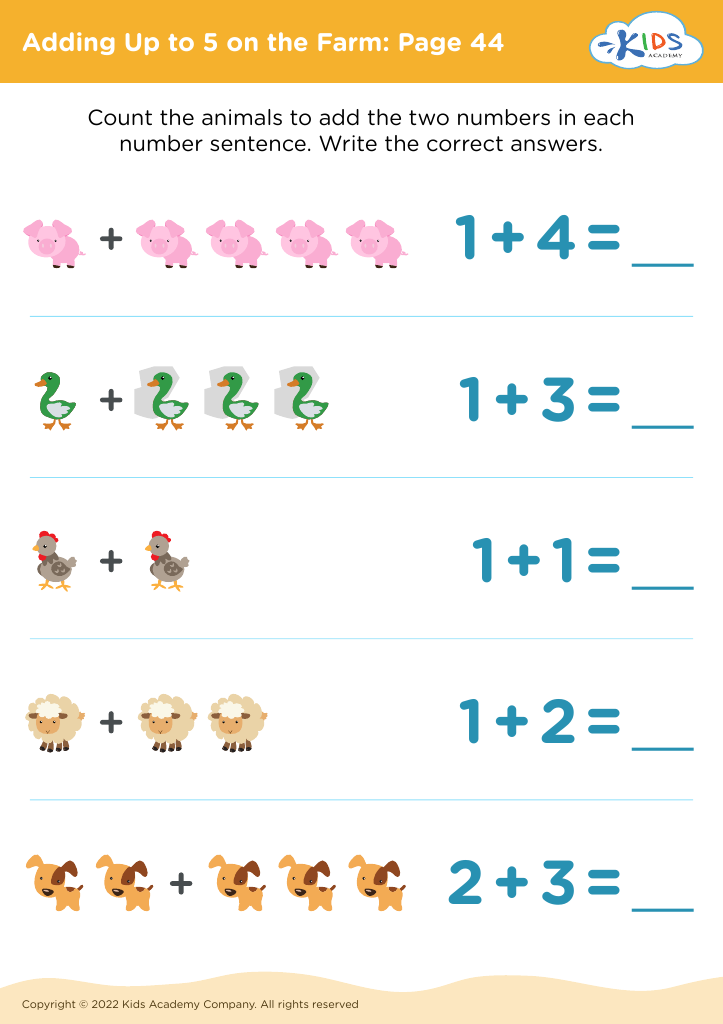
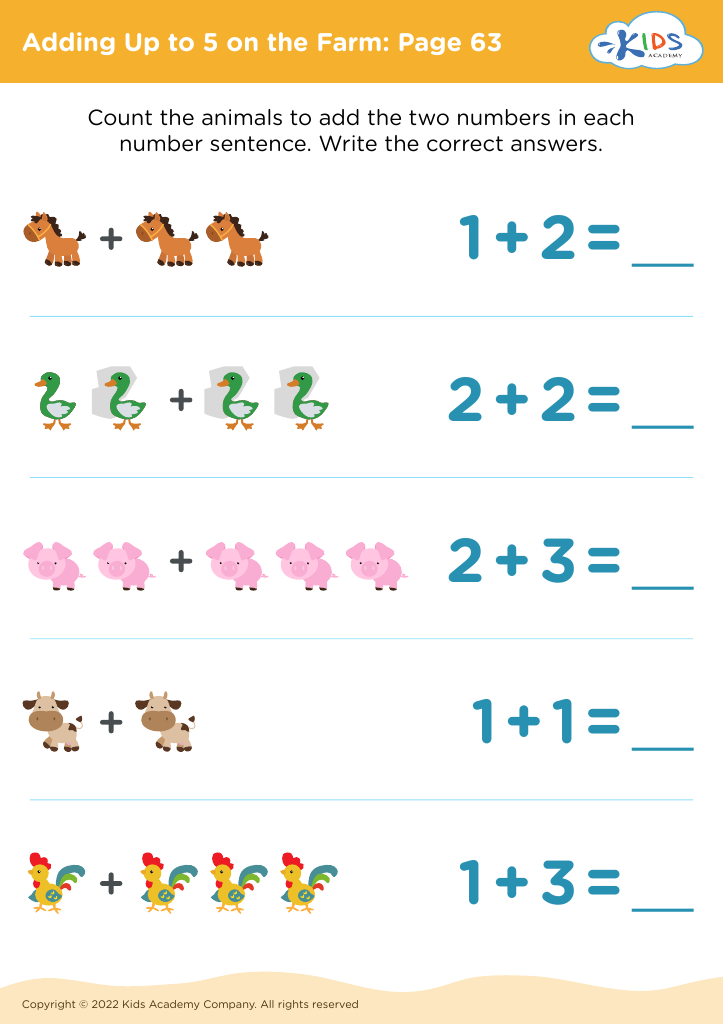



Parents and teachers should care about “Problem Solving: Adding on the Farm” for children ages 4-5 because it lays the foundation for critical thinking and mathematical reasoning. Early math experiences, such as adding while engaging in farm-themed activities, make learning active and fun, promoting enthusiasm for math. By integrating playful contexts that children can relate to, they are more likely to engage deeply with the concepts being taught.
Moreover, farm-related problem-solving introduces children to real-world situations where math is applicable, helping them understand the practical use of addition beyond the classroom. This hands-on approach encourages teamwork, communication, and perseverance as they work together to solve problems related to familiar farm scenarios, such as counting animals or organizing crops.
Additionally, fostering these early problem-solving skills in a safe environment builds children's confidence and resilience. Experiencing success in these activities can motivate them to tackle more complex problems in the future. Thus, emphasizing problem solving through engaging and relatable themes like a farm equips young learners with essential foundational skills that will benefit them academically and personally in their lives ahead.