Understanding Quantities Adding on the Farm Worksheets for Ages 4-5
9 filtered results
-
From - To
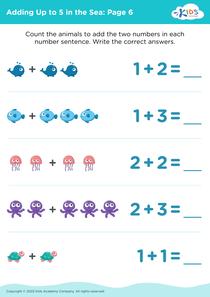
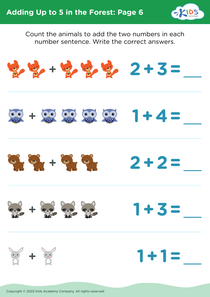
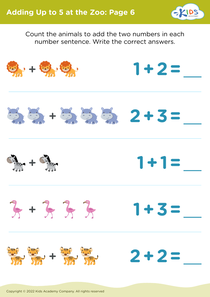
Discover our "Understanding Quantities: Adding on the Farm" worksheets designed for young learners aged 4-5. These engaging activities introduce children to basic addition concepts through fun, farm-themed illustrations and scenarios. Kids will count and add images of farm animals, crops, and tools, helping them grasp essential math skills in a playful context. Each worksheet is crafted to enhance fine motor skills and cognitive development while fostering a love for learning through interactive participation. Perfect for home or classroom use, these worksheets provide a hands-on approach to understanding quantities and promoting early math skills. Let the fun of math begin on the farm!
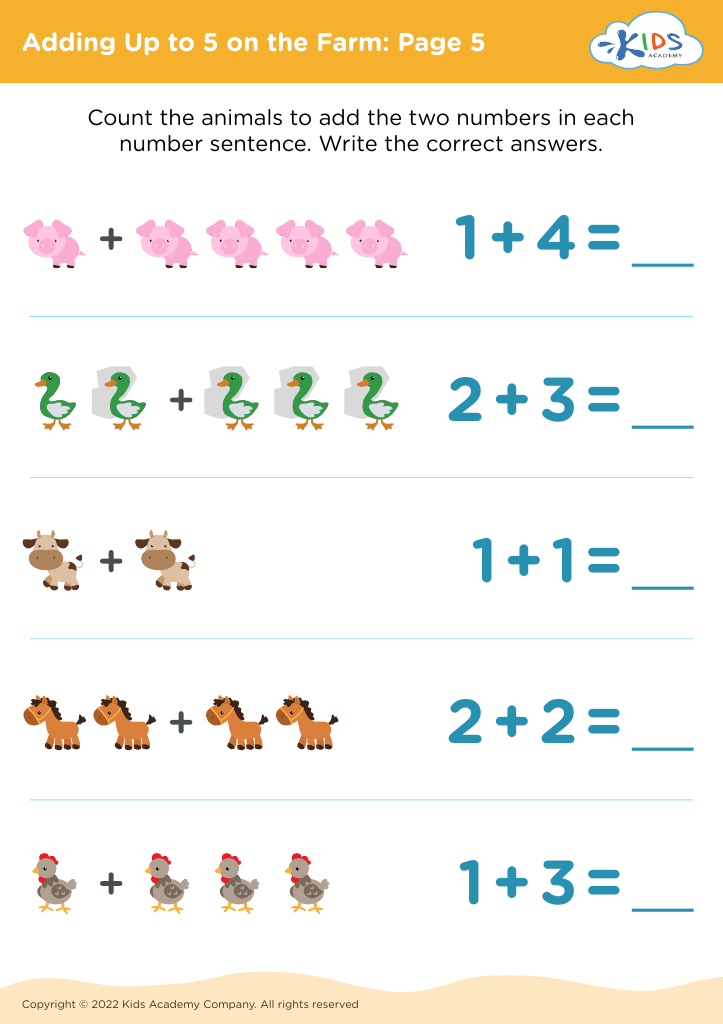
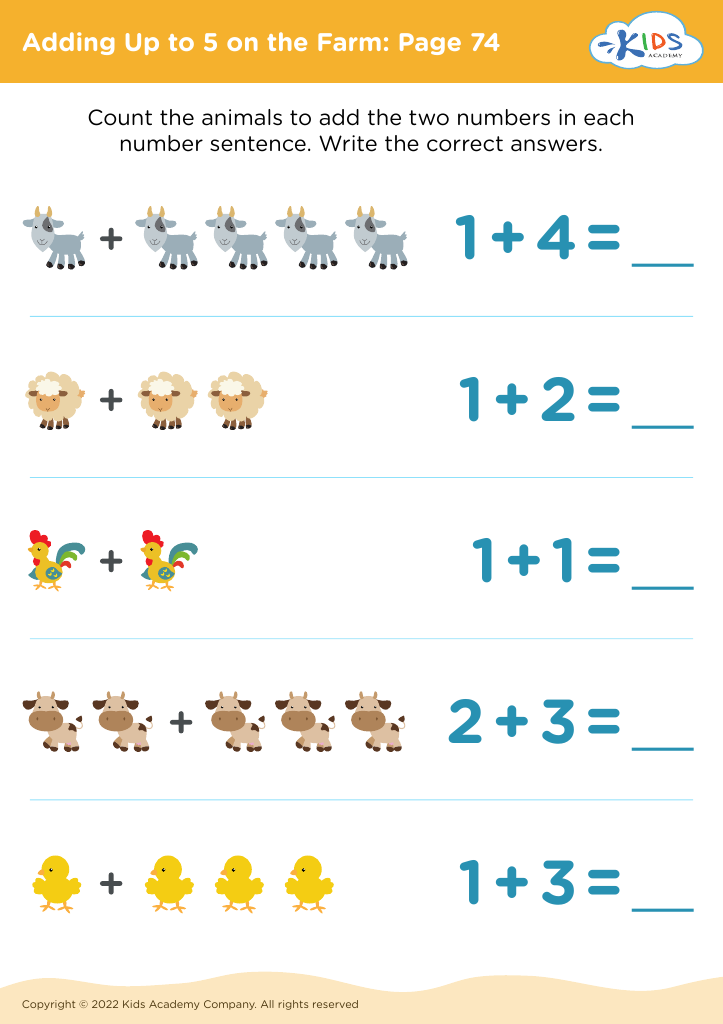
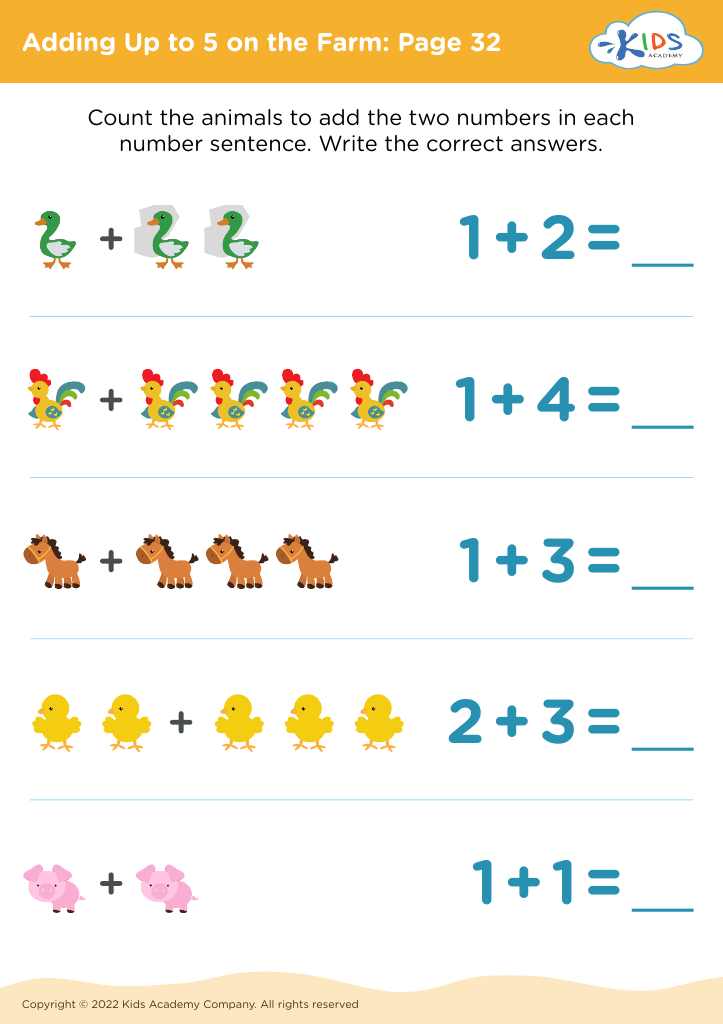
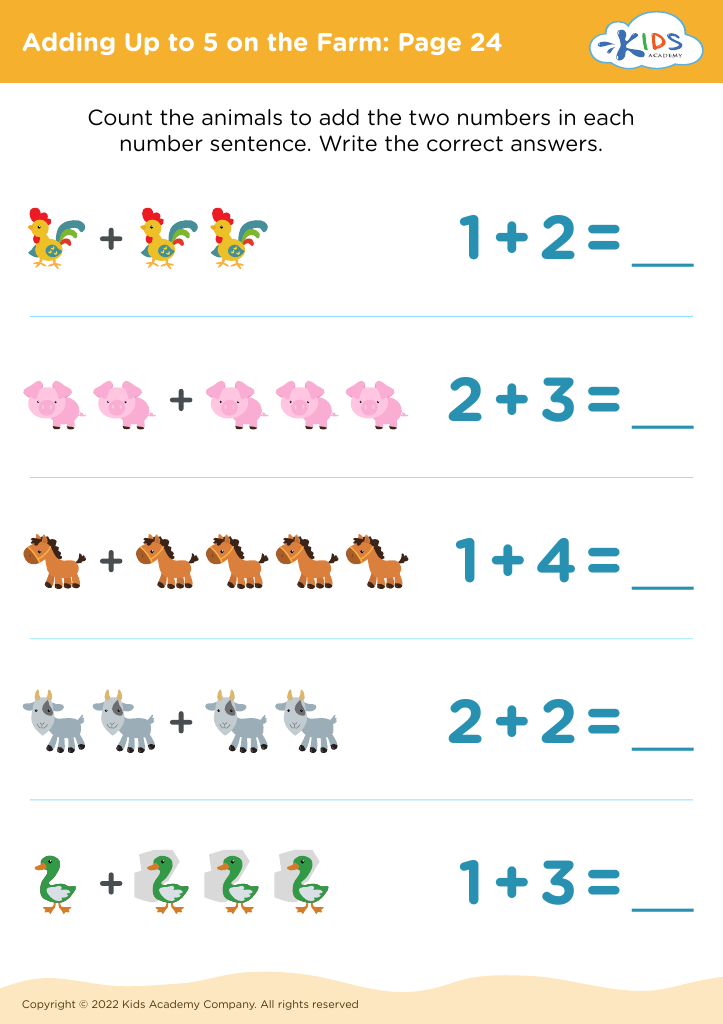
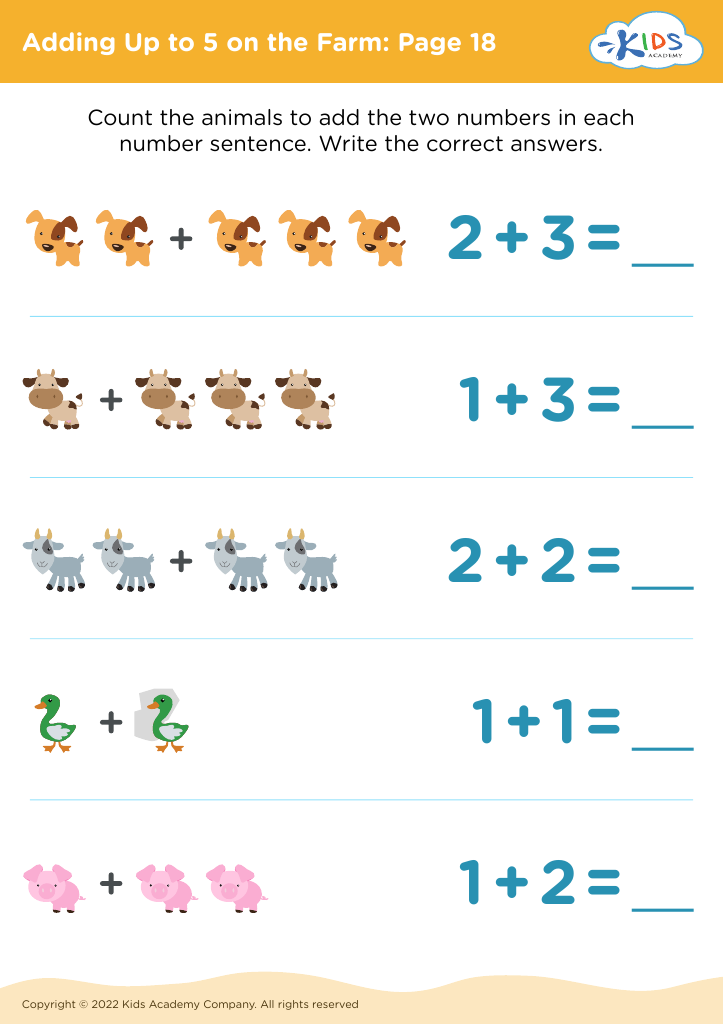
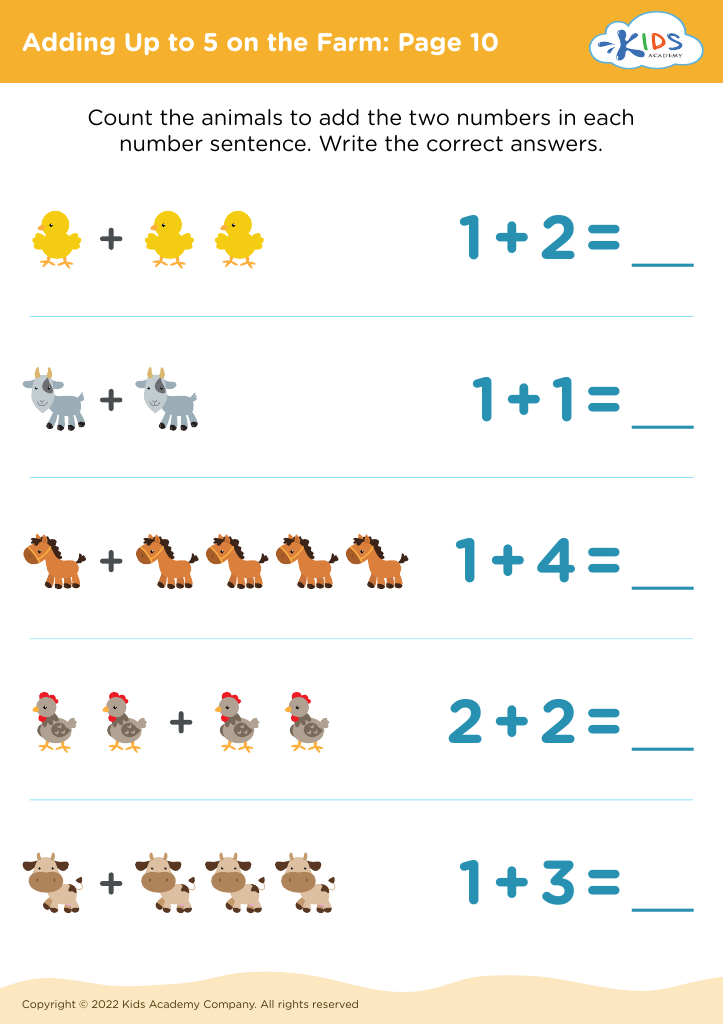
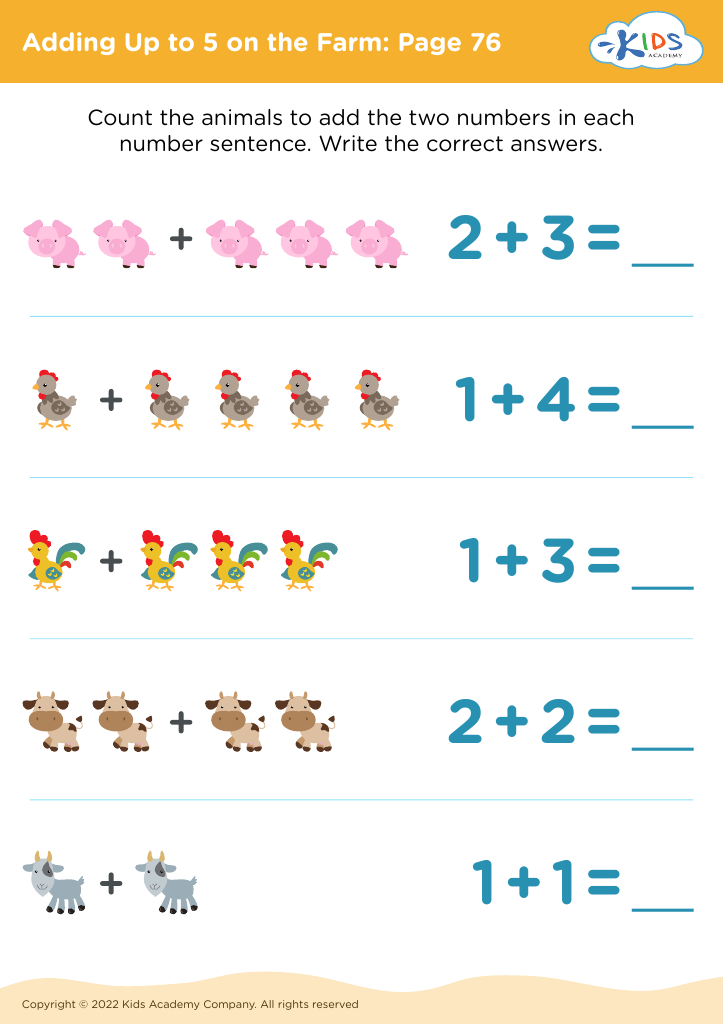
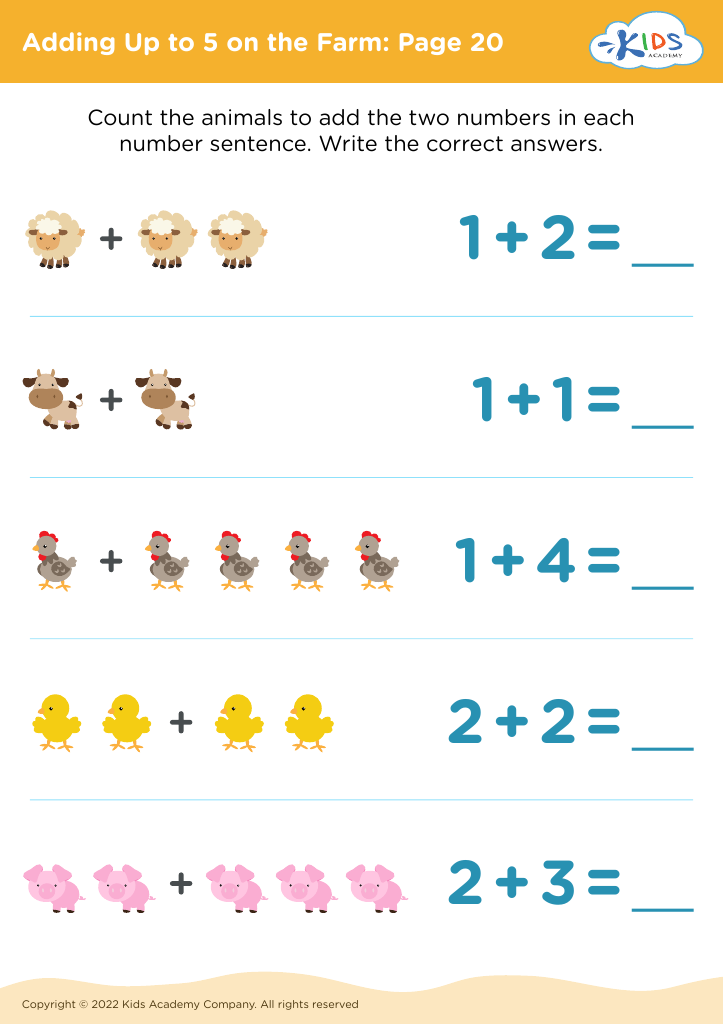
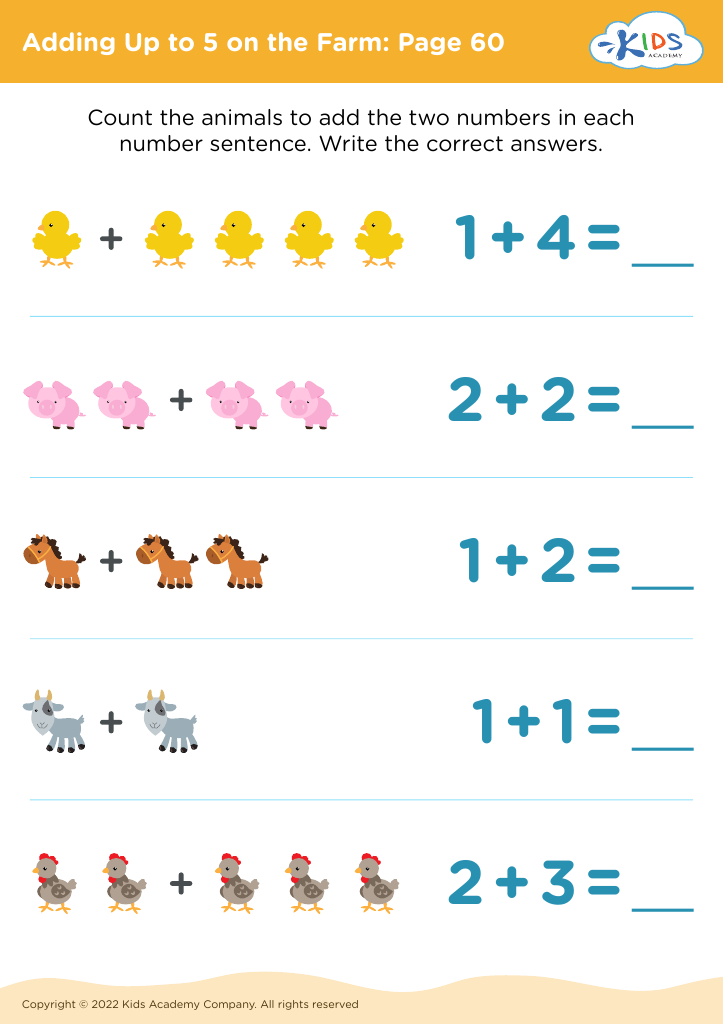



Understanding quantities and basic addition on the farm is crucial for early learners aged 4-5 for several reasons. First, it provides a hands-on context that makes learning relatable and engaging. Young children are naturally curious about animals, plants, and farm activities, which can be harnessed to introduce mathematical concepts in a fun way.
As they explore quantities—such as counting how many apples are in a basket or adding the number of chickens to ducks—students grasp foundational math skills. This early exposure helps prepare children for future mathematical concepts by developing their number sense, promoting critical thinking, and honing problem-solving abilities.
Additionally, engaging in farm-related activities fosters social interaction among peers, enhancing communication skills as they discuss quantities and share observations. For parents and educators, utilizing a familiar setting such as a farm creates a learning opportunity to blend academic skills with real-world experiences.
Moreover, stronger numerical skills cultivated early on can boost children's self-confidence in math, paving the way for a positive attitude towards learning. Ultimately, understanding quantities supports cognitive development and instills a lifelong appreciation for both math and the natural world. This connection between academics and everyday life encourages holistic child development.