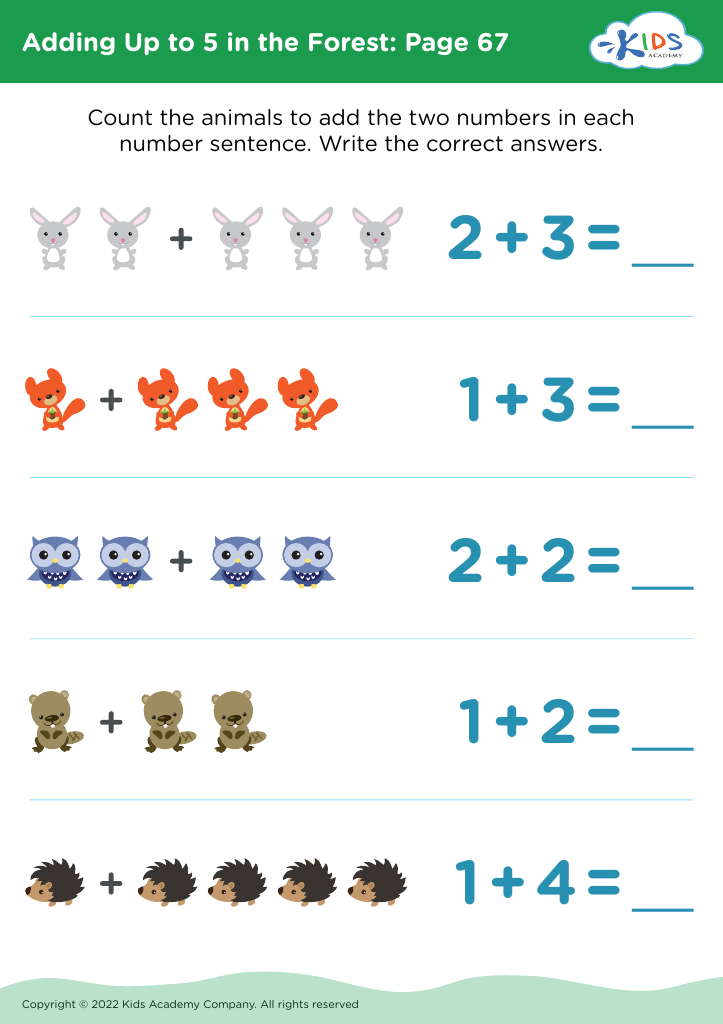
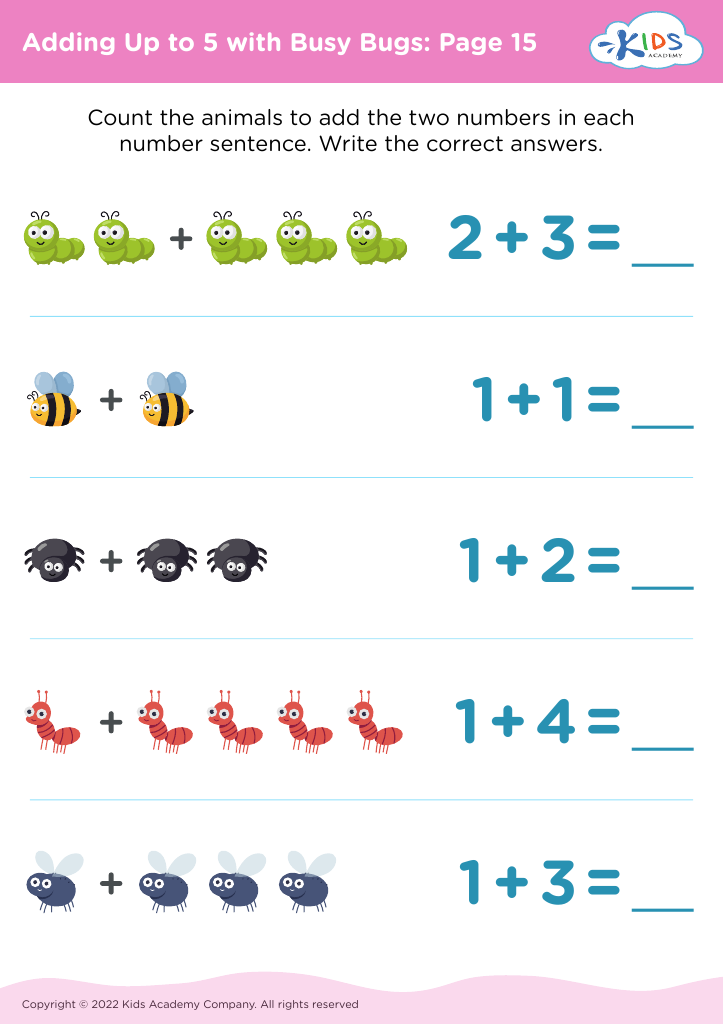








Addition practice for young learners, especially adding up to 5, is crucial for several reasons. First and foremost, this foundational skill sets the stage for essential mathematical concepts that children will encounter throughout their education. By mastering addition within this small range, children develop number sense, which enhances their ability to understand larger numbers and more complex operations later on.
For parents and teachers, engaging children in addition practice fosters critical thinking and problem-solving skills. Simple addition encourages the use of strategies, such as counting on fingers or visualizing objects, which promotes cognitive development. Moreover, incorporating playful activities—like counting toys or using fingers—makes learning enjoyable and relevant.
Additionally, practicing addition helps build confidence in young learners. When children successfully solve addition problems, no matter how simple, it boosts their self-esteem and motivation to tackle further math challenges.
Finally, addition skills are not just academic; they have real-world applications. Recognizing patterns, understanding quantities, and handling basic calculations are skills that children will rely on throughout their lives. Encouraging addition practice from an early age equips children with the tools they need for success in school and beyond.








