Filters

90 filtered results

Clear all filters
Favorites
With answer key
Interactive

90 filtered results

Difficulty Level

Grade


Check out this FREE Trial Lesson on Adding Up to 5 for age 4-5!

Short and Long Vowel Sort

Favorites
With answer key
Interactive
  • 4-5
  • Animal recognition
  • Adding Up to 5
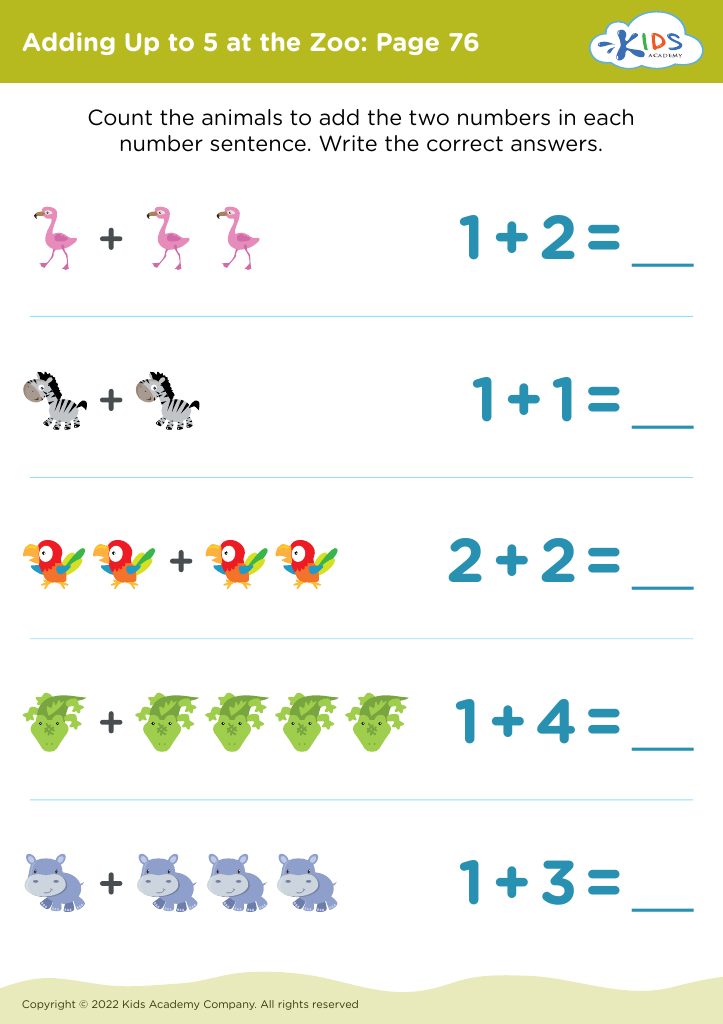
Adding Up to 5 at the Zoo: Page 76
Worksheet
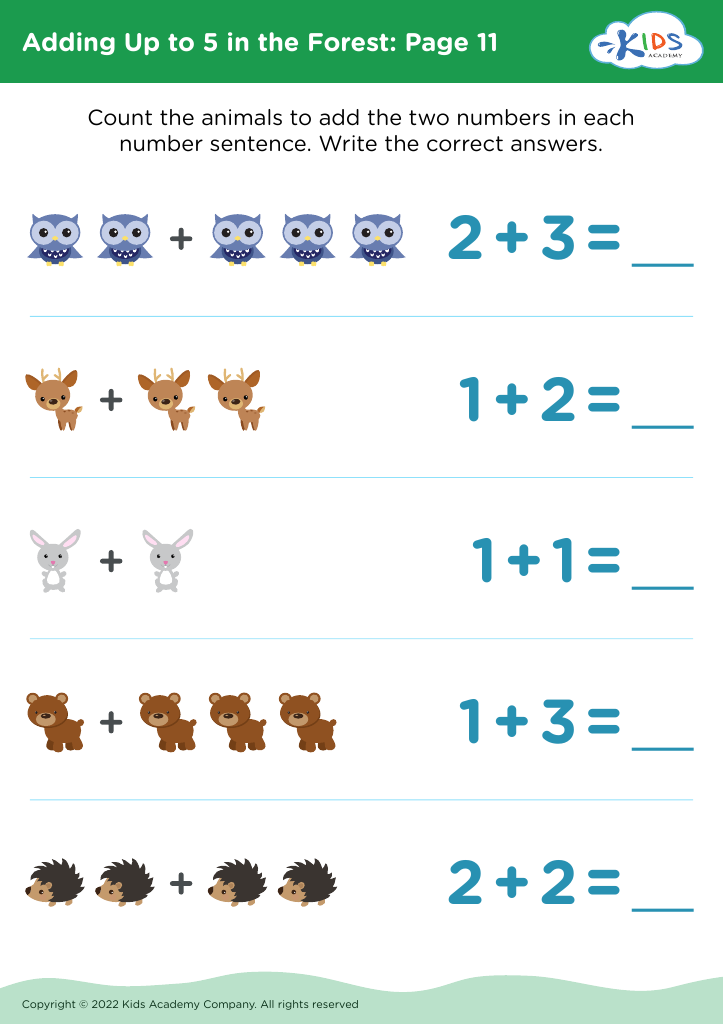
Adding Up to 5 in the Forest: Page 11
Worksheet
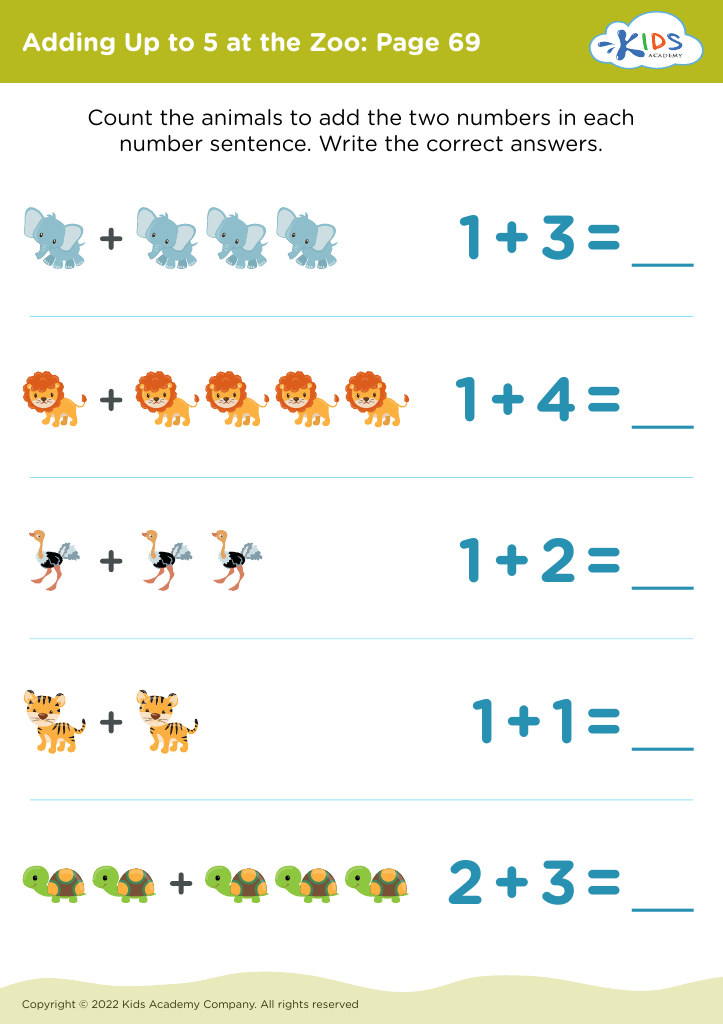
Adding Up to 5 at the Zoo: Page 69
Worksheet
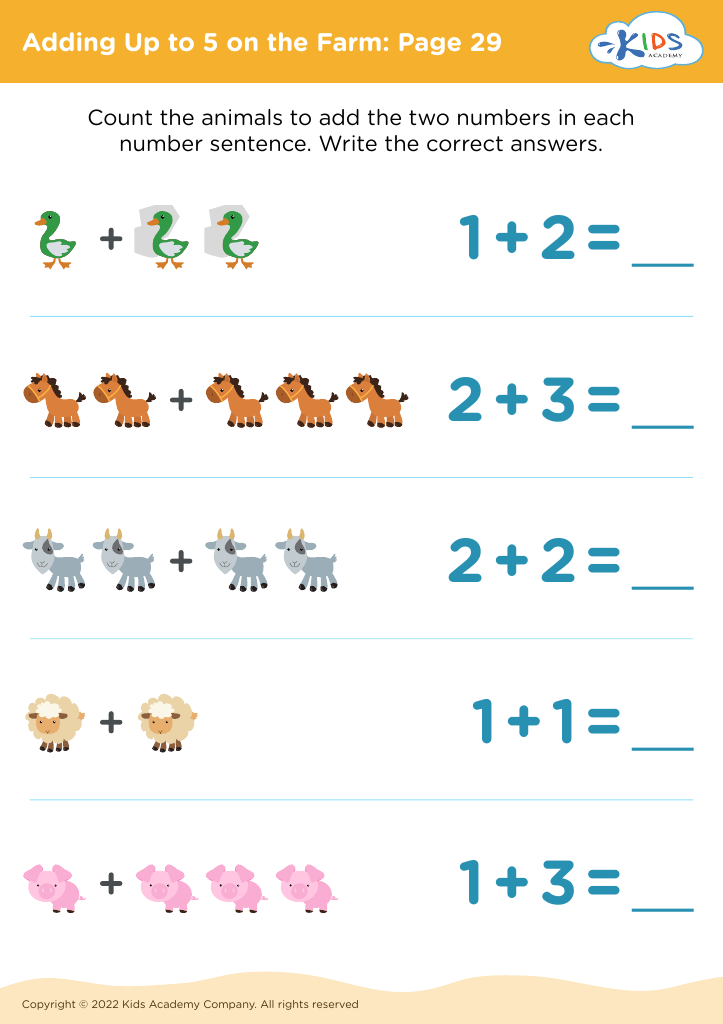
Adding Up to 5 on the Farm: Page 29
Worksheet
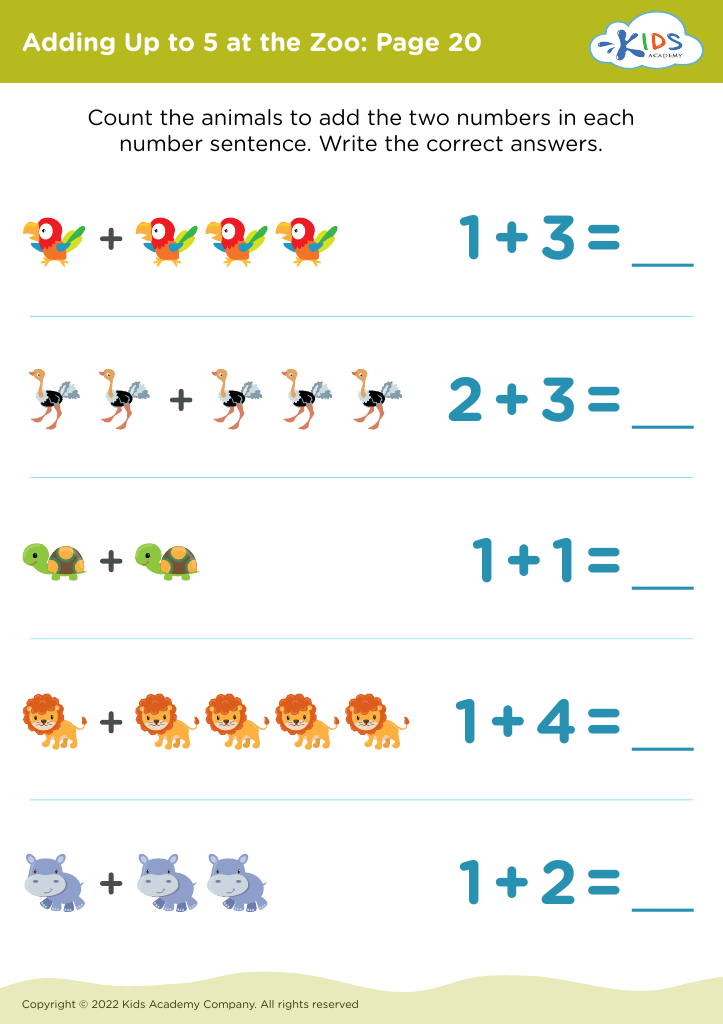
Adding Up to 5 at the Zoo: Page 20
Worksheet
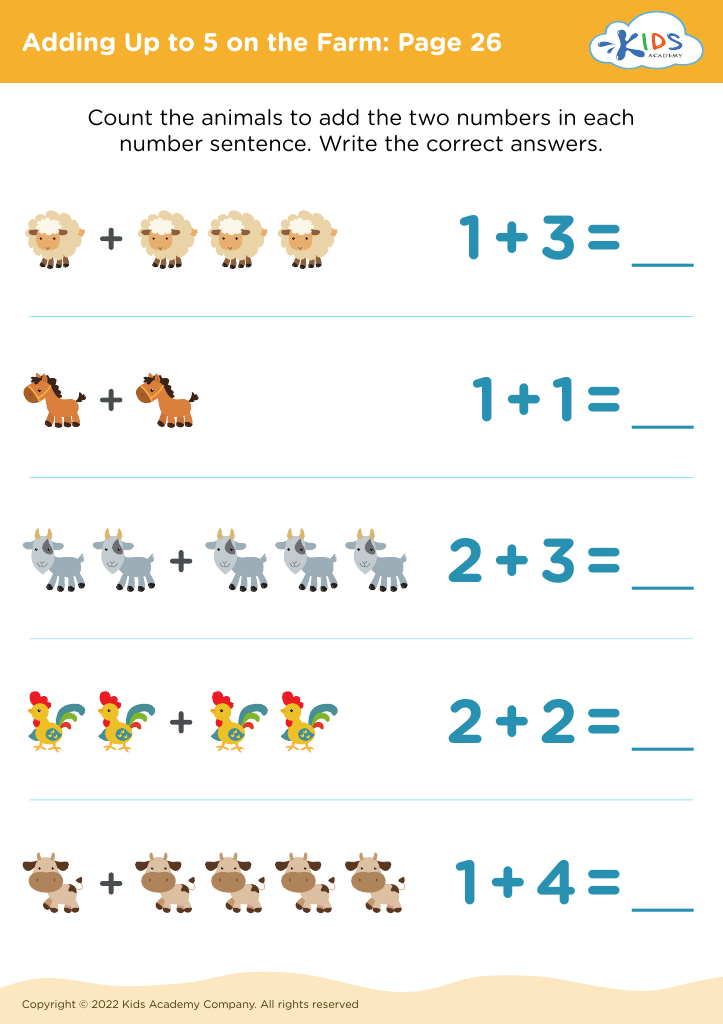
Adding Up to 5 on the Farm: Page 26
Worksheet
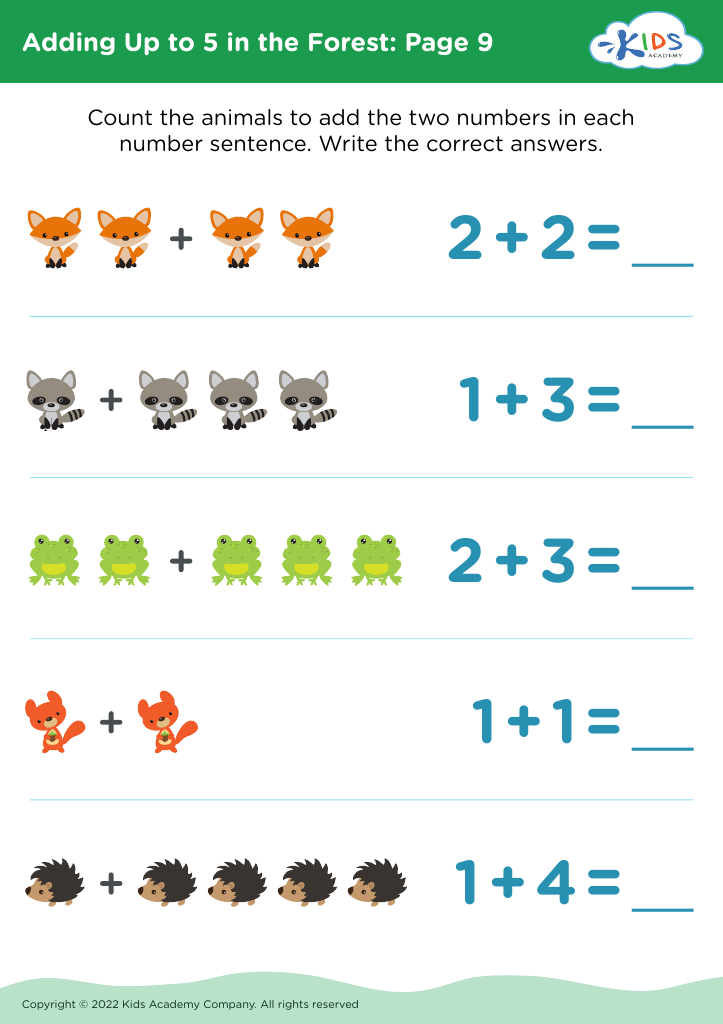
Adding Up to 5 in the Forest: Page 9
Worksheet
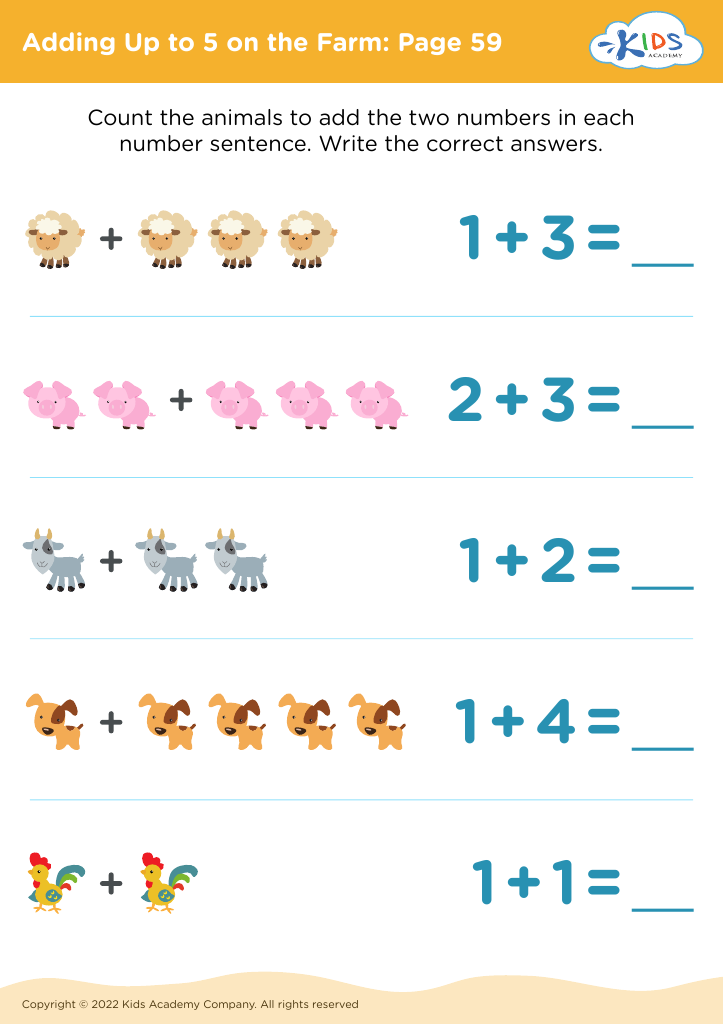
Adding Up to 5 on the Farm: Page 59
Worksheet
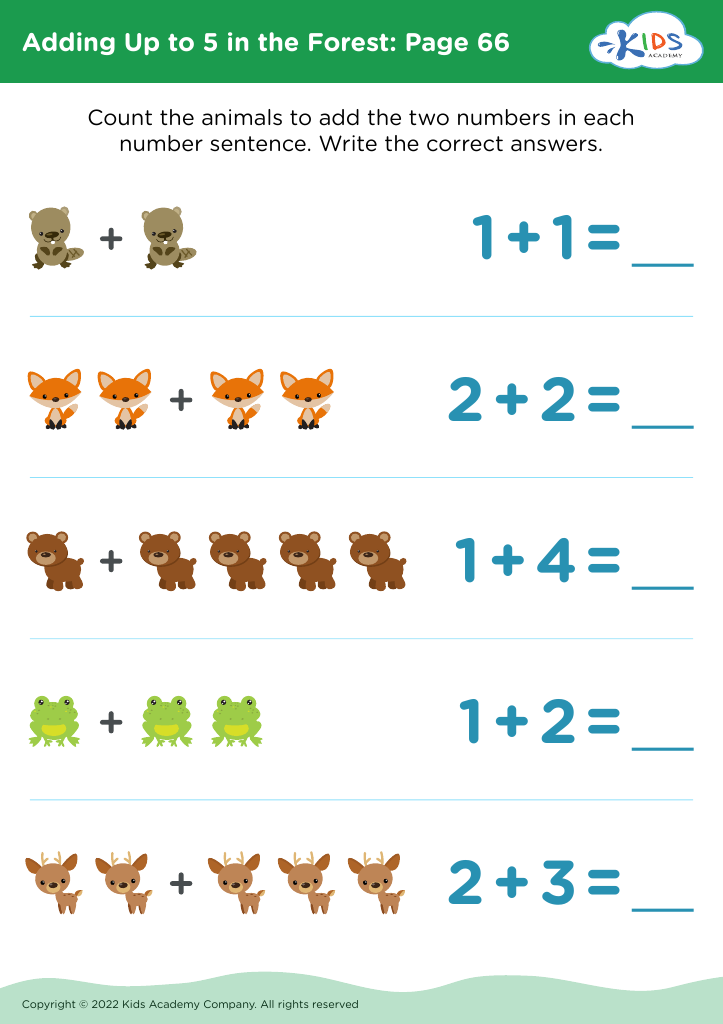
Adding Up to 5 in the Forest: Page 66
Worksheet
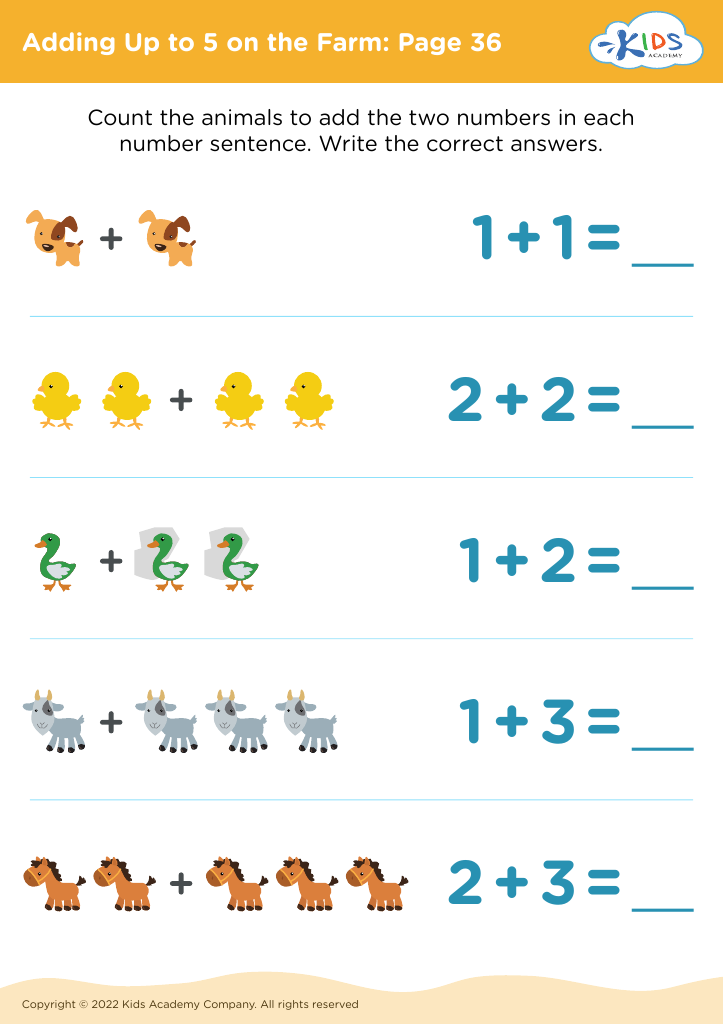
Adding Up to 5 on the Farm: Page 36
Worksheet
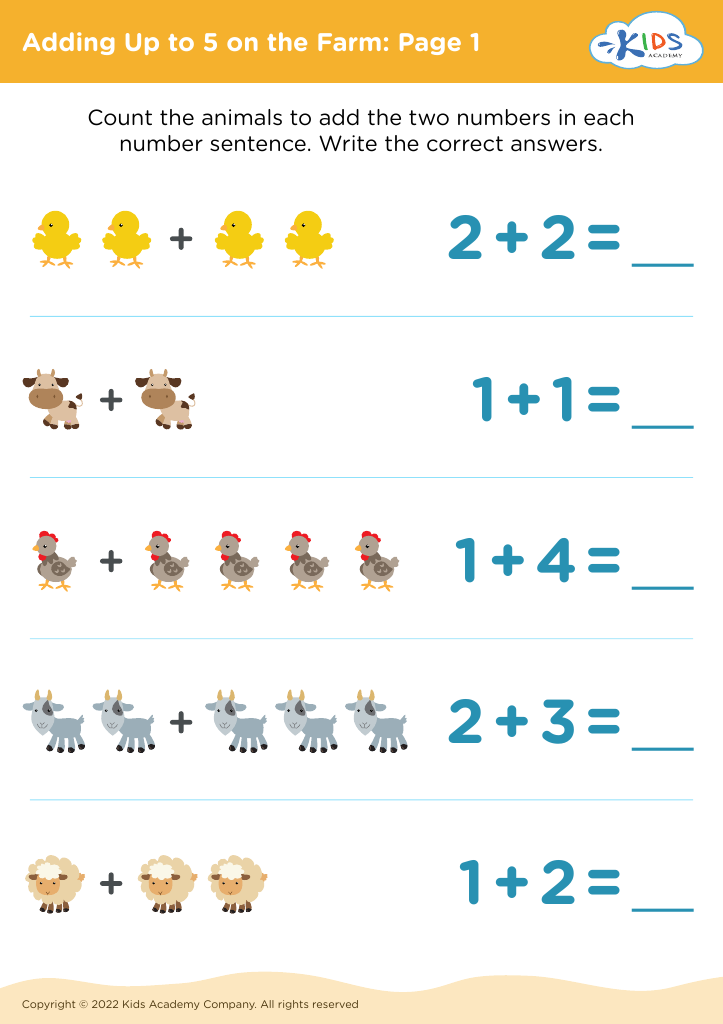
Adding Up to 5 on the Farm: Page 1
Worksheet
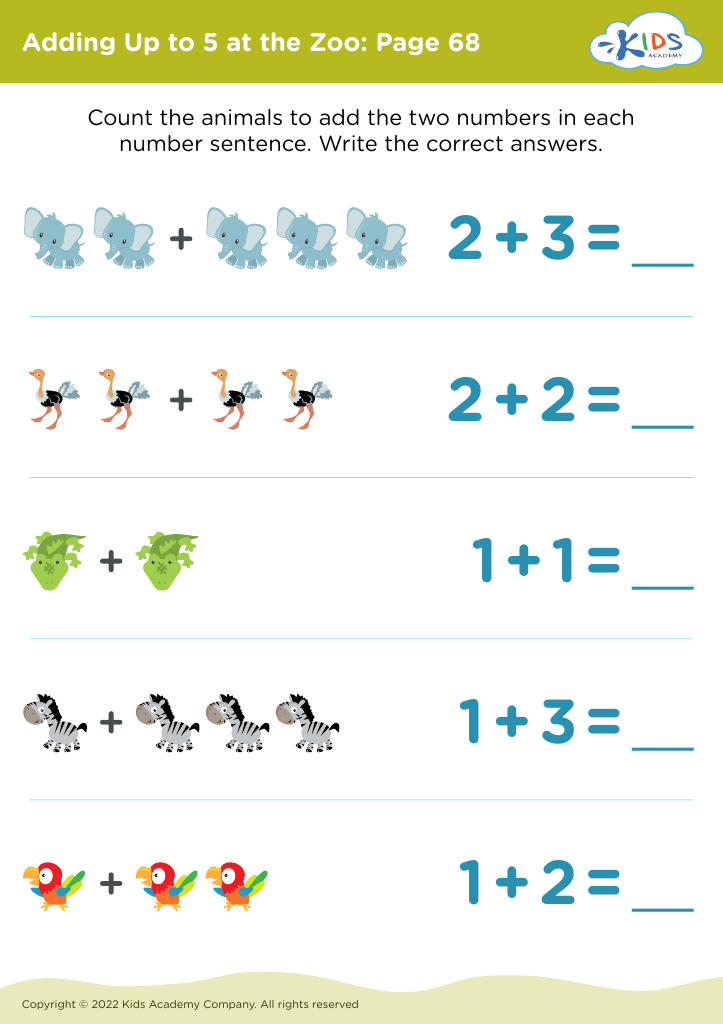
Adding Up to 5 at the Zoo: Page 68
Worksheet
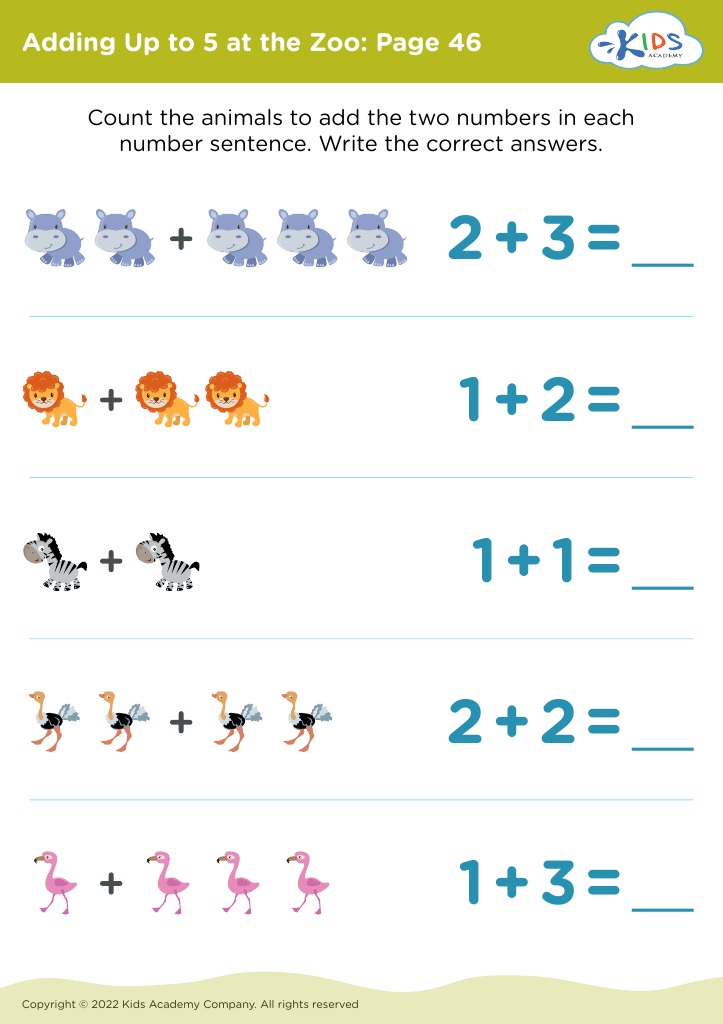
Adding Up to 5 at the Zoo: Page 46
Worksheet
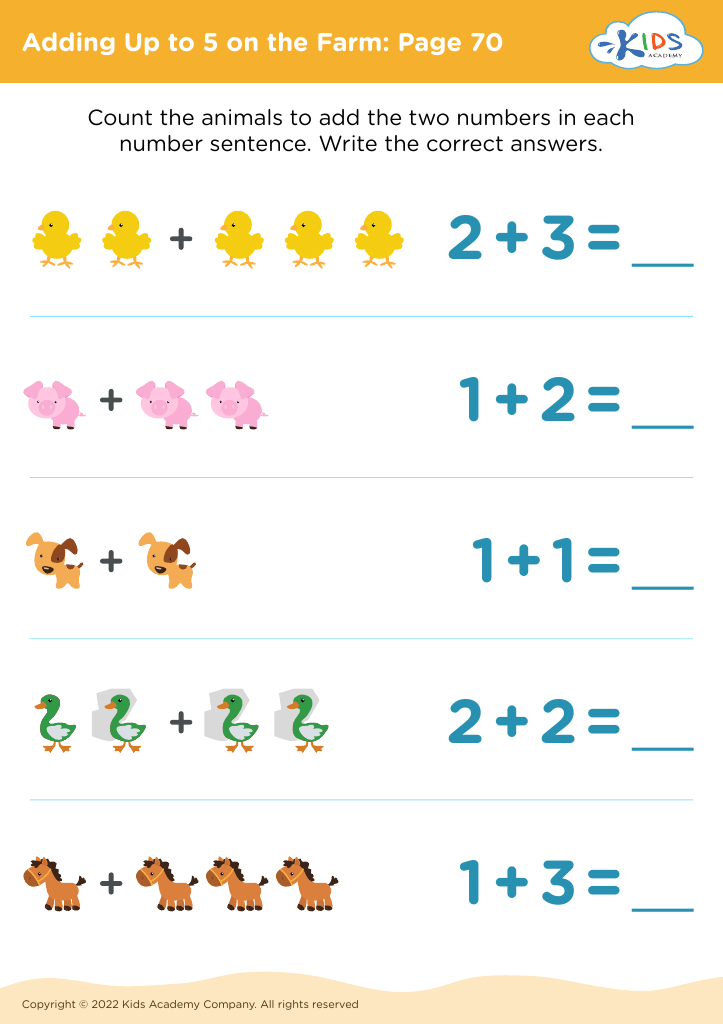
Adding Up to 5 on the Farm: Page 70
Worksheet
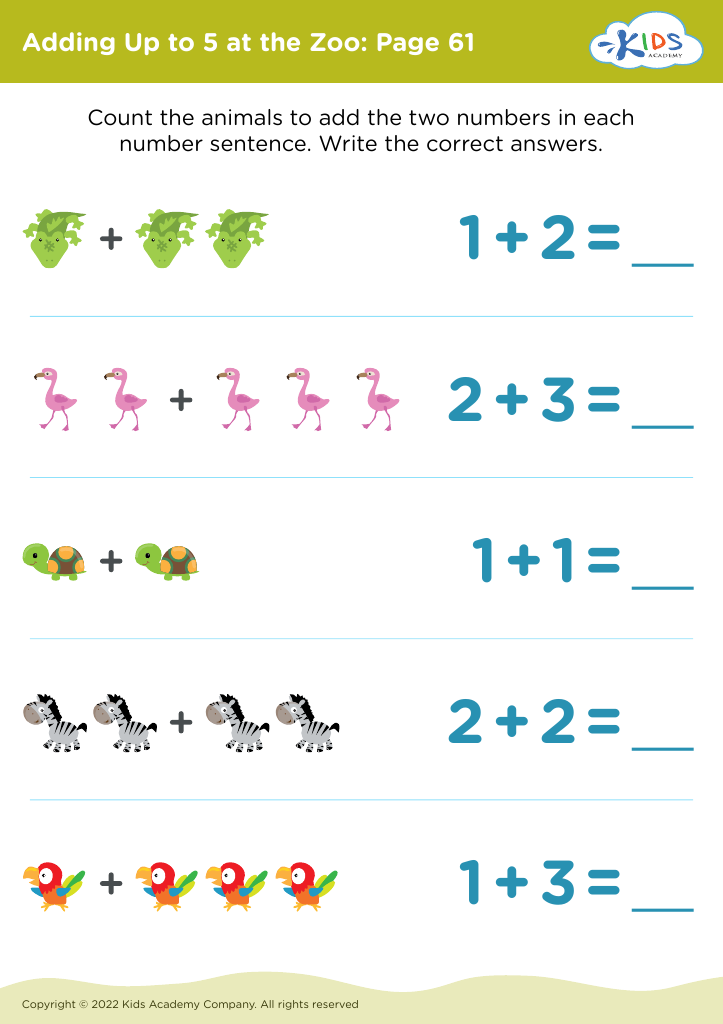
Adding Up to 5 at the Zoo: Page 61
Worksheet
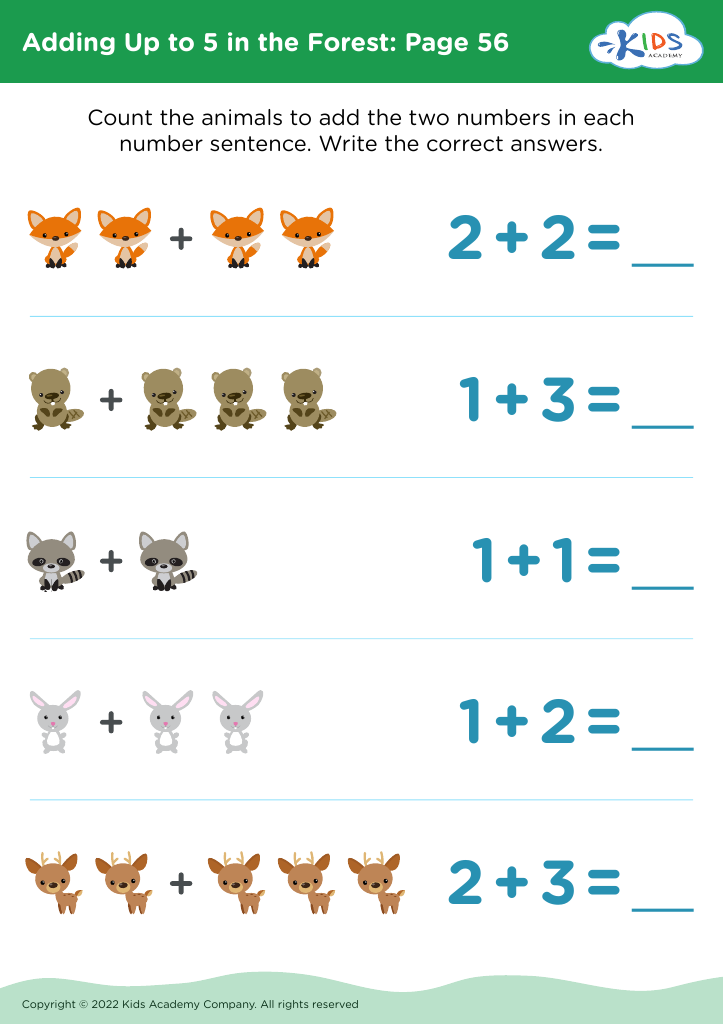
Adding Up to 5 in the Forest: Page 56
Worksheet
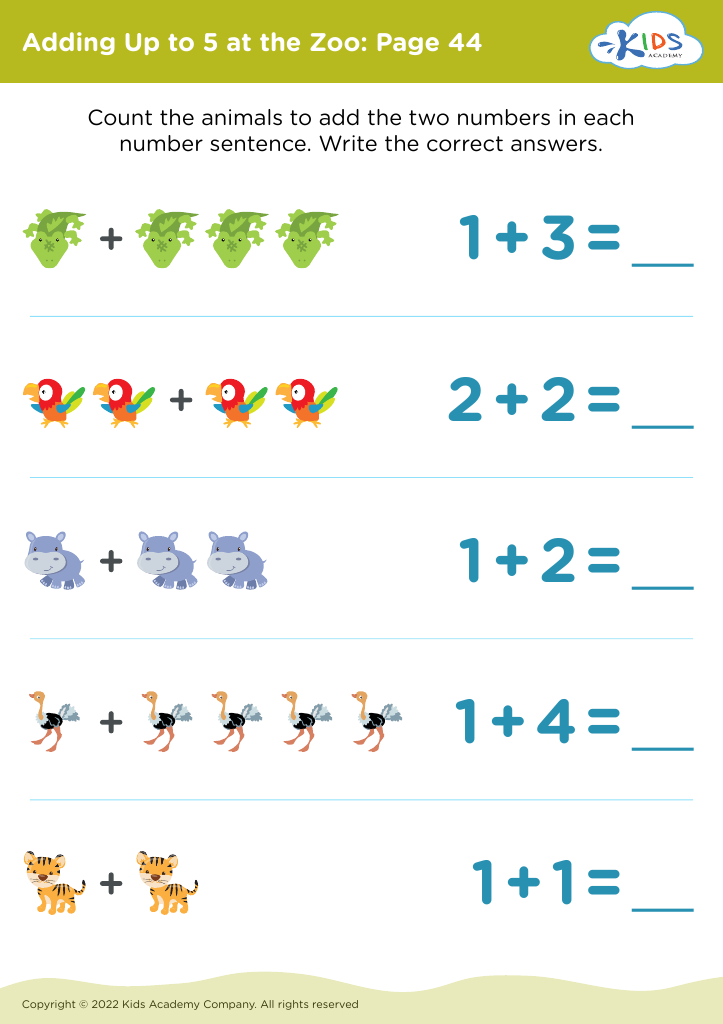
Adding Up to 5 at the Zoo: Page 44
Worksheet
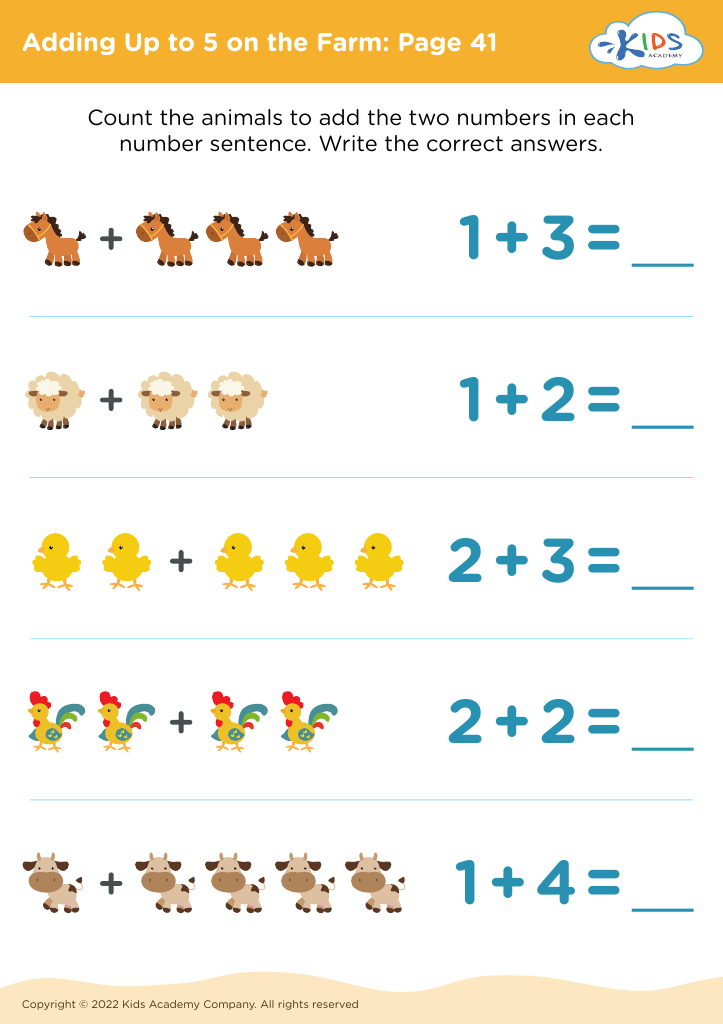
Adding Up to 5 on the Farm: Page 41
Worksheet
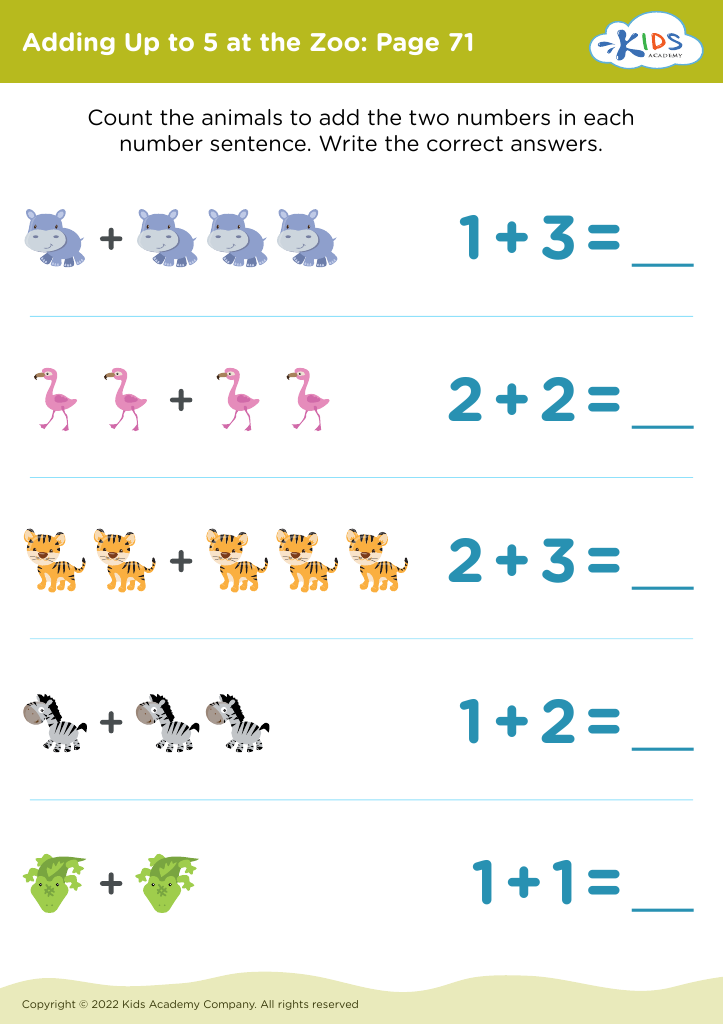
Adding Up to 5 at the Zoo: Page 71
Worksheet
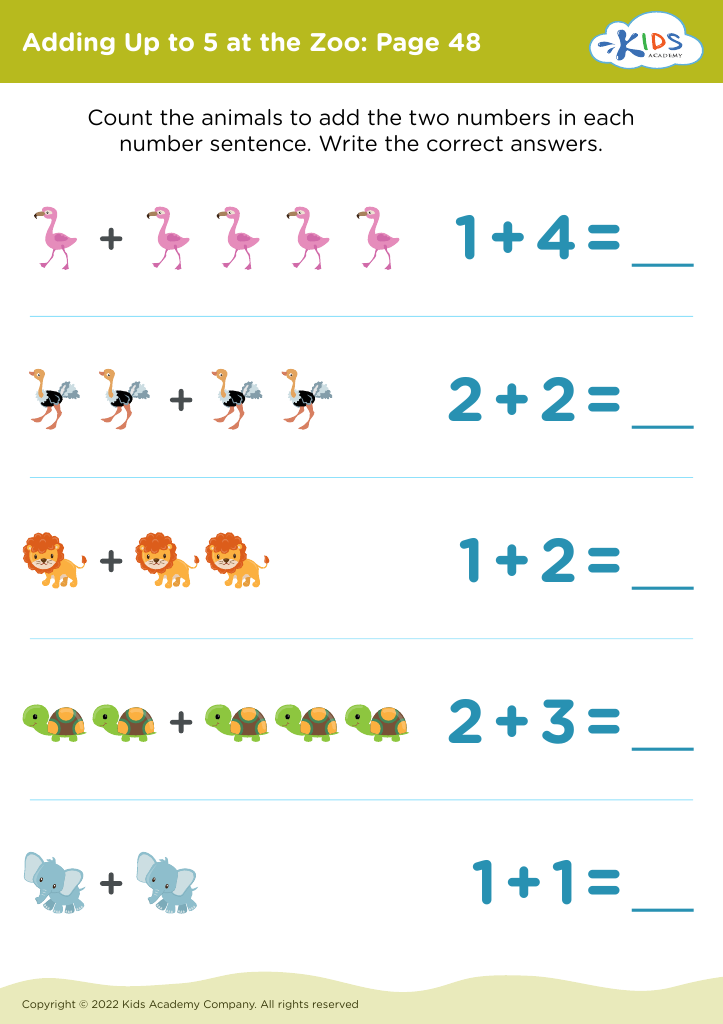
Adding Up to 5 at the Zoo: Page 48
Worksheet
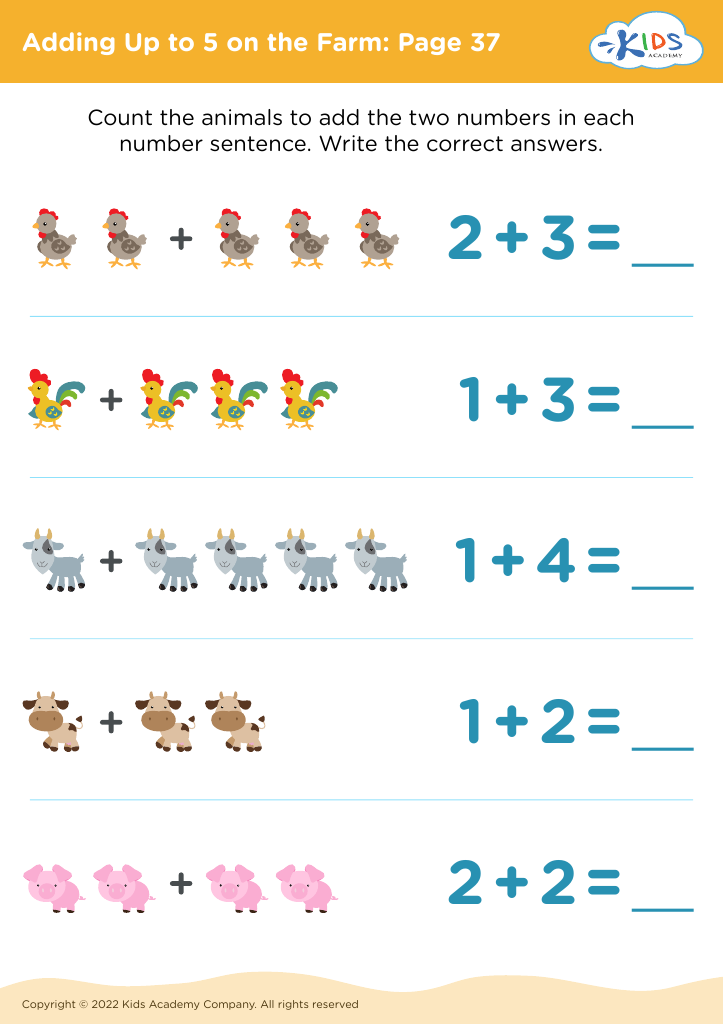
Adding Up to 5 on the Farm: Page 37
Worksheet
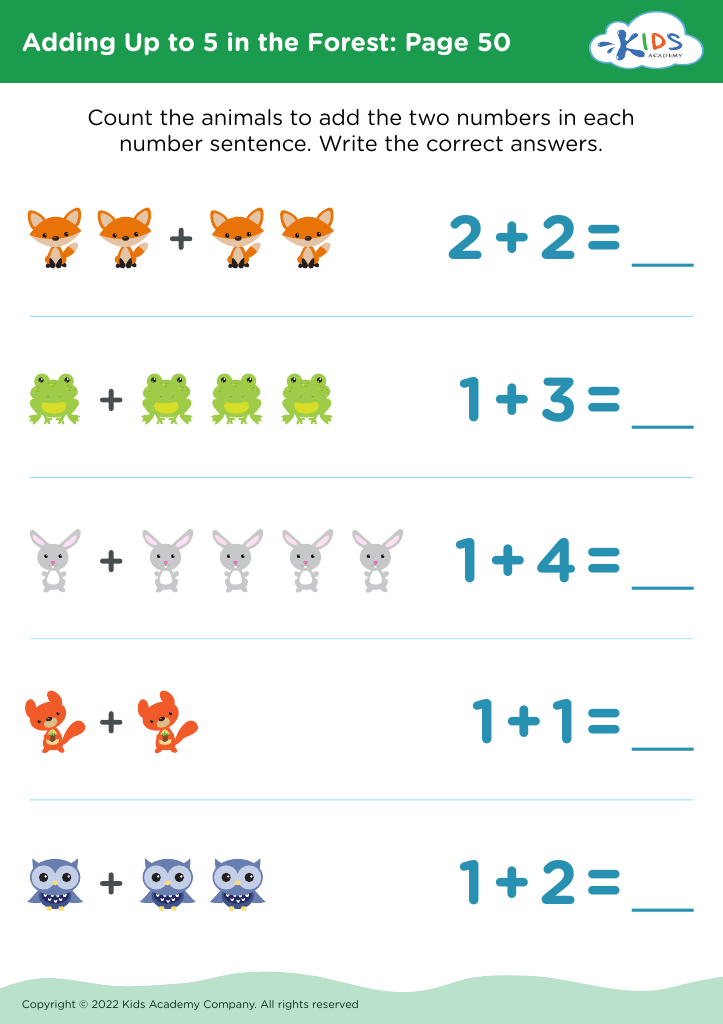
Adding Up to 5 in the Forest: Page 50
Worksheet
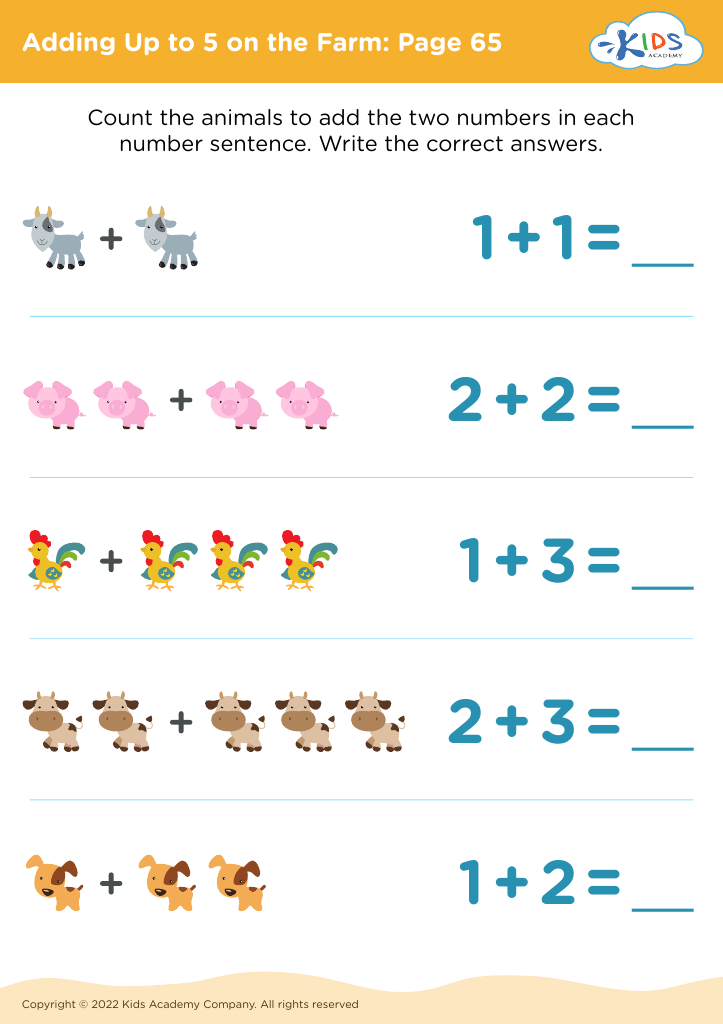
Adding Up to 5 on the Farm: Page 65
Worksheet
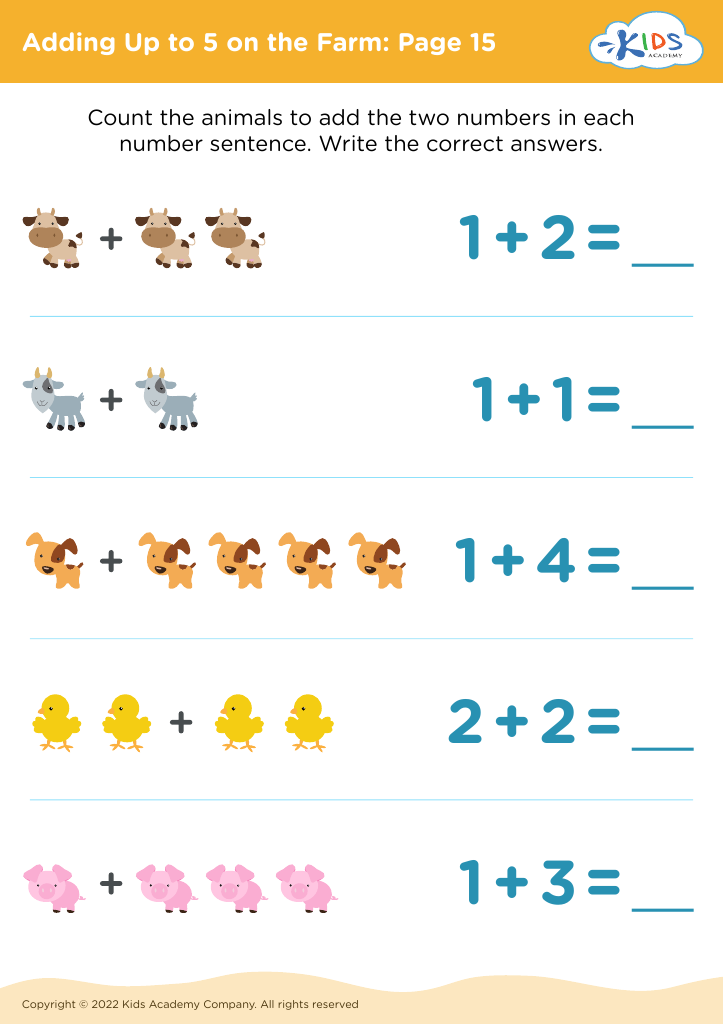
Adding Up to 5 on the Farm: Page 15
Worksheet


Teaching animal recognition along with basic math skills such as adding up to 5 to children ages 4-5 plays a crucial role in their early development. First, young children are naturally fascinated by animals, making animal-themed activities highly engaging and motivational. This intrinsic interest encourages longer periods of focused attention, which is essential for learning.

Introducing basic arithmetic through the lens of animal counting connects abstract concepts to something tangible, reinforcing both cognitive and observational skills. For instance, counting five cows together emphasizes numerical concepts while fostering animal recognition.

Moreover, combining animal recognition with adding up to 5 cultivates a holistic approach to learning. While they practice numbers and simple addition, they also expand their vocabulary, understand basic categorization, and develop memory by recalling animal names and characteristics.

Such activities also promote social skills and cooperative learning when done in group settings, where children can share knowledge and solve problems together. Providing specific context to numbers through familiar themes further aids in concept retention and connects learning with the real world.

Involving parents and teachers in these activities ensures that children receive integrated support in their emotional, cognitive, and social development, ultimately laying a strong foundation for future learning endeavors. Thus, prioritizing such educational themes is crucial for comprehensive early childhood development.