Fine motor skills (writing) Adding Up to 5 Worksheets for Ages 4-5 - Page 2
32 filtered results
-
From - To
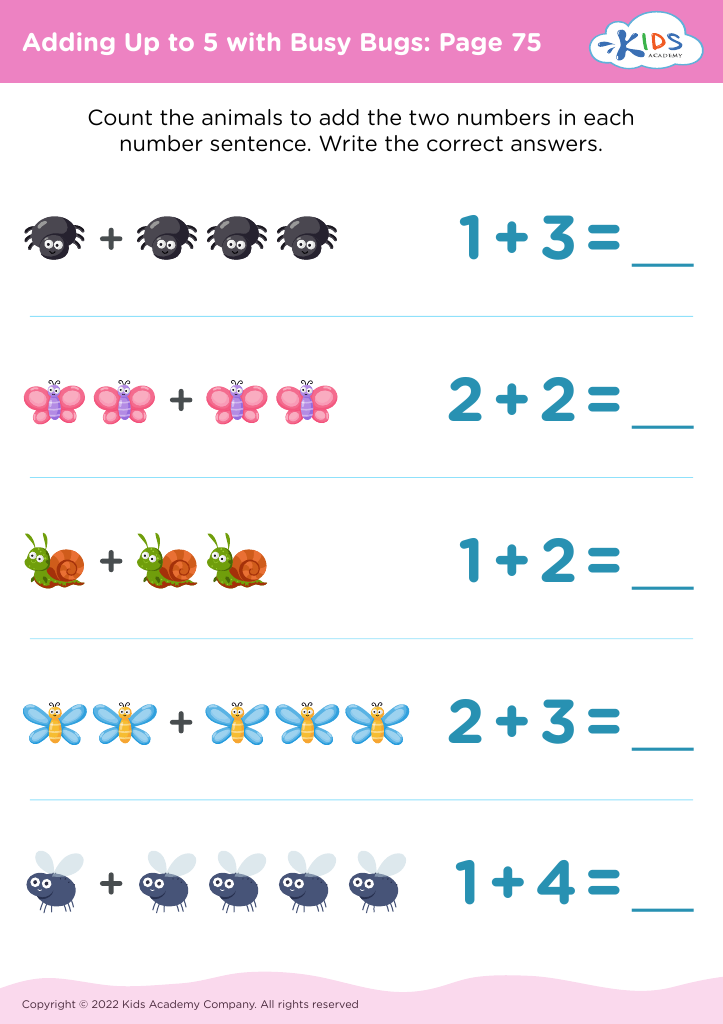
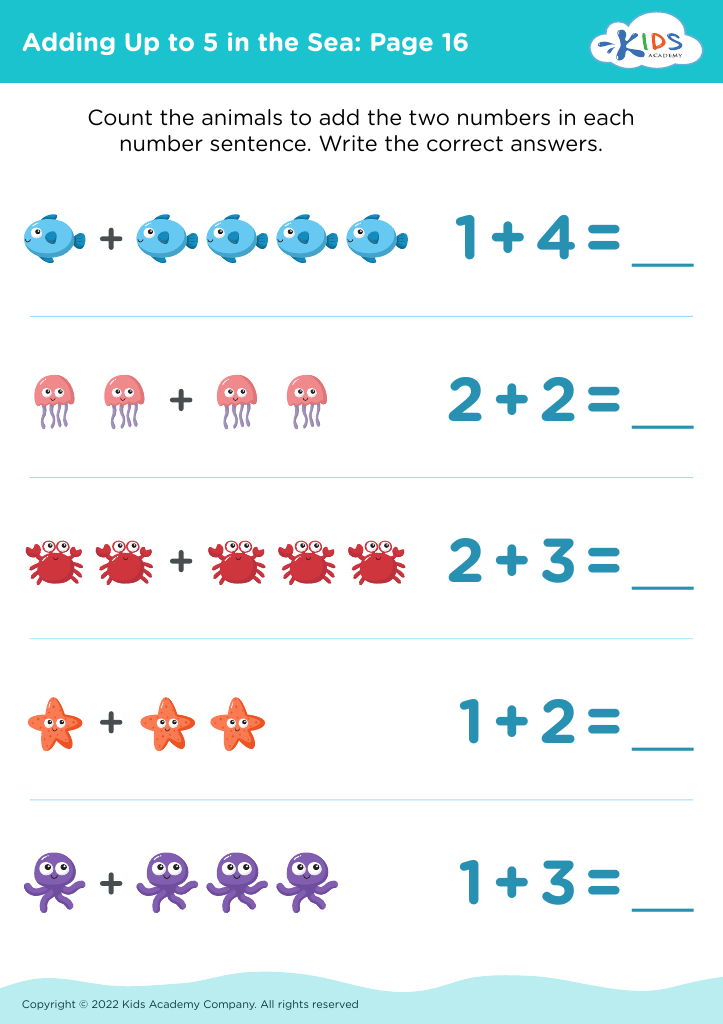
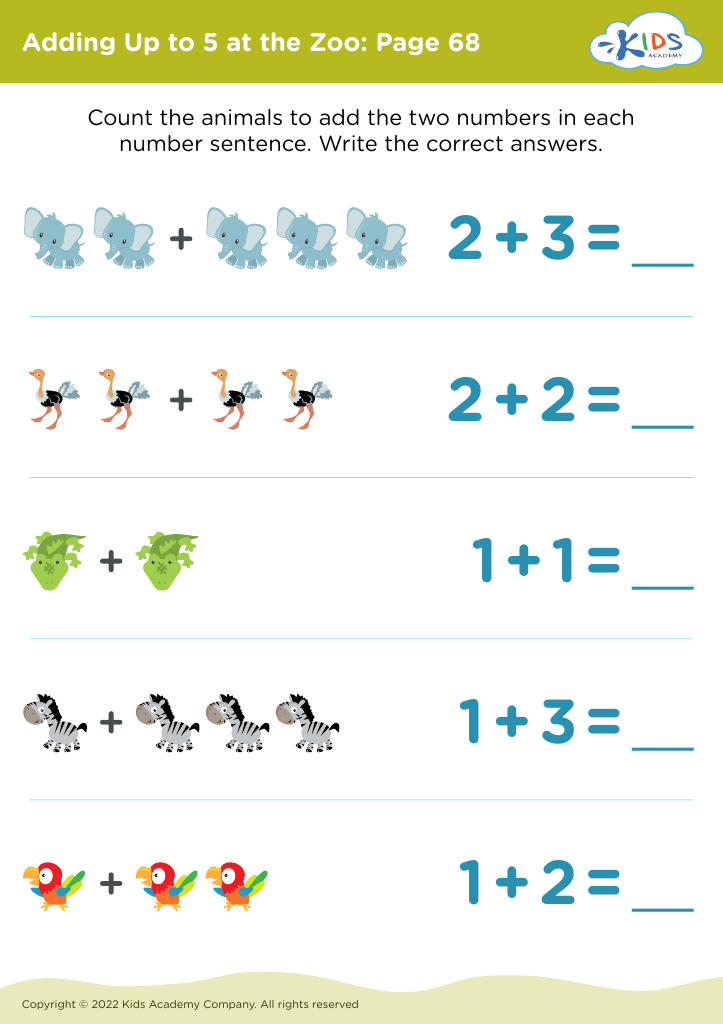
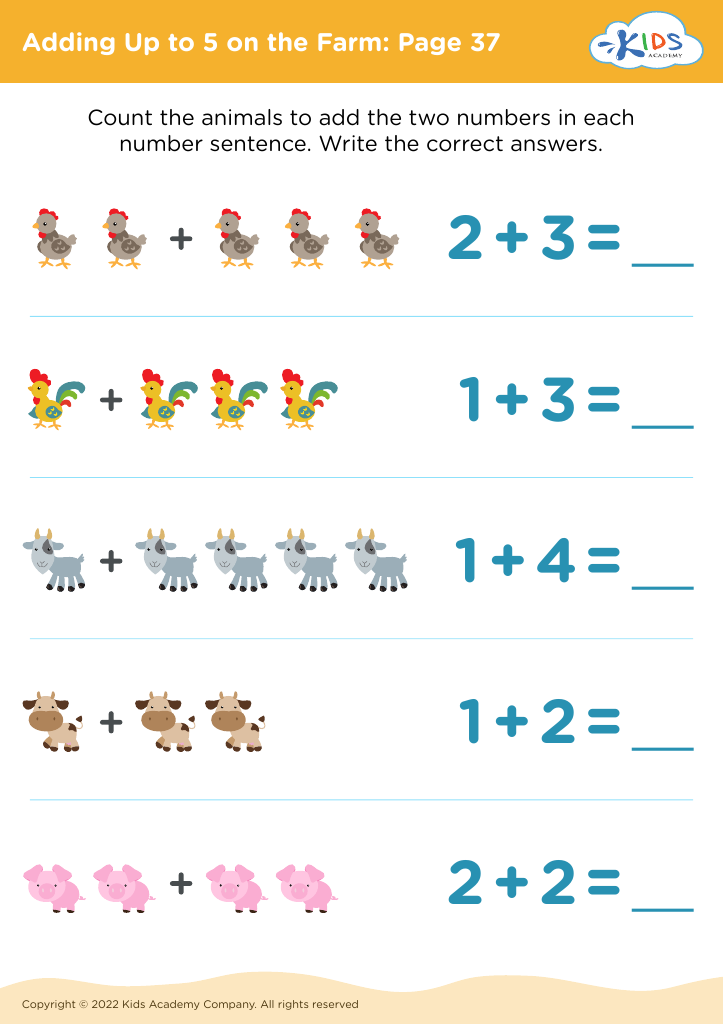
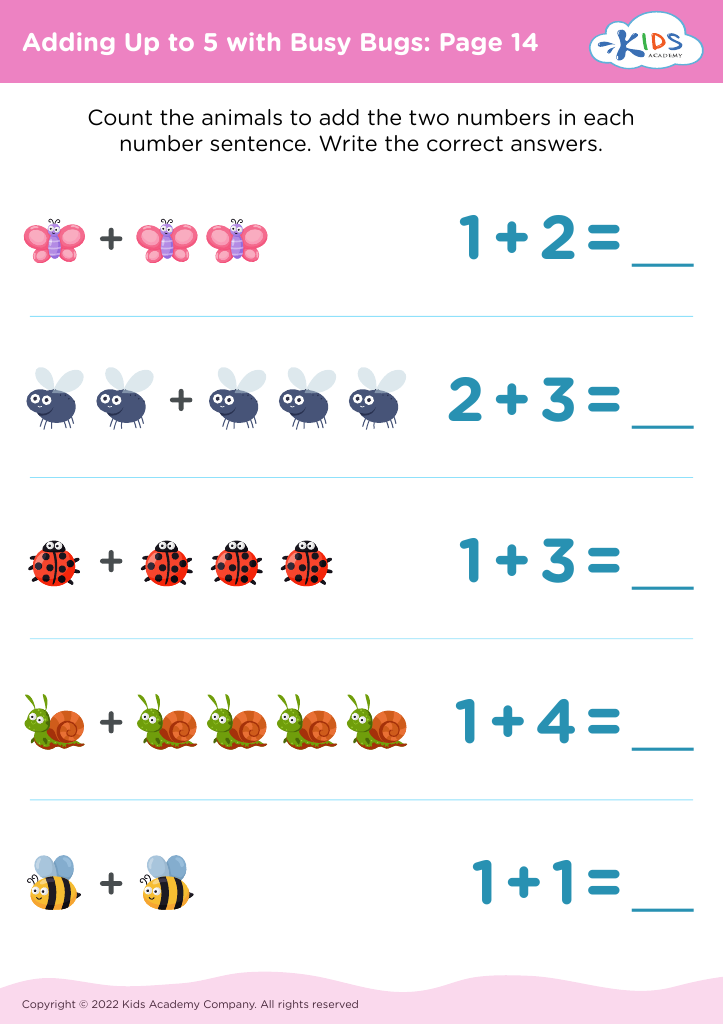
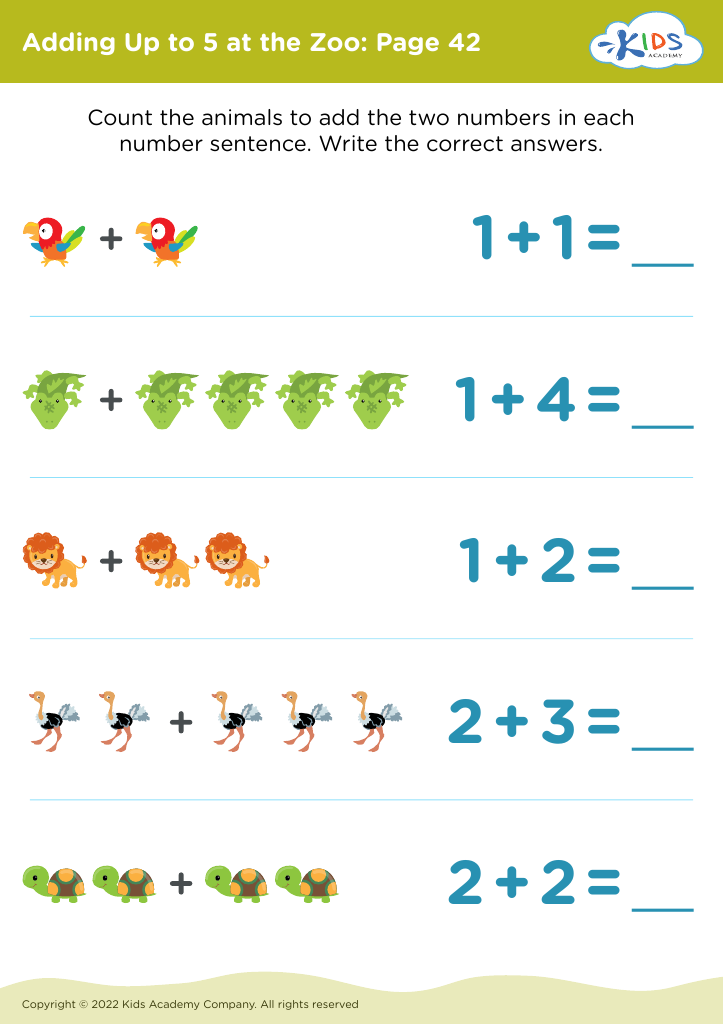
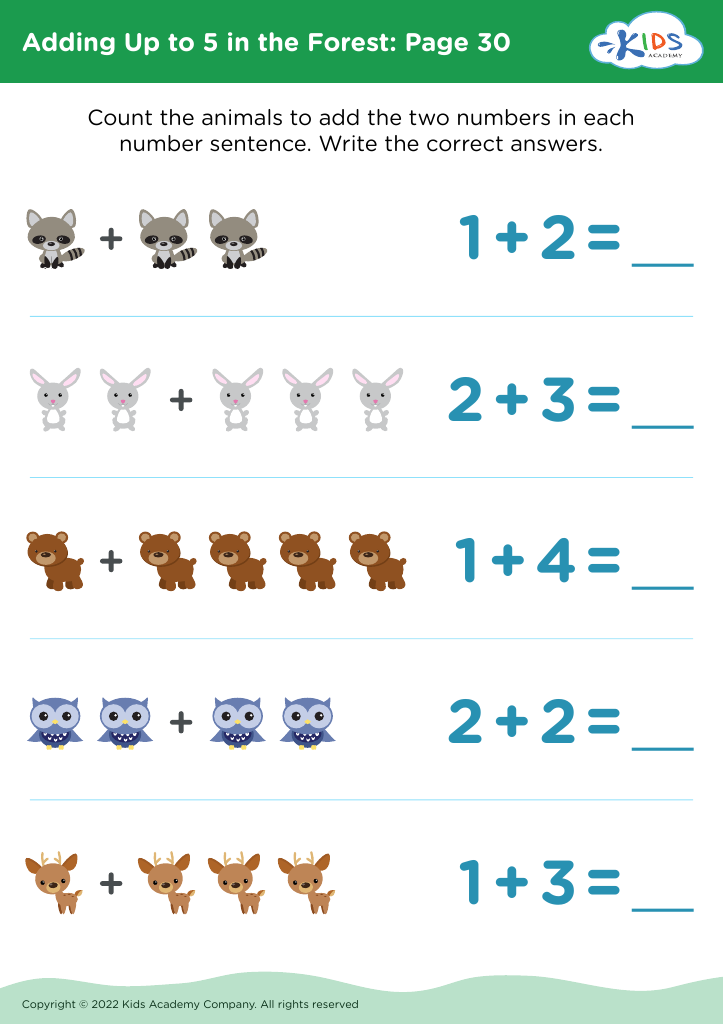
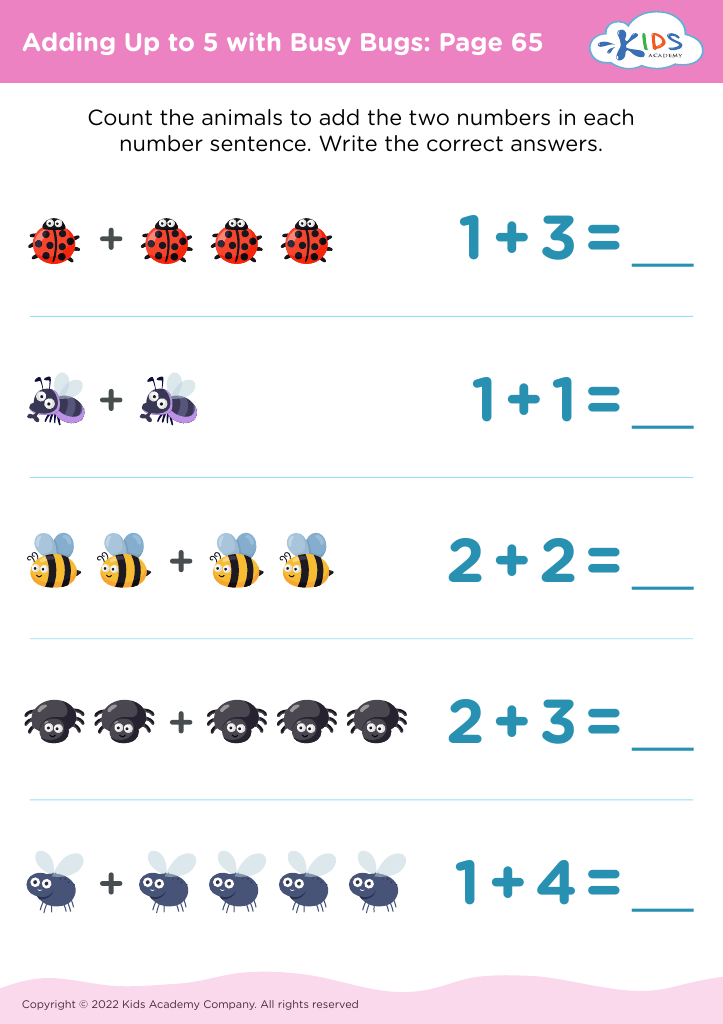








Parents and teachers should care about fine motor skills, particularly writing, for ages 4-5 because these skills are foundational for children’s overall development. Fine motor skills involve the coordination of small muscles, particularly those in the hands and fingers. Writing, along with activities such as cutting, coloring, and building, helps children build strength and dexterity, which are vital for daily tasks and more advanced skills in the future.
Additionally, writing activities that emphasize adding up to 5 enhance cognitive development by helping children understand numbers and early math concepts through hands-on practice. Mastering these basic numerical skills fosters mathematical confidence and problem-solving abilities, laying the groundwork for future academic success.
Moreover, fine motor development is closely linked to concentration and coordination. As children engage in writing and manipulating tools, they are learning to focus and persist in tasks, skills that are essential not only in academics but in life. By promoting these skills, parents and teachers can play a crucial role in nurturing responsible, engaged learners who feel competent in their abilities to express thoughts and solutions, paving the way for a well-rounded education. Investing in fine motor skills today will empower children for years to come.








