Math problem-solving Adding Up to 5 Worksheets for Ages 4-5
3 filtered results
-
From - To
Enhance your child's math skills with our engaging "Adding Up to 5" worksheets, designed specifically for ages 4-5. These interactive problem-solving activities foster critical thinking and help young learners develop a strong foundation in basic addition. Each worksheet encourages children to combine visual aids and hands-on exercises, making math fun and accessible. By practicing adding up to 5, kids will boost their number recognition and fine motor skills while gaining confidence in their abilities. Perfect for teachers and parents alike, these worksheets are a valuable resource for early math education. Download and start your little one's math journey today!
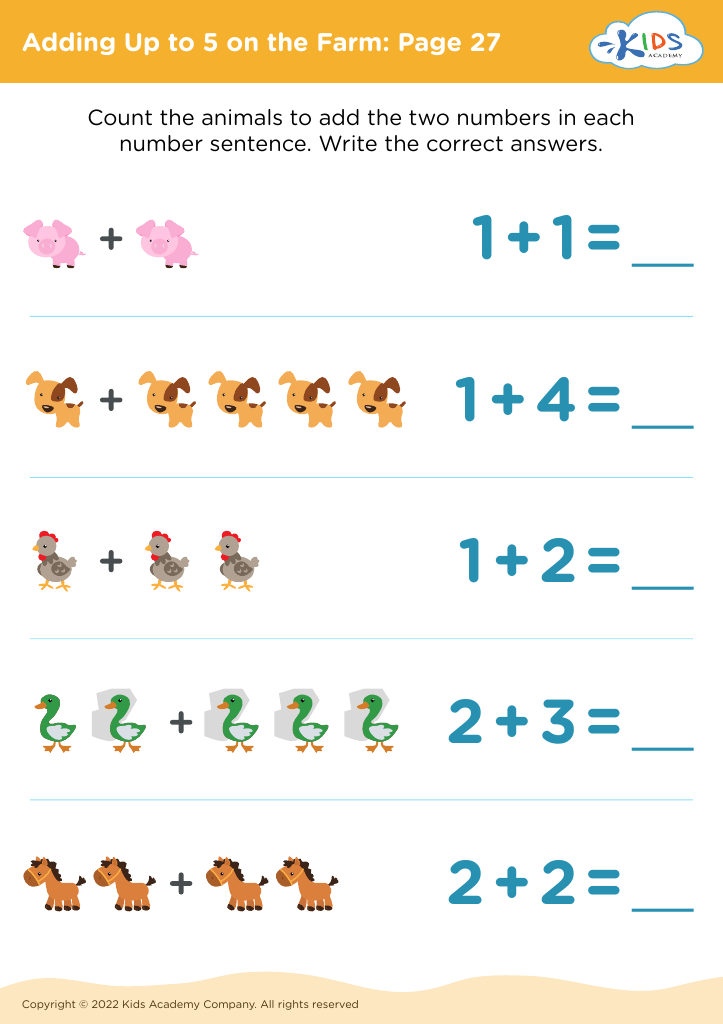
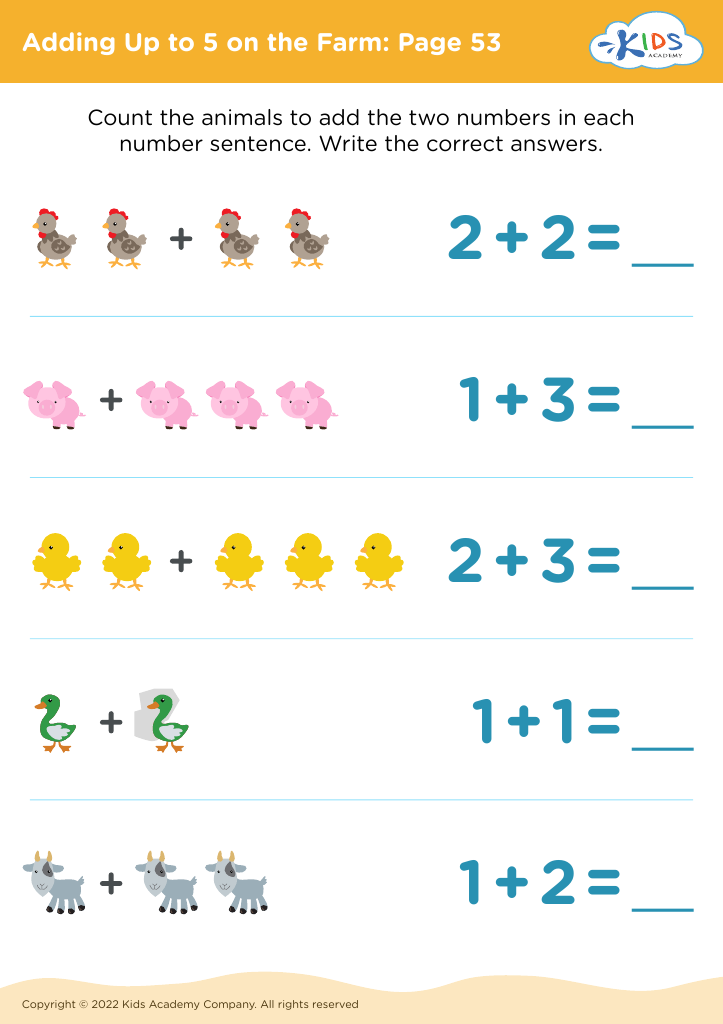
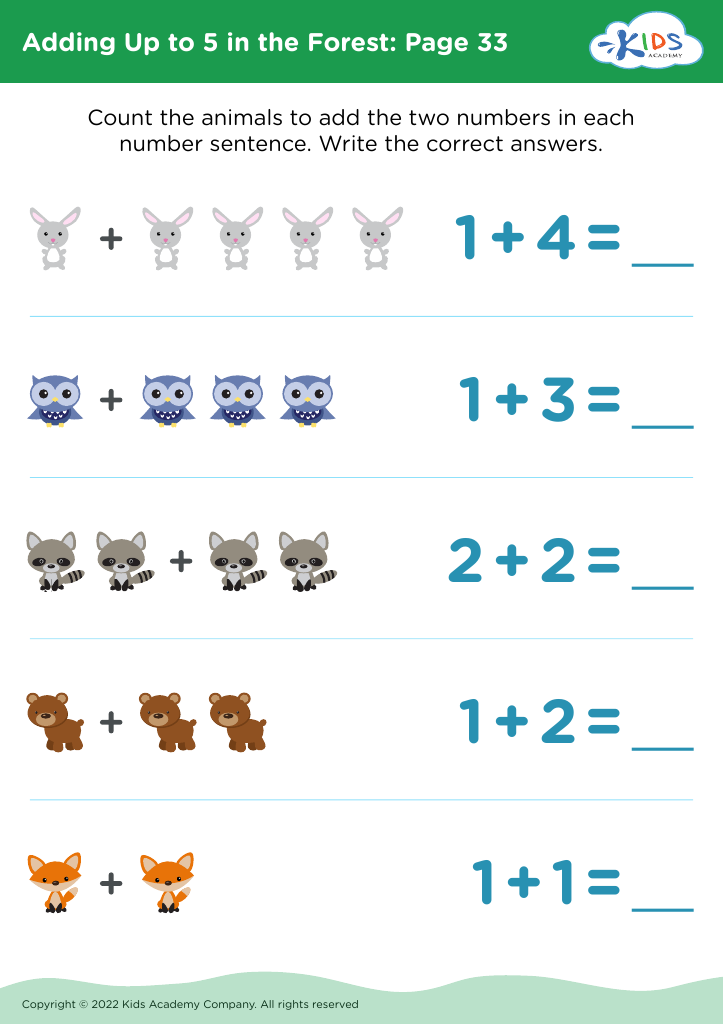








Teaching young children, especially ages 4-5, to solve math problems focusing on adding up to 5 is crucial for their cognitive development and early mathematics skills. At this developmental stage, children are forming foundational skills that will support their future understanding of more complex mathematical concepts. Learning to add numbers up to 5 helps promote number recognition, counting abilities, and basic problem-solving strategies.
These early math experiences encourage critical thinking, as children learn to visualize problems, explore different ways to combine numbers, and develop their logical reasoning skills. Engaging with simple addition problems also enhances fine motor skills through interactive activities—like using blocks or manipulatives, which keeps children engaged and motivates them to learn.
Moreover, exposing children to math concepts enriches their social interactions, as they often collaborate with peers during problem-solving activities. This teamwork fosters communication skills and builds a sense of community. As parents and teachers offer positive reinforcement and celebrate successes, children build confidence in their abilities, leading to a more profound interest in mathematics as they grow. Ultimately, building early math skills culminates in lifelong learning, helping children thrive academically and personally.








