Filters

37 filtered results

Clear all filters
Favorites
With answer key
Interactive

37 filtered results

Difficulty Level

Grade


Check out this FREE Trial Lesson on Adding Up to 5 for age 4-5!

A

Favorites
With answer key
Interactive
  • 4-5
  • Problem-Solving Skills
  • Adding Up to 5
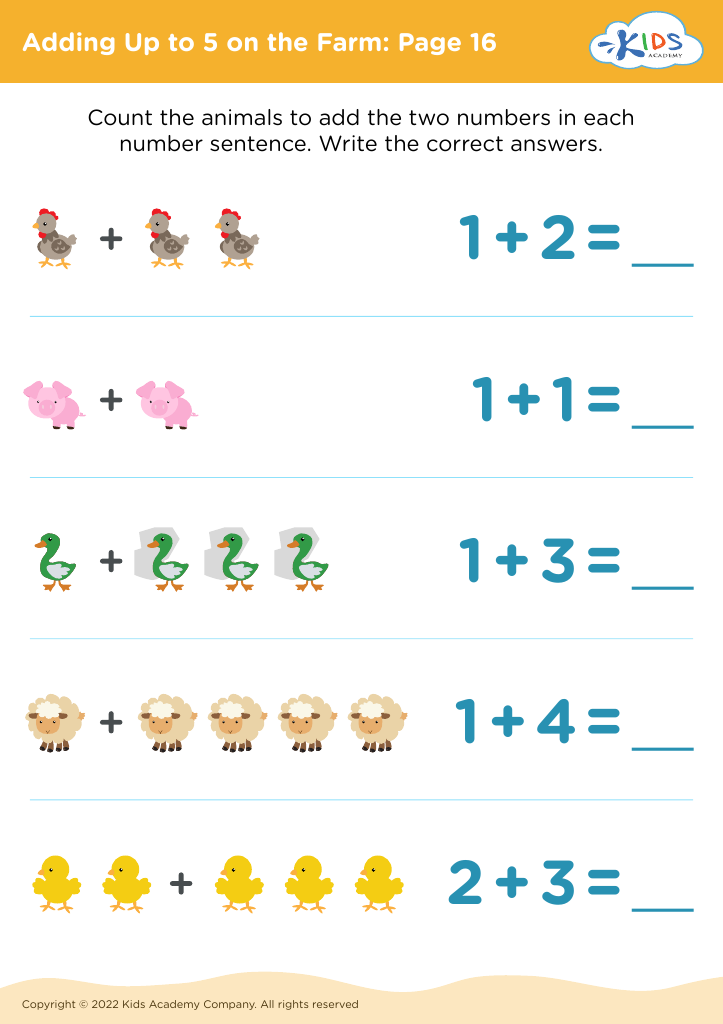
Adding Up to 5 on the Farm: Page 16
Worksheet
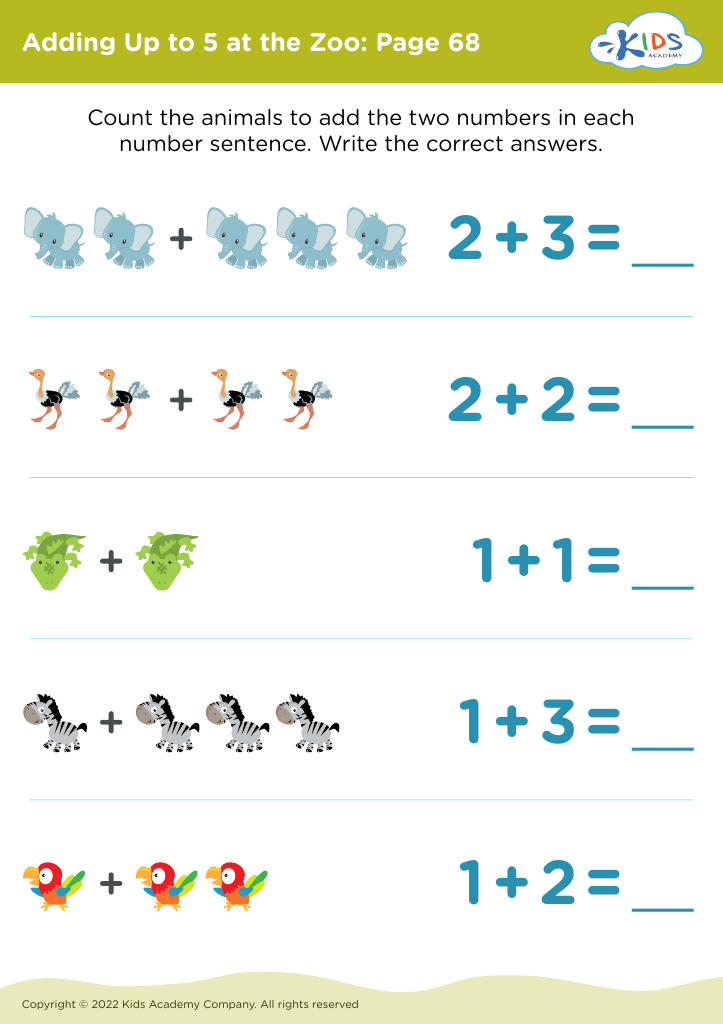
Adding Up to 5 at the Zoo: Page 68
Worksheet
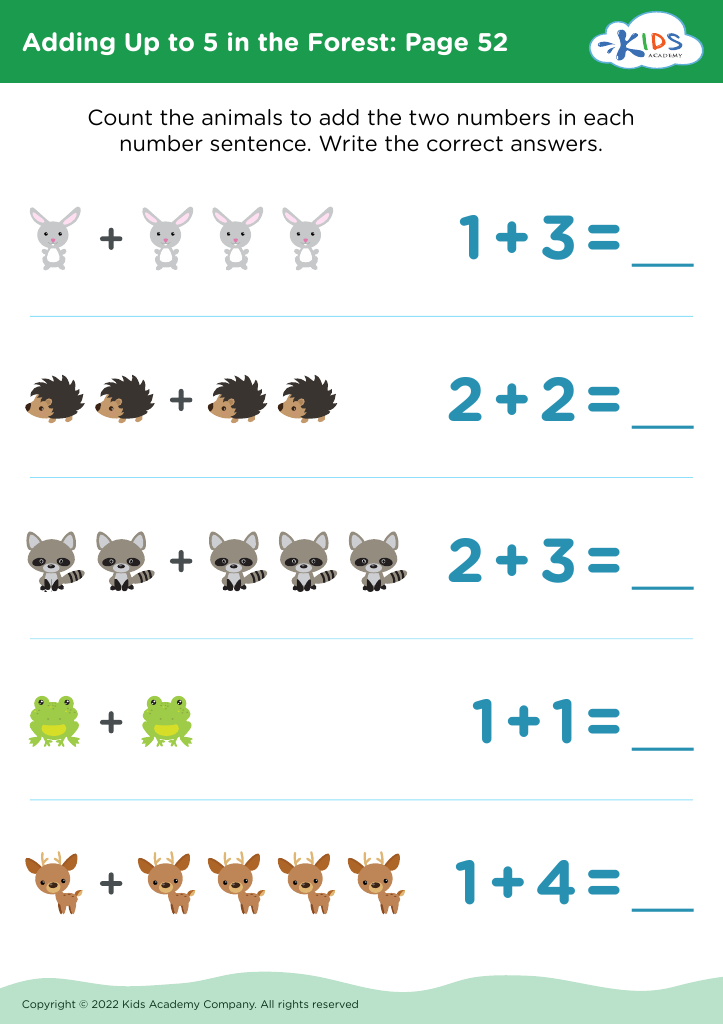
Adding Up to 5 in the Forest: Page 52
Worksheet
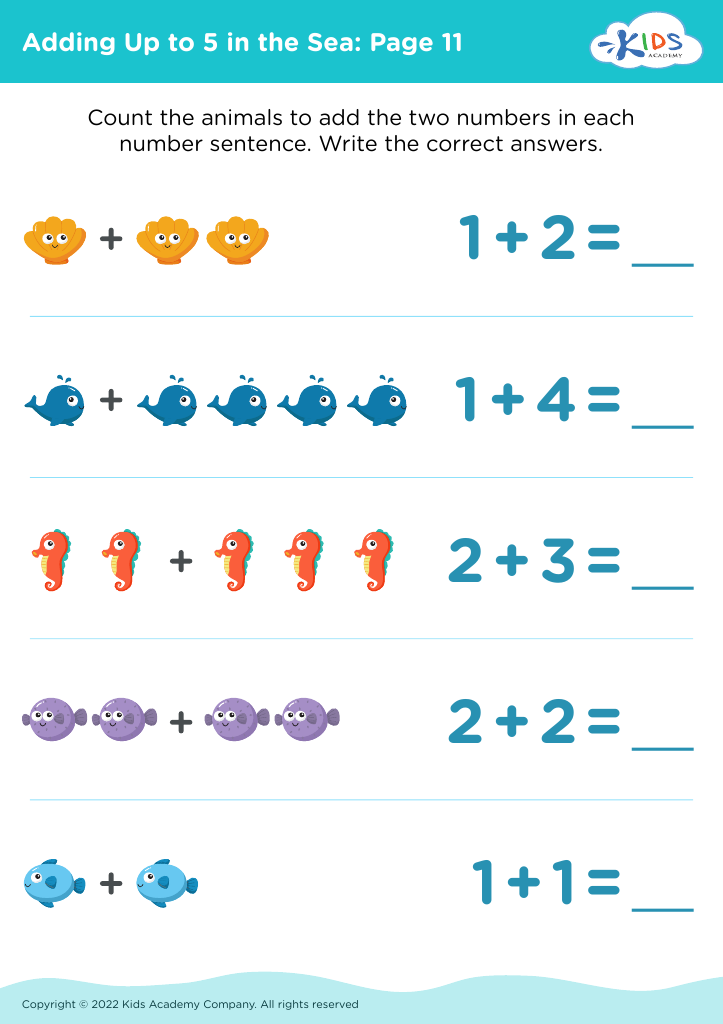
Adding Up to 5 in the Sea: Page 11
Worksheet
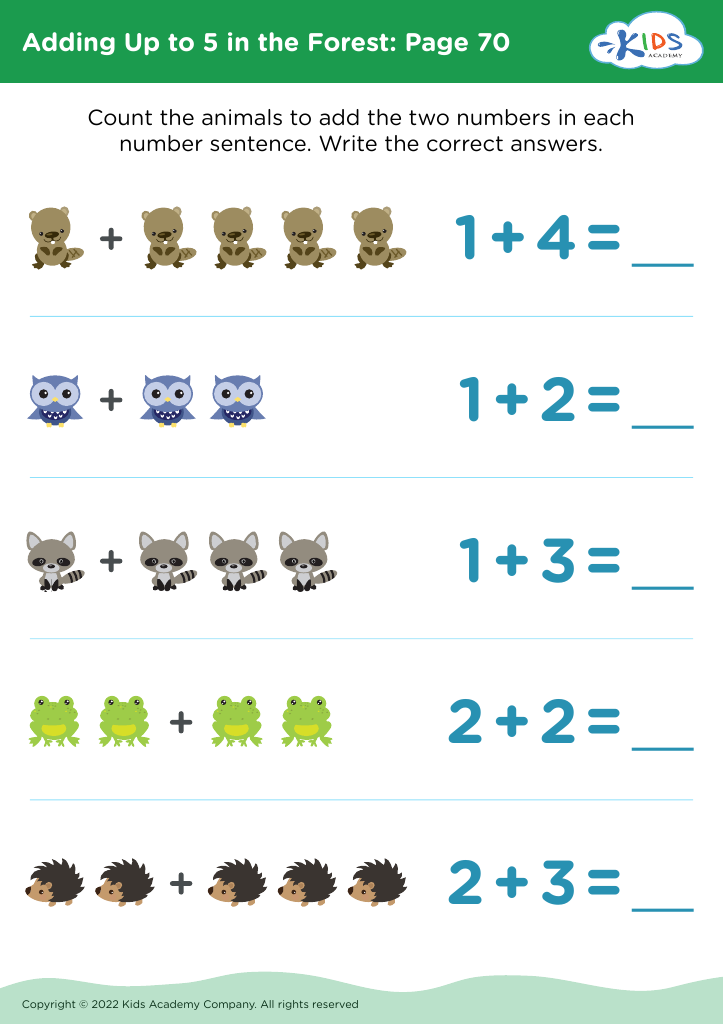
Adding Up to 5 in the Forest: Page 70
Worksheet
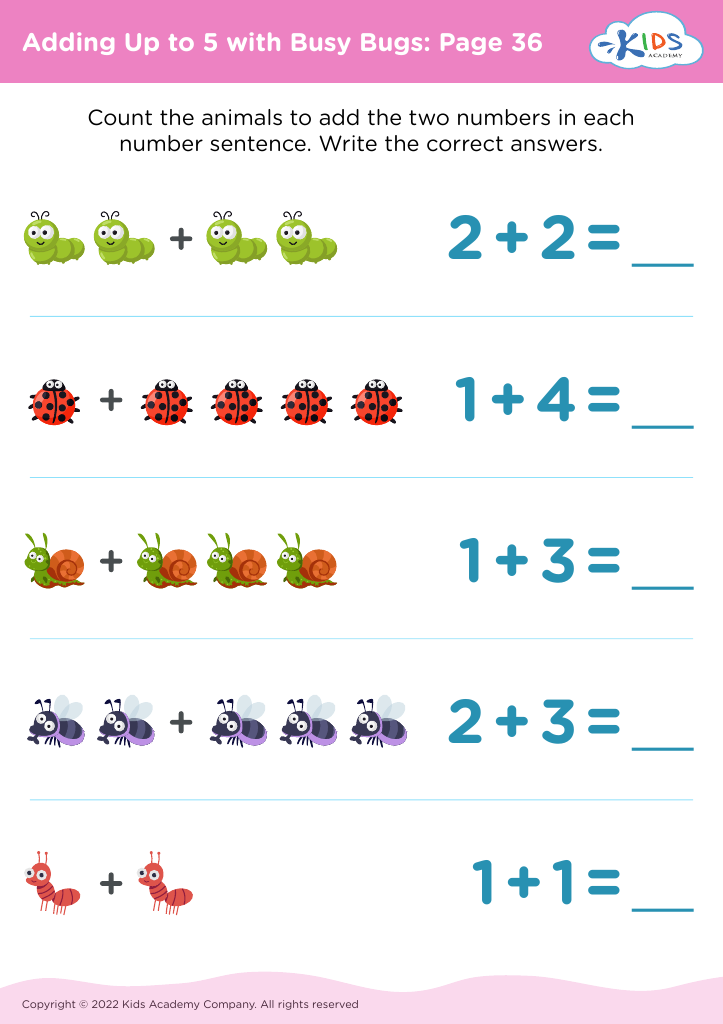
Adding Up to 5 with Busy Bugs: Page 36
Worksheet
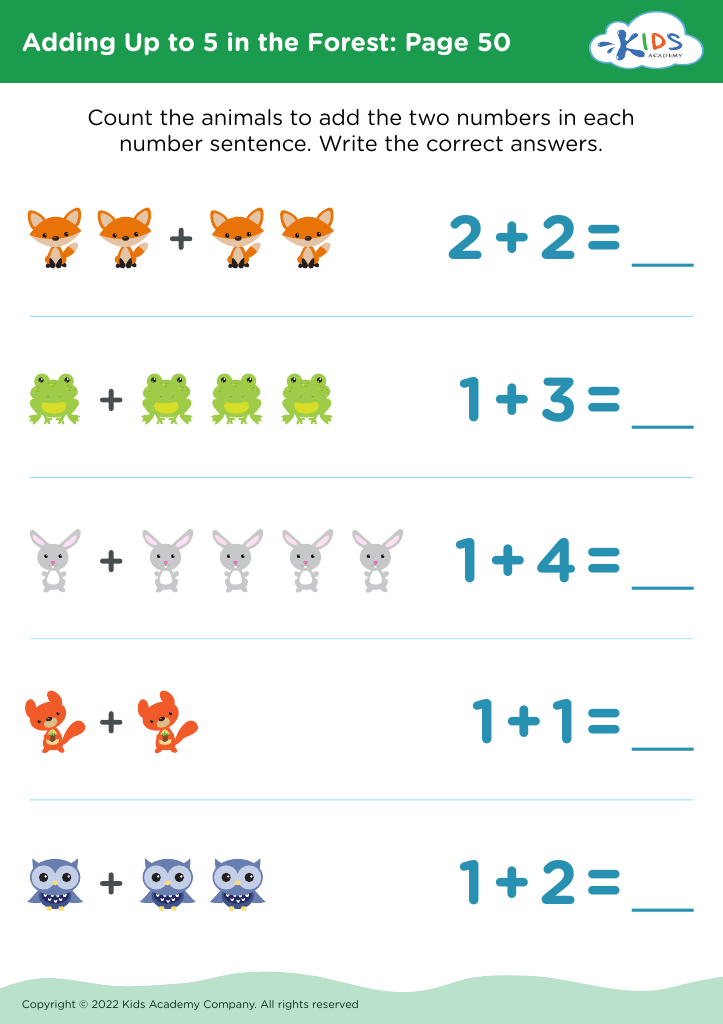
Adding Up to 5 in the Forest: Page 50
Worksheet
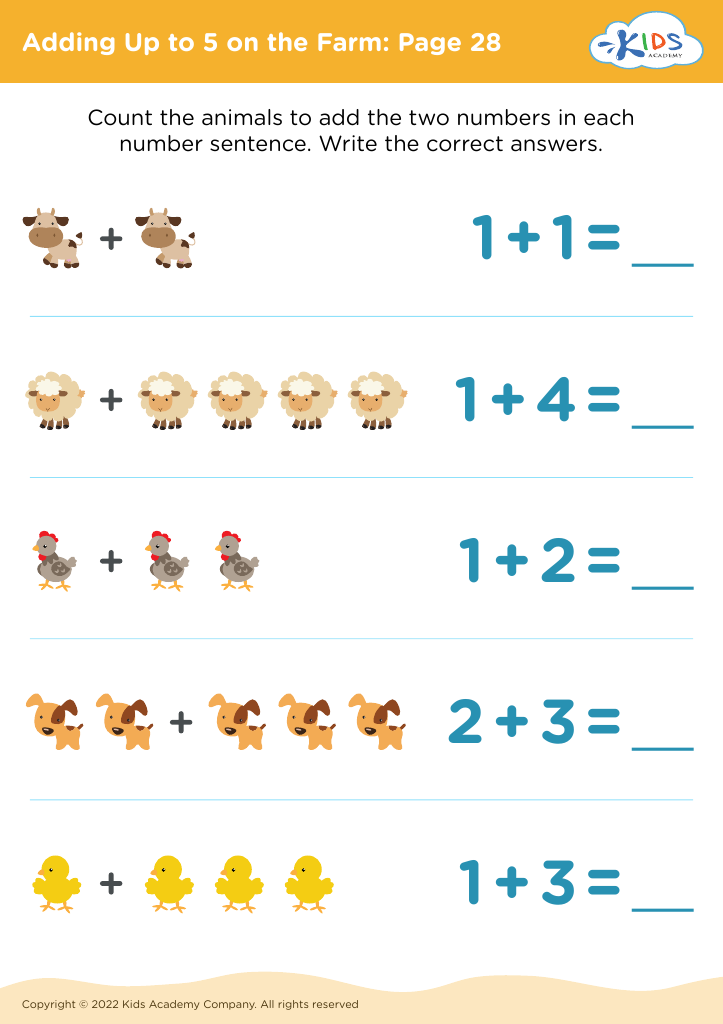
Adding Up to 5 on the Farm: Page 28
Worksheet
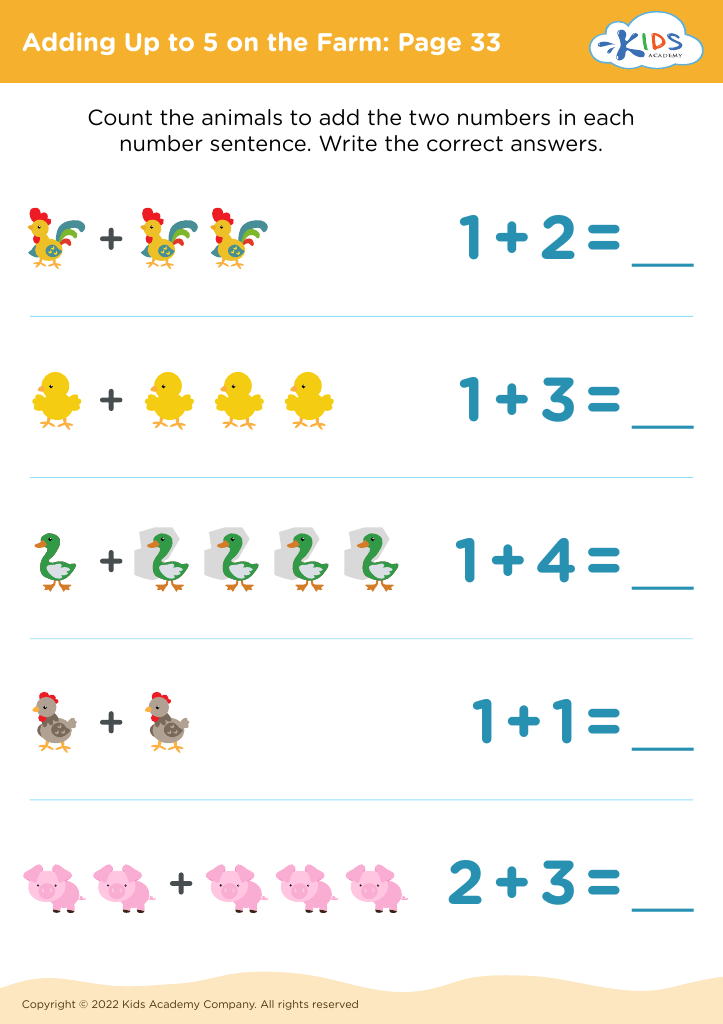
Adding Up to 5 on the Farm: Page 33
Worksheet
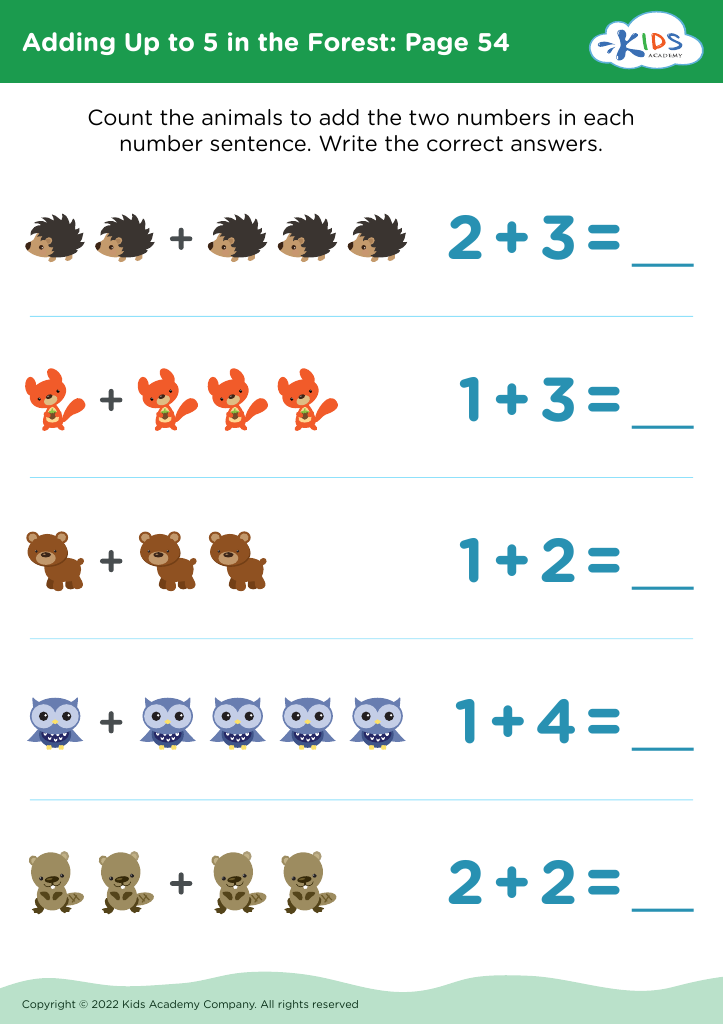
Adding Up to 5 in the Forest: Page 54
Worksheet
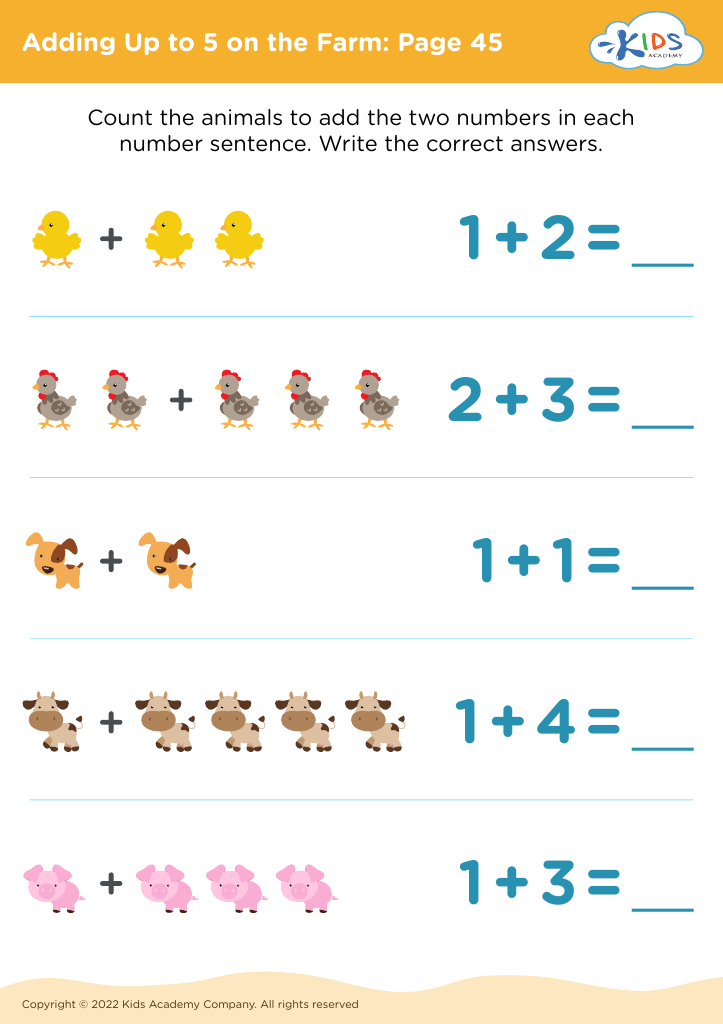
Adding Up to 5 on the Farm: Page 45
Worksheet
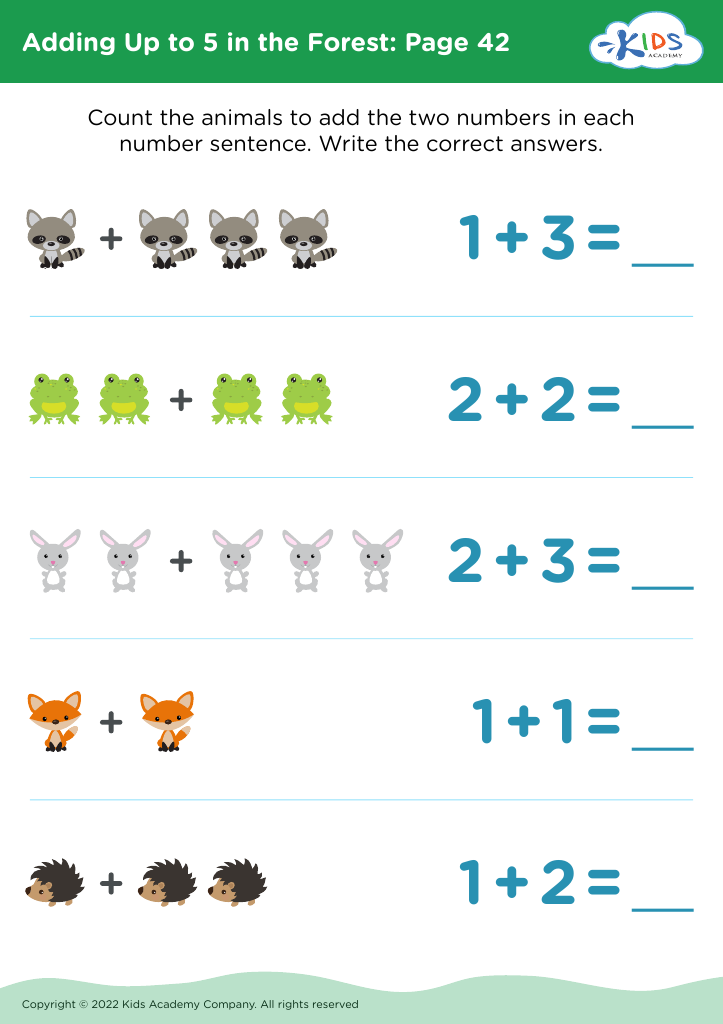
Adding Up to 5 in the Forest: Page 42
Worksheet
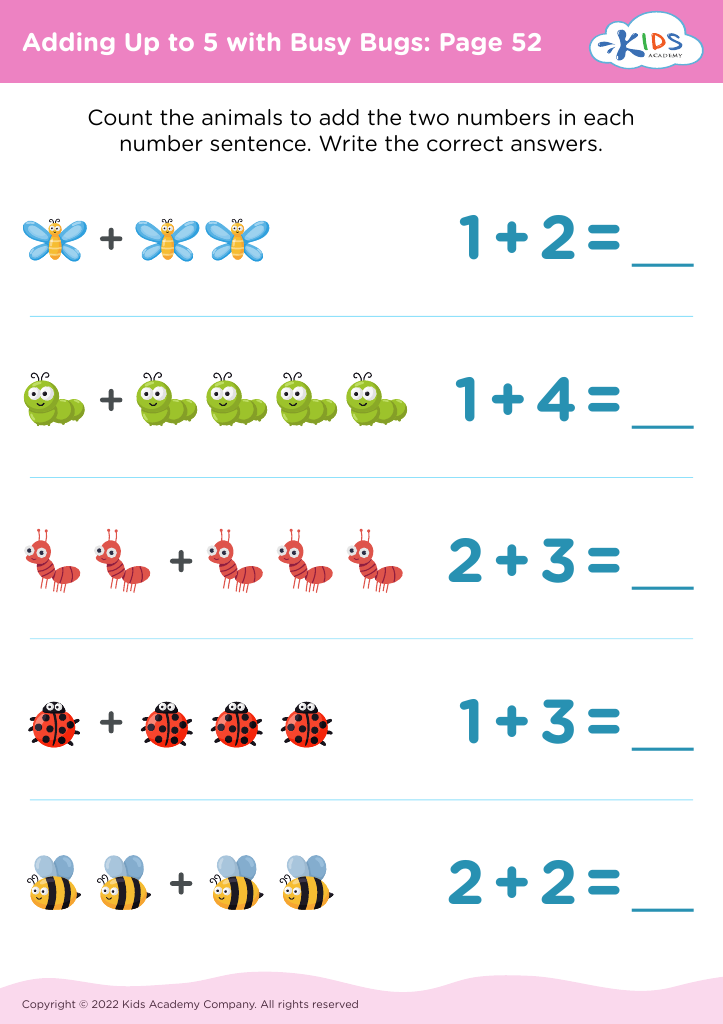
Adding Up to 5 with Busy Bugs: Page 52
Worksheet


Parents and teachers should prioritize developing problem-solving skills that involve adding up to 5 for children ages 4-5 because these foundational skills are essential for early mathematical understanding. At this age, children are naturally curious and eager to explore numbers, making it the perfect time to introduce basic arithmetic concepts.

Understanding how to add numbers up to 5 helps children develop critical thinking and reasoning abilities. These skills lay the groundwork for more complex math concepts they will encounter later, such as subtraction and larger addition problems. Moreover, problem-solving fosters perseverance – children learn to approach challenges with a positive mindset, experiment with different strategies, and find solutions independently.

Engaging in problem-solving activities encourages curiosity and creativity. When children manipulate objects or visualize problems, they become active participants in their learning, which enhances retention and comprehension. Collaborating with peers or adults during these activities also promotes social skills, communication, and teamwork.

Finally, building a strong math foundation boosts children's confidence and sets the stage for academic success. When learners feel comfortable with numbers, they are more inclined to take on new challenges, explore further learning, and develop a lifelong appreciation for mathematics. Teaching these skills isn't just about math; it's about fostering a love for learning.