Understanding number values Adding Up to 5 Worksheets for Ages 4-5
3 filtered results
-
From - To
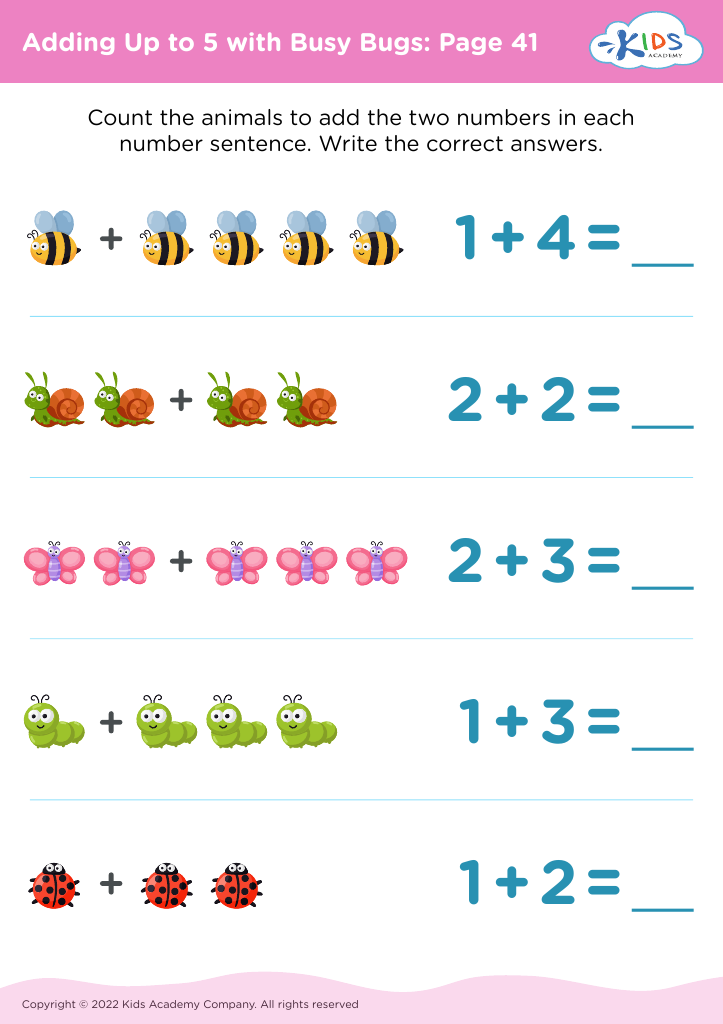
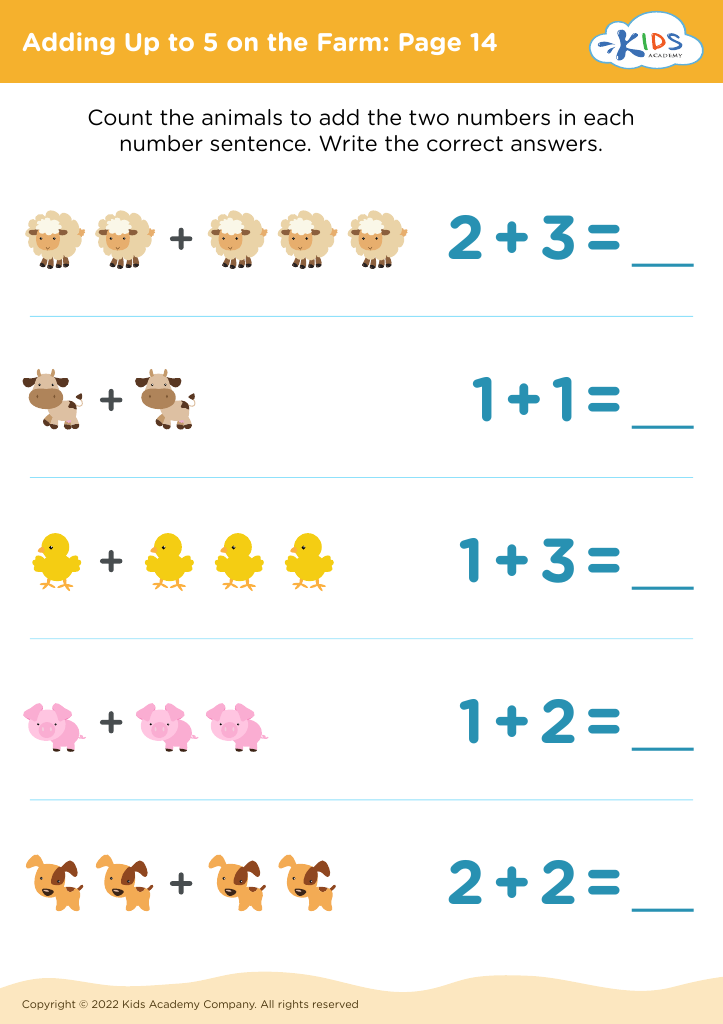
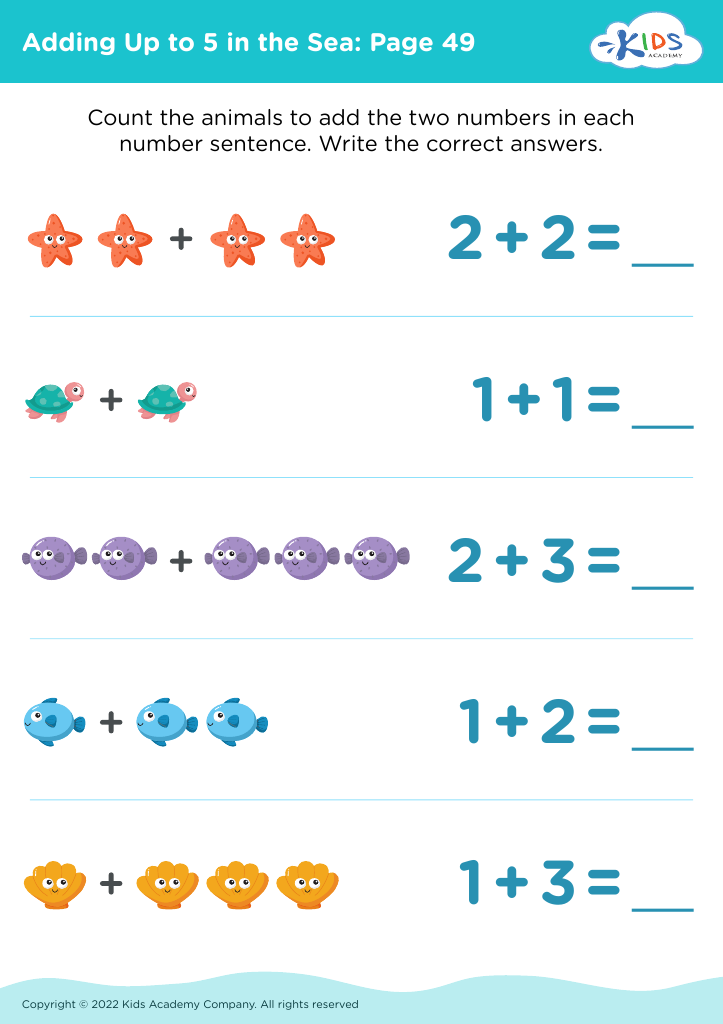
Introduce your little learners to the concept of addition with our engaging "Understanding Number Values Adding Up to 5 Worksheets." Designed for children ages 4-5, these worksheets blend fun illustrations with hands-on activities. Perfect for developing early math skills, they'll help kids grasp the meaning of number values while learning to add up to 5. Each worksheet features colorful images to count, stimulating exercises, and simple instructions to guide them as they build a solid arithmetic foundation. Make math enjoyable and educational with these specially tailored printable sheets, turning abstract ideas into tangible learning experiences for young minds.




.jpg)



Understanding number values and being able to add up to 5 is crucial for children aged 4-5 as it lays the foundation for their future math skills. At this age, children are just beginning to grasp basic numerical concepts, which are essential for their cognitive development and problem-solving abilities. By mastering numbers and addition up to 5, children start developing a sense of quantity, recognition of small groups of items, and the foundational concept of adding more to an existing amount.
Moreover, early math skills are strong predictors of later academic success in both math and other subjects. When children can confidently add numbers up to 5, they enhance their ability to perform more complex mathematical operations that they will encounter as they progress in school.
Parents and teachers play a vital role in ensuring this understanding. Simple, playful activities involving counting objects, combining groups of items, or even using interactive games can make learning fun and reinforce these essential skills. By caring about this fundamental stage of number comprehension, parents and teachers not only help children build their math confidence but also ignite a lifelong interest in learning.








