Visual learning enhancement Adding Up to 5 Worksheets for Ages 4-5
4 filtered results
-
From - To
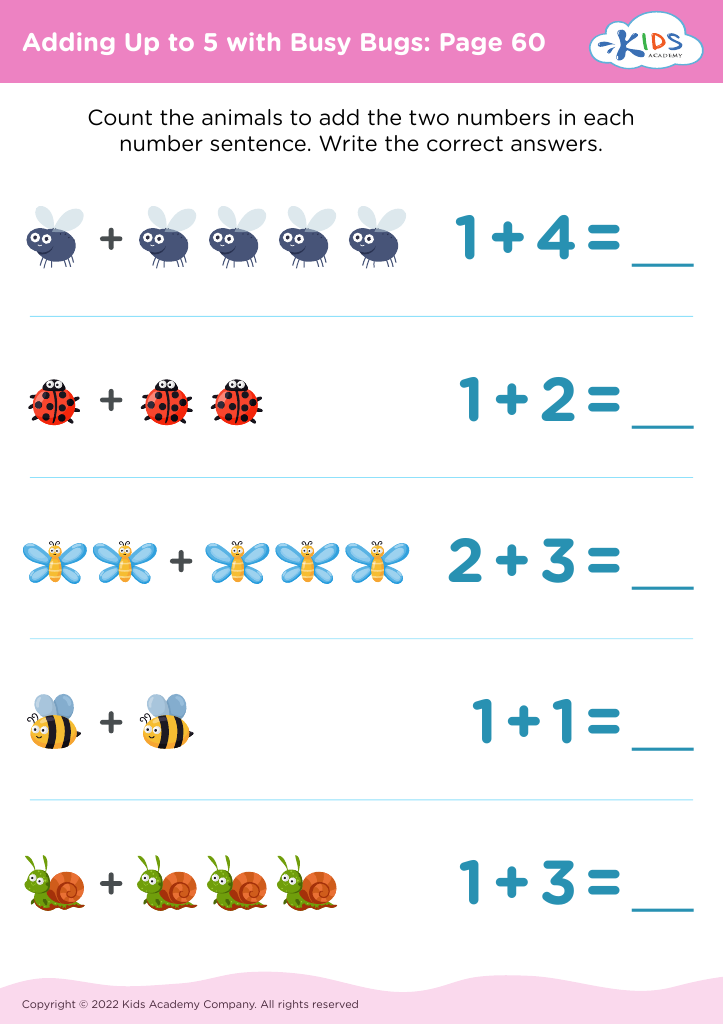
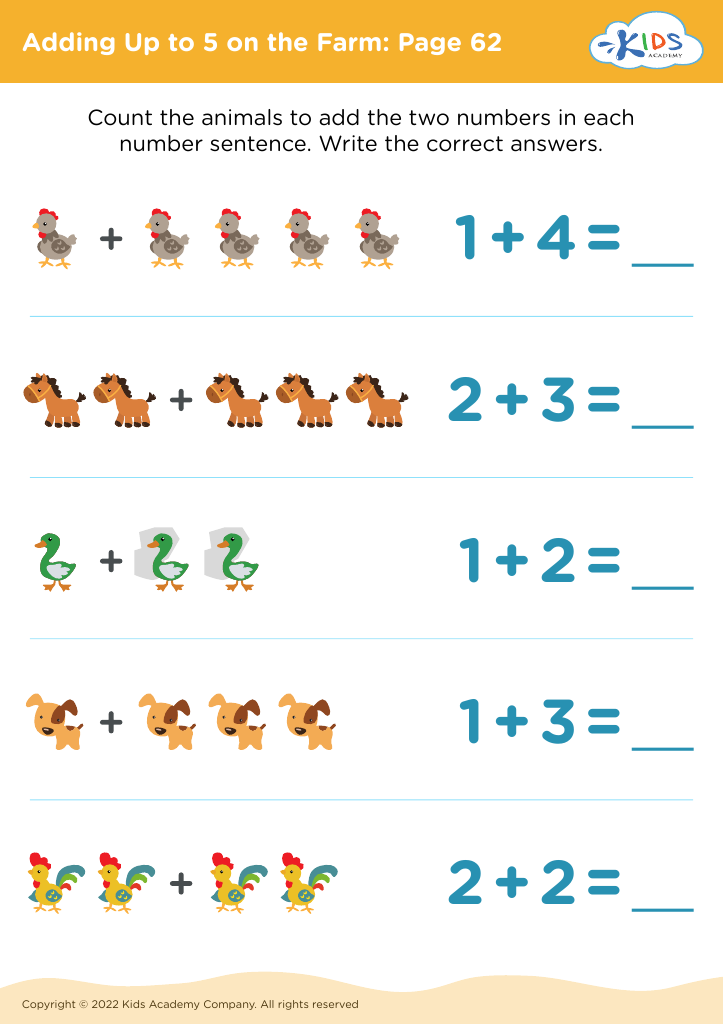
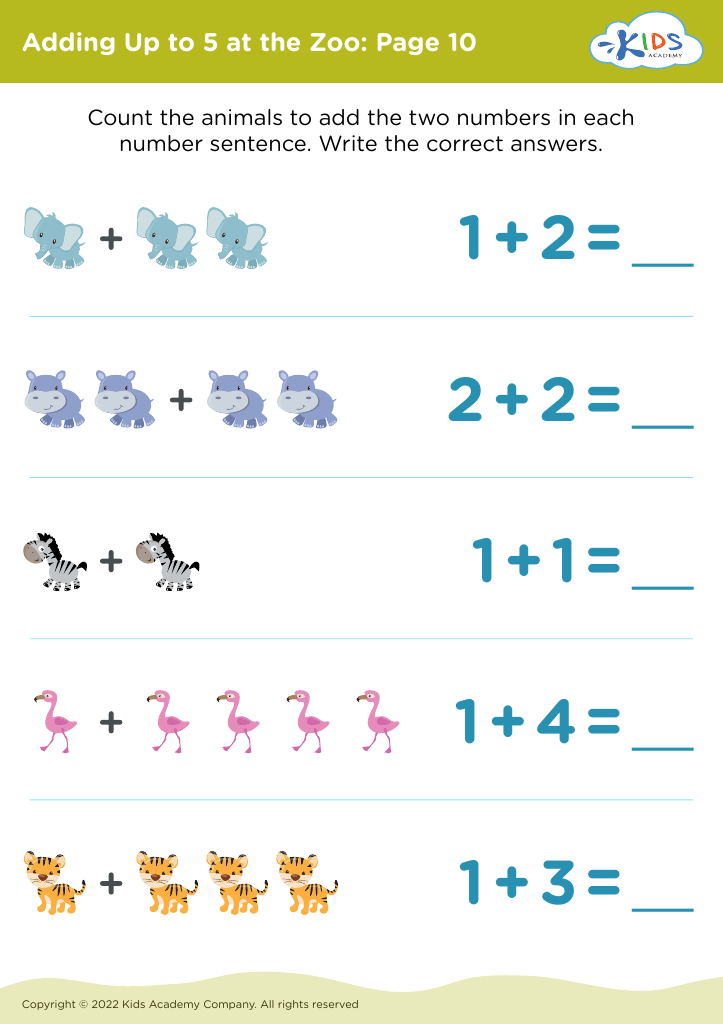
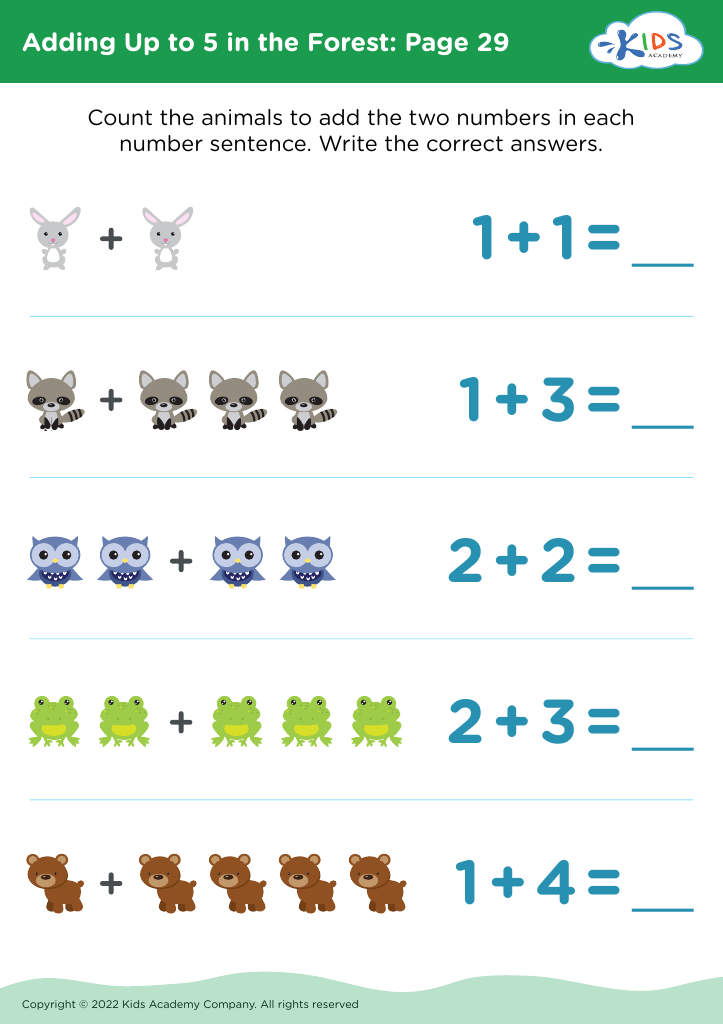
Enhance your child's visual learning experience with our "Adding Up to 5 Worksheets" designed for ages 4-5. These engaging, colorful worksheets utilize visual aids to make understanding addition fun and interactive. By incorporating images and tangible elements, children can grasp the concept of combining numbers with ease. Ideal for early math skills development, these worksheets encourage critical thinking and creativity while reinforcing the fundamentals of math. Perfect for classroom use or at-home learning, our resources aim to make mathematical concepts accessible and enjoyable for young learners. Unlock your child's potential with effective visual learning strategies today!


%20(1).jpg)
.jpg)




Parents and teachers of young children aged 4 to 5 should be keenly interested in visual learning enhancement, especially when it comes to counting and basic mathematics like "Adding Up to 5." This age group is at a pivotal stage of cognitive development, where visual aids can significantly boost comprehension and retention.
Visual learning strategies, such as using manipulatives, number charts, and digital tools, provide concrete resources for abstract concepts. For example, using colored blocks or finger paintings to represent numbers makes addition more engaging and relatable, fostering a deeper understanding of math.
Incorporating visual elements caters to various learning styles, ensuring that diverse learners can appreciate and grasp mathematical concepts. Visual aids can also make learning about numbers fun, promoting a positive attitude towards math. This enthusiasm can lead to a lifelong love of learning.
Furthermore, visual learning encourages critical thinking and problem-solving skills. As children explore different ways to combine numbers visually, they exercise creativity and adaptability, core competencies in today’s world.
Ultimately, enhancing visual learning in early math not only builds foundational skills but also prepares children for future academic success, nurturing their self-confidence and enthusiasm for learning in various domains.








