Basic math concepts Adding with Busy Bugs Worksheets for Ages 4-5
6 filtered results
-
From - To
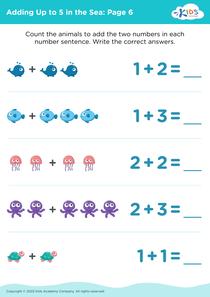
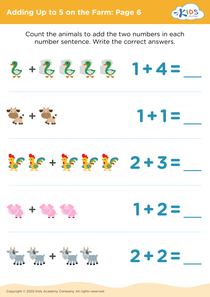
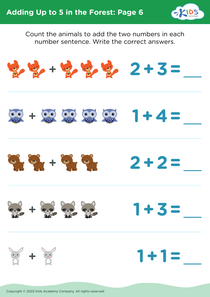
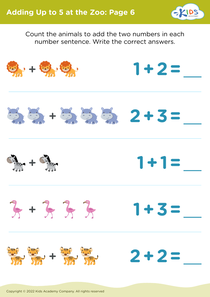
Welcome to our "Adding with Busy Bugs Worksheets" page, designed for kids aged 4-5! Our engaging worksheets introduce fundamental math concepts, focusing on addition through delightful bug-themed activities. These printable resources are tailored to spark your child's interest in learning while building their early math skills. Each worksheet combines colorful illustrations with easy-to-follow exercises, allowing young learners to practice counting and simple addition in a fun way. By incorporating playful themes, we cultivate a positive and enjoyable experience for children to develop their confidence in mathematics. Help your child thrive with our Busy Bugs worksheets today!
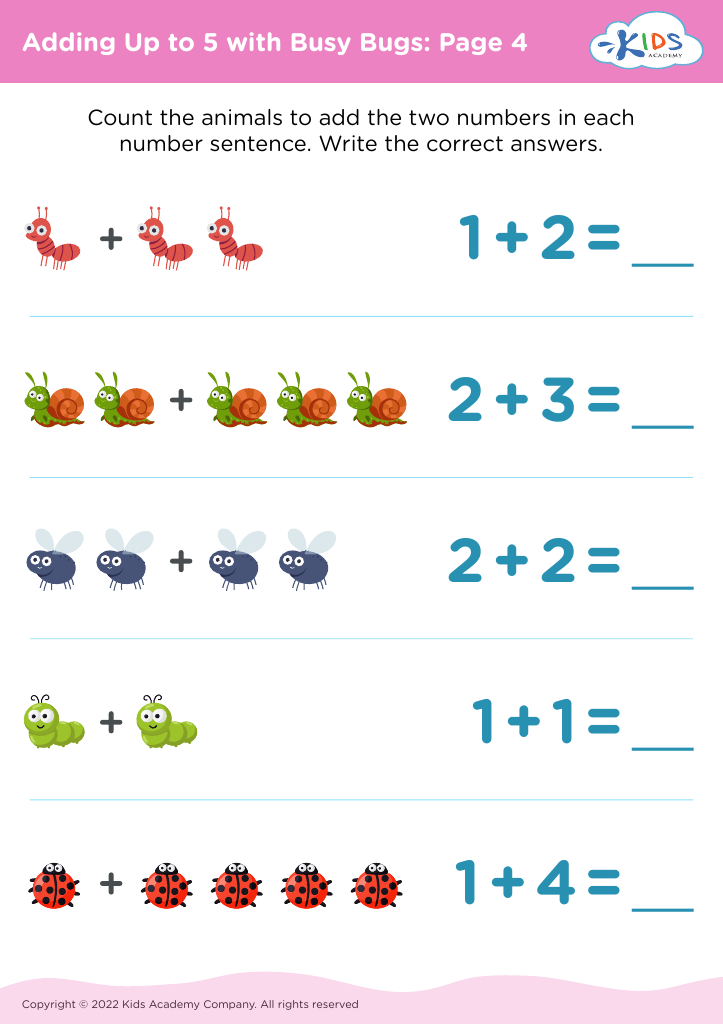
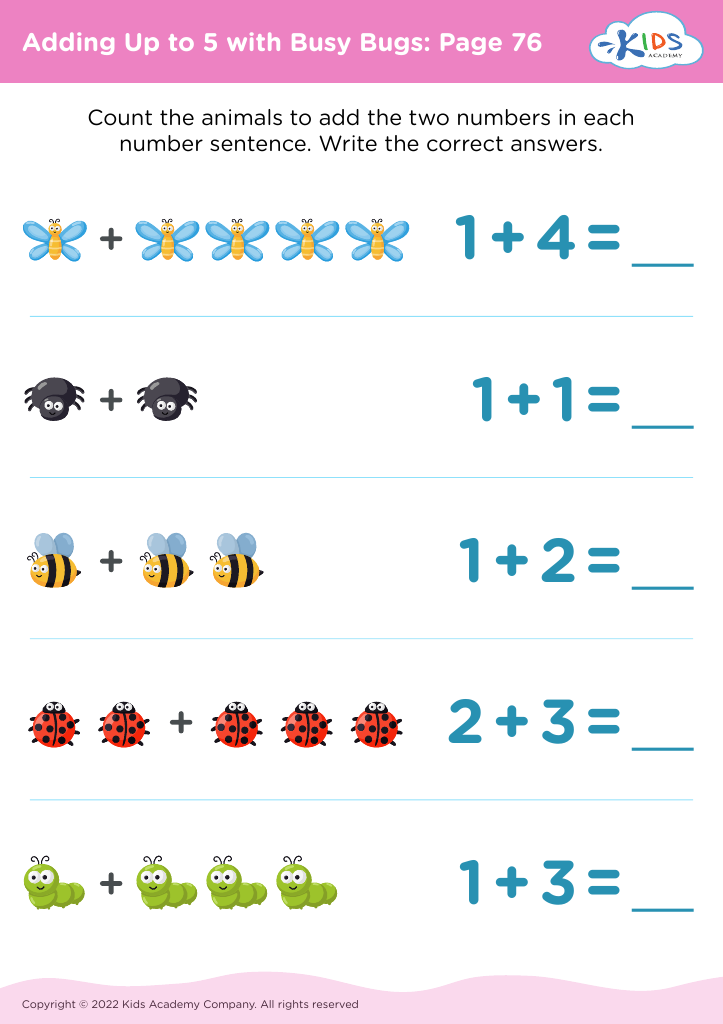
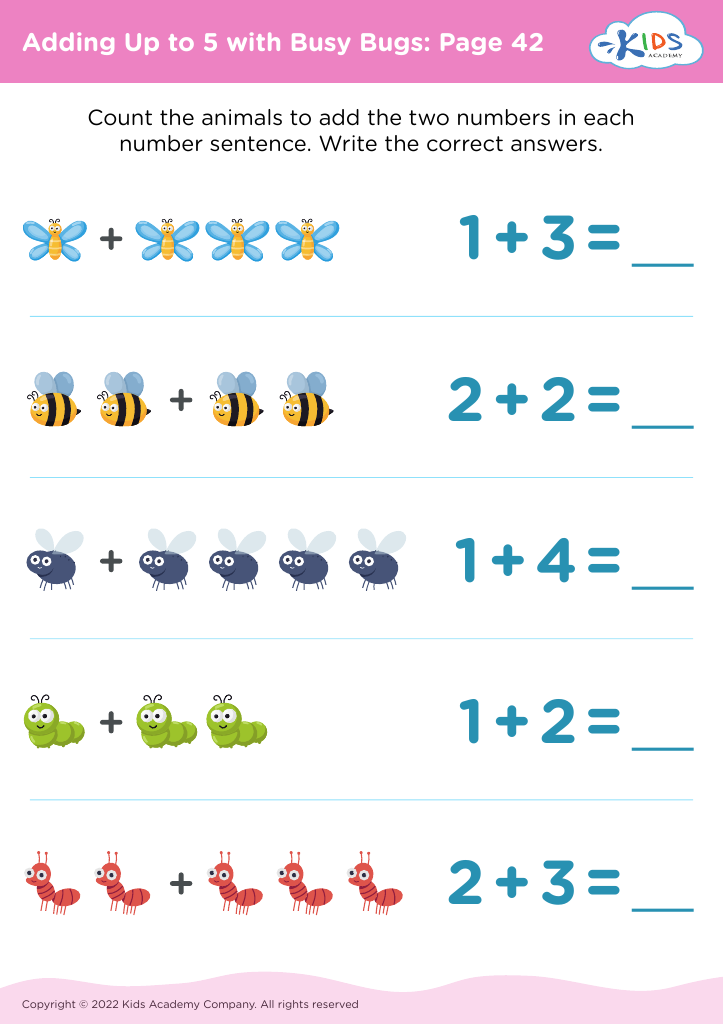
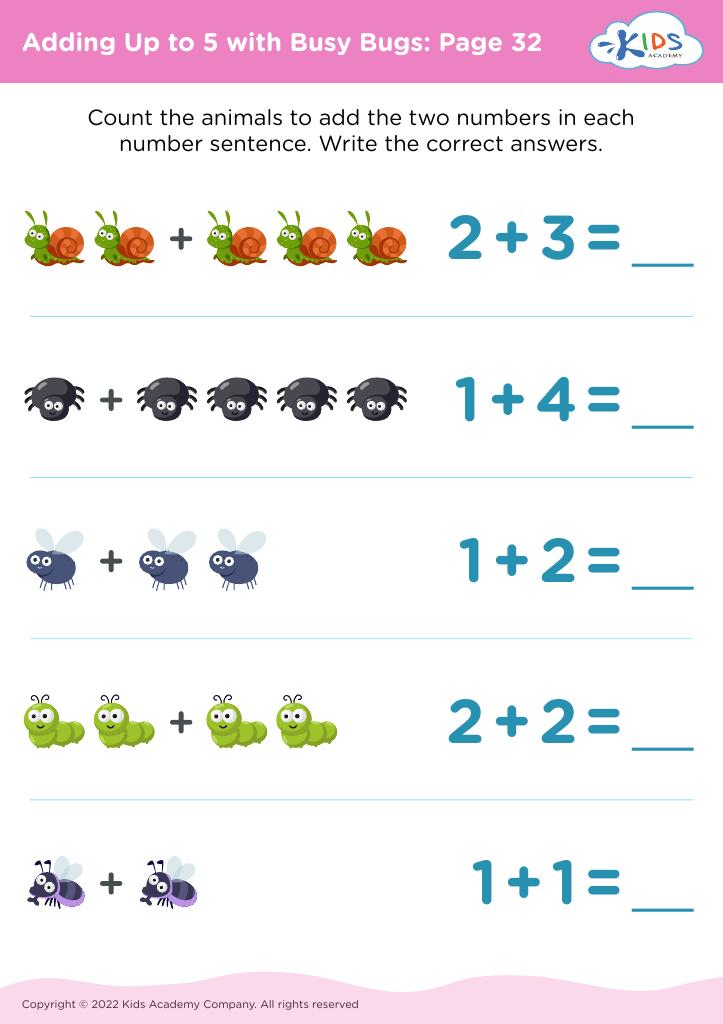
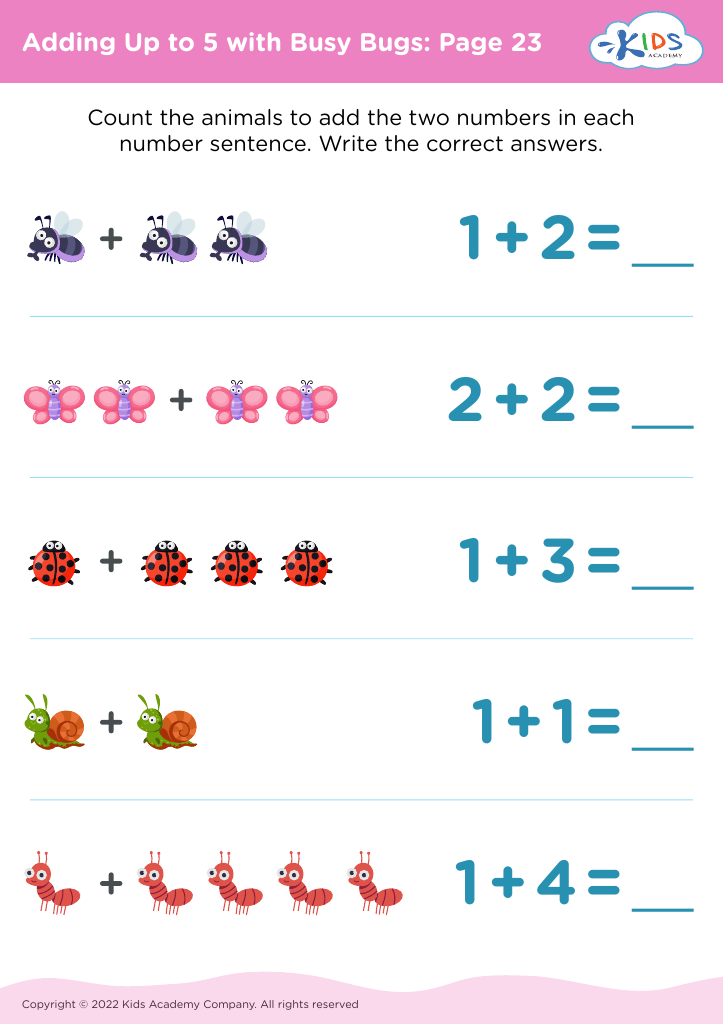
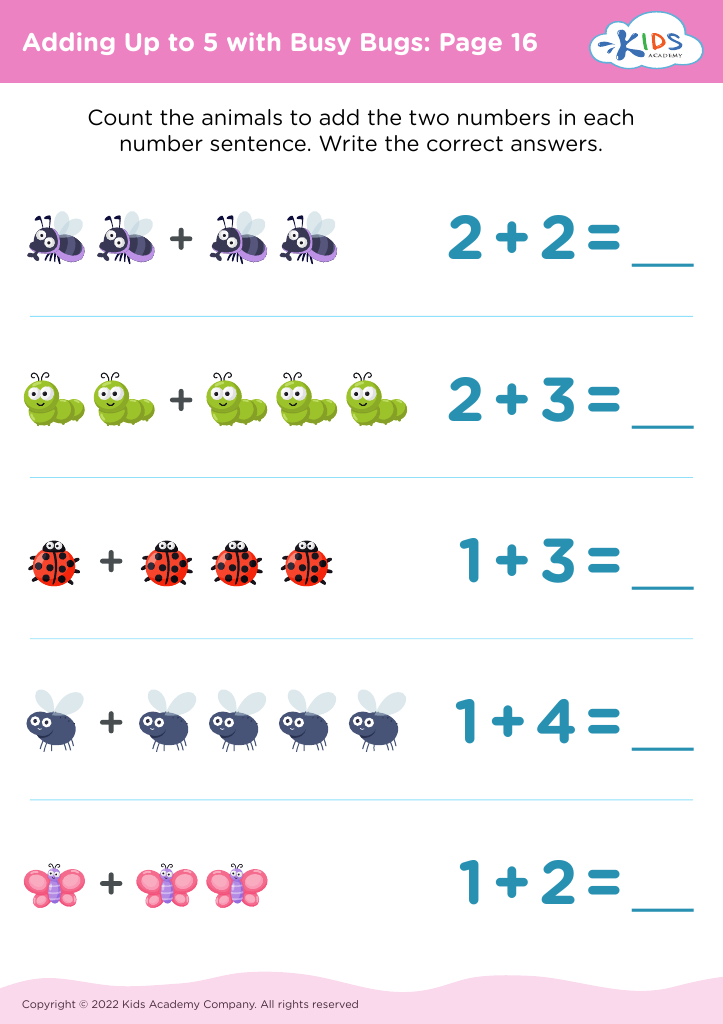



Parents and teachers should prioritize basic math concepts, like addition through interactive tools like "Busy Bugs," for children aged 4-5 because early mathematical understanding lays the foundation for future academic success. Engaging children in hands-on, visually stimulating activities helps them grasp abstract concepts in a fun and relatable way. "Busy Bugs" captures young children's imagination, making learning enjoyable and effective.
Learning addition through play reinforces essential skills such as counting, number recognition, and problem-solving in a non-threatening environment. Children develop their numeracy skills while also enhancing fine motor skills, coordination, and critical thinking. Moreover, early exposure to math fosters a positive attitude towards learning, helping combat future math anxiety.
Incorporating games like "Busy Bugs" promotes cooperative learning as children interact, share ideas, and learn from each other. This collaborative element builds social skills and encourages communication, vital for their overall development. Lastly, fostering a rich mathematical environment nurtures a love for learning that extends beyond the classroom, promoting lifelong curiosity and intellectual growth. Supporting early math education prepares children not only for future academic challenges but also equips them with the necessary skills to navigate the world around them.