Basic Math Skills Adding with Busy Bugs Worksheets for Ages 4-5
7 filtered results
-
From - To
Introducing Basic Math Skills: Adding with Busy Bugs Worksheets for Ages 4-5, available at Kids Academy. These fun, engaging worksheets feature colorful bug illustrations designed to captivate young learners as they practice addition. Ideal for preschool and kindergarten students, the exercises focus on fundamental math skills, encouraging hands-on learning and critical thinking. Each worksheet presents simple addition problems that help children master counting, number recognition, and basic math operations in an entertaining and educational way. Perfect for parents and teachers seeking high-quality, printable resources to support early childhood math development in an enjoyable manner!
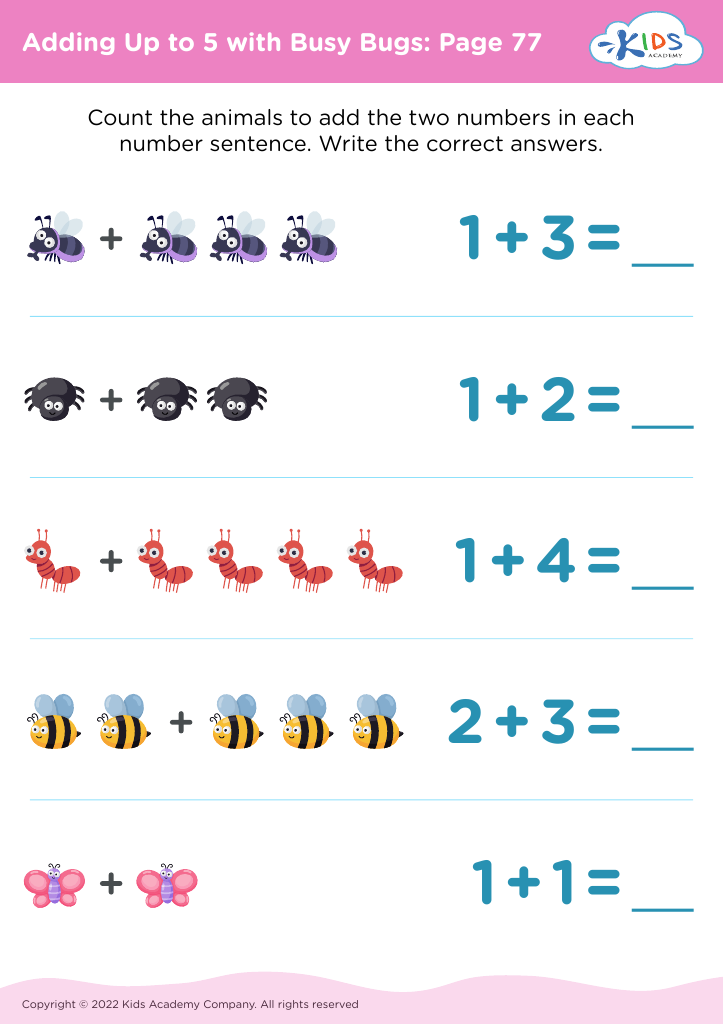
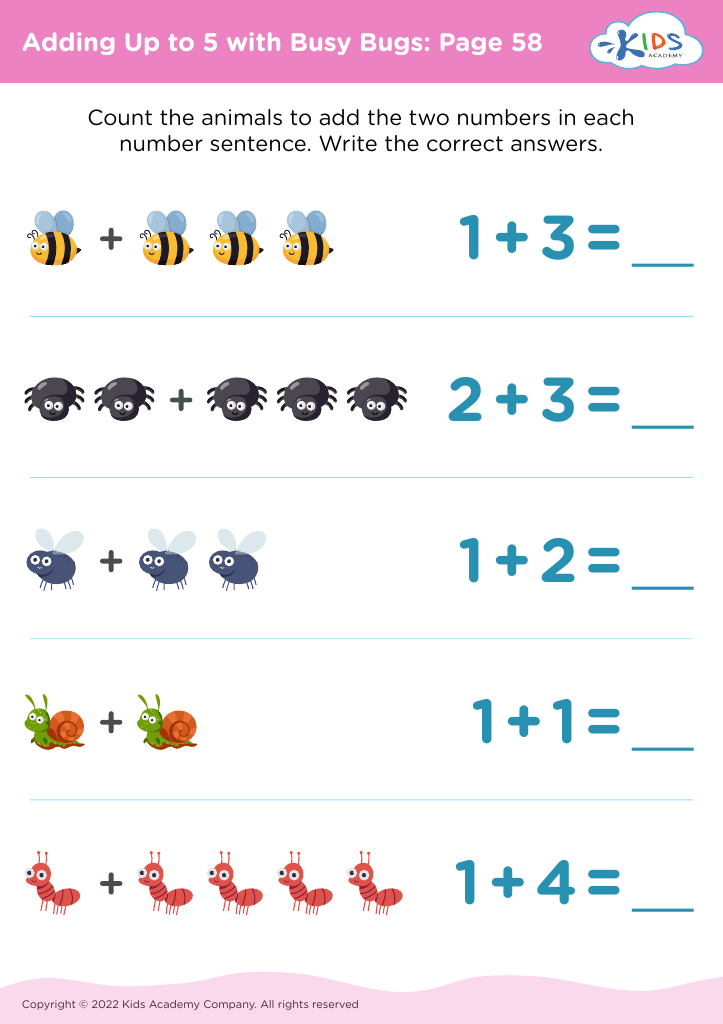
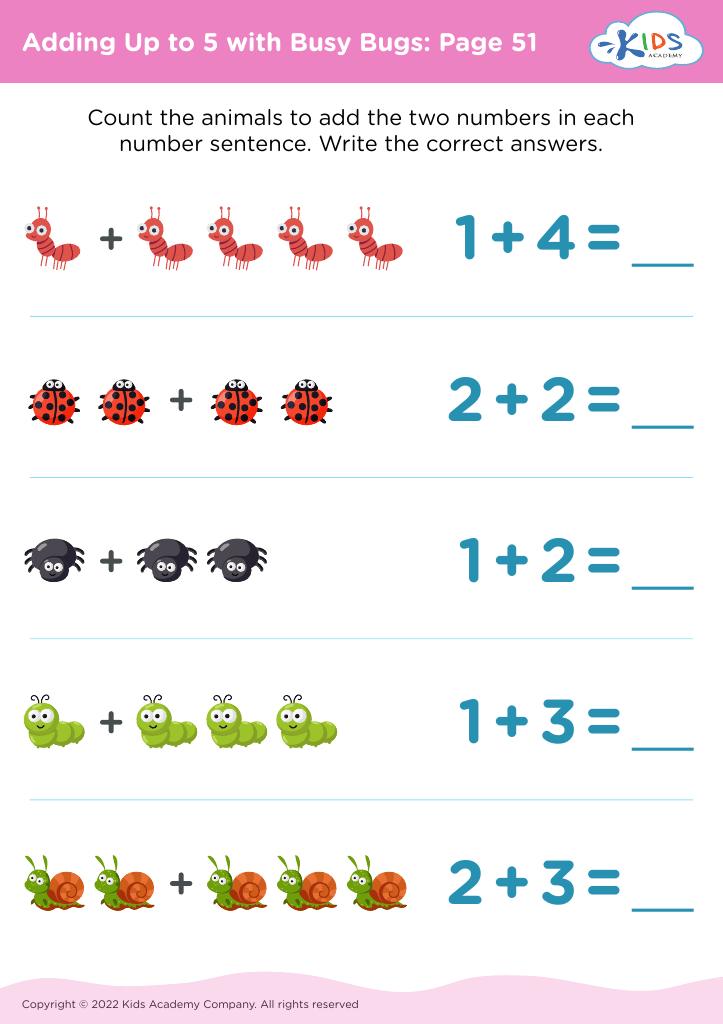
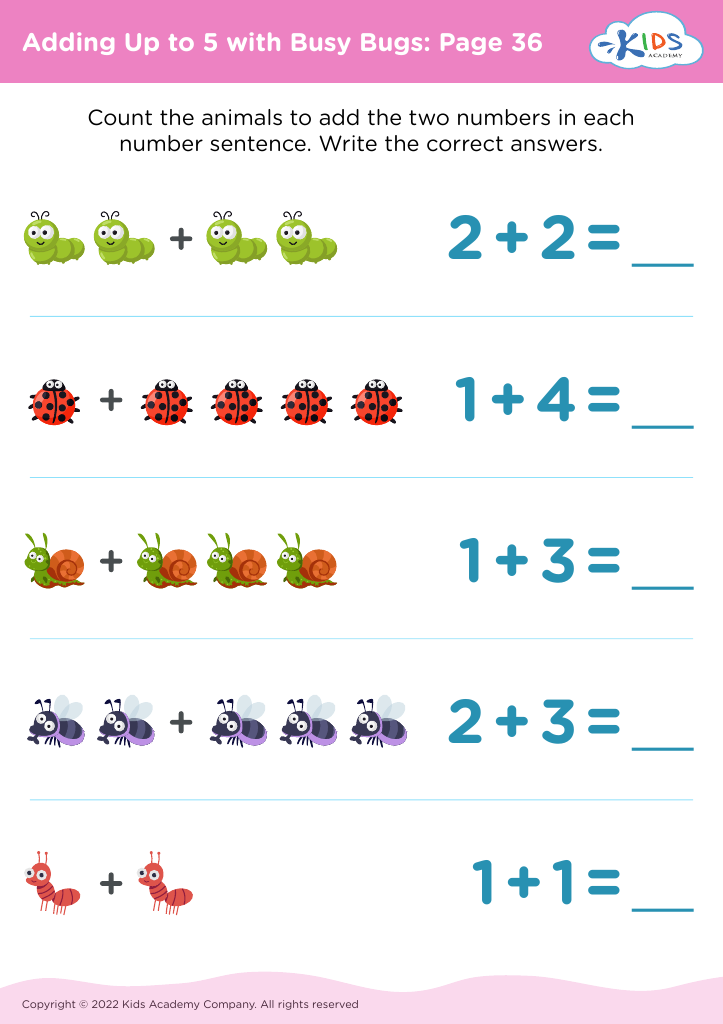
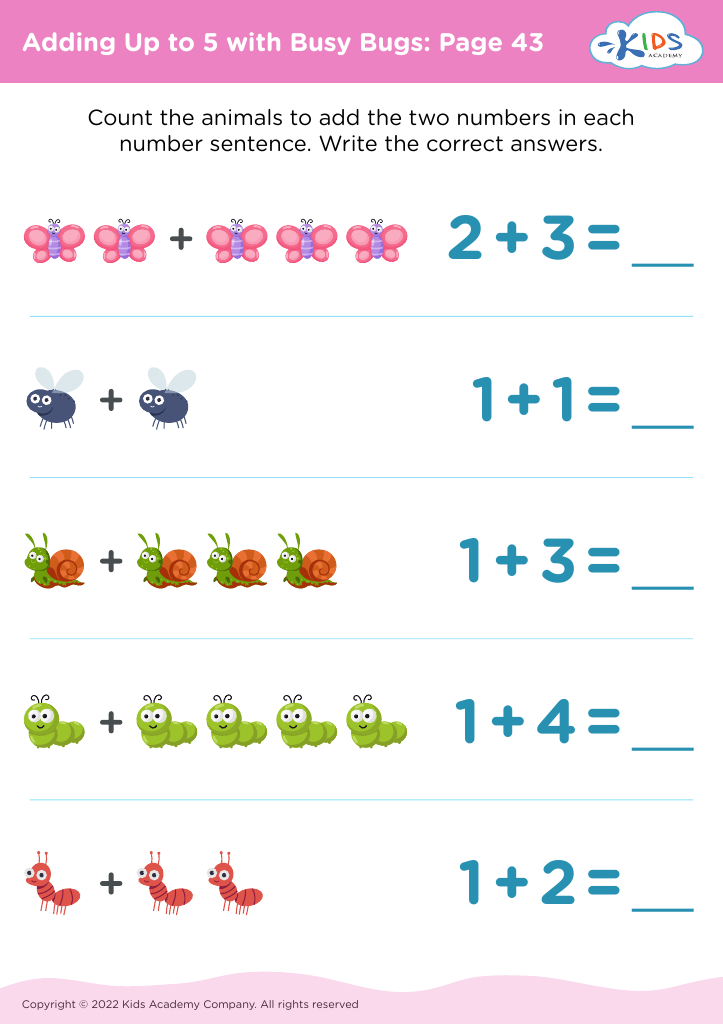
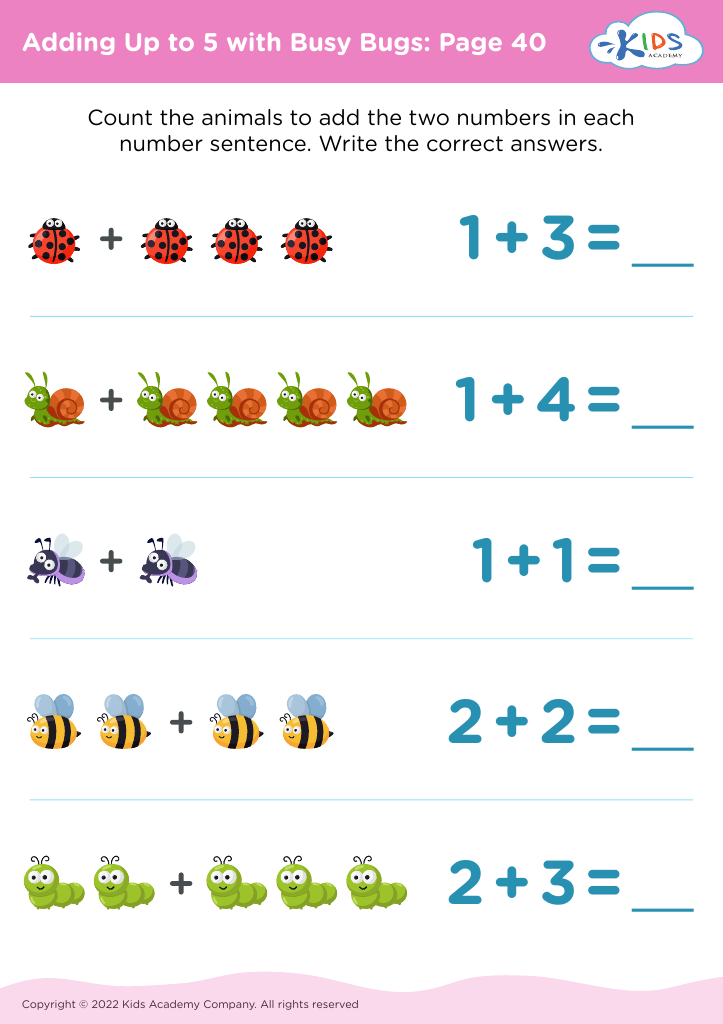
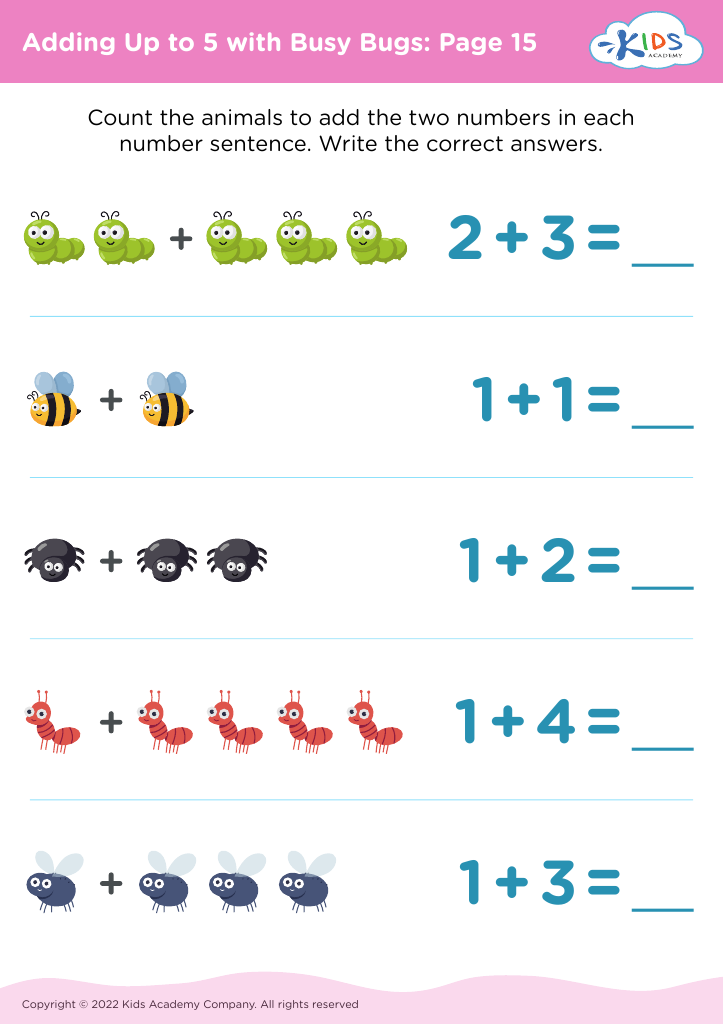



Parents and teachers should place significant emphasis on foundational math skills, and the "Basic Math Skills: Adding with Busy Bugs" workbook for ages 4-5 offers an engaging method to do so. Mastery of basic addition at this early stage is crucial as it sets the foundation for more complex mathematical concepts that children will encounter as they progress in school.
Using visually appealing and interactive elements like "Busy Bugs" captures the interest of young learners, making abstract concepts tangible and relatable. This method stimulates curiosity and fosters a positive attitude towards math, which is essential in minimizing math anxiety and boosting confidence. Activities centered around busy bugs make learning feel like play, motivating children to spend productive time improving their skills.
Moreover, at ages 4-5, children are in a critical window for cognitive development, where they are building neural connections rapidly. Incorporating math worksheets during this period aids in enhancing their computational thinking, problem-solving abilities, and attention span. Continuous practice with such engaging tools provides structured learning while also catering to individual learning paces.
In summary, caring about these early math foundational skills ensures that children gain a strong numerical keystone, setting them up for academic success and a lifelong comfort with mathematical thinking.