Counting practice Addition and Subtraction Word Problems Worksheets for Ages 4-5
5 filtered results
-
From - To
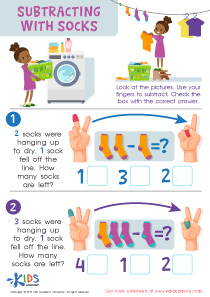
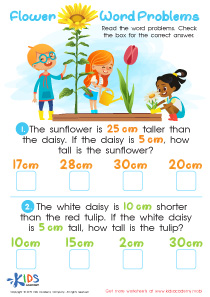
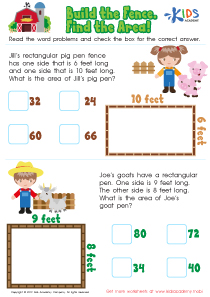
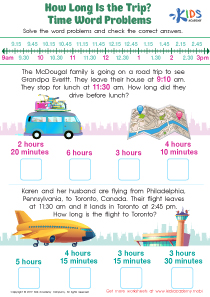
Discover engaging Counting Practice Addition and Subtraction Word Problems Worksheets designed for children aged 4-5! Our carefully crafted printables help young learners develop essential math skills through fun, relatable scenarios. These worksheets encourage counting, addition, and subtraction in a playful way, making learning enjoyable and effective. With vibrant illustrations and simple wording, children will enhance their problem-solving abilities while mastering basic arithmetic. Perfect for parents and teachers alike, these worksheets are an excellent resource to support early math education and build a strong foundation for future learning. Explore our collection and watch your little ones thrive in mathematics!
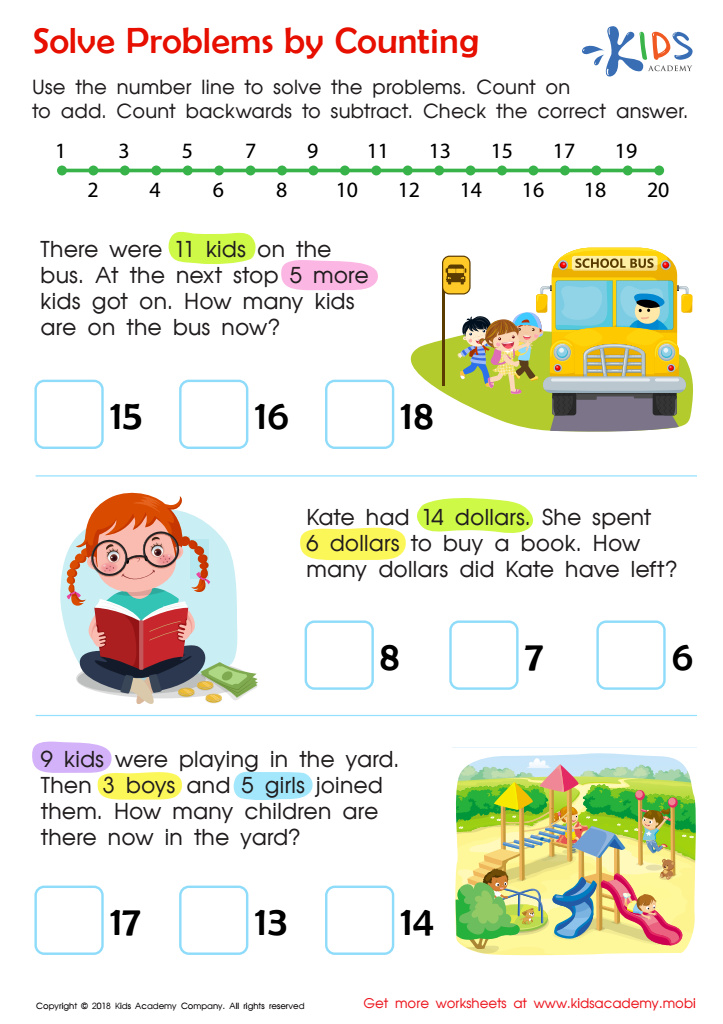
Solve Problems by Counting Worksheet
 Assign to My Students
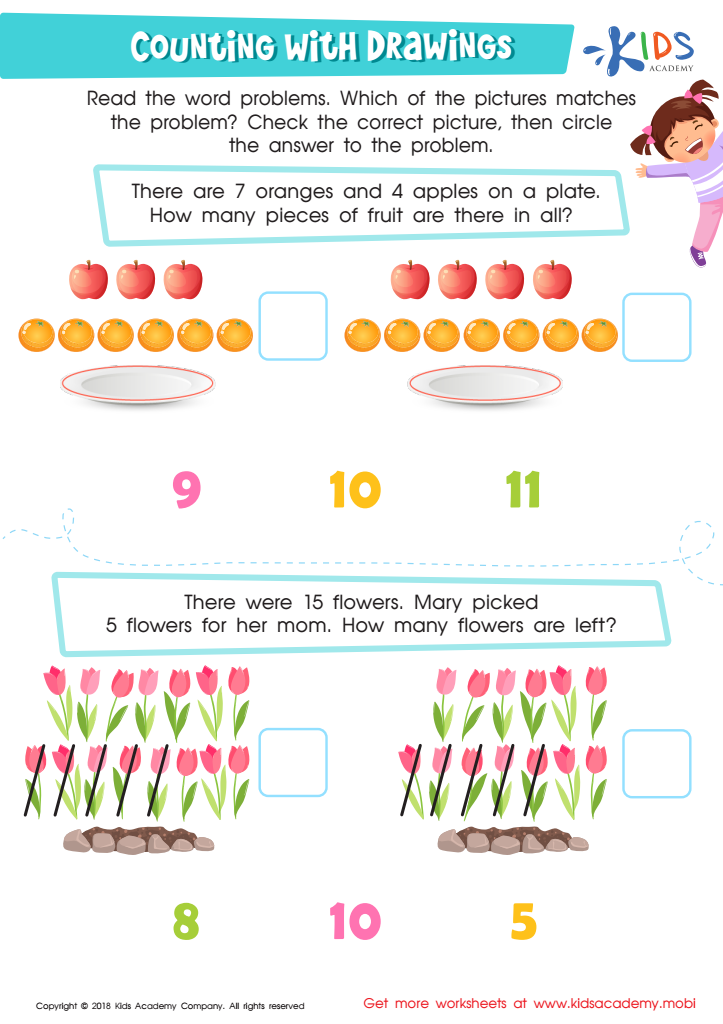
Counting with Drawings: Fruits & Chocolates Worksheet
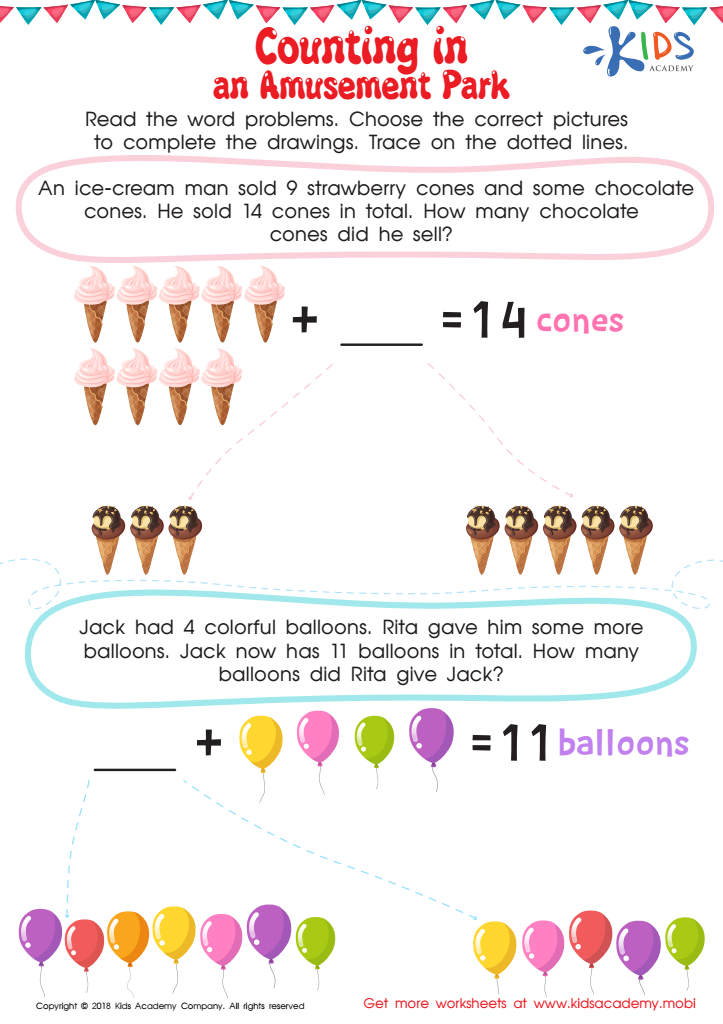
Counting in an Amusement Park Worksheet
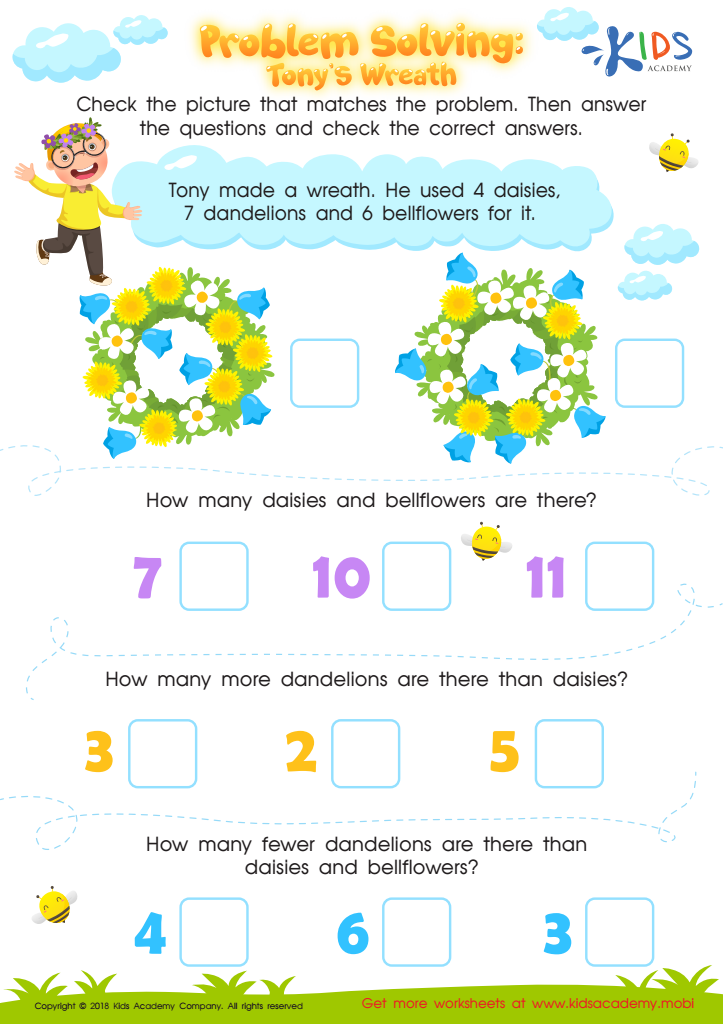
Problem Solving: Tony's Wreath Worksheet
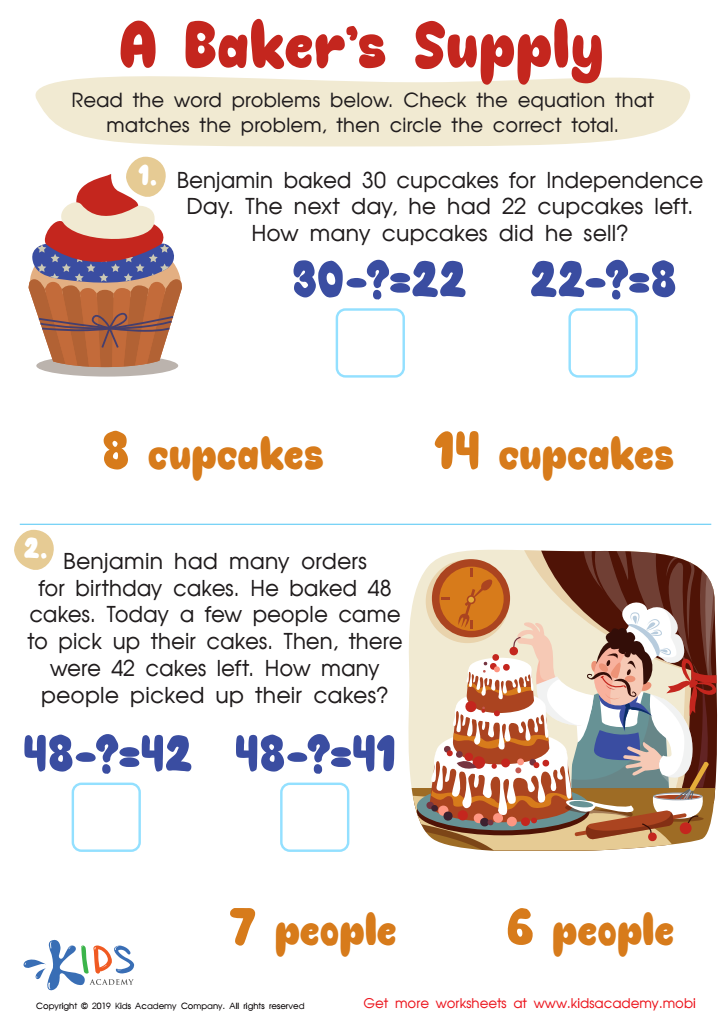
A Baker's Supply Worksheet








Counting practice, along with addition and subtraction word problems, plays a crucial role in the early development of mathematical skills for children aged 4-5. During this formative stage, children are naturally curious and eager to learn, making it the perfect time to introduce fundamental concepts. Engaging in counting and solving word problems helps children develop a strong number sense, enabling them to understand quantities, relationships, and basic arithmetic. These skills serve as the foundation for more complex mathematical concepts later in their education.
Additionally, word problems encourage critical thinking and problem-solving abilities. When children learn to translate real-world situations into mathematical expressions, they enhance their cognitive skills and comprehension. Moreover, this practice supports language development, as they learn to articulate their understanding of the problems and communicate their thought processes.
Incorporating counting and basic operations into everyday activities can make learning enjoyable and relevant, reinforcing positive attitudes toward math. When parents or teachers engage with children in this practice, they foster a love for learning while building confidence and competence in mathematics. Ultimately, these skills are essential for academic success and everyday problem-solving in later years, making it vital for caregivers to prioritize this area of development.