Animal identification Addition & Subtraction Worksheets for Ages 4-5 - Page 2
27 filtered results
-
From - To
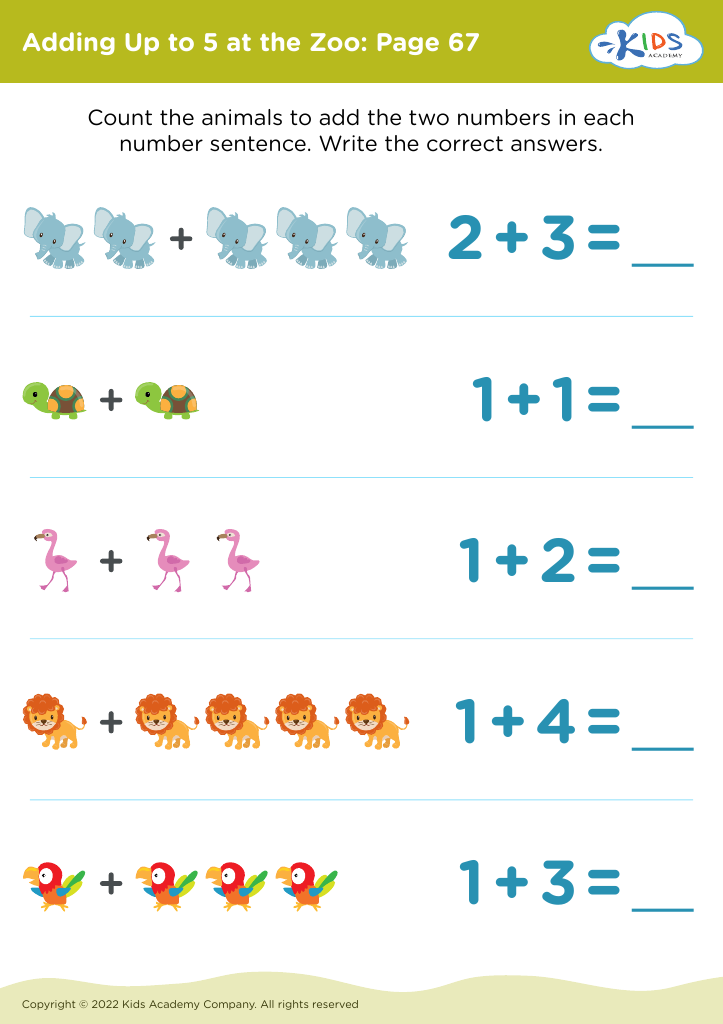
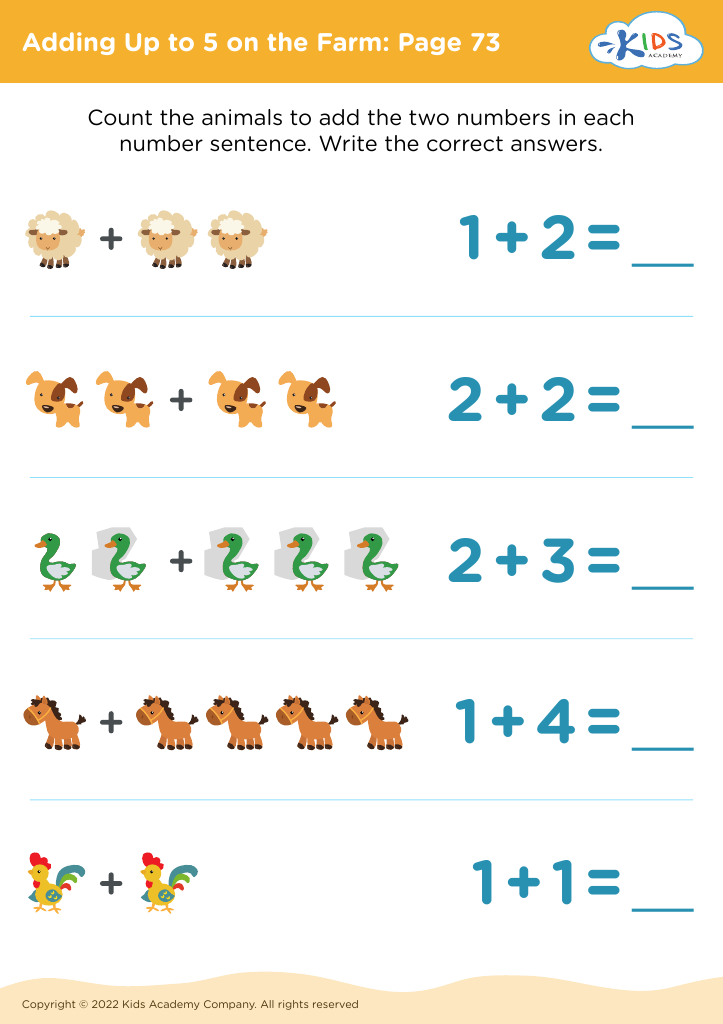
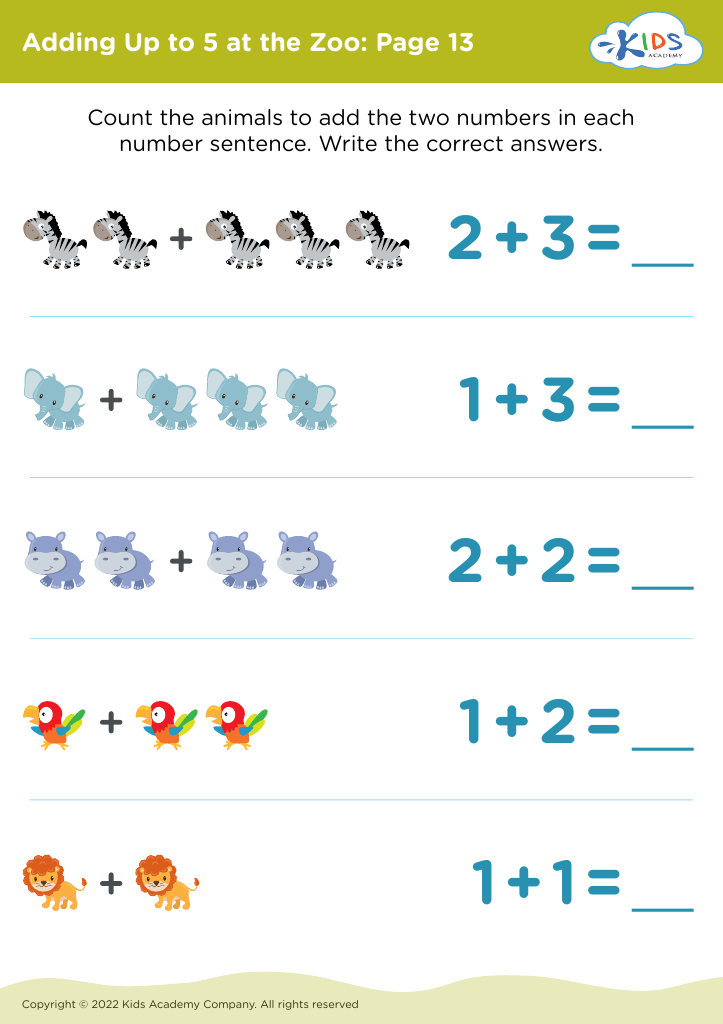








Animal identification, along with addition and subtraction, plays a vital role in early childhood education, especially for ages 4-5. Engaging children in learning through familiar and engaging themes, such as animals, makes the educational experience both fun and meaningful. Recognizing animals enhances their observation skills and fosters curiosity about the world around them.
Incorporating addition and subtraction into animal identification encourages problem-solving and critical thinking. When children count and interact with various animals, they’re practicing fundamental math skills in a lively, interactive way. For instance, asking them how many elephants there are and if one leaves to join a group of lions, prompts them to think mathematically, reinforcing addition and subtraction concepts.
Moreover, this approach nurtures foundational skills such as counting, number recognition, and basic calculations, which are crucial for later math success.
Supporting this learning at home or in the classroom also creates opportunities for discussion and exploration, promoting language skills as children express their observations. Overall, animal identification combined with addition and subtraction enriches learning experiences, making foundational math concepts accessible and enjoyable, while laying the groundwork for future academic success.








