Animal recognition Addition & Subtraction Worksheets for Ages 4-5 - Page 3
97 filtered results
-
From - To
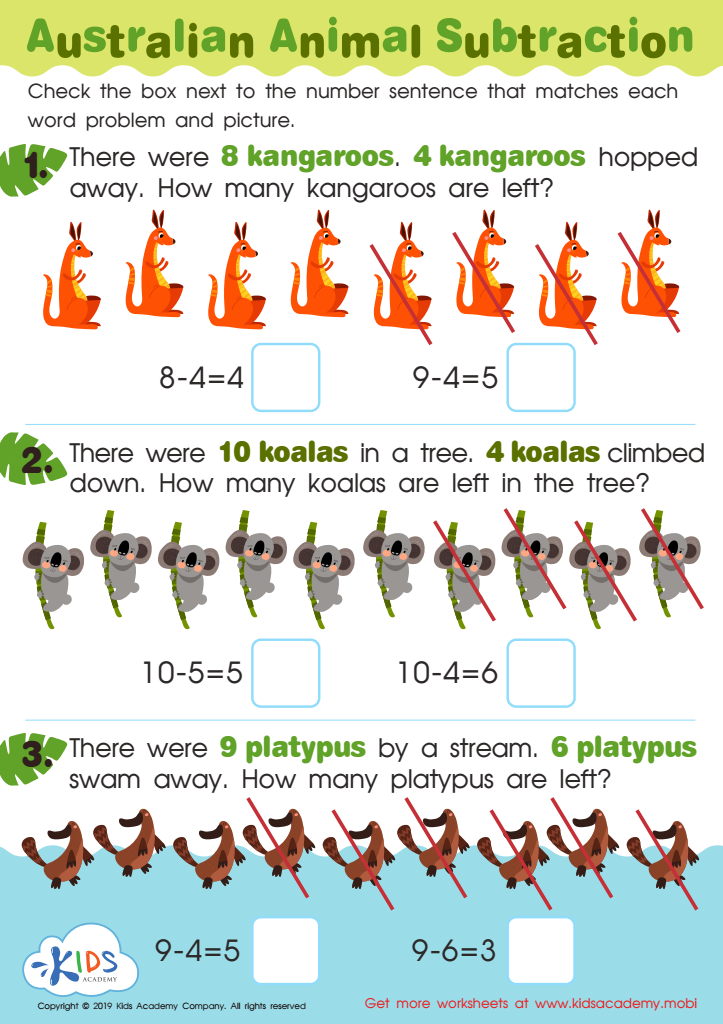
Australian Animal Subtraction Worksheet
 Assign to My Students
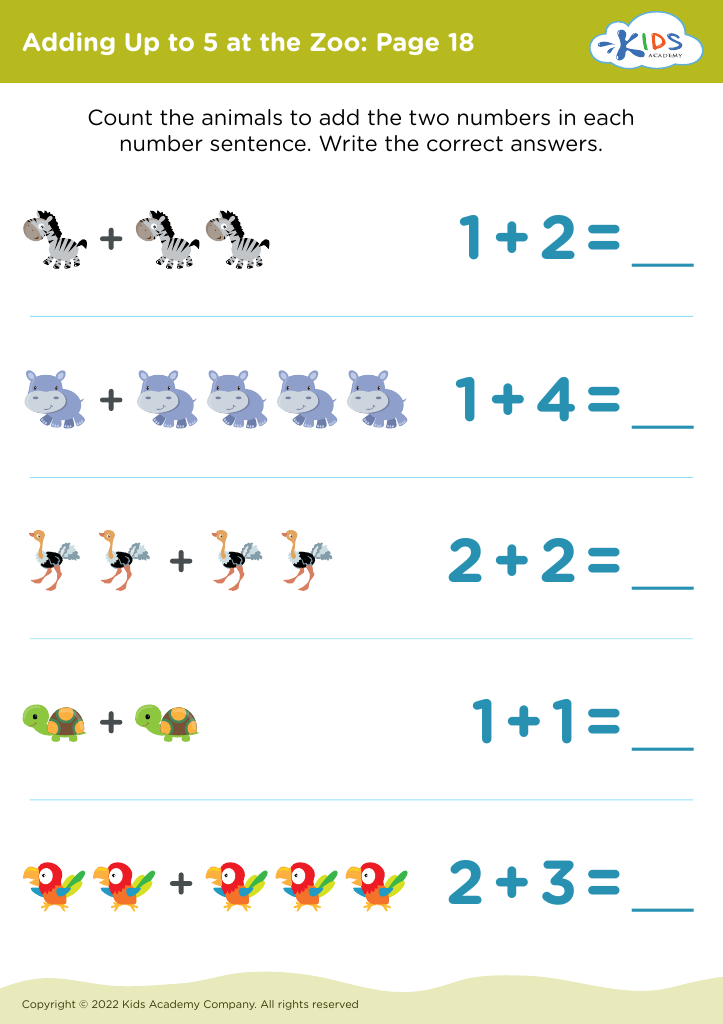
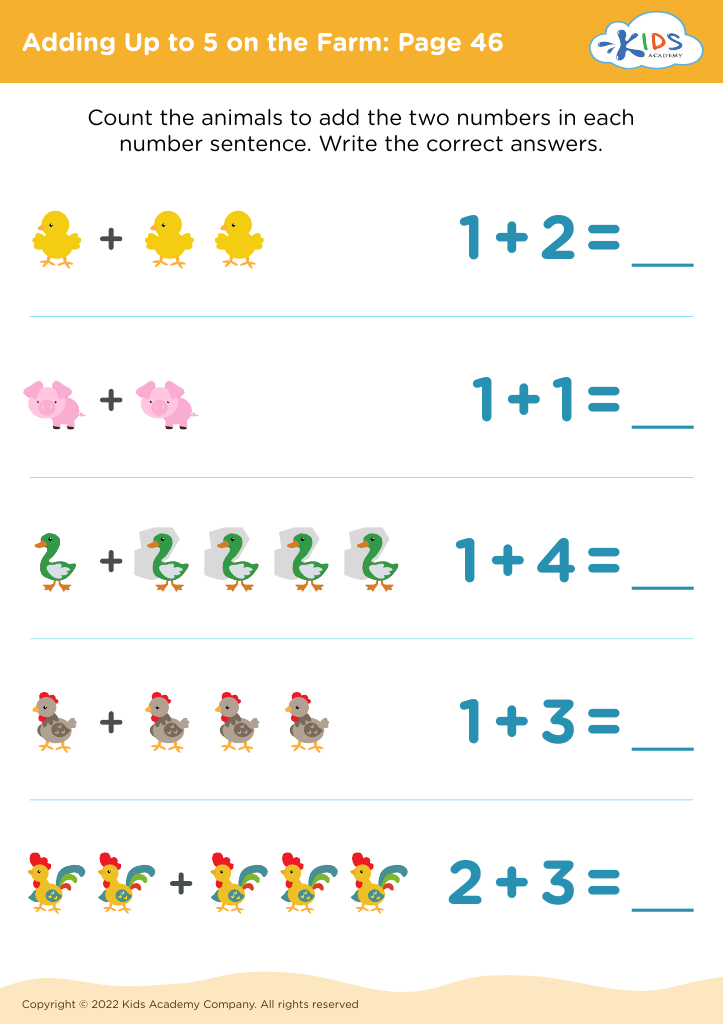
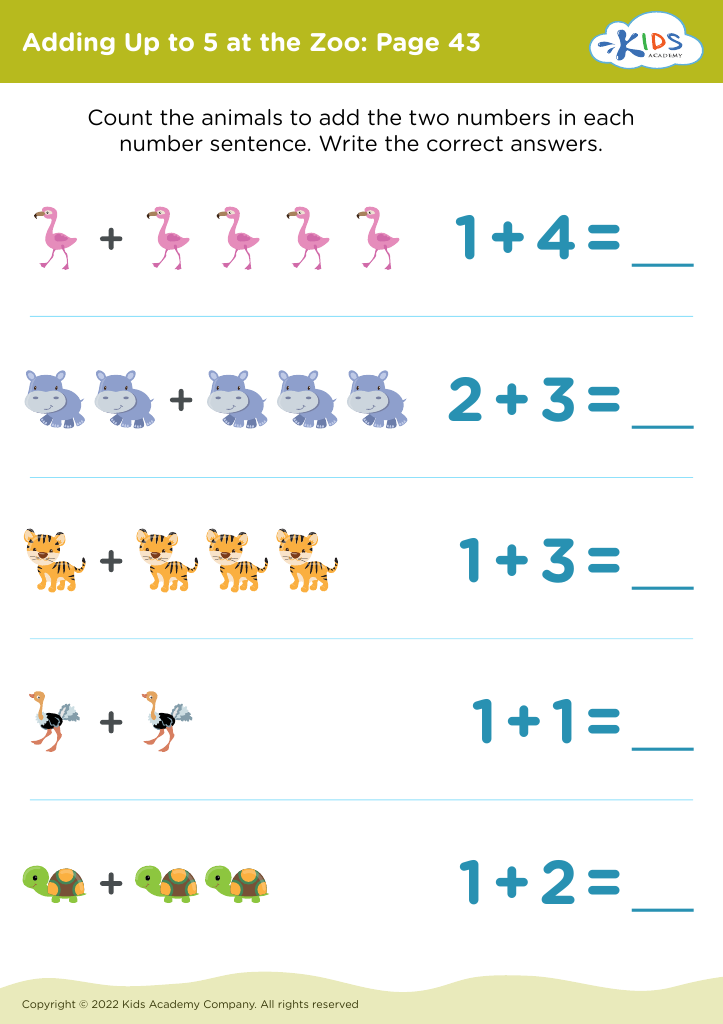
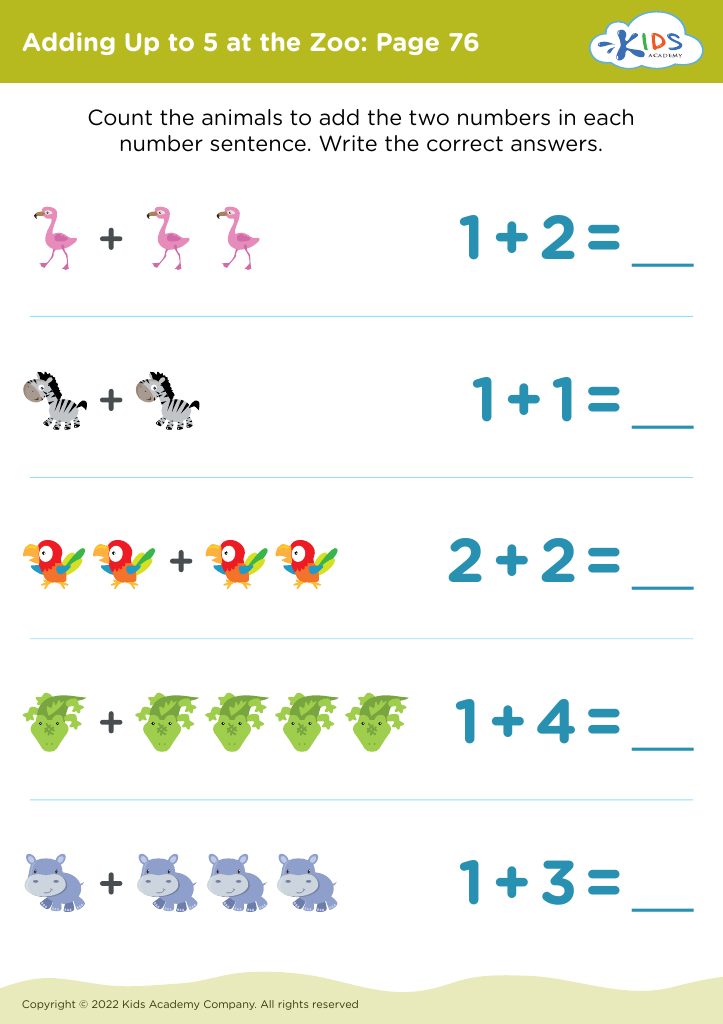
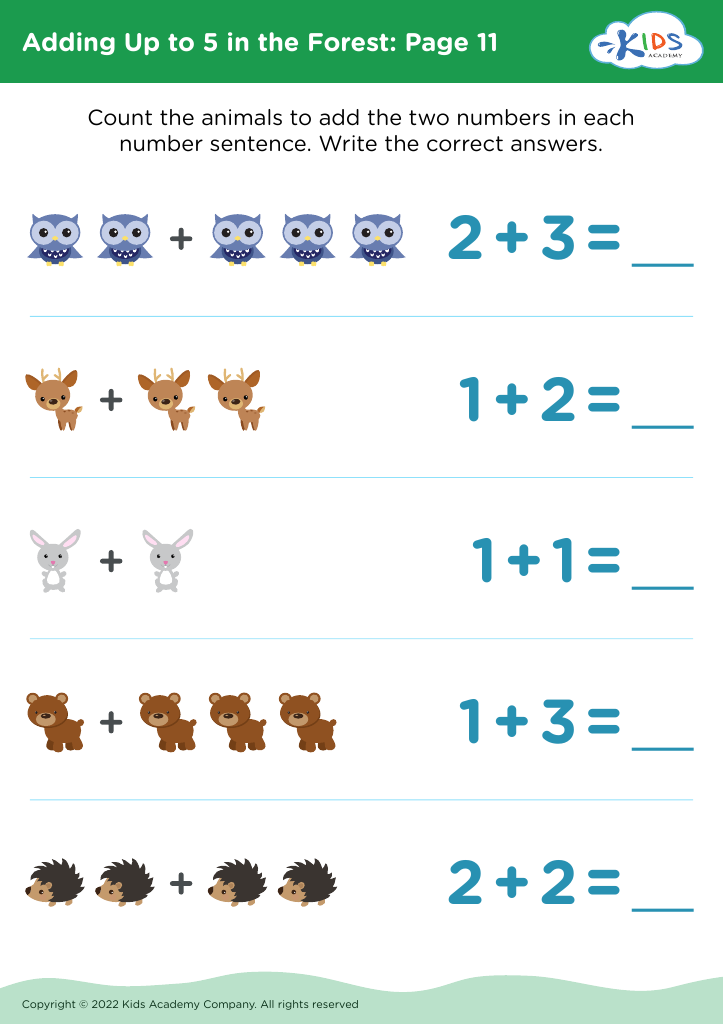
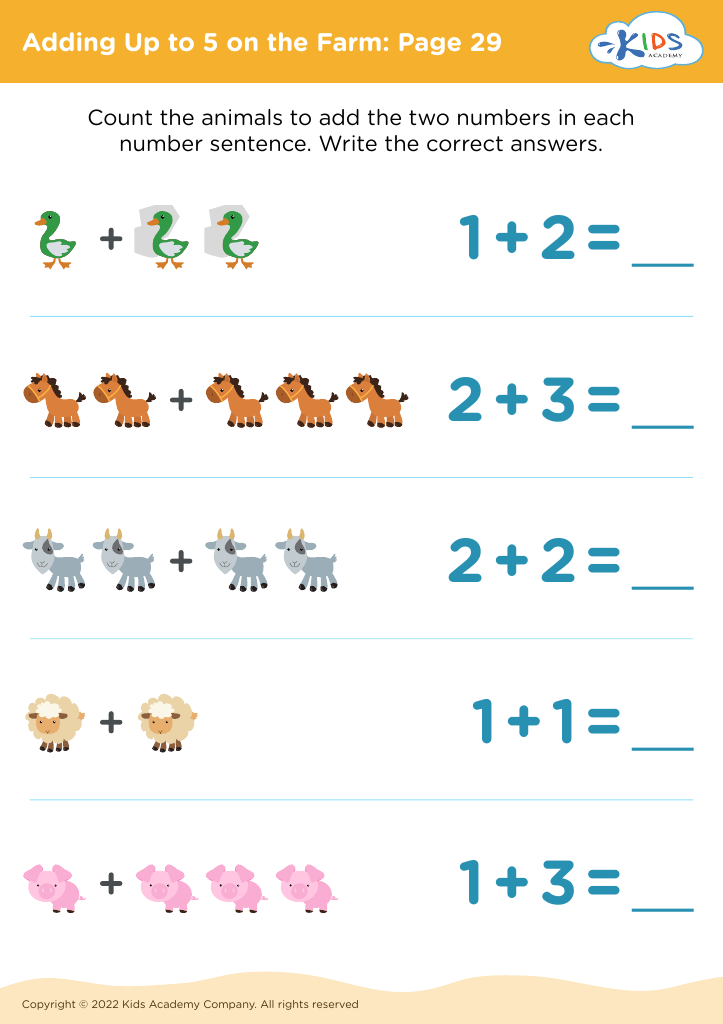
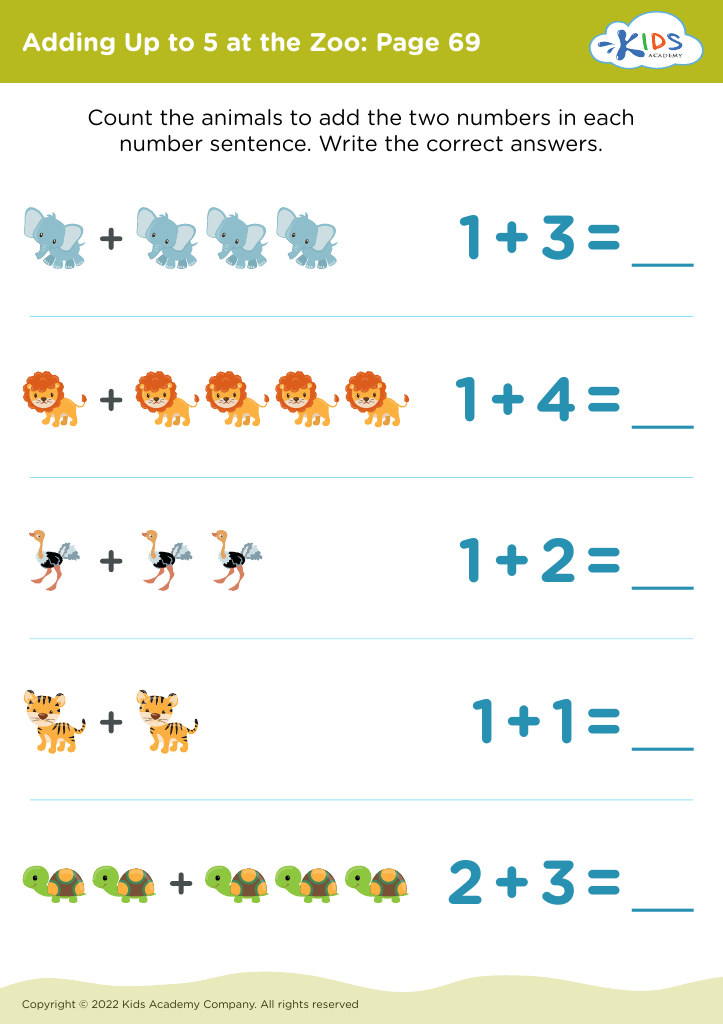
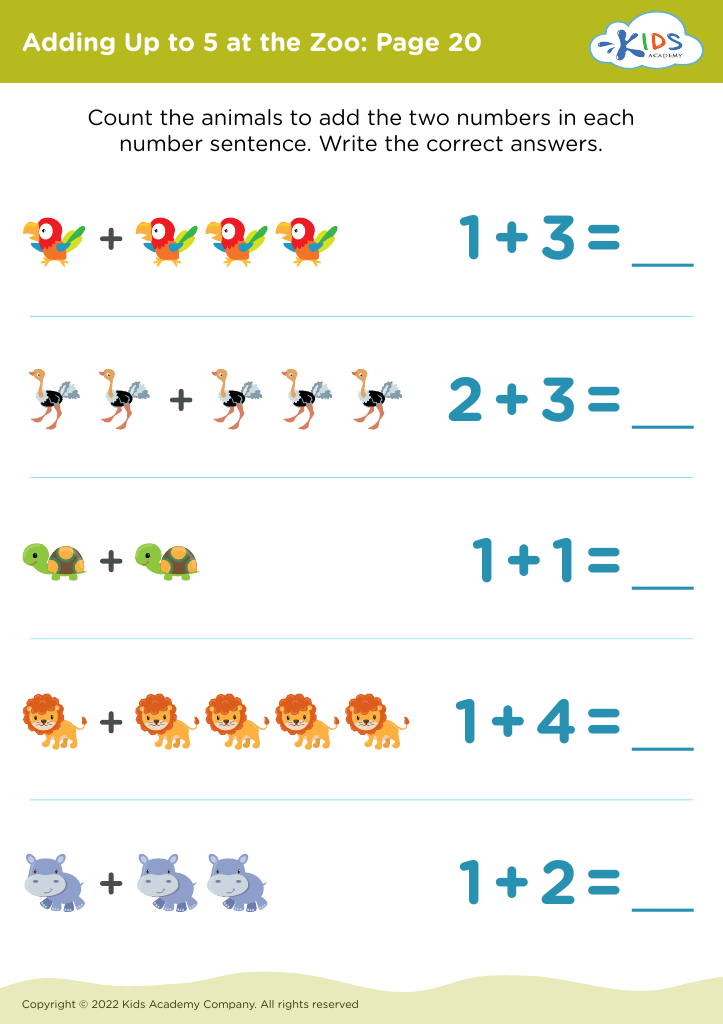
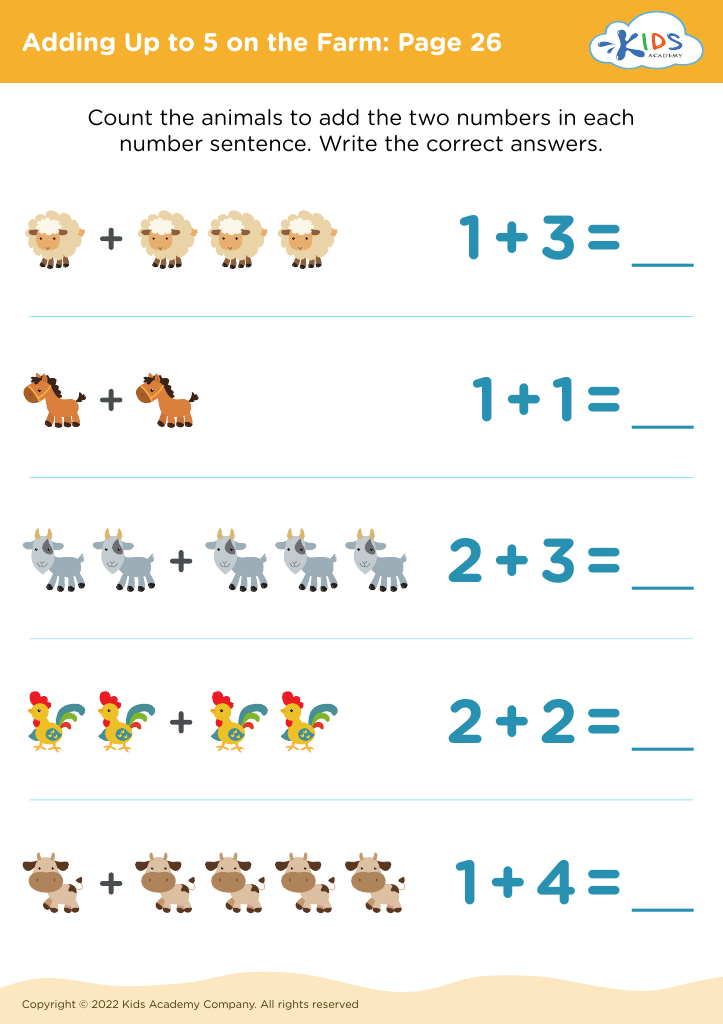
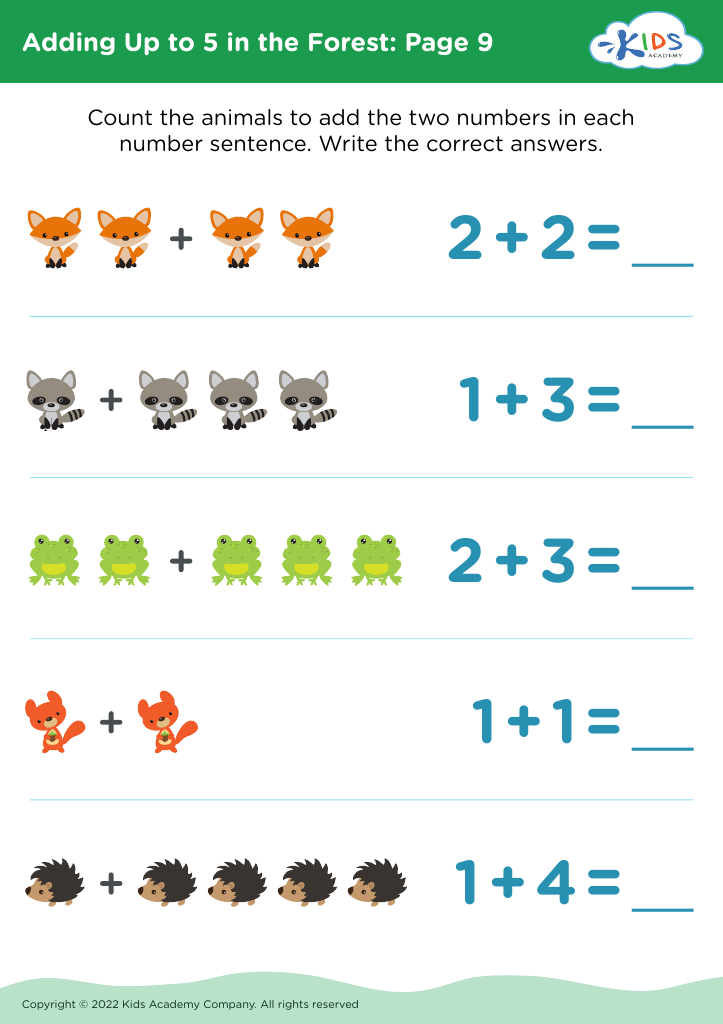
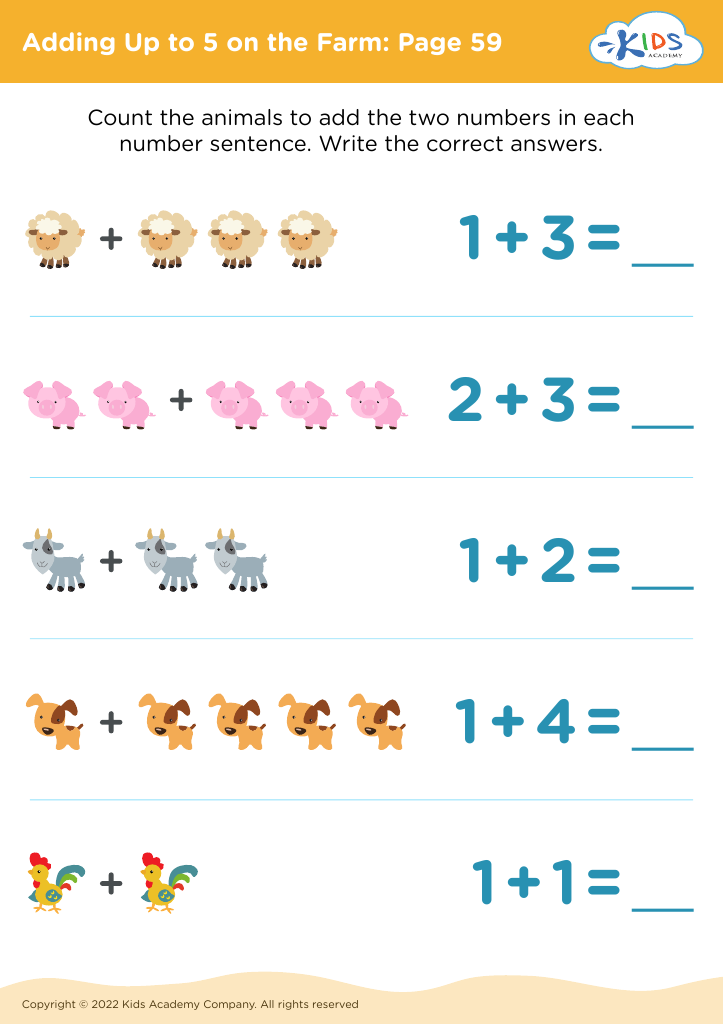
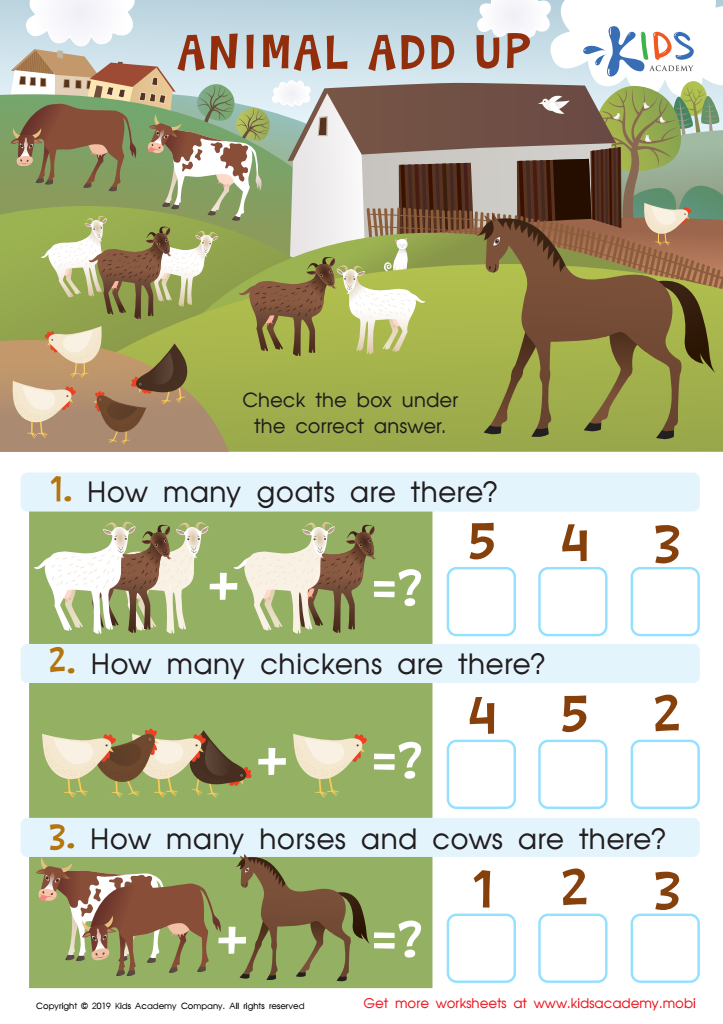
Animal Add Up Worksheet
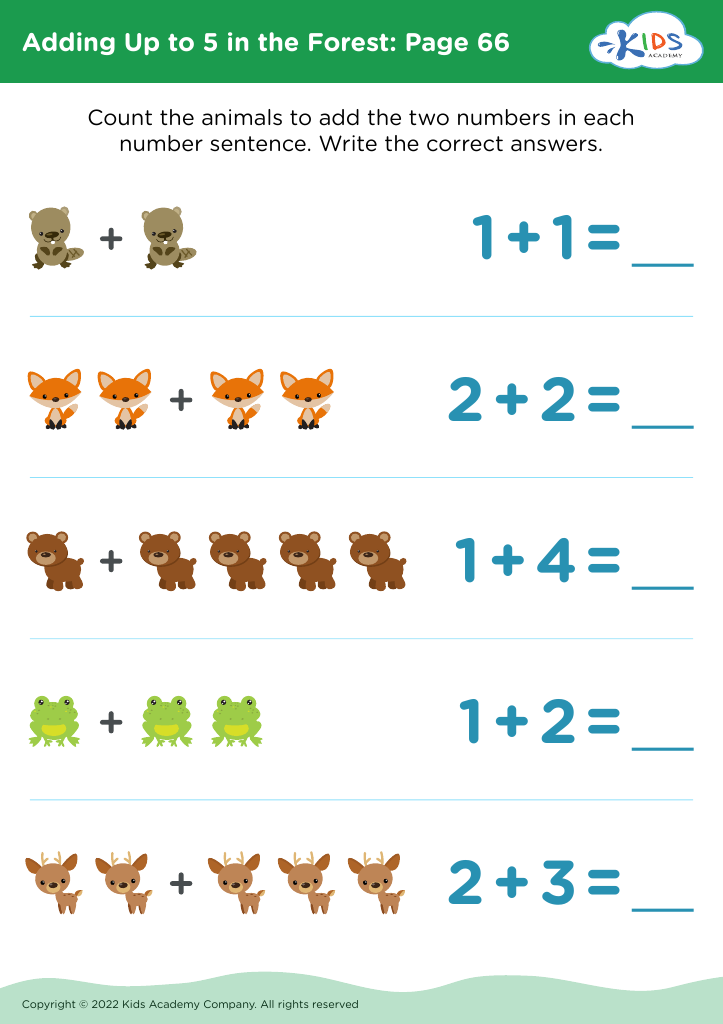
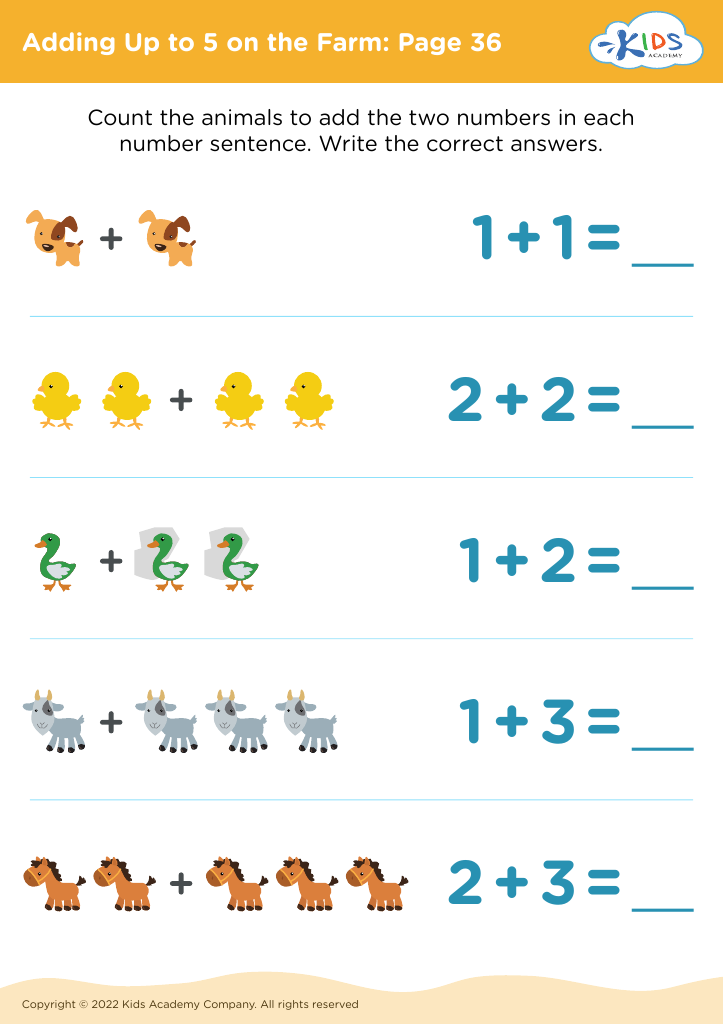
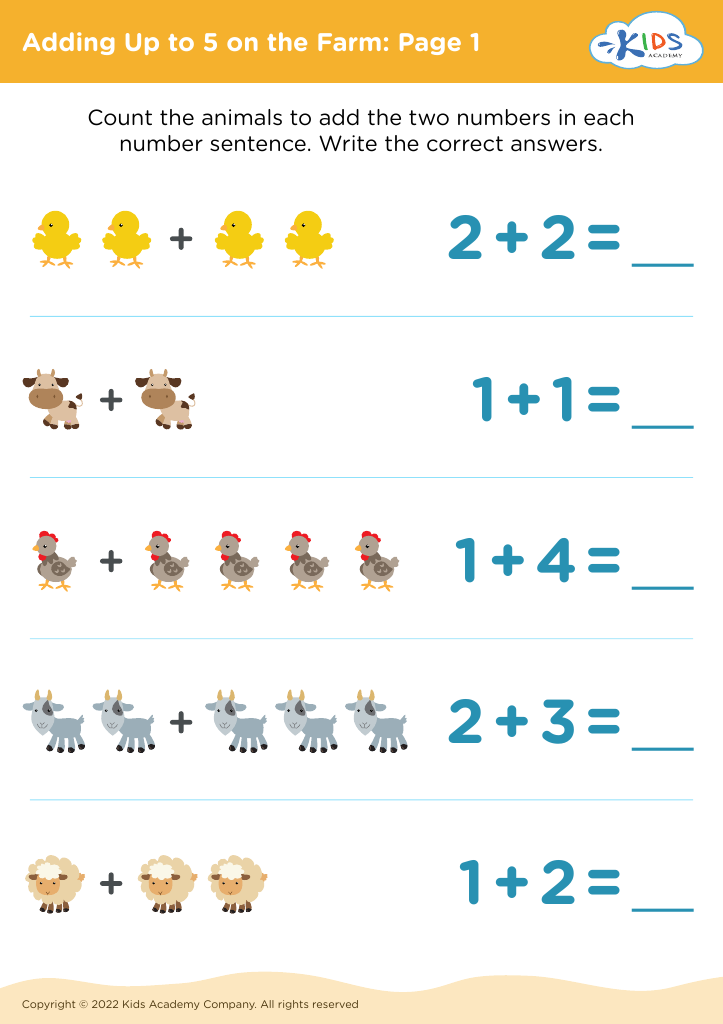
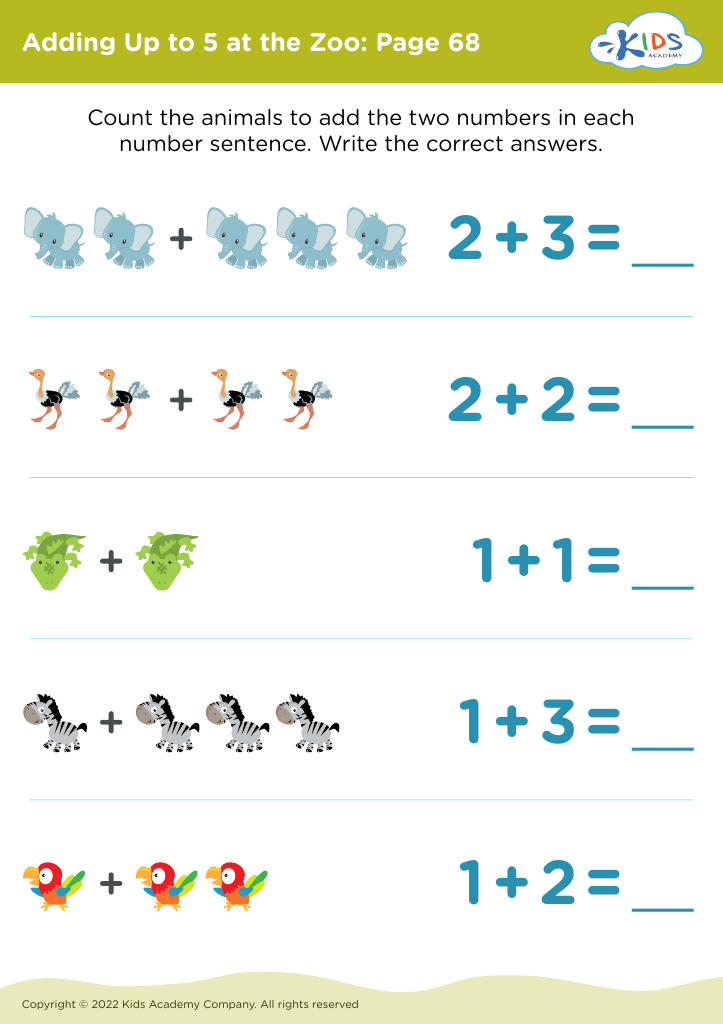
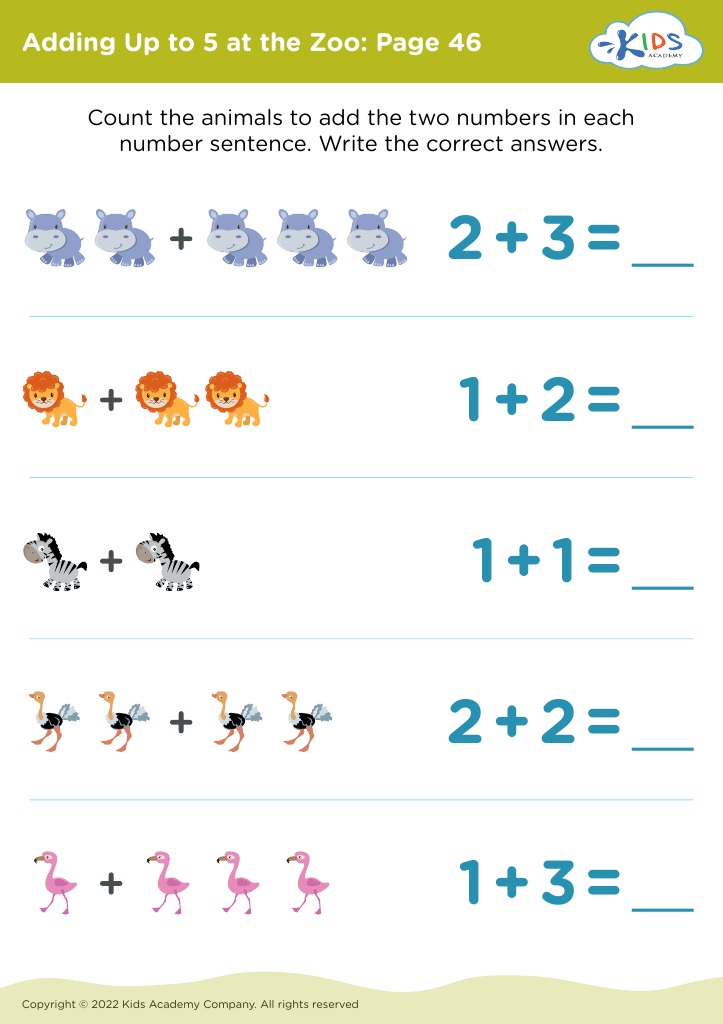
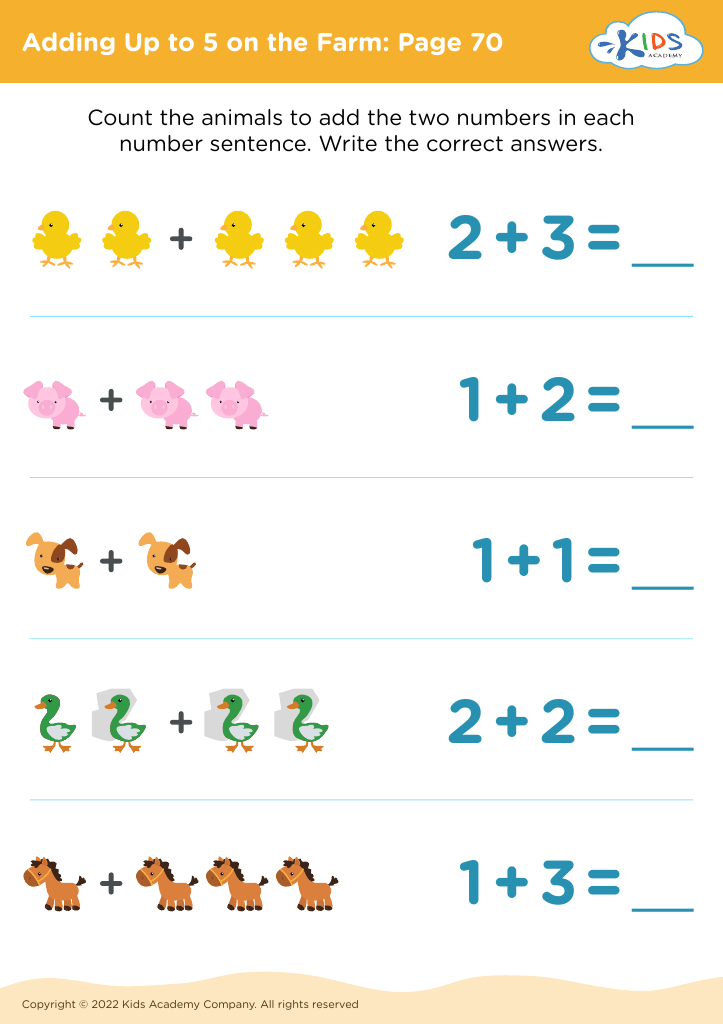
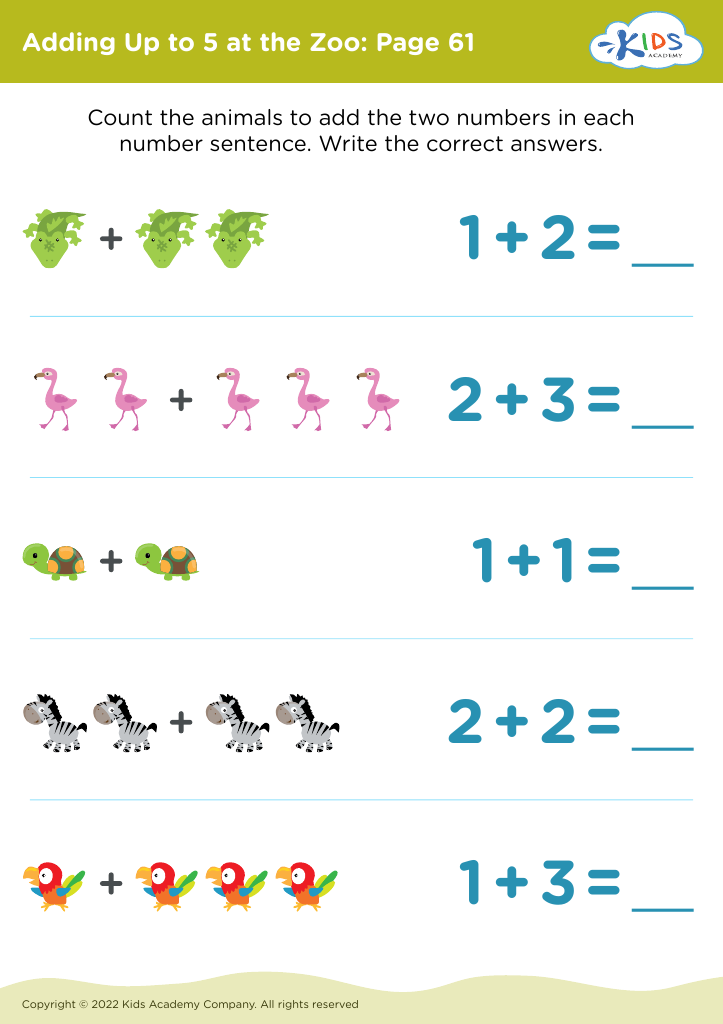
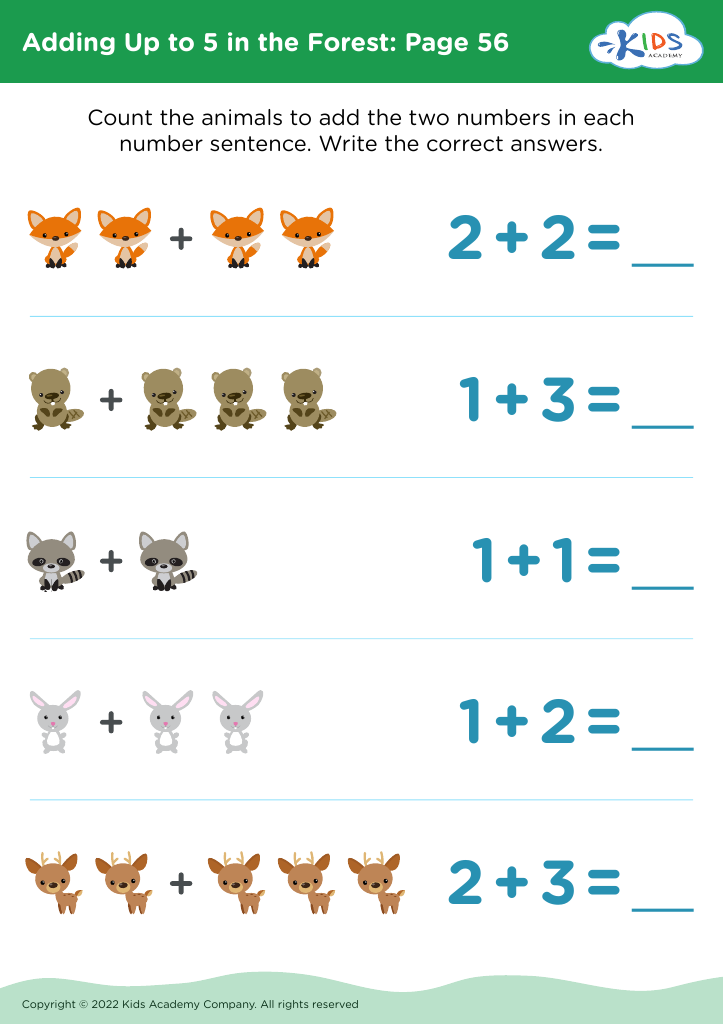
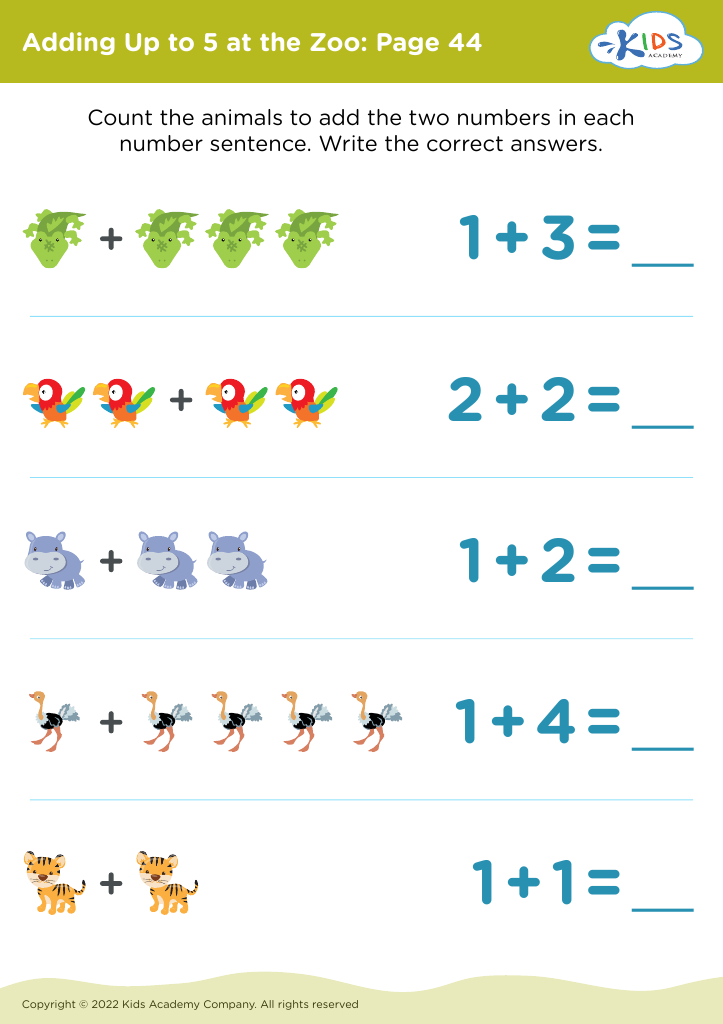
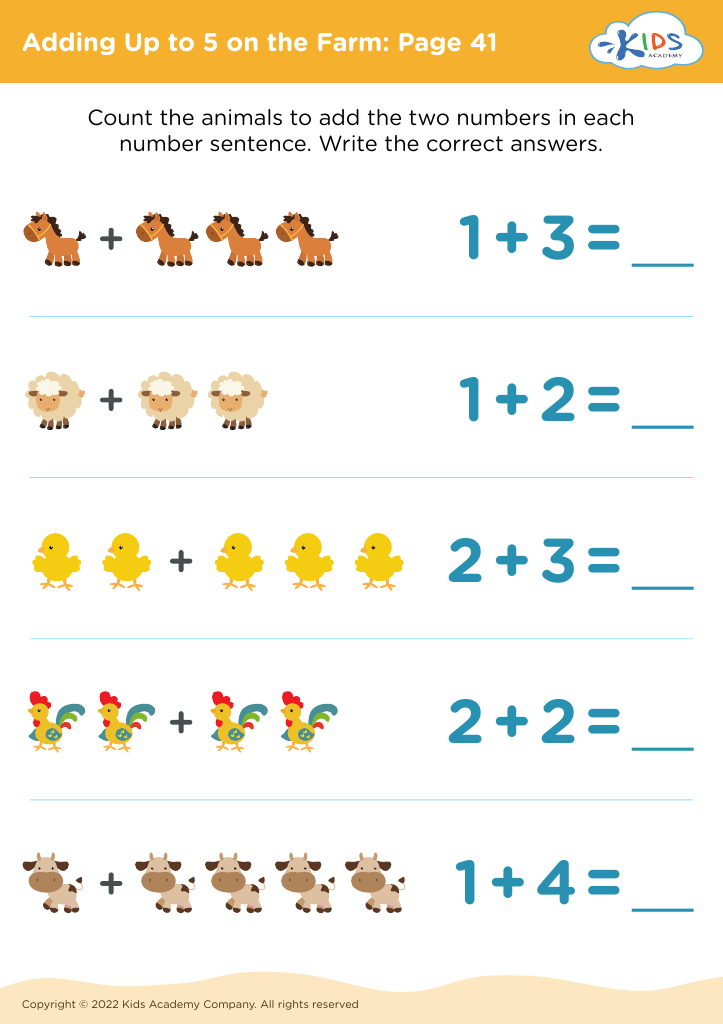
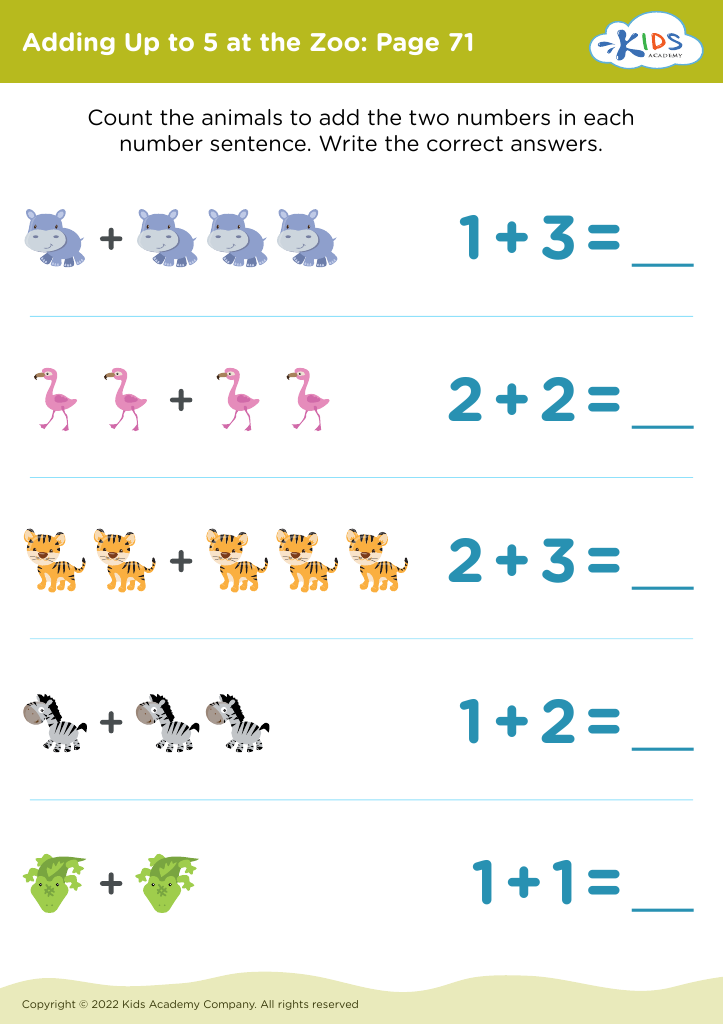








Animal recognition in the context of addition and subtraction for children aged 4-5 is crucial for several reasons. First, incorporating animals engages young learners, making math concepts more relatable and enjoyable. When children identify and count their favorite animals, it fosters a connection between math and the real world. This relevance makes the learning experience more meaningful, enhancing their interest in exchanging animals, thereby reinforcing addition and subtraction skills.
Moreover, learning math through animal recognition supports cognitive development. At this age, children are developing their ability to classify and categorize, so exploring animals reinforces that skill while building foundational math abilities. It also helps improve language acquisition as children learn animal names and characteristics, encouraging vocabulary development.
Another significant aspect is social interaction; when children engage in group activities involving animal-themed math games, they practice teamwork and communication, important social skills at this age.
Lastly, early exposure to math concepts lays the groundwork for future academic success. Mastering basic addition and subtraction while exploring animal recognition helps build confidence and problem-solving skills, which are essential as they progress through their education. In essence, relating math to animals supports a holistic approach to early learning that benefits children's emotional, social, and intellectual growth.








