
Basic Math understanding Addition & Subtraction Worksheets for Ages 4-5
7 filtered results
Difficulty Level
Grade
Age
-
From - To
Subject
Activity
Standards
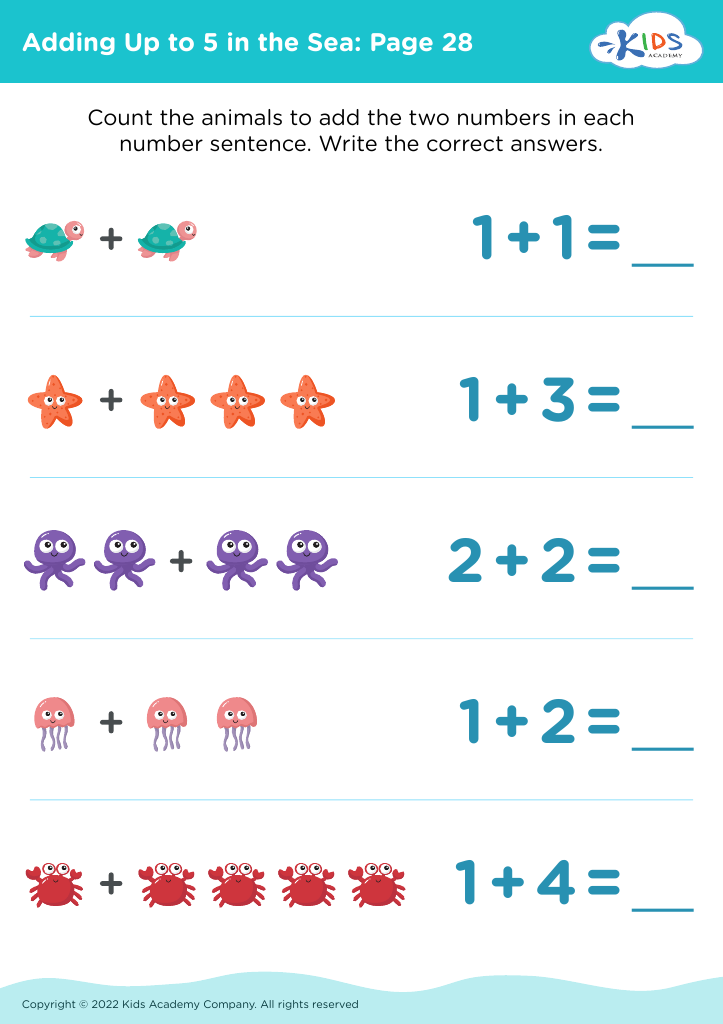
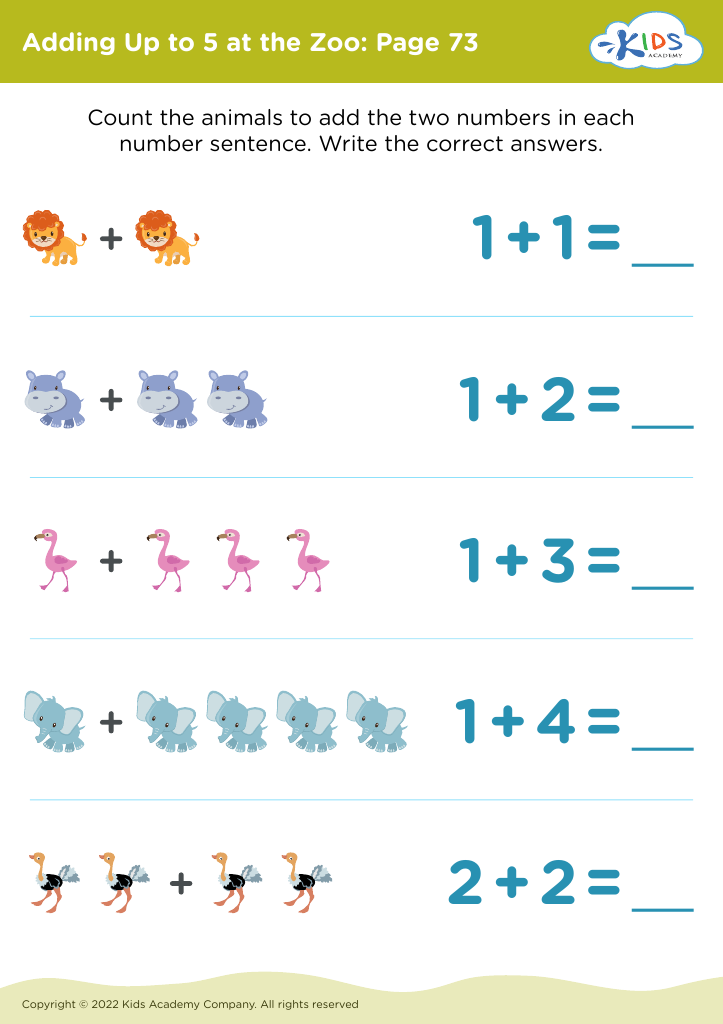
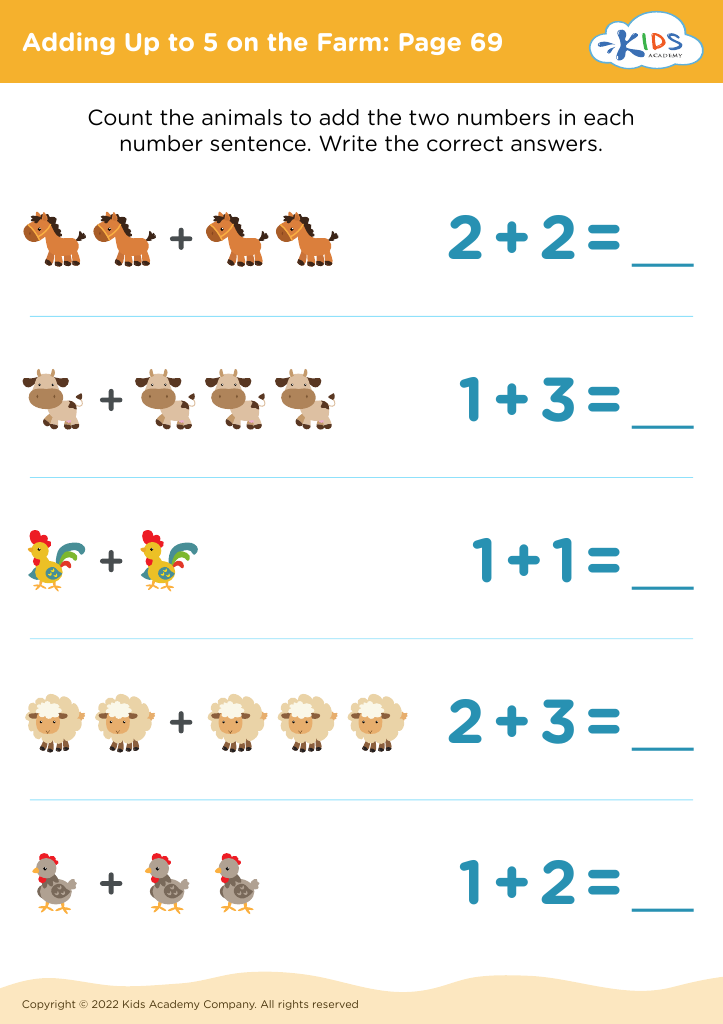
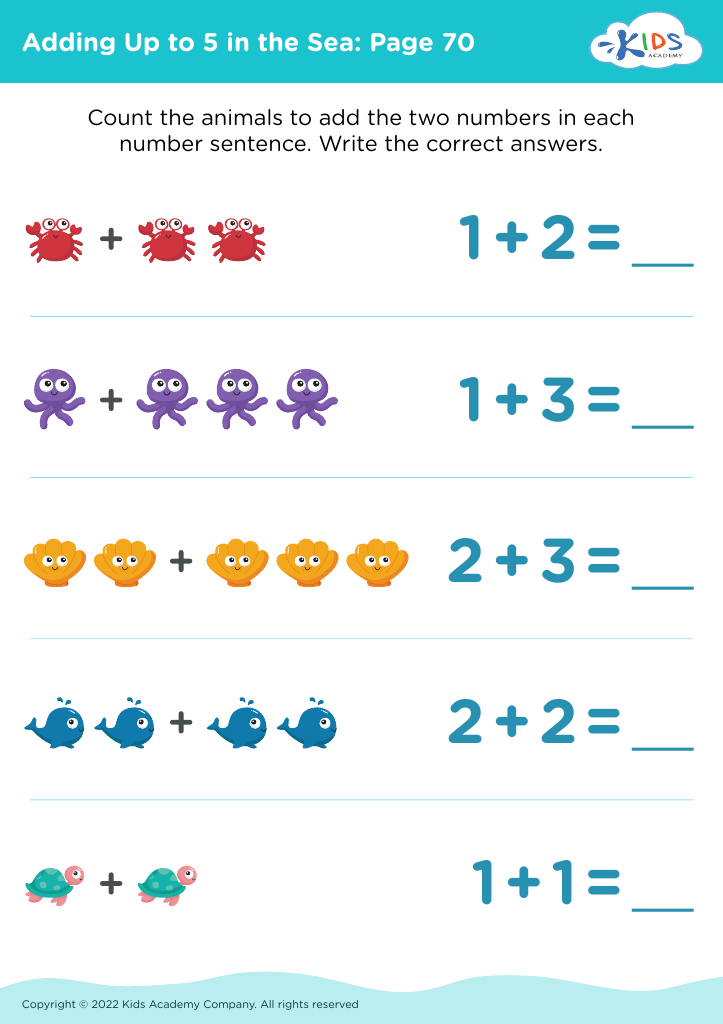
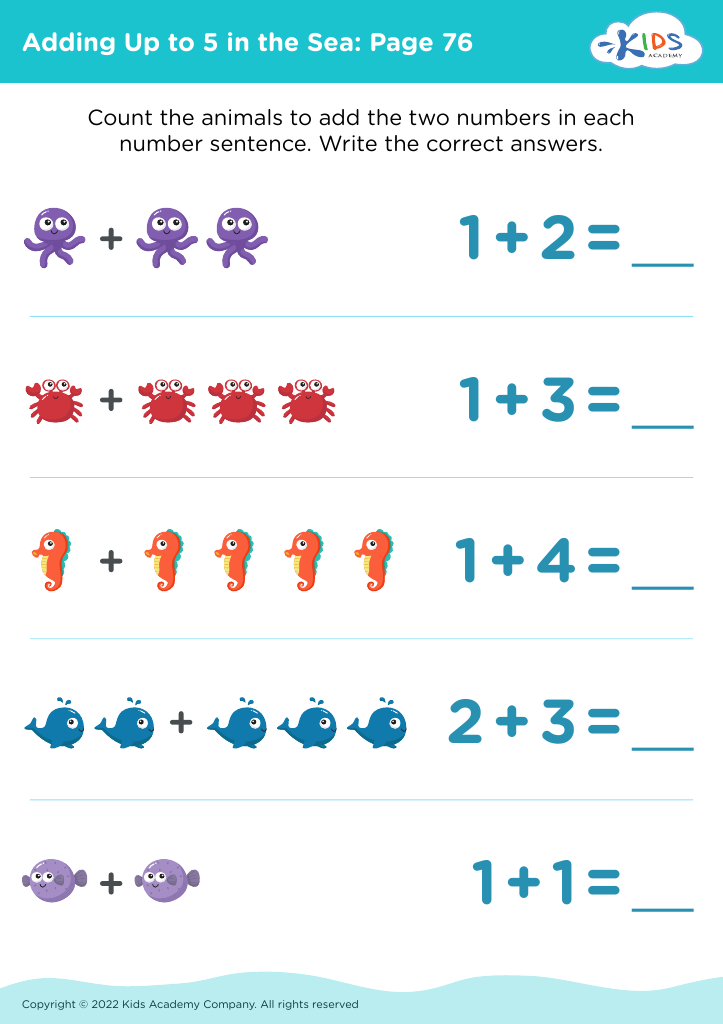
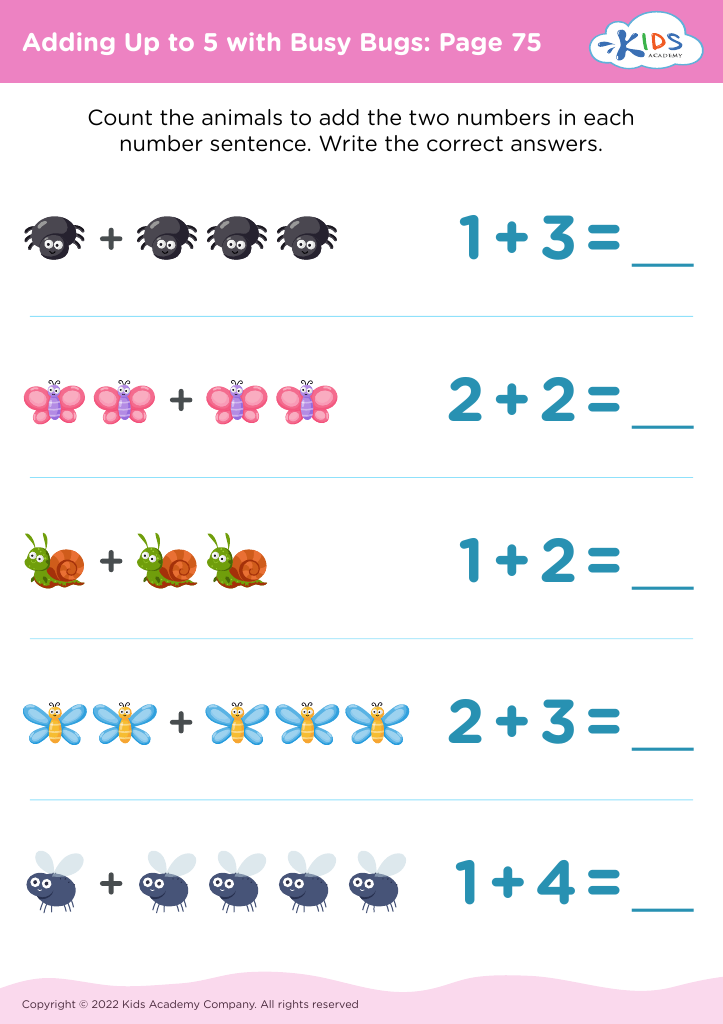
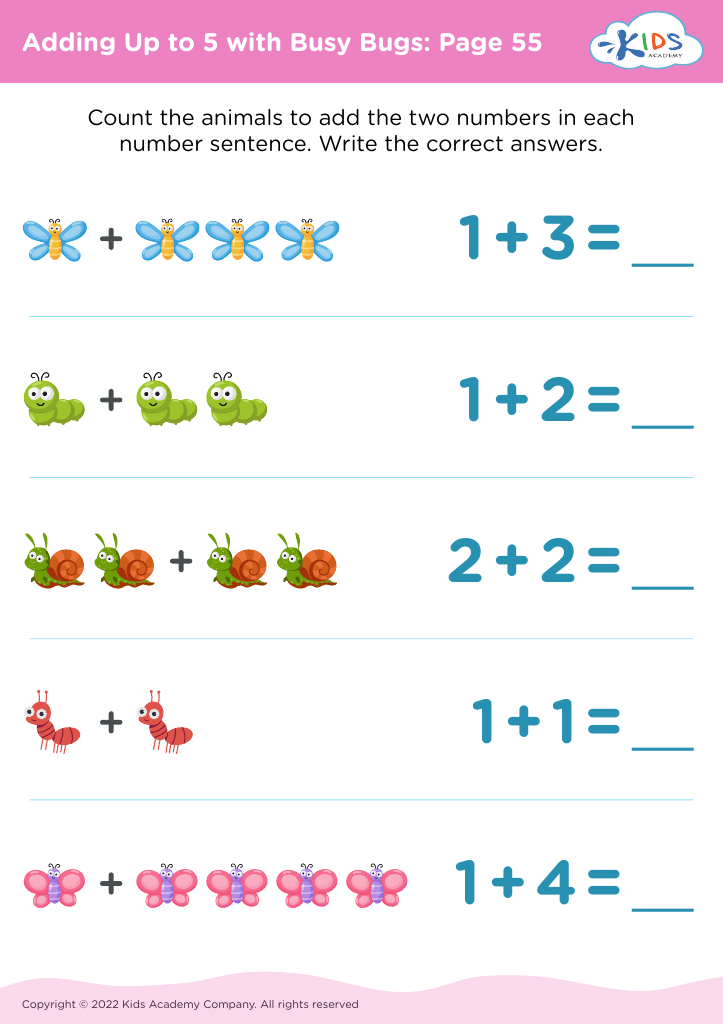
Our "Basic Math Understanding: Addition & Subtraction Worksheets for Ages 4-5" provide engaging and scaffolded learning experiences for young learners. Designed to build foundational math skills, these worksheets feature colorful visual aids and straightforward problems to help preschoolers and kindergarteners grasp the basics of addition and subtraction. Ideal for both classroom and home use, these resources support early numeracy, critical thinking, and problem-solving abilities. Each worksheet is aligned with educational standards, ensuring your child gets both a fun and educational start in math. Boost your child's confidence with these effective, age-appropriate math exercises.
Favorites
With answer key
Interactive
Join Kids Academy for Free
Who is primarily going to use this learning content?








Parents and teachers should prioritize ensuring that children aged 4-5 understand basic math concepts like addition and subtraction because these skills lay the foundational blocks for future learning. Young children are naturally curious and capable of absorbing new information swiftly, making this an ideal period to introduce essential numeracy skills.
Firstly, understanding addition and subtraction enhances cognitive development, improving children’s problem-solving abilities and logical thinking. They begin to grasp real-world concepts such as quantity, order, and cause-and-effect relationships, which are integral to everyday decision-making.
Additionally, early proficiency in these areas builds confidence and fosters a positive attitude towards learning in general. When children feel competent with foundational math, they are more likely to engage enthusiastically with more complex topics as they progress through their education.
Moreover, early math skills are strong predictors of later academic achievement, not just in mathematics but across other subjects. Comprehending and performing basic math helps children develop critical precision in language skills and literacy.
Beyond academic benefits, these skills are practical, everyday tools. Simple tasks like sharing toys or understanding time involve basic math. For young minds, these concepts help make sense of their world, fostering independence and enhancing interactions with their surroundings. Hence, imparting a solid understanding of addition and subtraction at an early age is crucial for holistic development.








