Understanding number value Addition & Subtraction Worksheets for Ages 4-5
3 filtered results
-
From - To
Explore our engaging "Understanding Number Value Addition & Subtraction Worksheets" designed specifically for children aged 4-5. These worksheets aim to help young learners grasp fundamental math concepts through fun, interactive activities. By focusing on number value, students will develop essential skills in addition and subtraction while boosting their confidence in math. Each worksheet is thoughtfully crafted to promote critical thinking and problem-solving abilities, making learning enjoyable and effective. Perfect for both classroom settings and home practice, these worksheets provide a strong foundation for future math success, enabling children to approach numbers with a positive attitude and enthusiasm. Encourage your child’s math journey today!
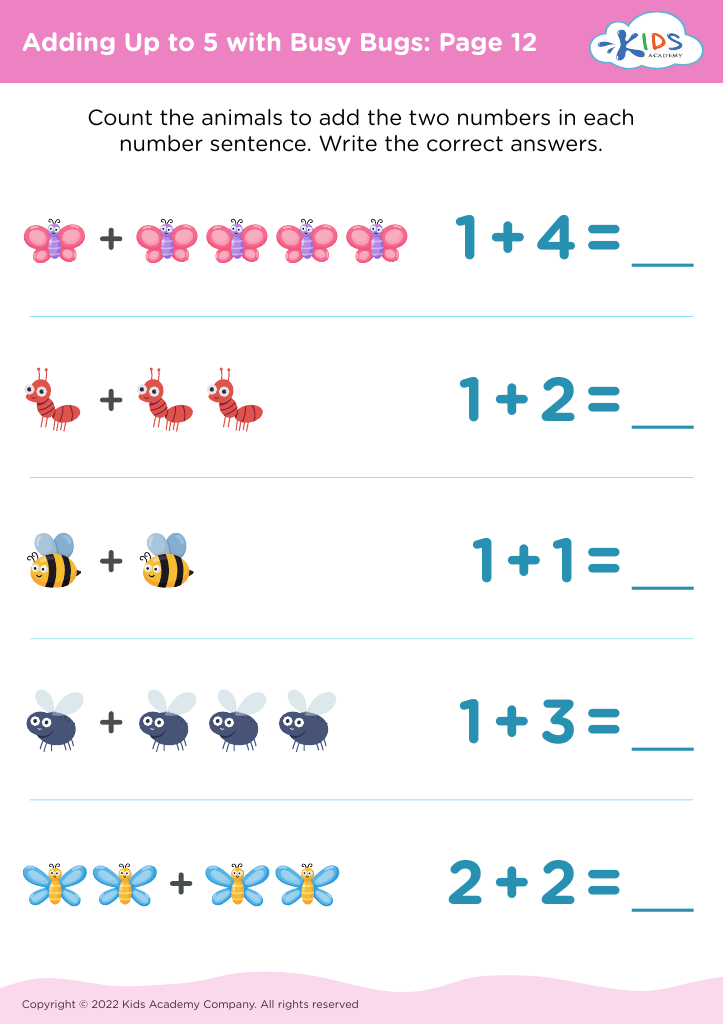
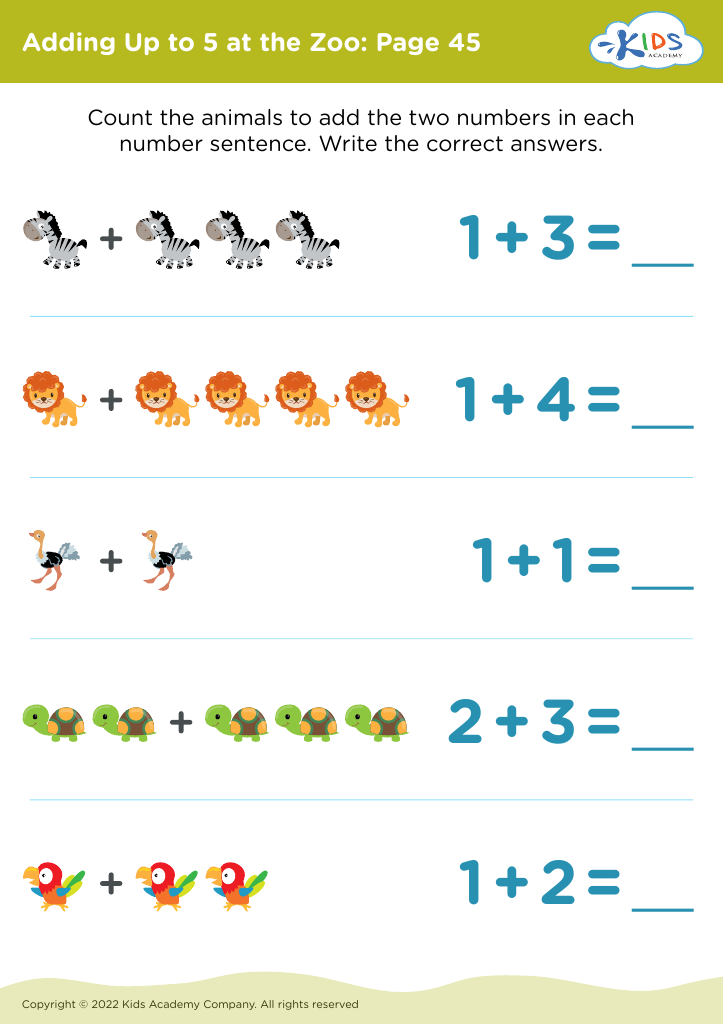
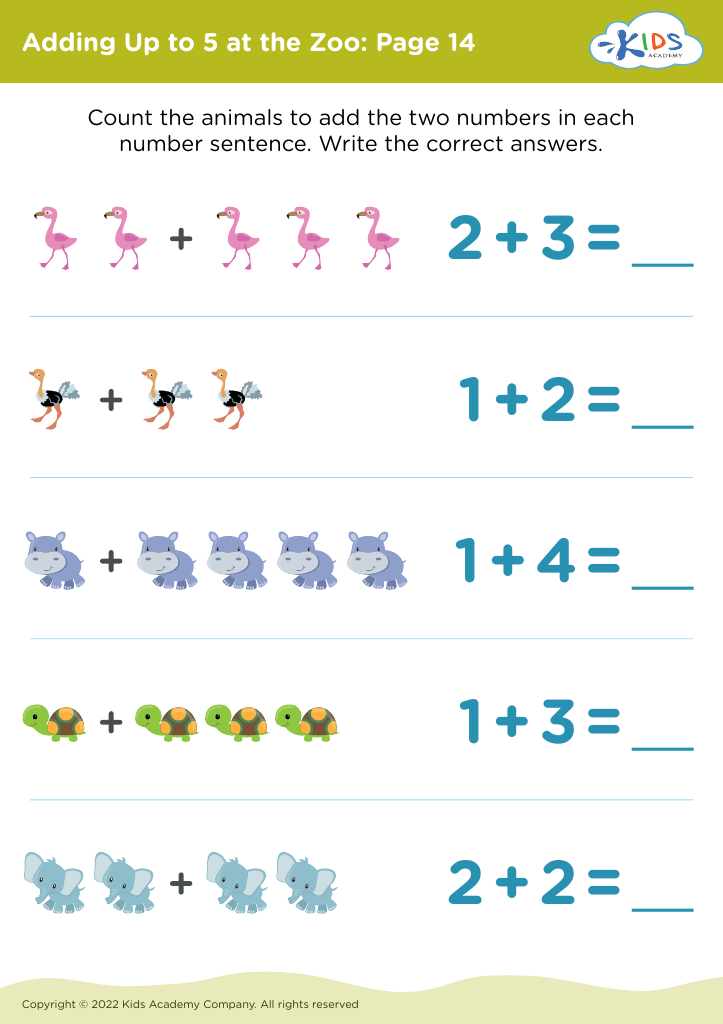








Understanding number value, addition, and subtraction is crucial for children ages 4-5, as it lays the foundational math skills they will build upon throughout their education. This stage is formative, where young learners begin to recognize numbers, understand their meanings, and explore simple operations.
For parents and teachers, it’s essential to care about these concepts because they foster critical thinking, problem-solving skills, and cognitive development. When children grasp the value of numbers, they not only learn to count but also begin to understand concepts like quantity and comparison. This understanding enhances their ability to engage with their environment, encouraging play-based learning opportunities through measuring, sorting, and counting in everyday activities.
Additionally, mastering addition and subtraction at this age promotes a positive attitude toward math, reducing anxiety and building confidence. Engaging children with hands-on activities, such as using toys or snacks for simple math problems, creates an enjoyable learning experience. When children see math in context, they are more likely to retain and apply these skills later in life. Ultimately, fostering these early mathematical skills helps set the stage for future academic success, supporting children as they navigate more complex mathematical concepts in years to come.








