Visualization skills Addition & Subtraction Worksheets for Ages 4-5
3 filtered results
-
From - To
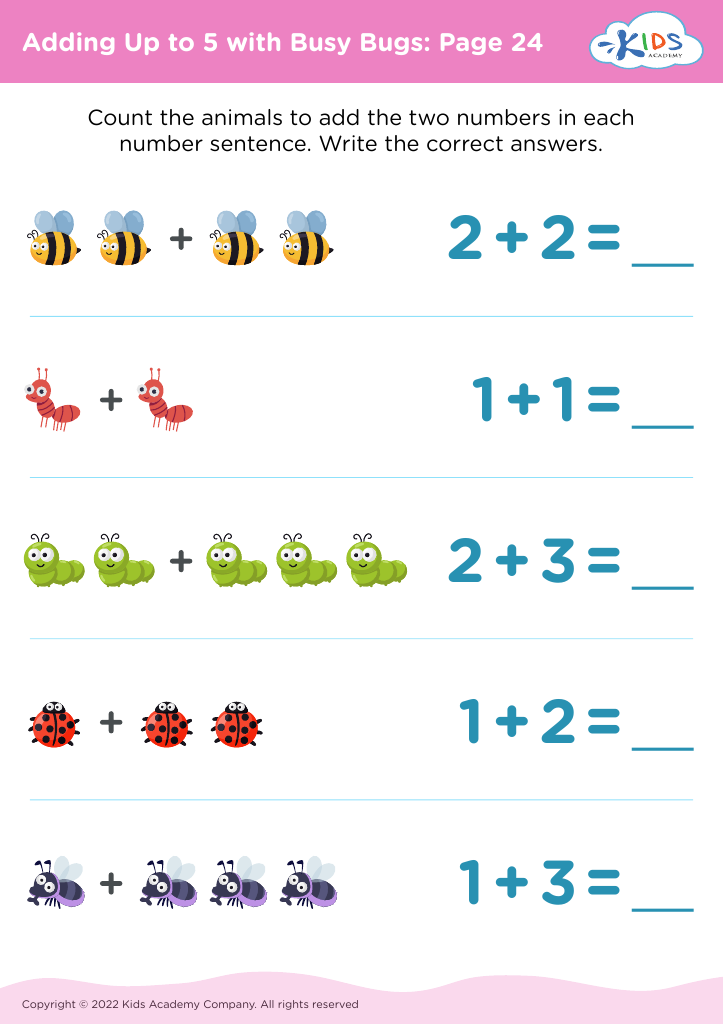
Our "Visualization Skills Addition & Subtraction Worksheets for Ages 4-5" blend fun and learning to develop early math skills in young children. Designed to foster engagement, these worksheets use vibrant imagery and interactive tasks to help kids effortlessly grasp the concepts of addition and subtraction. By visualizing problems, children enhance both their numerical abilities and cognitive development. These resources are expertly crafted to suit preschoolers and kindergarteners, ensuring that foundational math skills are built with confidence and ease. Perfect for parents and educators aiming to support young learners in a dynamic and enjoyable manner.
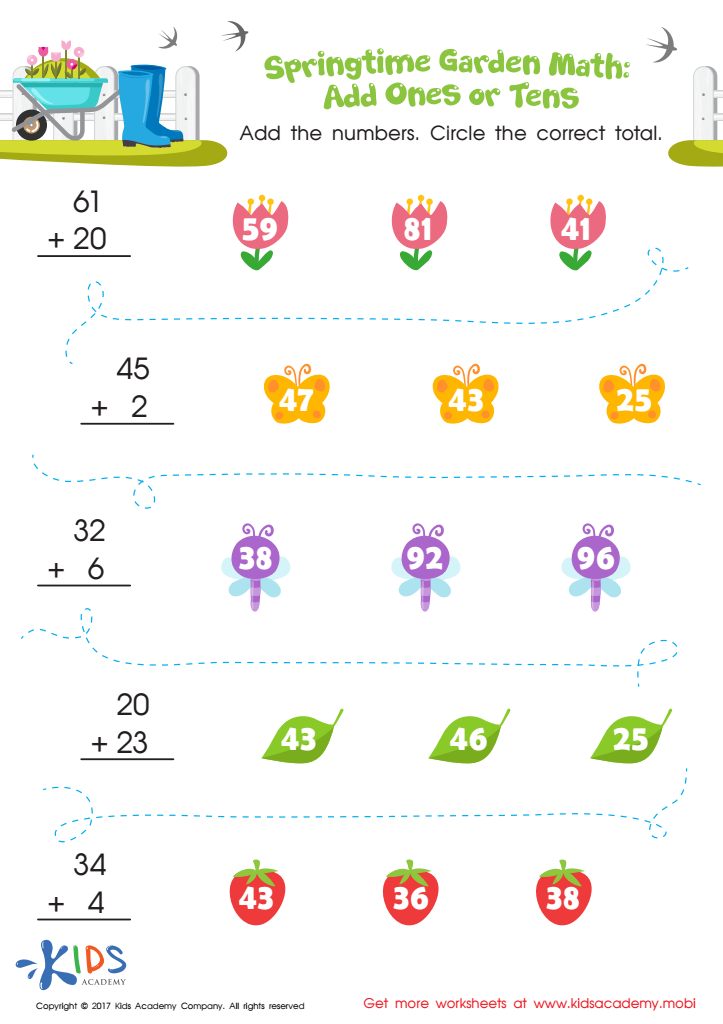
Springtime Garden Math Worksheet
 Assign to My Students
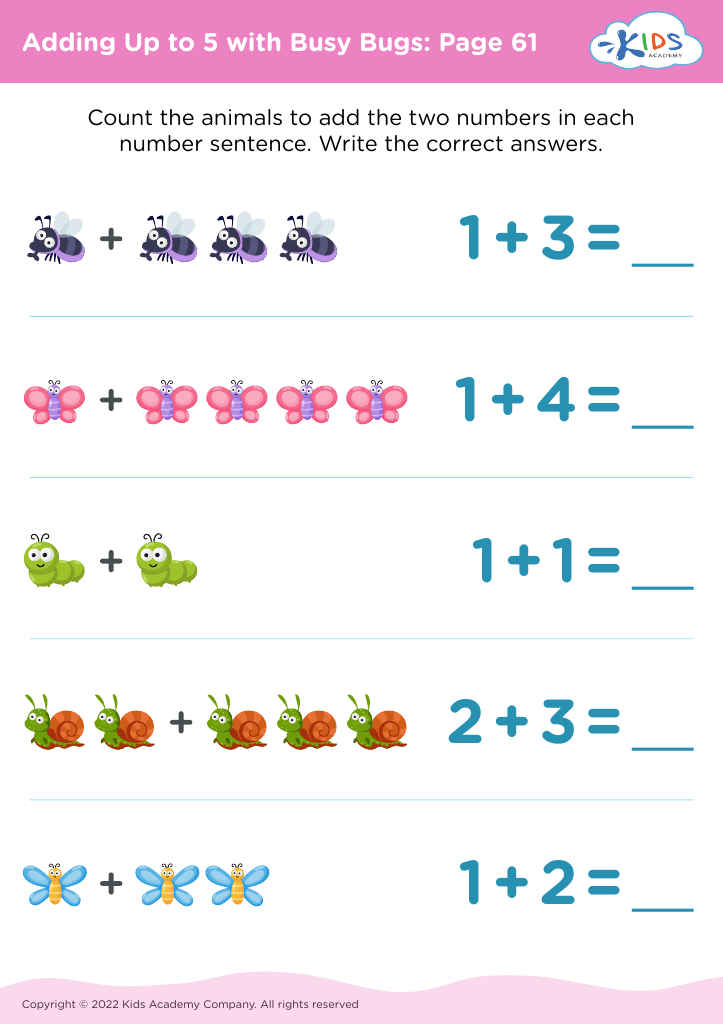








Visualization skills in addition and subtraction are pivotal for young children, specifically ages 4-5, as they lay the foundational bedrock for future mathematical understanding. At this tender age, cognitive development is highly receptive to visual and concrete representations of numerical concepts. By visualizing addition and subtraction, children bridge the gap between abstract numerical symbols and their real-world meanings.
For example, when a child sees pictures, objects, or even fingers grouped together to visually represent an addition or subtraction problem, it becomes easier for them to grasp the idea of combining or separating quantities. This hands-on and visual approach translates complex ideas into more straightforward, tangible examples that young minds can easily understand.
Furthermore, learning these skills early fosters a positive relationship with math. Children who can visualize math problems tend to display better problem-solving strategies and greater confidence when approaching new mathematical challenges. These foundational skills also support other cognitive abilities such as reasoning, pattern recognition, and spatial awareness.
For teachers and parents, investing effort in developing a child's visualization capabilities ensures that mathematical learning is not only effective but also engaging and enjoyable. Encouraging visualization at a young age creates a harmonious blend of learning and play, cultivating a lifelong arithmetic comfort and competence.








