Filters

94 filtered results

Clear all filters
Favorites
With answer key
Interactive

94 filtered results

Difficulty Level

Grade


Check out this FREE Trial Lesson on Addition for age 4-5!

Z

Favorites
With answer key
Interactive
  • 4-5
  • Animal recognition
  • Addition
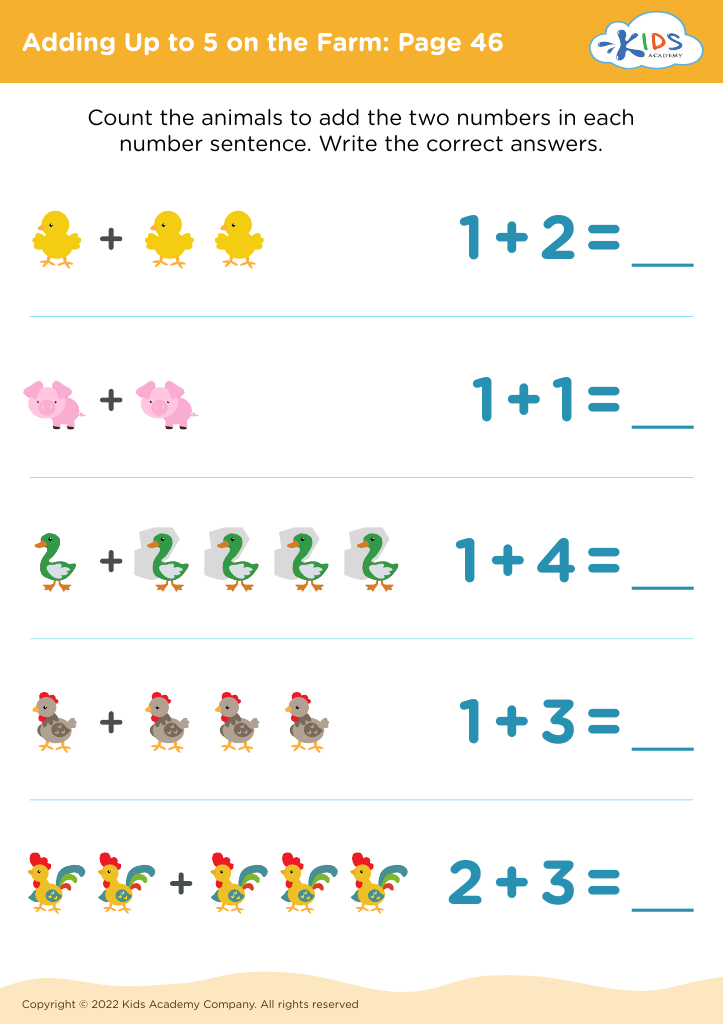
Adding Up to 5 on the Farm: Page 46
Worksheet
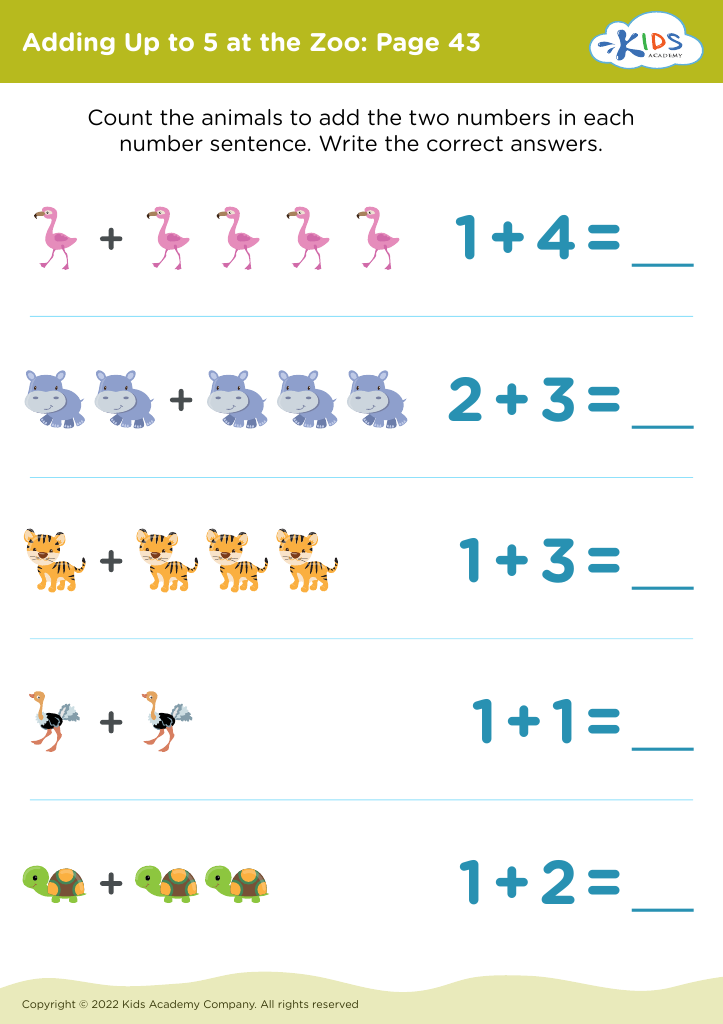
Adding Up to 5 at the Zoo: Page 43
Worksheet
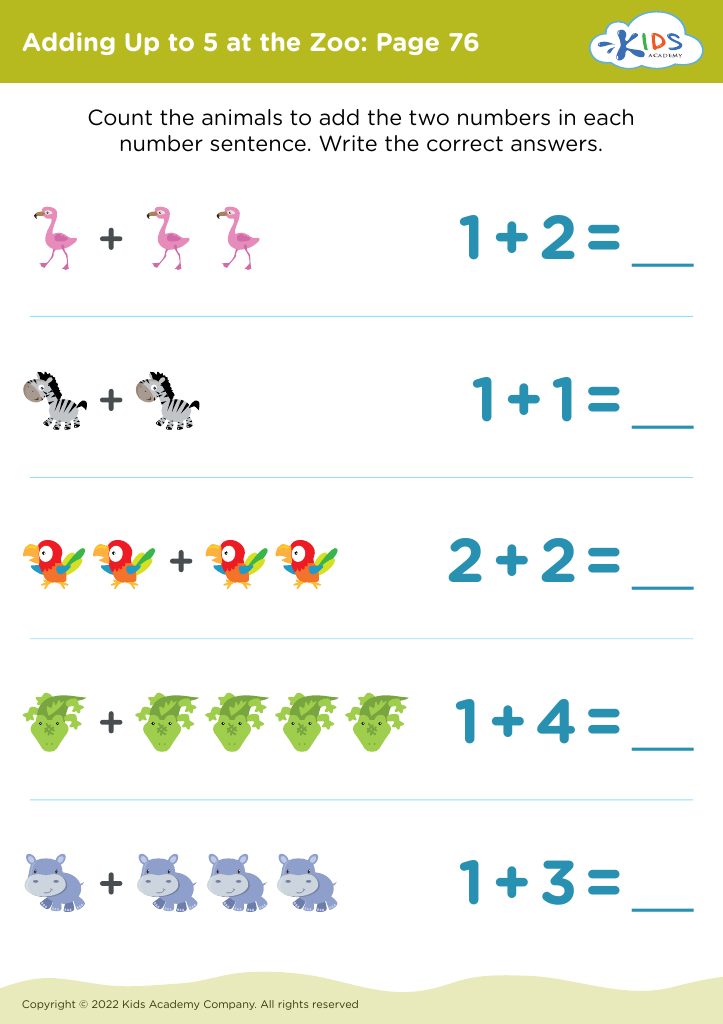
Adding Up to 5 at the Zoo: Page 76
Worksheet
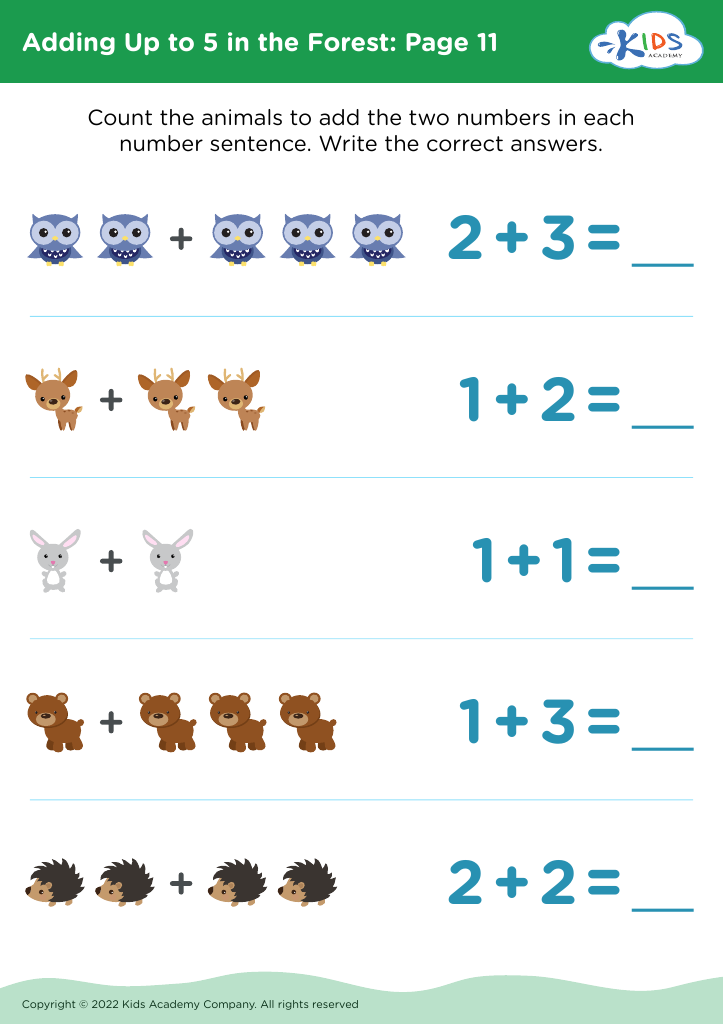
Adding Up to 5 in the Forest: Page 11
Worksheet
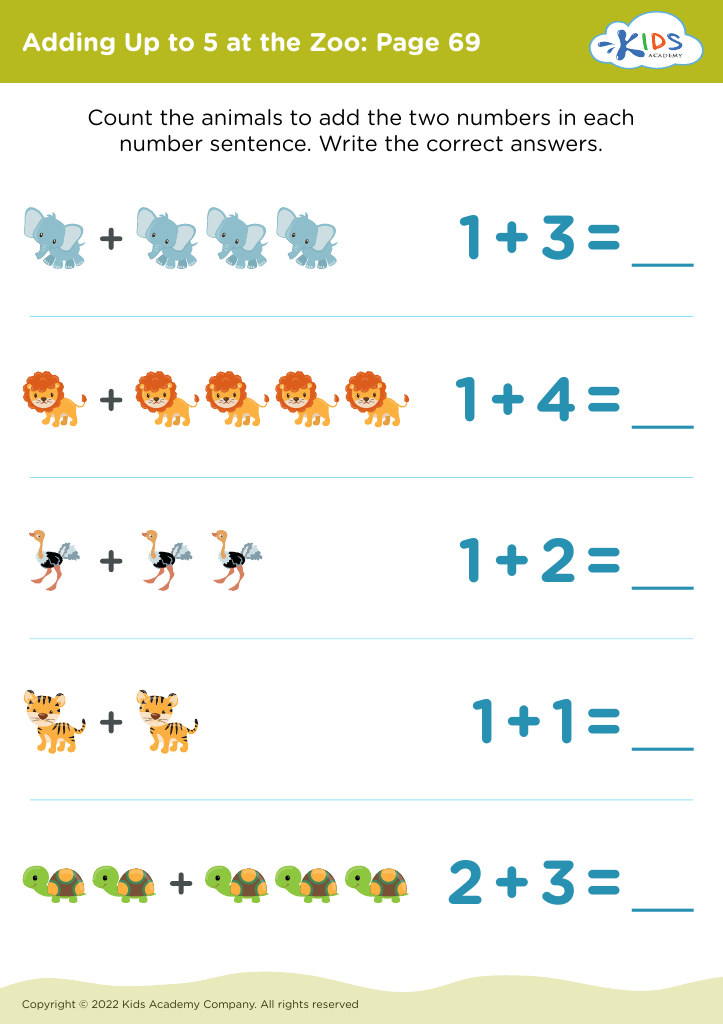
Adding Up to 5 at the Zoo: Page 69
Worksheet
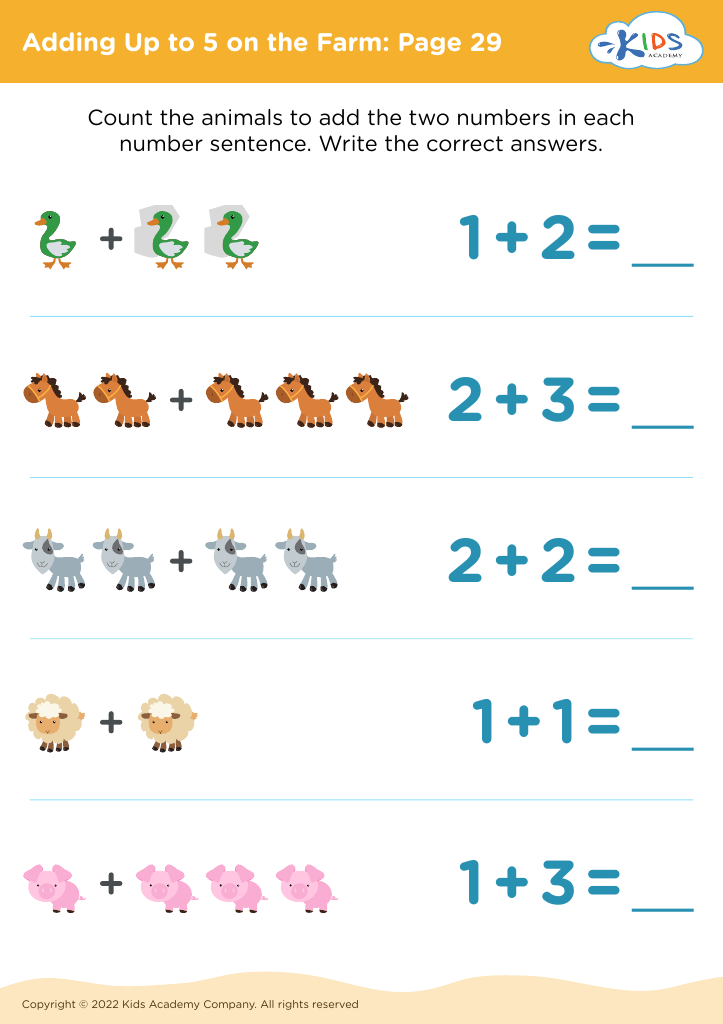
Adding Up to 5 on the Farm: Page 29
Worksheet
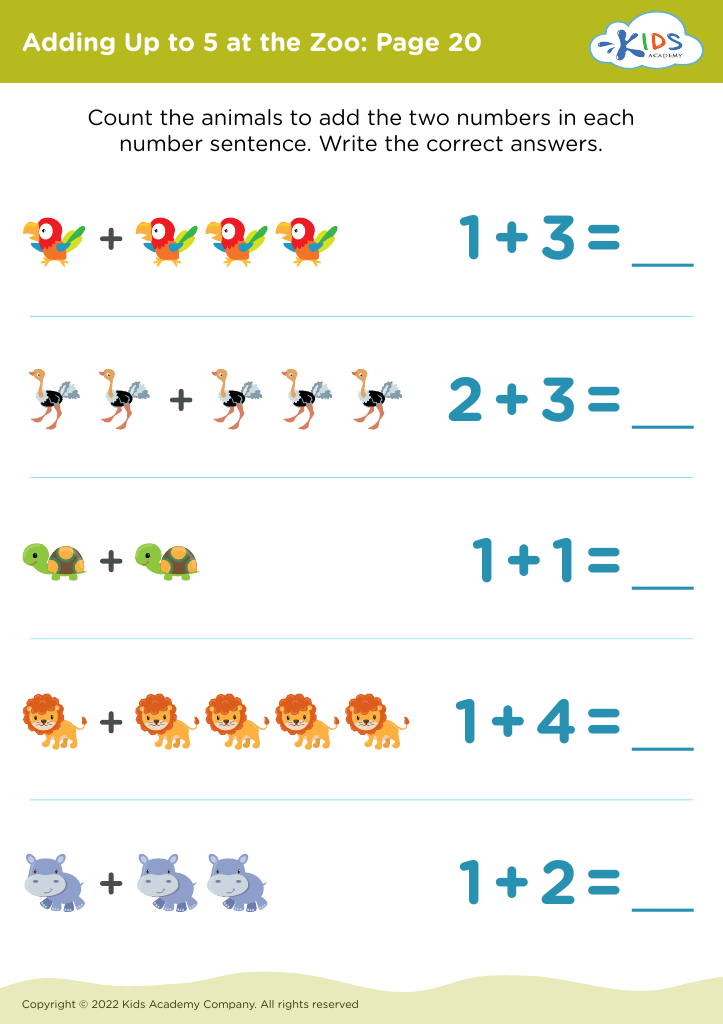
Adding Up to 5 at the Zoo: Page 20
Worksheet
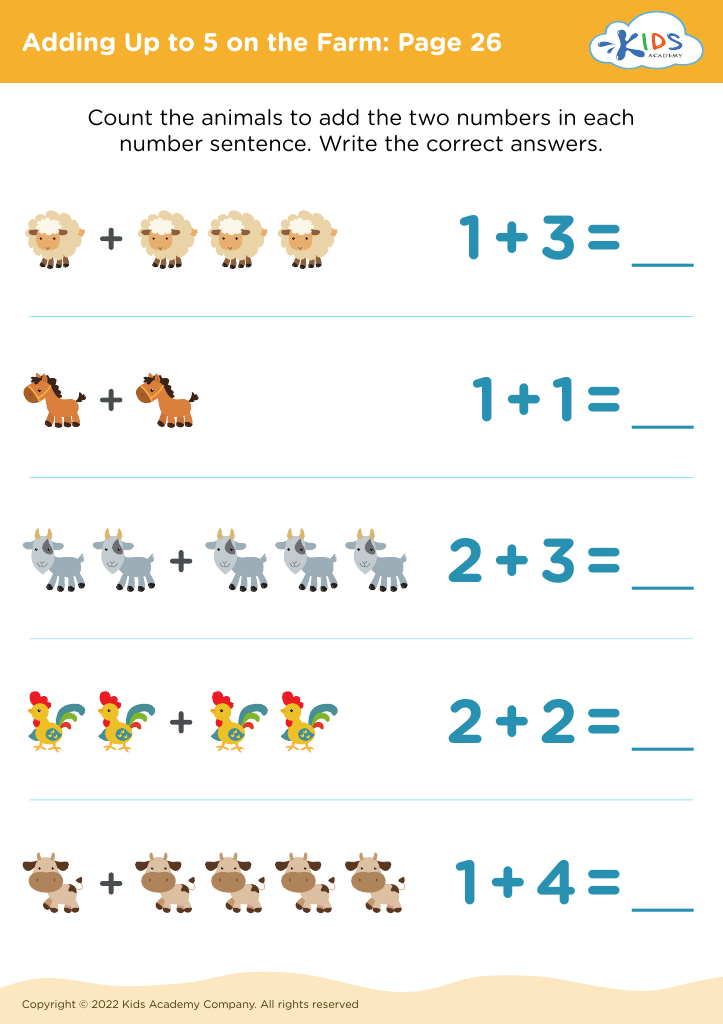
Adding Up to 5 on the Farm: Page 26
Worksheet
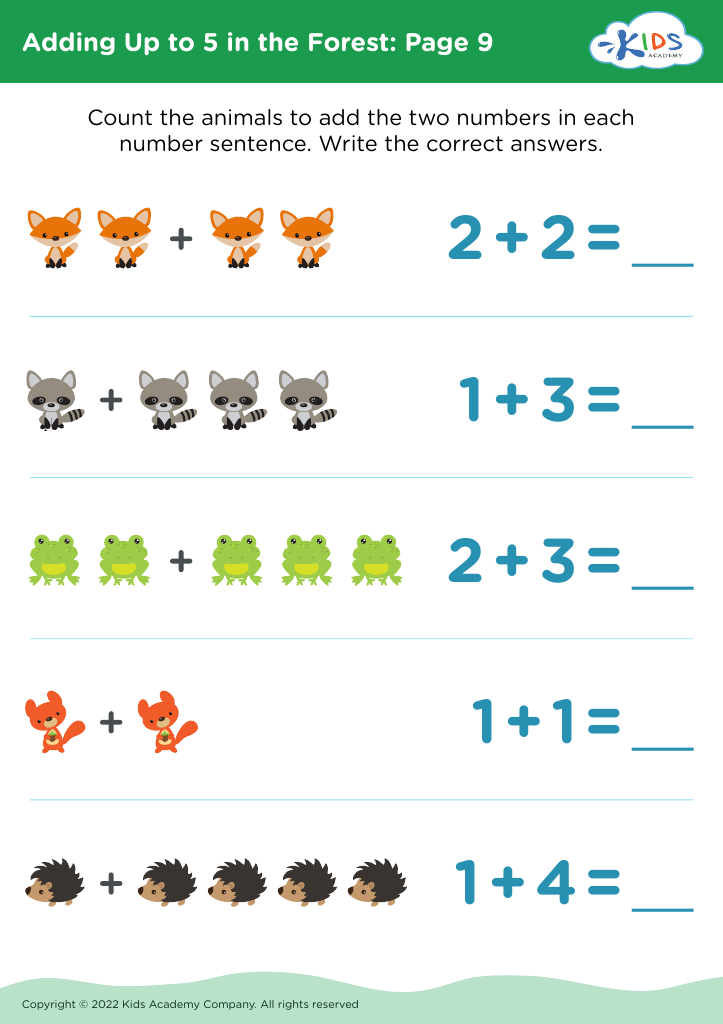
Adding Up to 5 in the Forest: Page 9
Worksheet
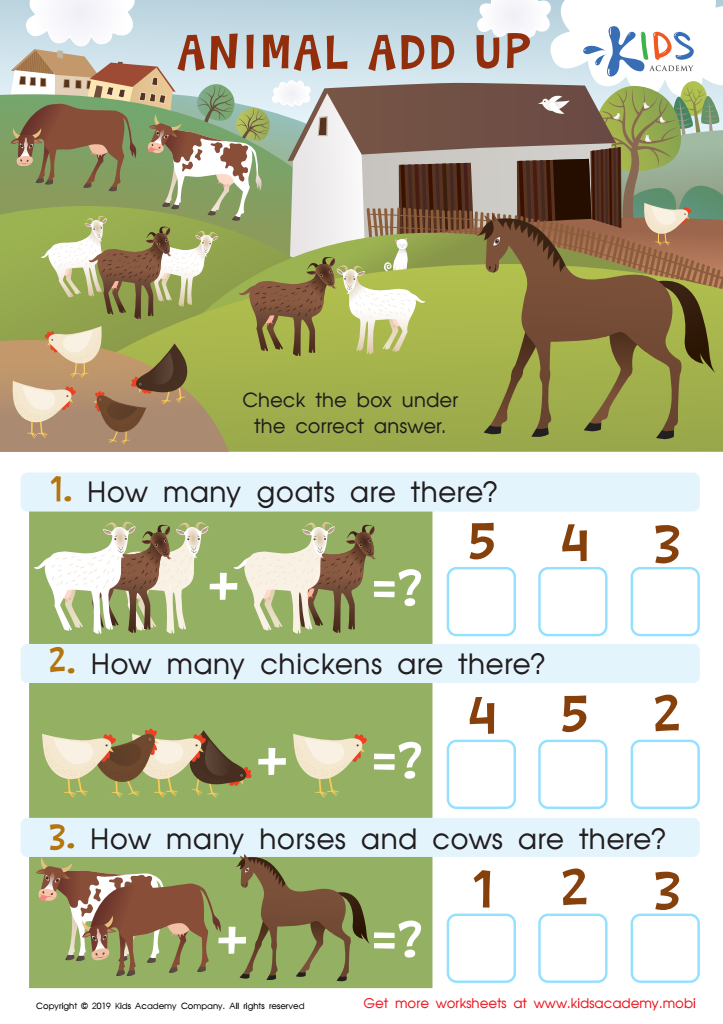
Animal Add Up Worksheet

Animal Add Up Worksheet

Animals are fun to observe and interact with. They can be seen at the zoo, parks, farms and in homes with pets. This worksheet helps kids identify animals, and build addition skills. Look at the picture with them and help name each animal. After that, add the animals up and check the box for the correct answer. 80 words.
Animal Add Up Worksheet
Worksheet
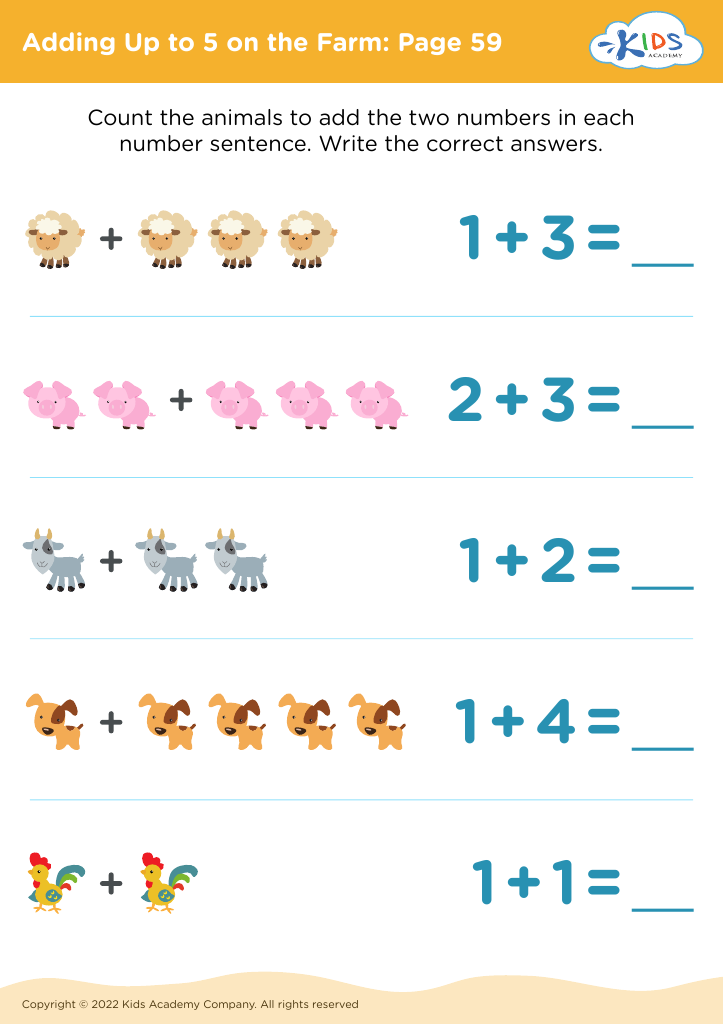
Adding Up to 5 on the Farm: Page 59
Worksheet
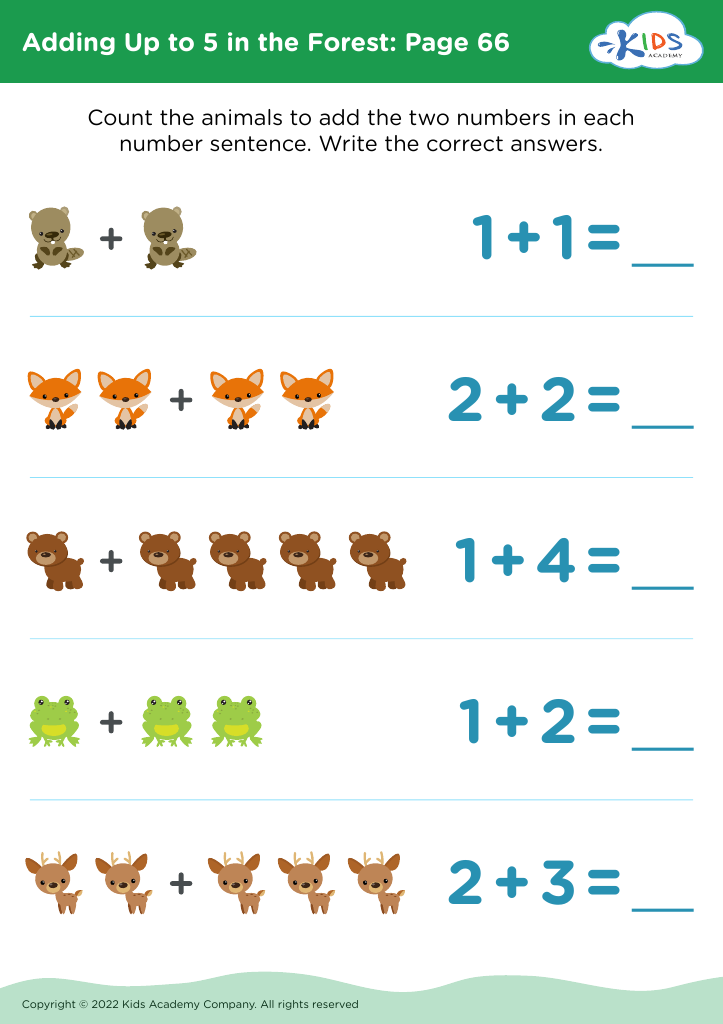
Adding Up to 5 in the Forest: Page 66
Worksheet
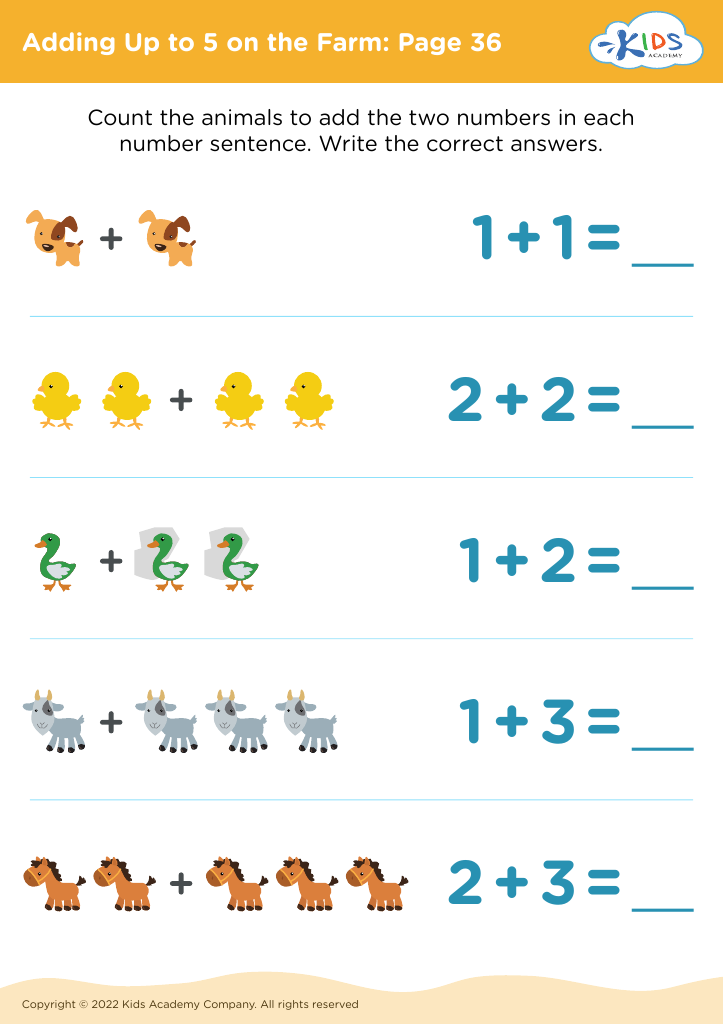
Adding Up to 5 on the Farm: Page 36
Worksheet
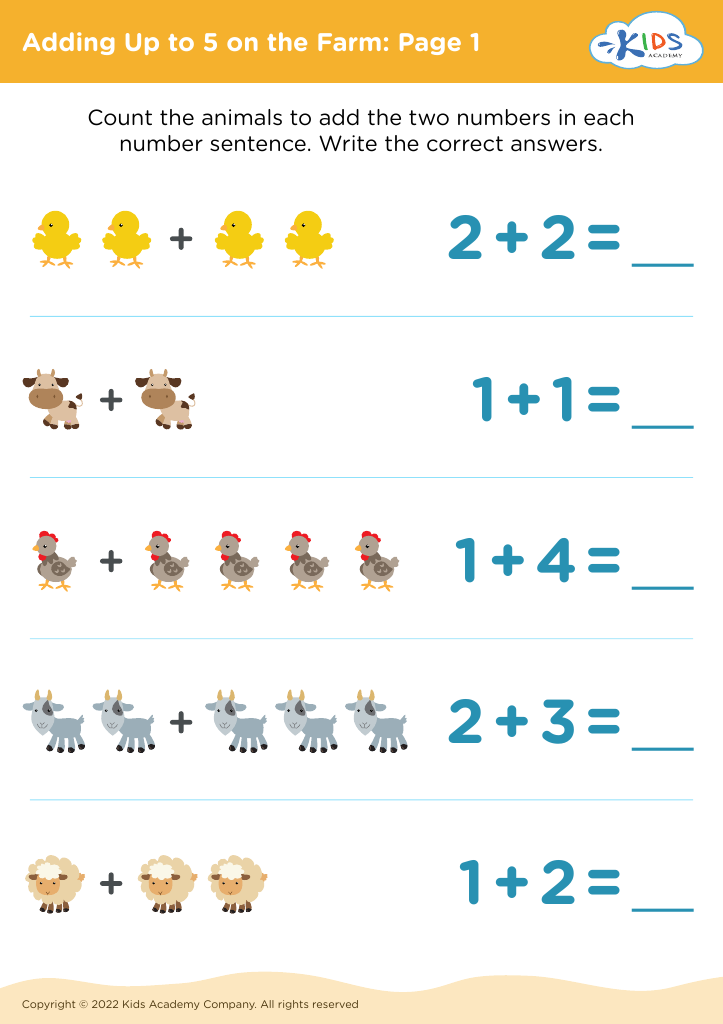
Adding Up to 5 on the Farm: Page 1
Worksheet
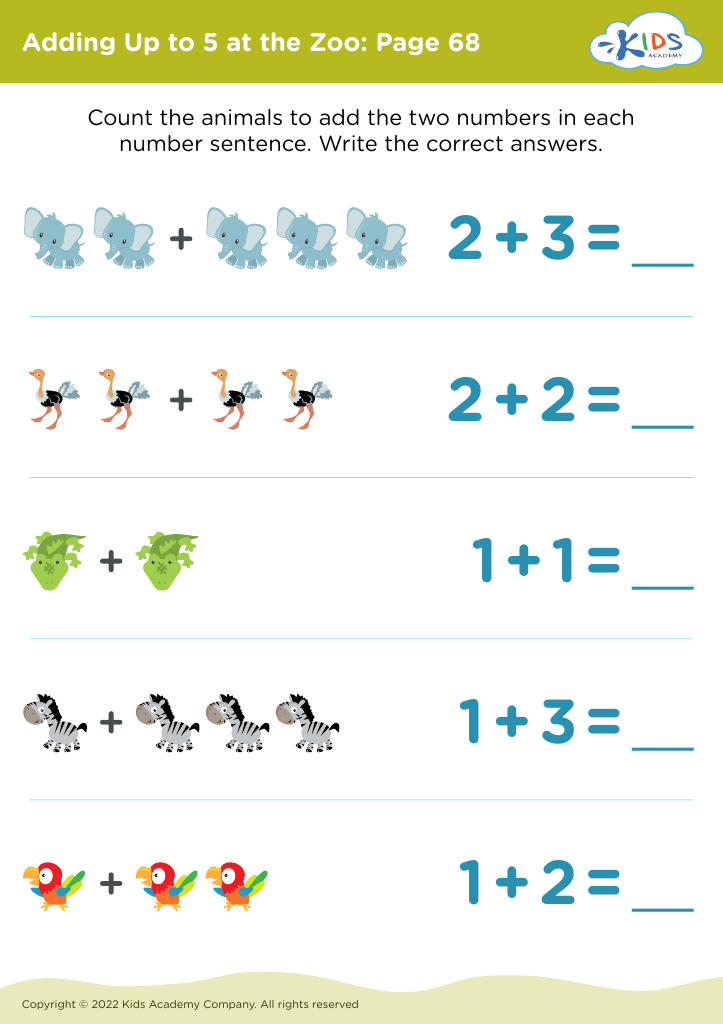
Adding Up to 5 at the Zoo: Page 68
Worksheet
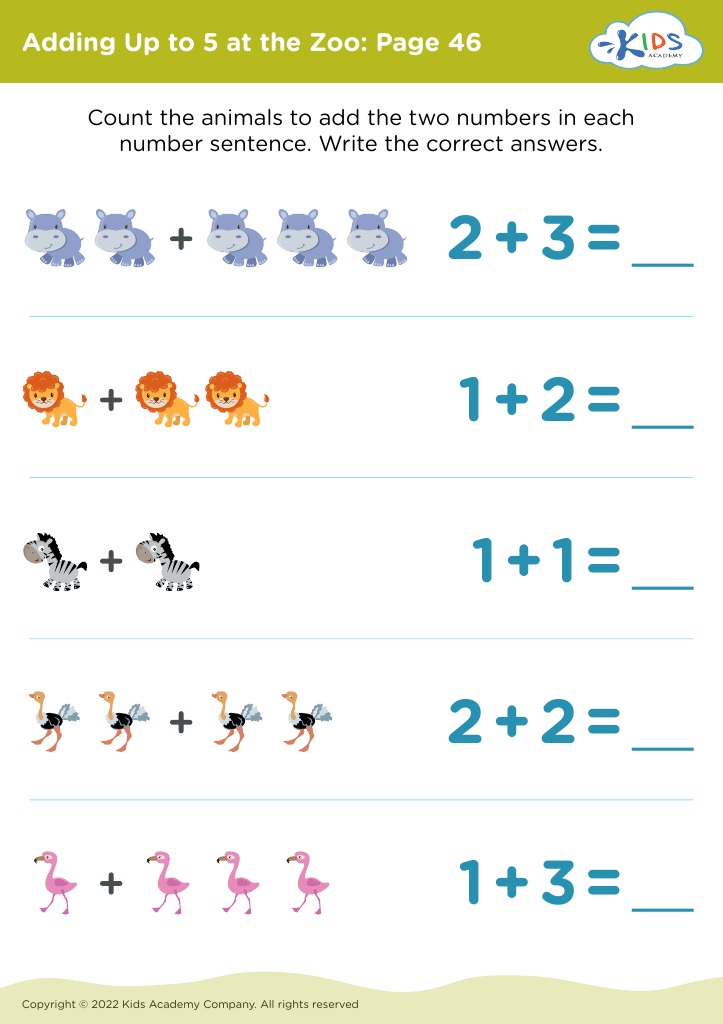
Adding Up to 5 at the Zoo: Page 46
Worksheet
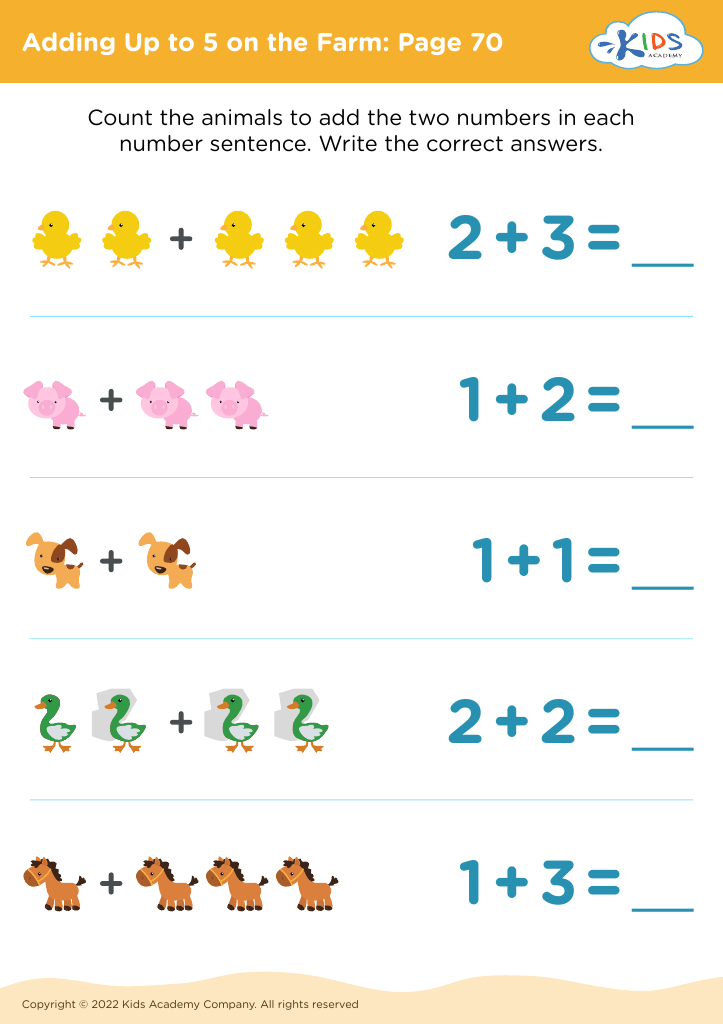
Adding Up to 5 on the Farm: Page 70
Worksheet
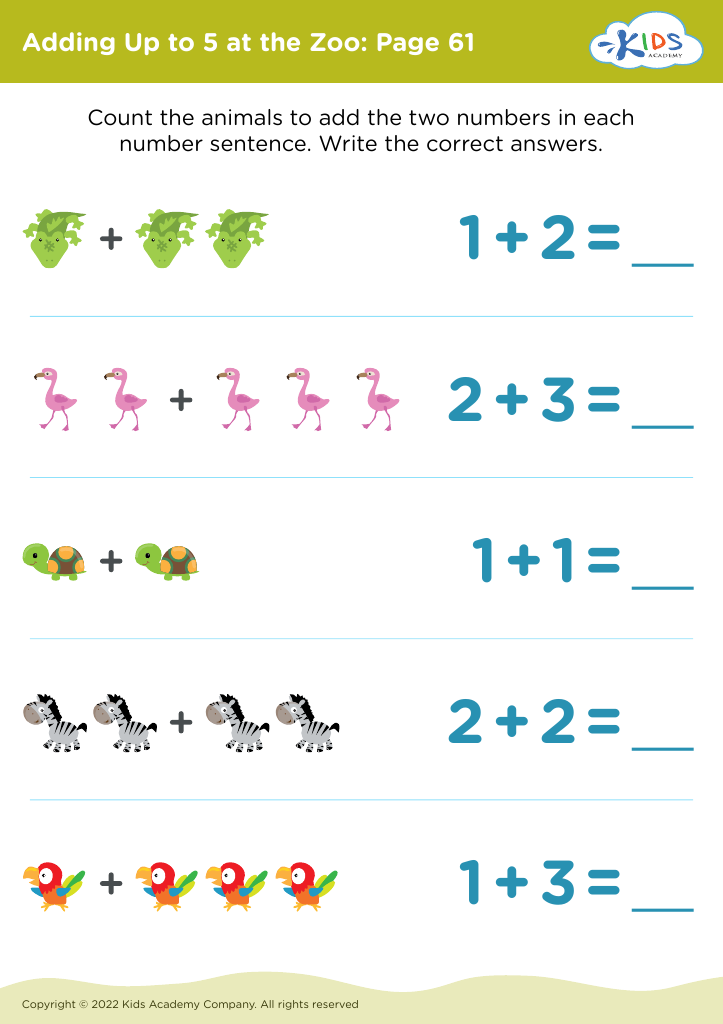
Adding Up to 5 at the Zoo: Page 61
Worksheet
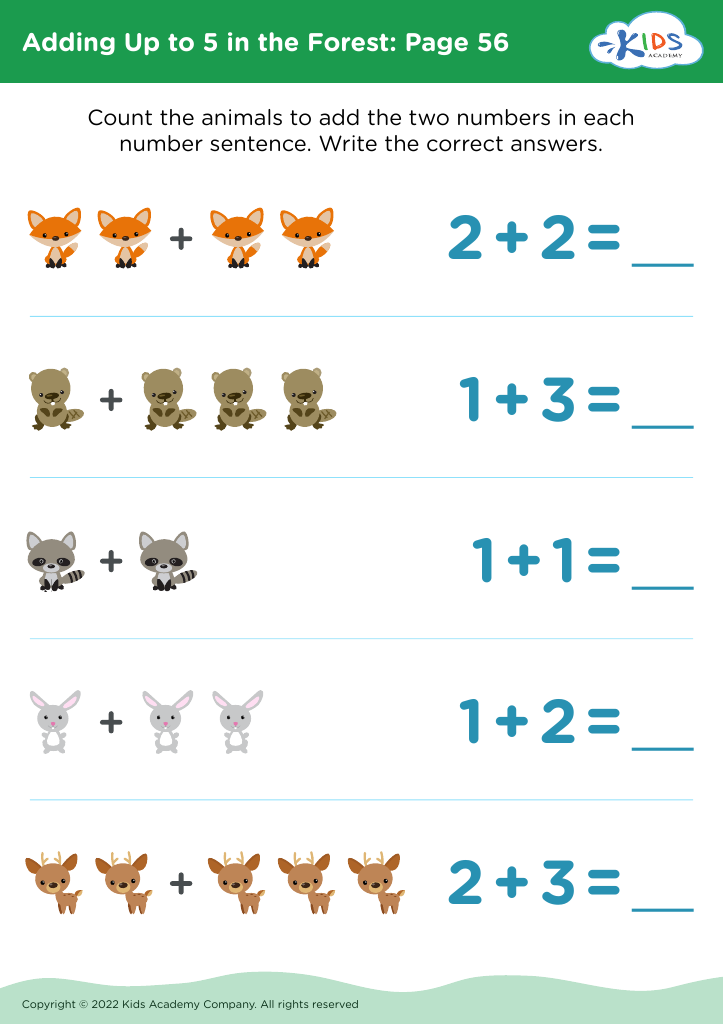
Adding Up to 5 in the Forest: Page 56
Worksheet
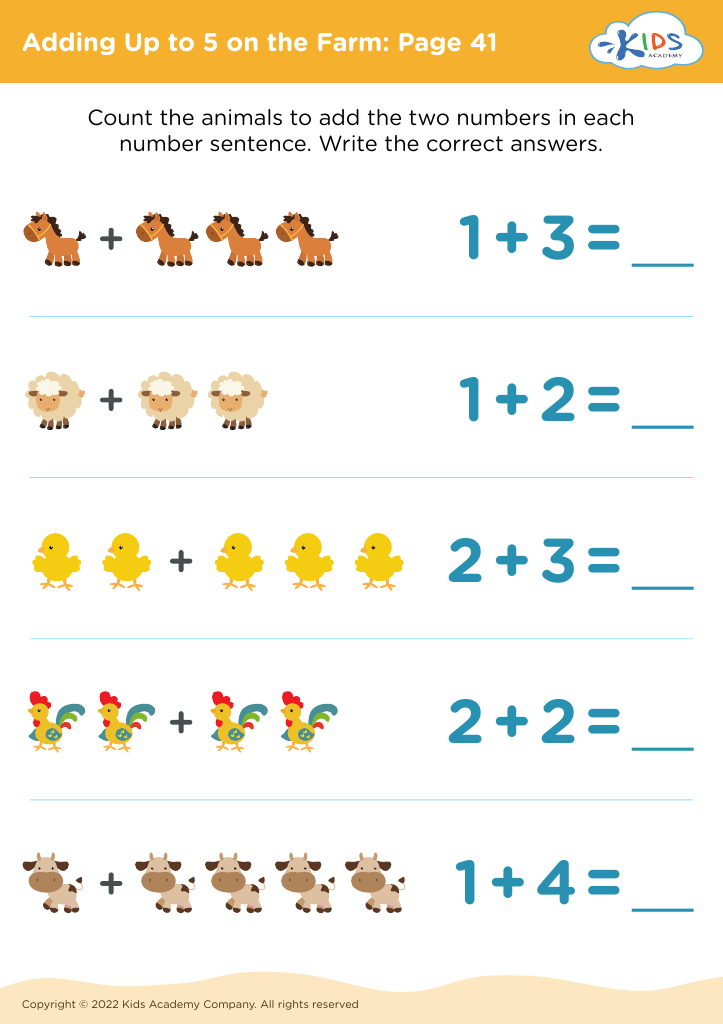
Adding Up to 5 on the Farm: Page 41
Worksheet
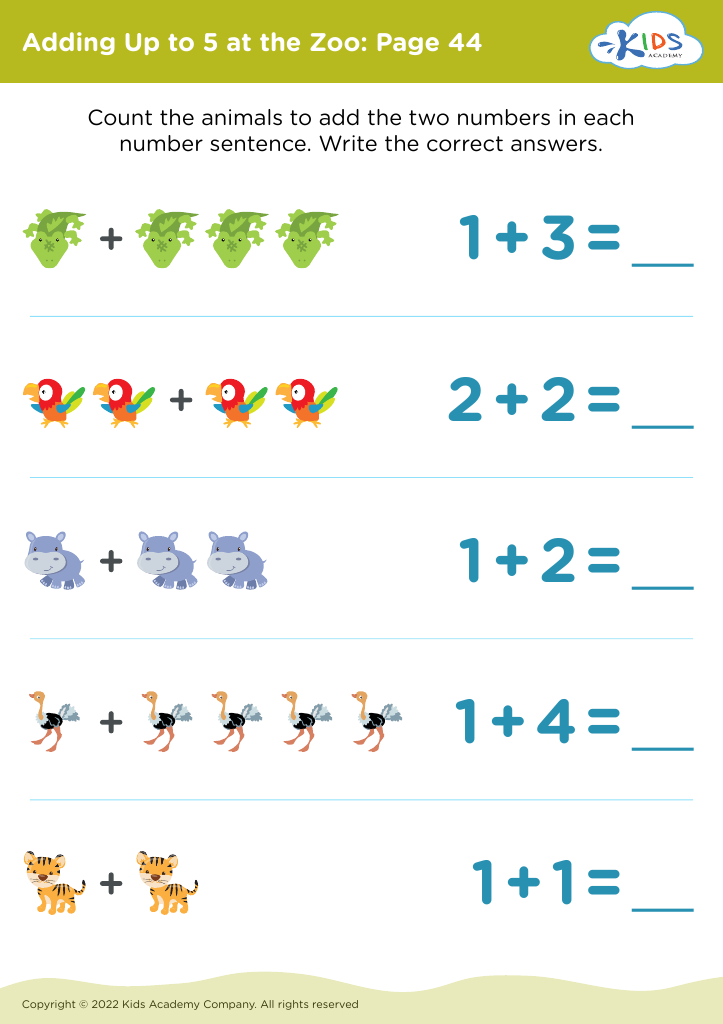
Adding Up to 5 at the Zoo: Page 44
Worksheet
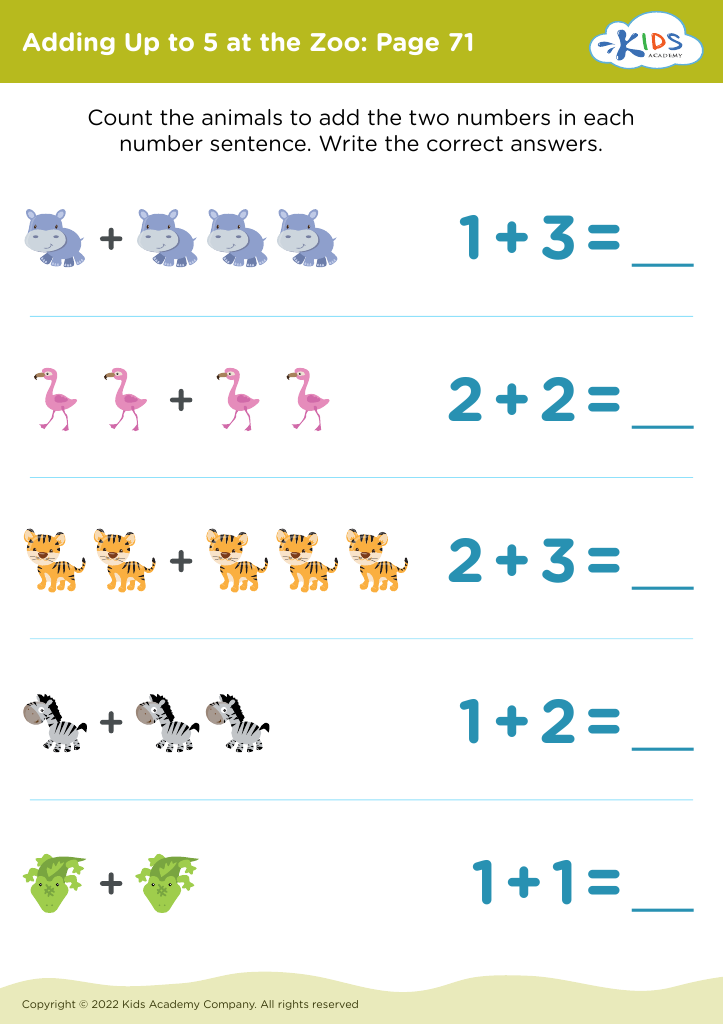
Adding Up to 5 at the Zoo: Page 71
Worksheet
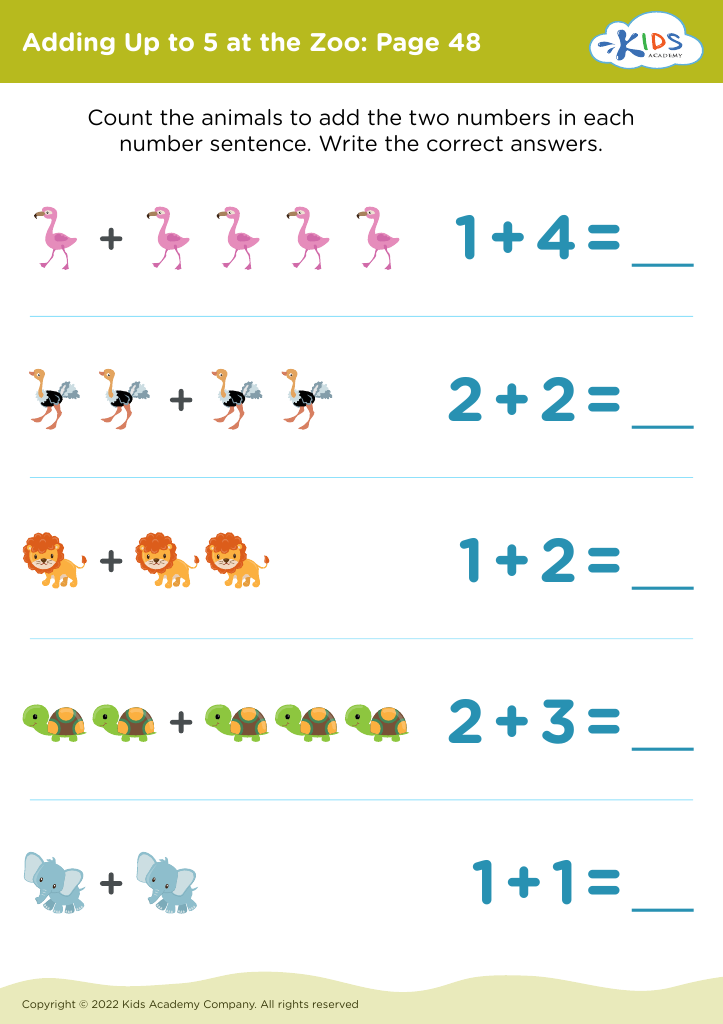
Adding Up to 5 at the Zoo: Page 48
Worksheet
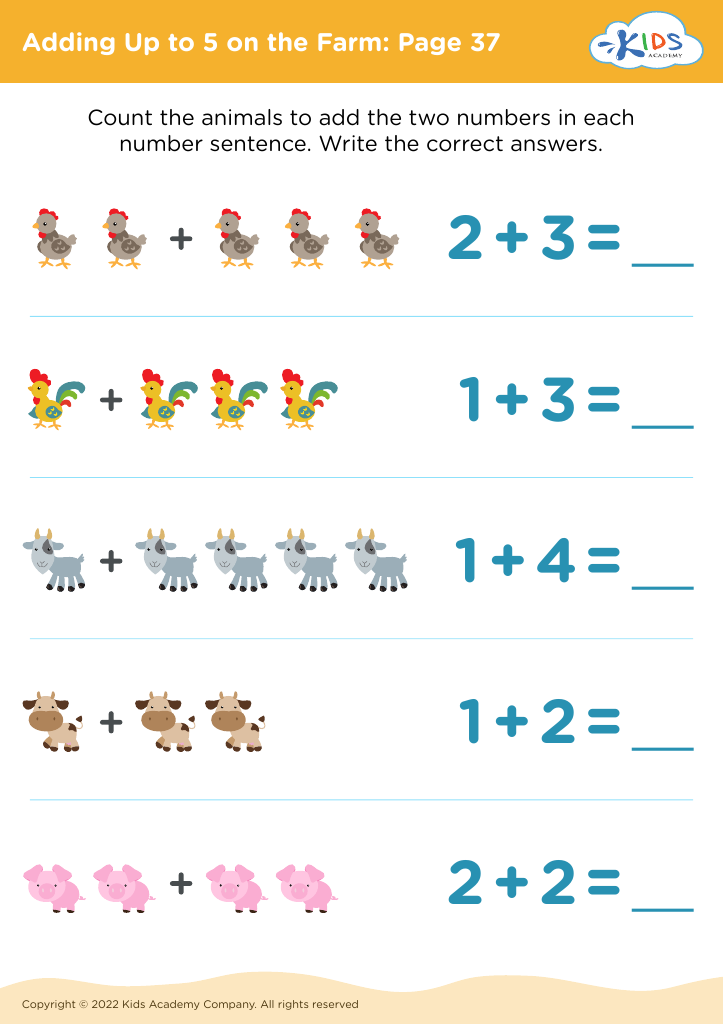
Adding Up to 5 on the Farm: Page 37
Worksheet


Animal recognition addition for ages 4-5 is an engaging and educational method that helps young children develop foundational math skills while simultaneously enhancing their understanding of the animal kingdom. Parents and teachers should care about this approach for several reasons.

Firstly, it integrates learning with play, fostering a love for mathematics. By using animals—especially those children are already familiar with—this method captures their attention and curiosity. For instance, counting animals in storybooks or using animal figurines can make addition fun and relatable.

Secondly, it aids cognitive development. Recognizing animals while practicing addition reinforces problem-solving skills and critical thinking. Children learn to associate quantities with visual representations, providing a strong basis for future math concepts.

Lastly, it promotes social and emotional learning. Activities that involve animals can inspire discussions about nature, empathy, and responsibility as children learn to care for animals or understand their habitats.

By embedding addition within animal recognition, parents and teachers enrich learning experiences, making mathematics approachable and enjoyable. Ultimately, this immersive approach cultivates confident, curious learners ready to explore more complex concepts as they grow. Engaging children in this way lays the groundwork for lifelong learning.