Check out this FREE Trial Lesson on Addition for age 4-5!

Exactly the Same, or Not

Favorites
With answer key
Interactive
  • 4-5
  • Basic Addition Skills
  • Addition
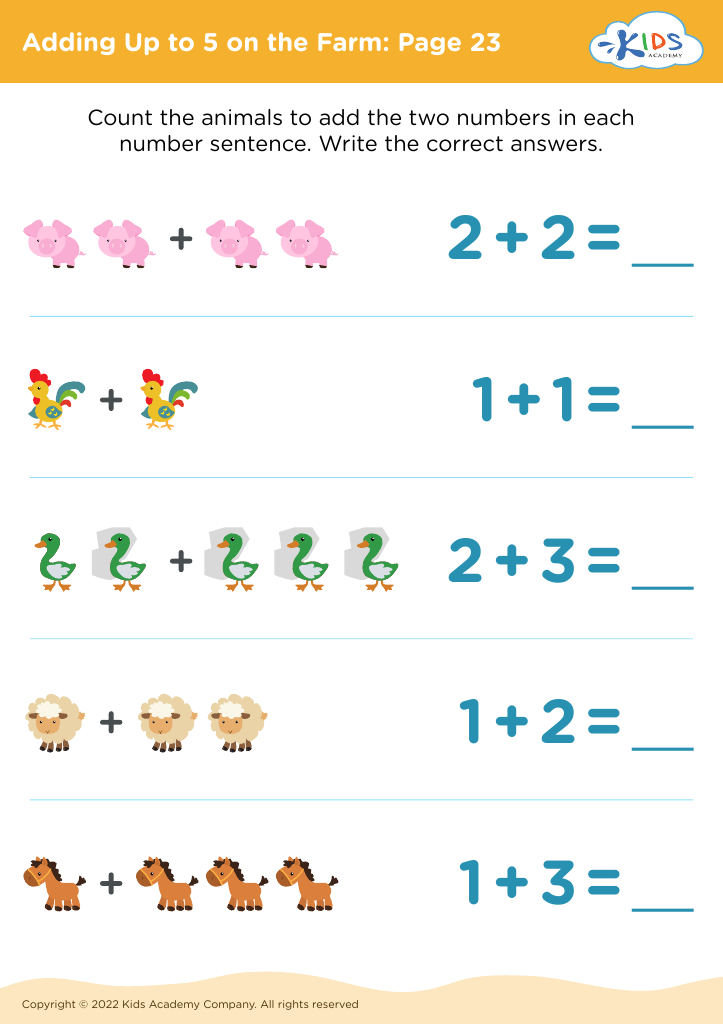
Adding Up to 5 on the Farm: Page 23
Worksheet
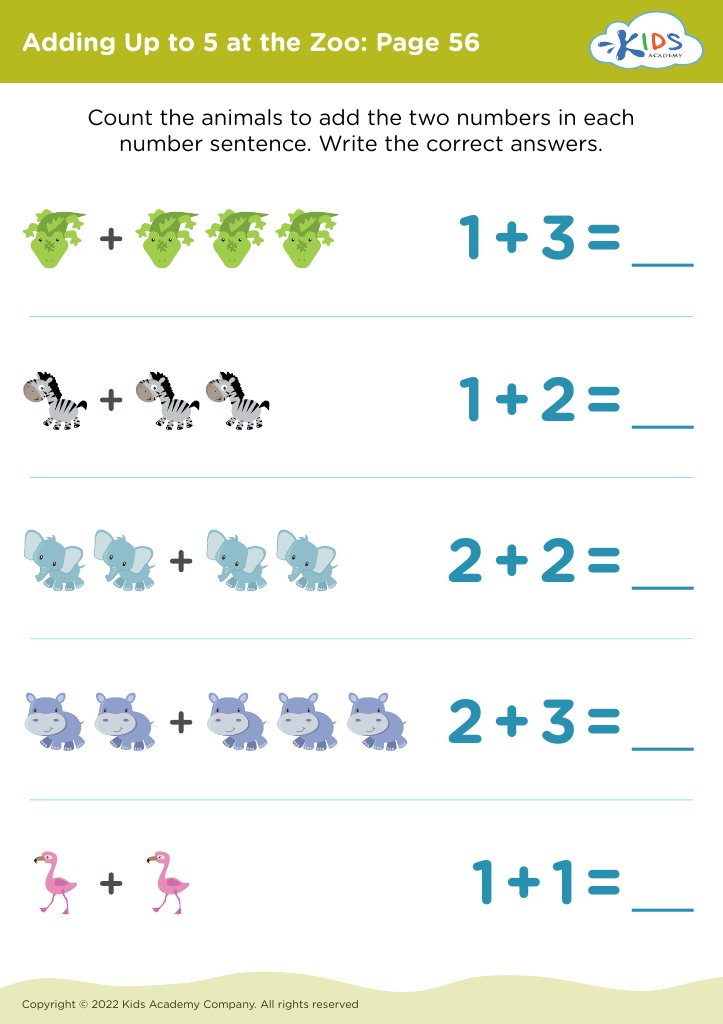
Adding Up to 5 at the Zoo: Page 56
Worksheet
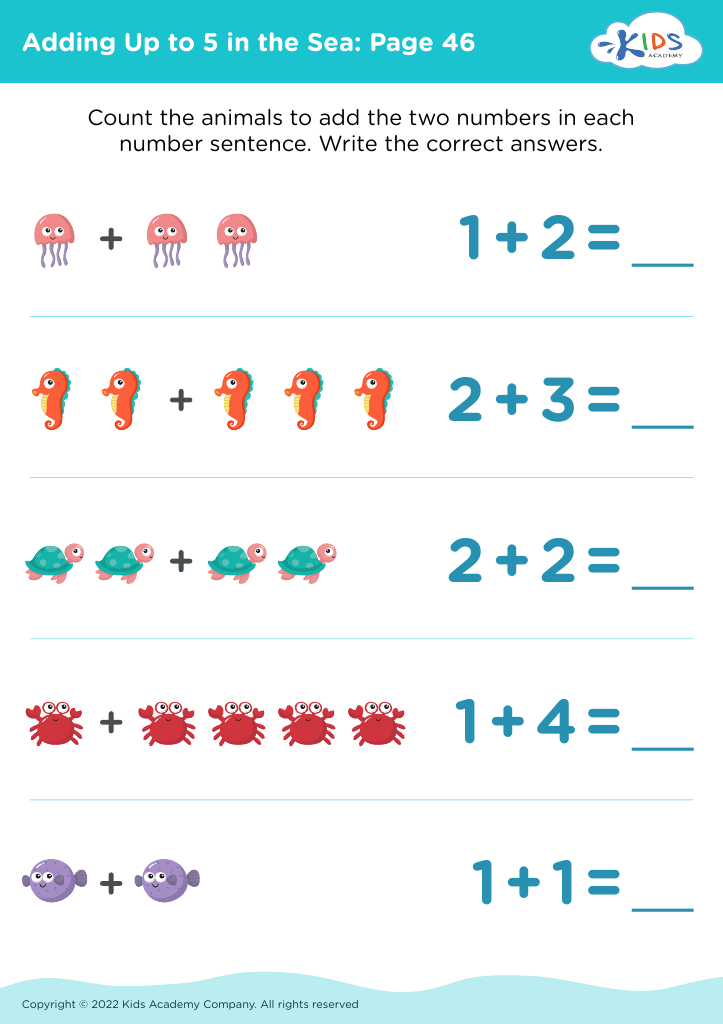
Adding Up to 5 in the Sea: Page 46
Worksheet
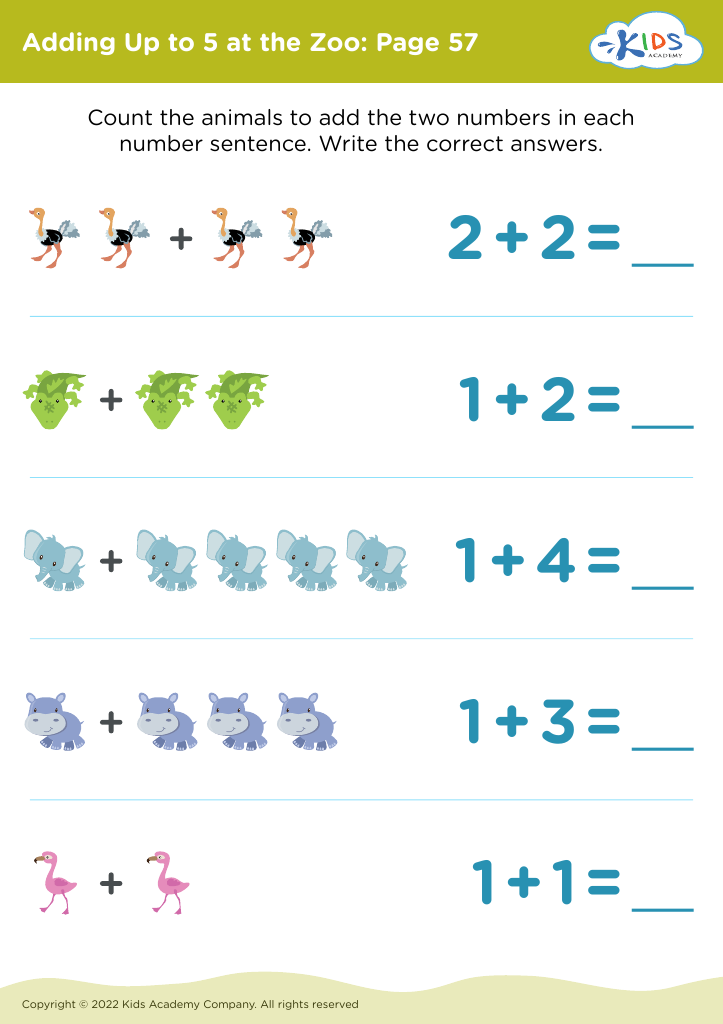
Adding Up to 5 at the Zoo: Page 57
Worksheet
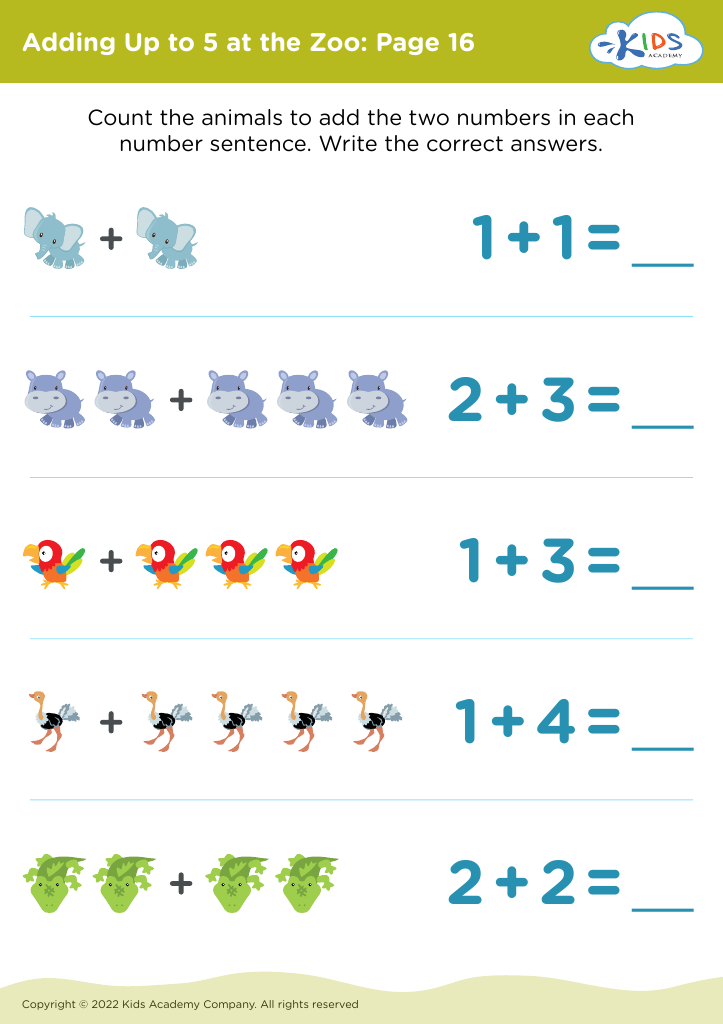
Adding Up to 5 at the Zoo: Page 16
Worksheet
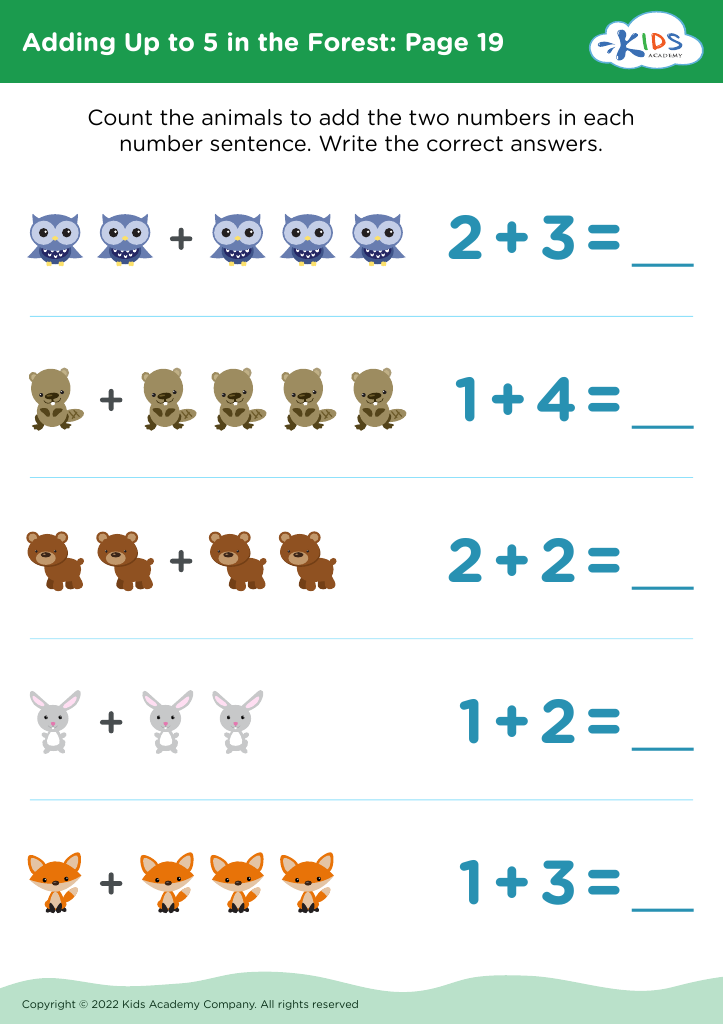
Adding Up to 5 in the Forest: Page 19
Worksheet
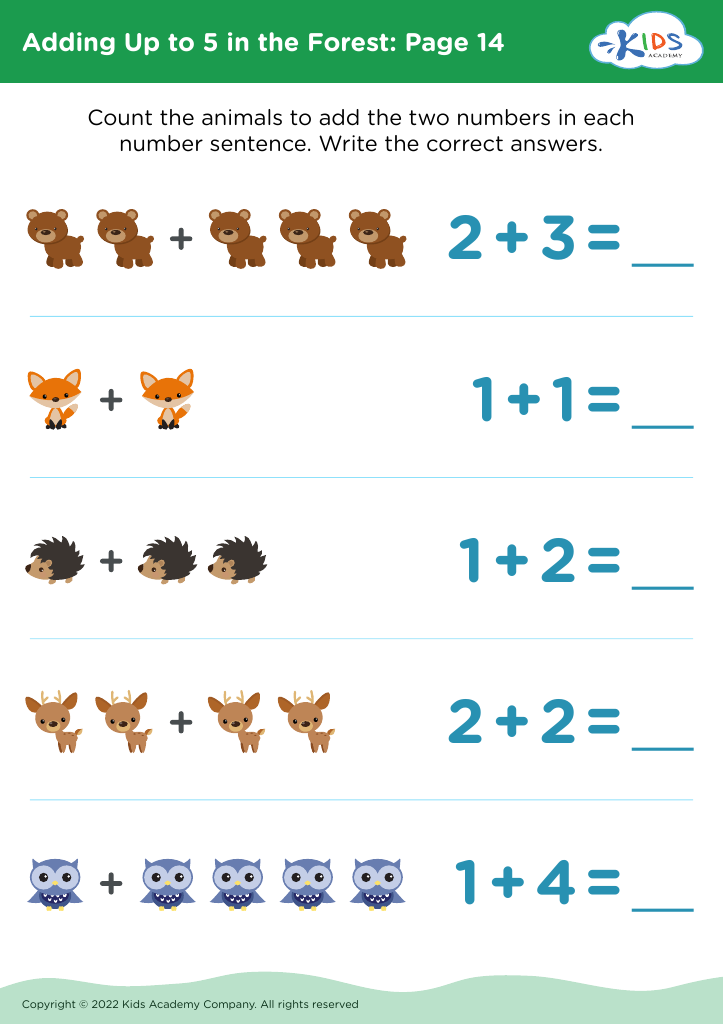
Adding Up to 5 in the Forest: Page 14
Worksheet
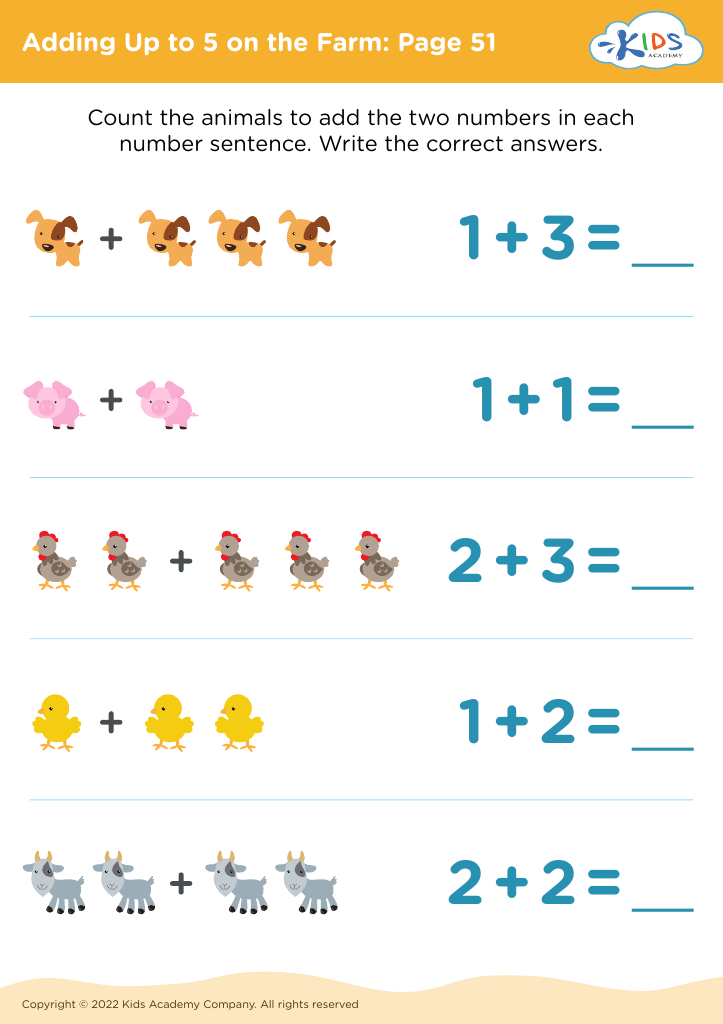
Adding Up to 5 on the Farm: Page 51
Worksheet
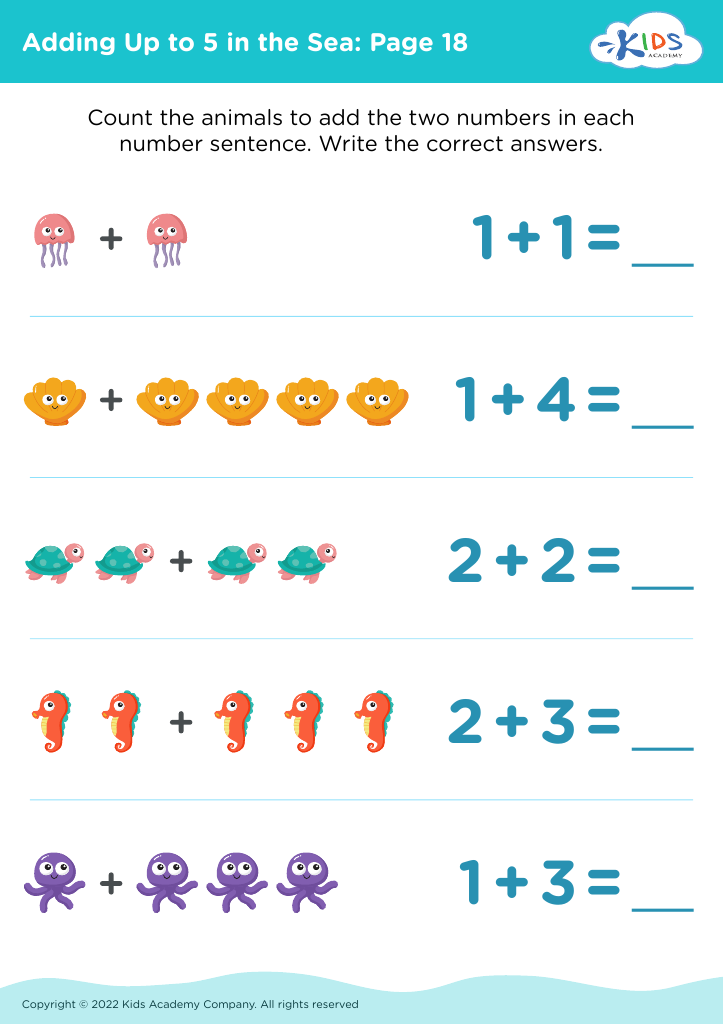
Adding Up to 5 in the Sea: Page 18
Worksheet
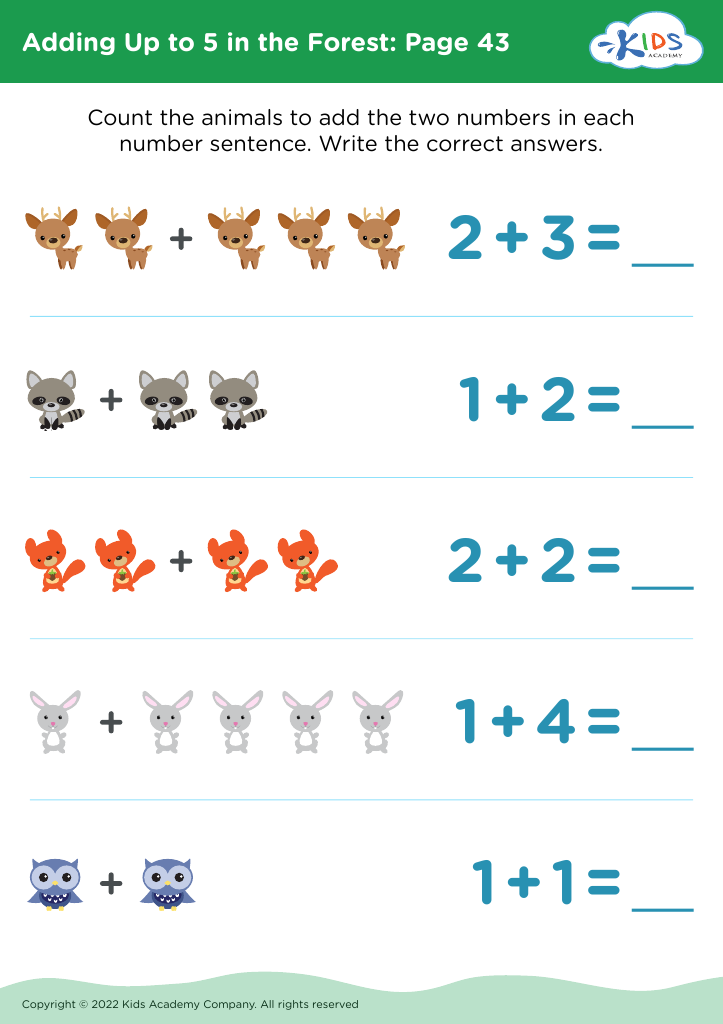
Adding Up to 5 in the Forest: Page 43
Worksheet
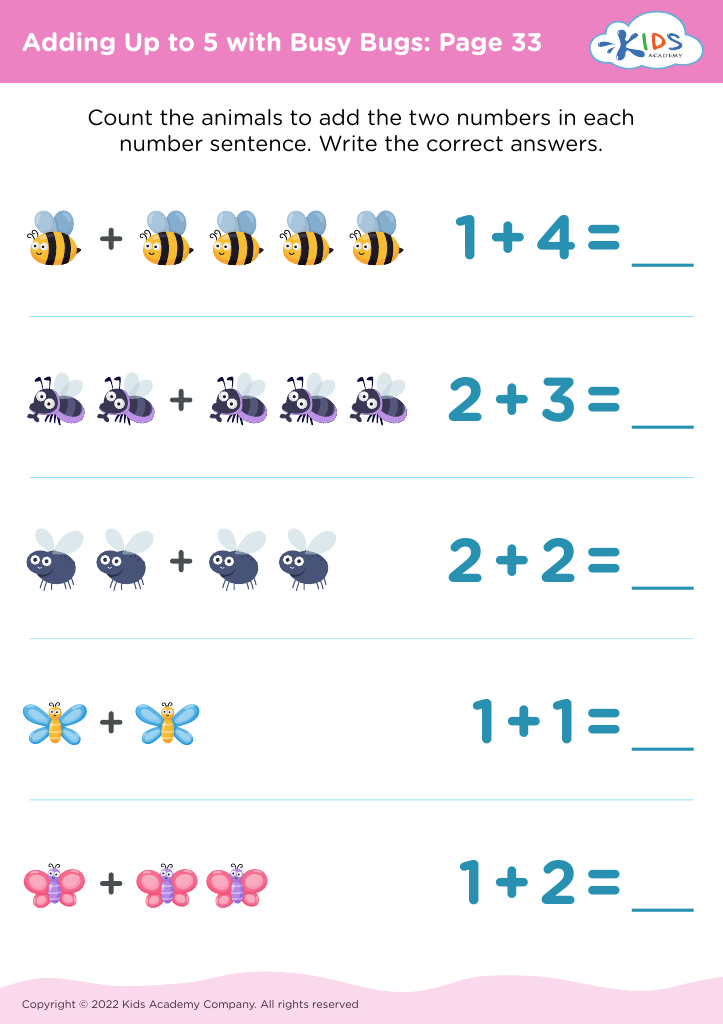
Adding Up to 5 with Busy Bugs: Page 33
Worksheet
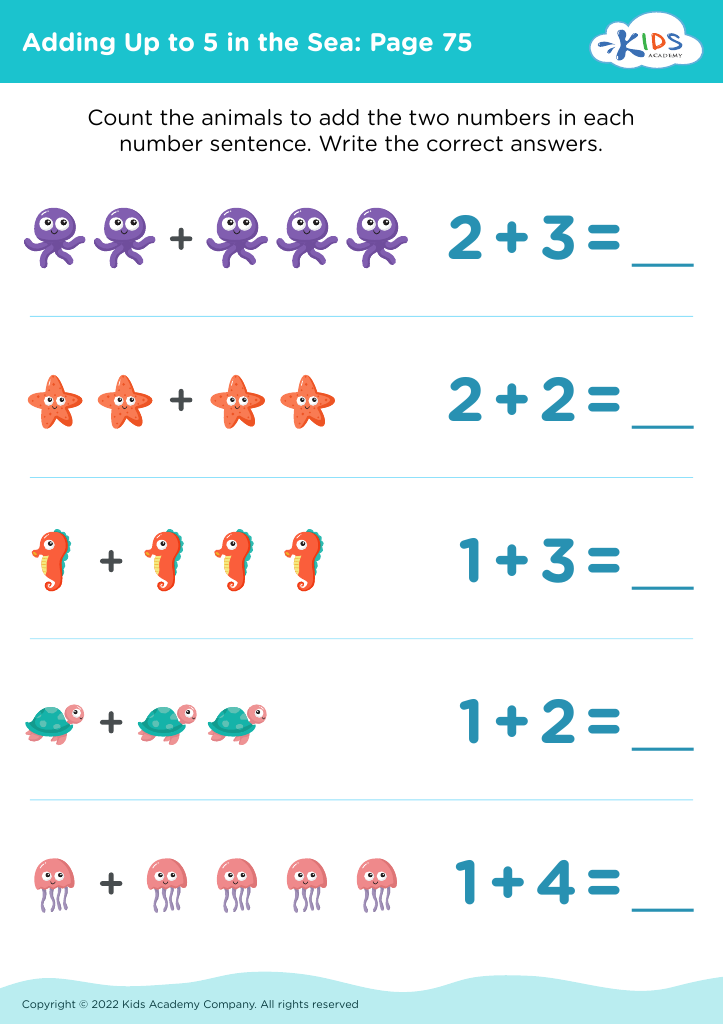
Adding Up to 5 in the Sea: Page 75
Worksheet
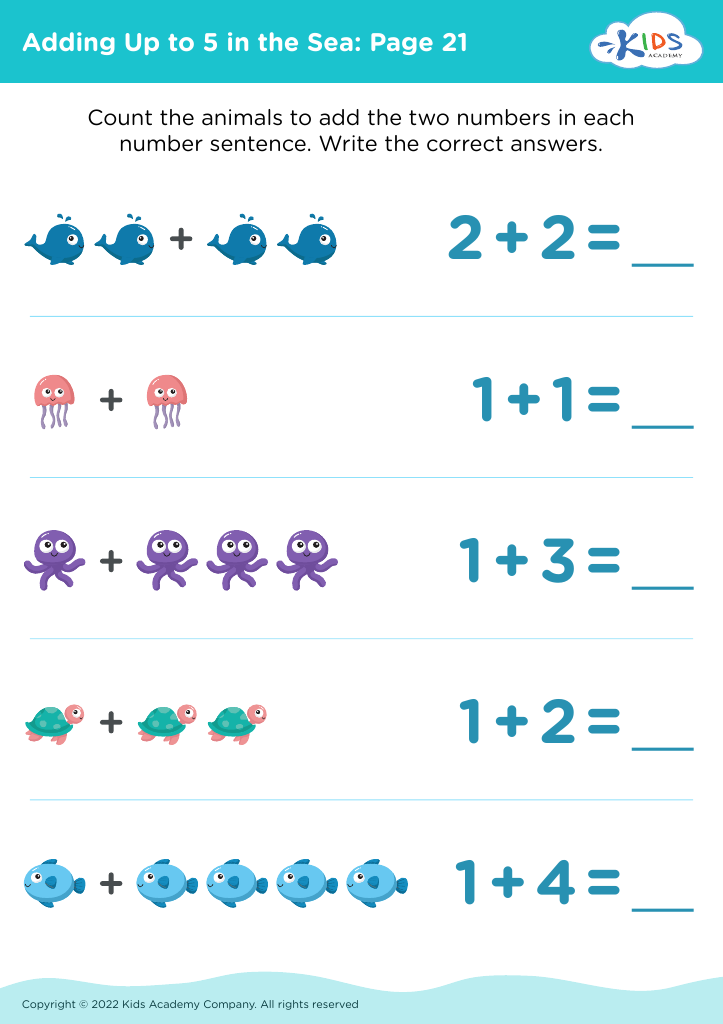
Adding Up to 5 in the Sea: Page 21
Worksheet
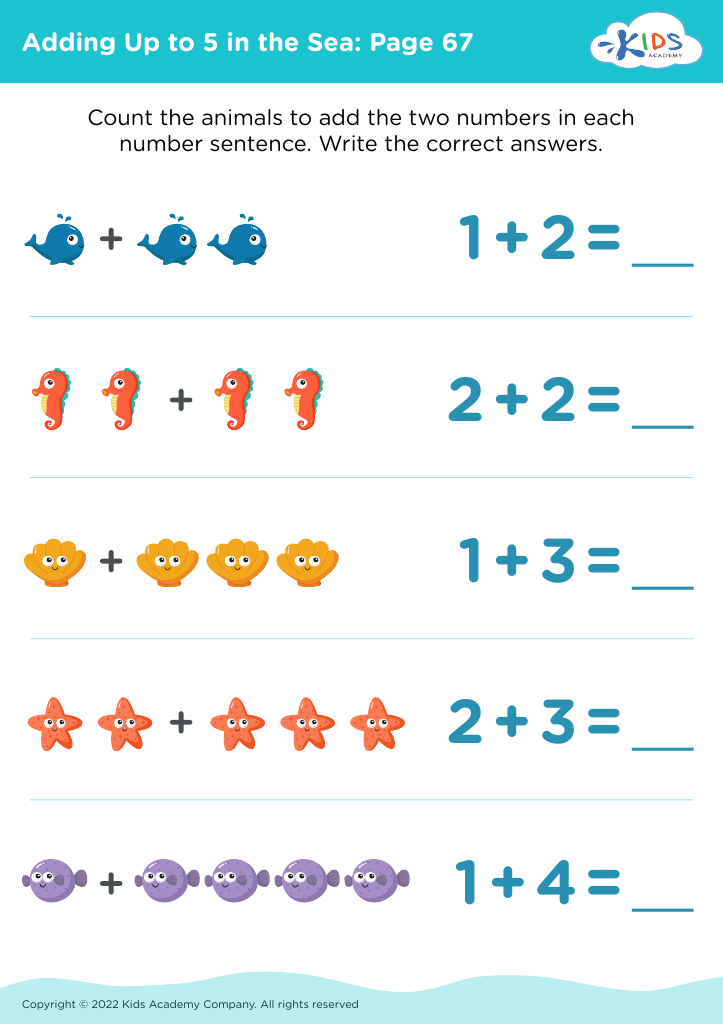
Adding Up to 5 in the Sea: Page 67
Worksheet
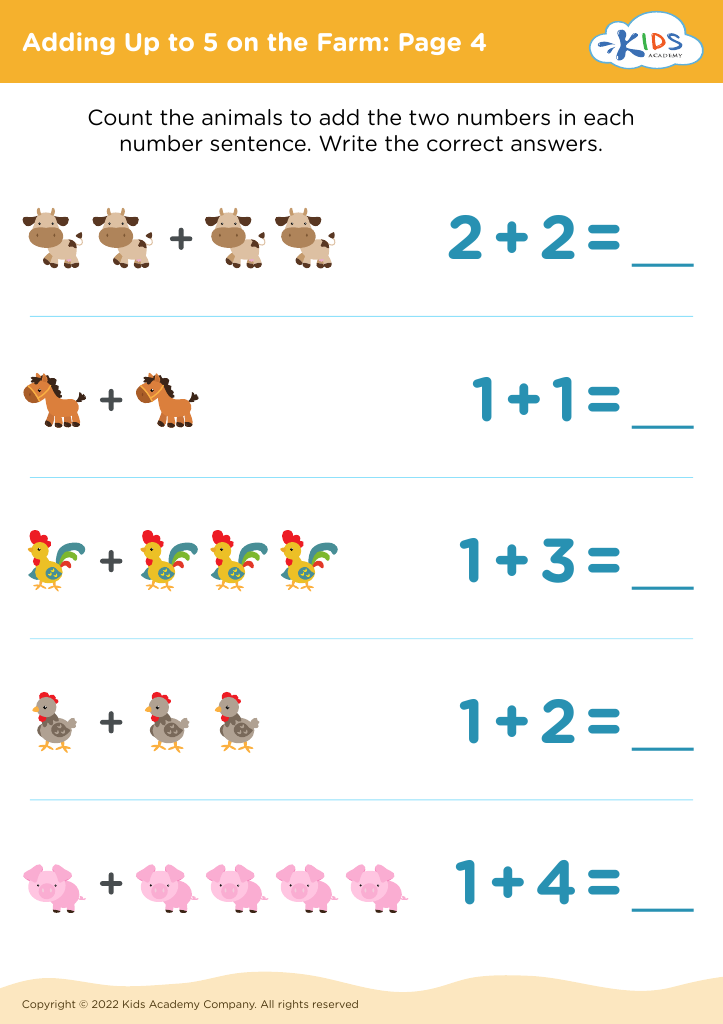
Adding Up to 5 on the Farm: Page 4
Worksheet
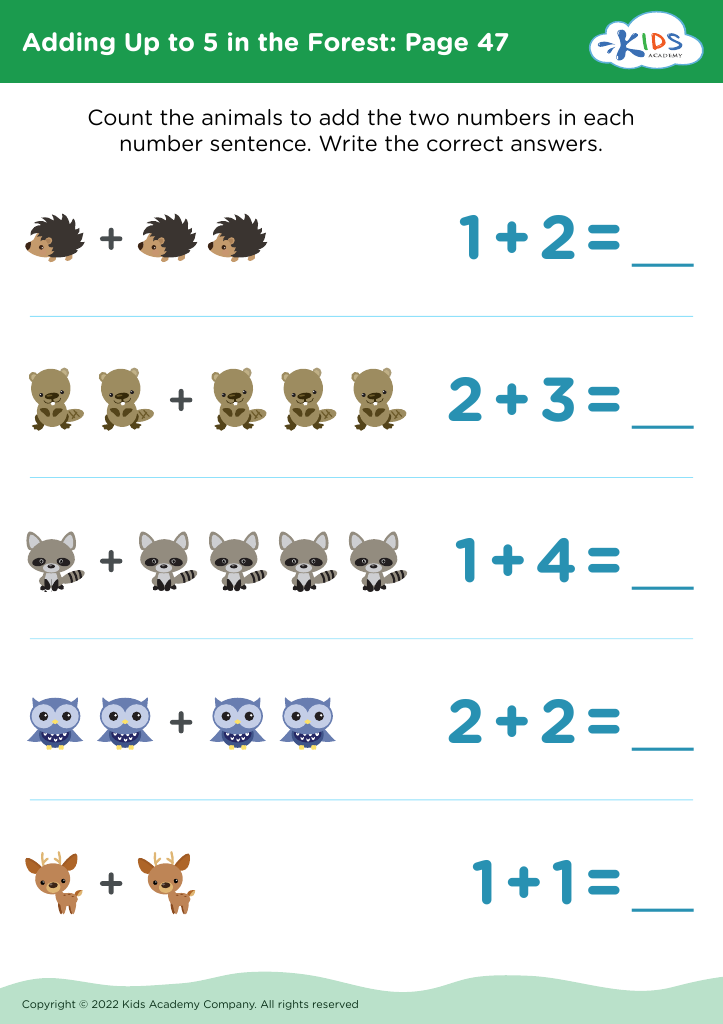
Adding Up to 5 in the Forest: Page 47
Worksheet
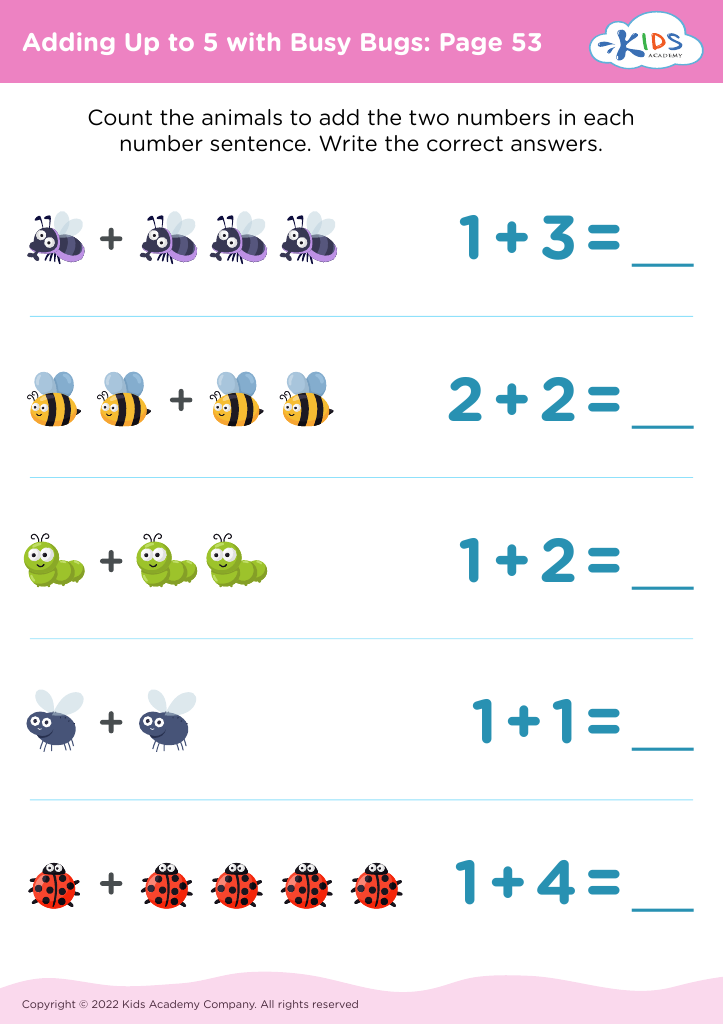
Adding Up to 5 with Busy Bugs: Page 53
Worksheet
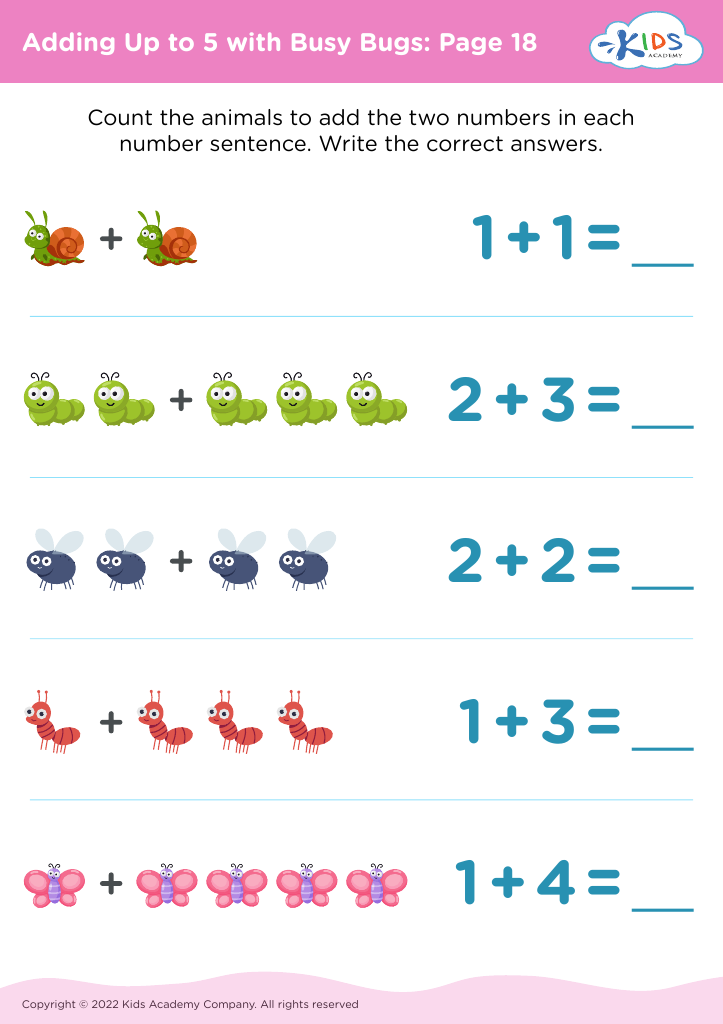
Adding Up to 5 with Busy Bugs: Page 18
Worksheet
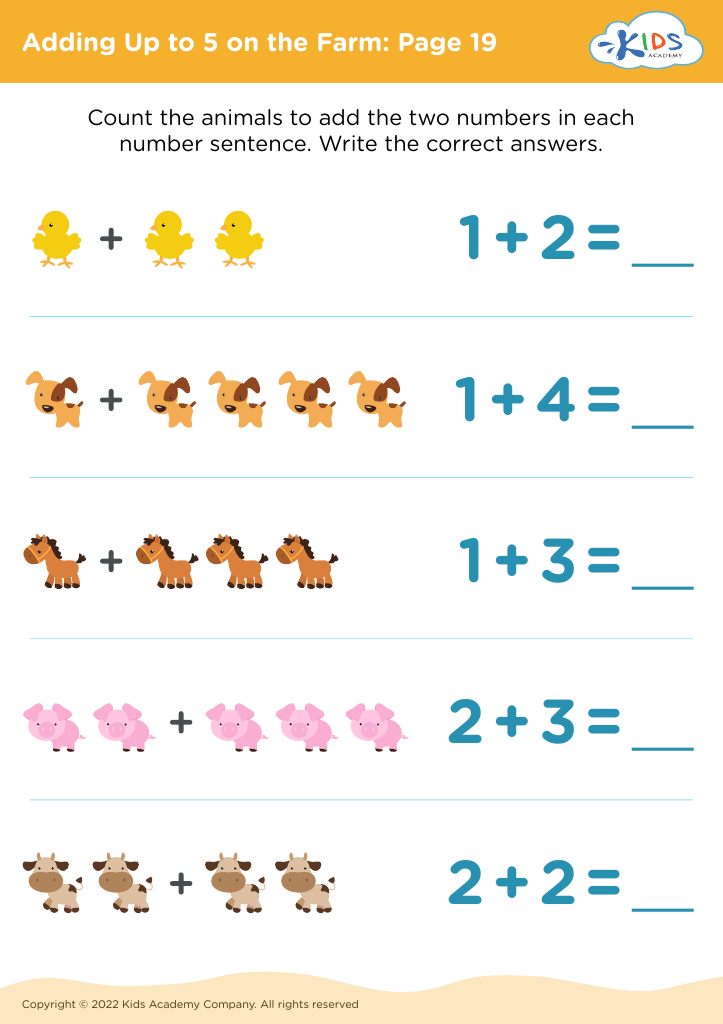
Adding Up to 5 on the Farm: Page 19
Worksheet
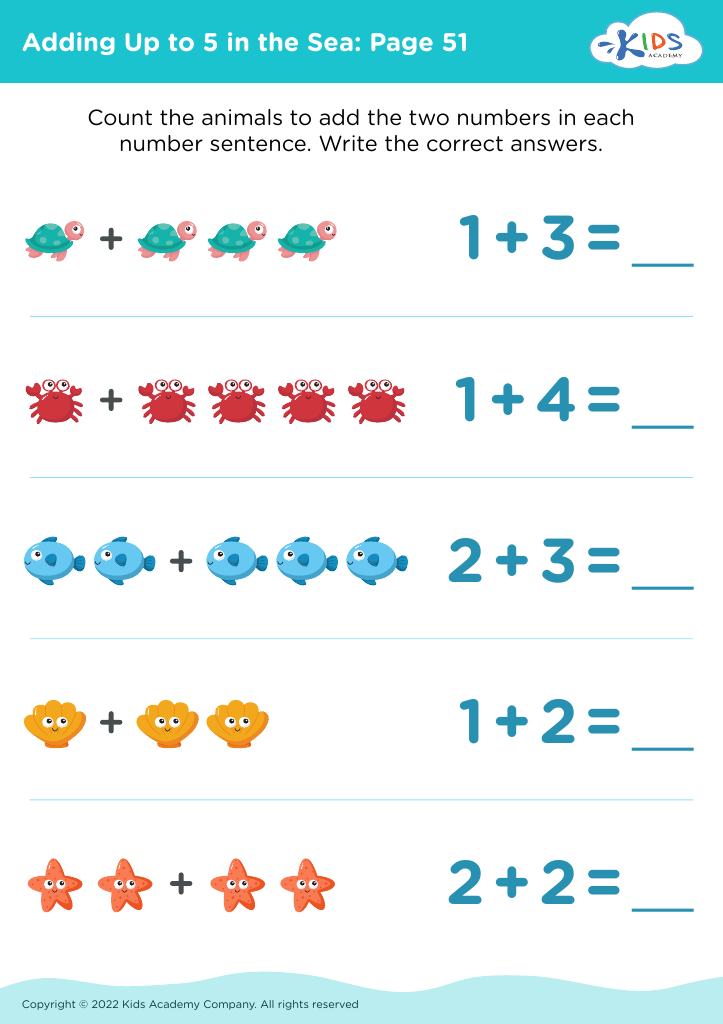
Adding Up to 5 in the Sea: Page 51
Worksheet
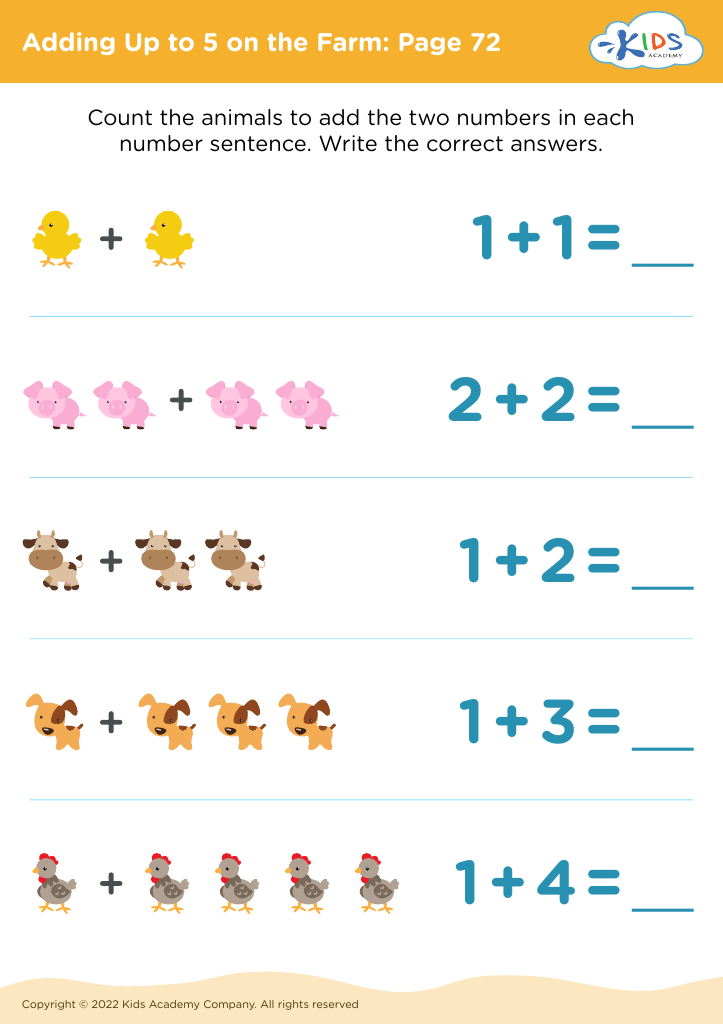
Adding Up to 5 on the Farm: Page 72
Worksheet
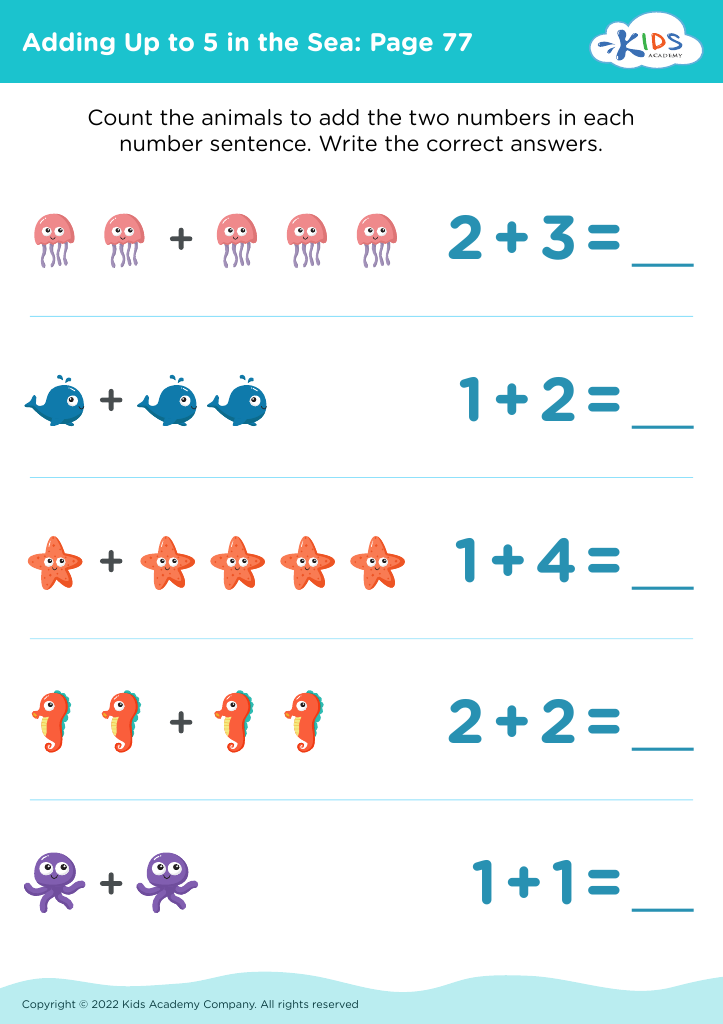
Adding Up to 5 in the Sea: Page 77
Worksheet
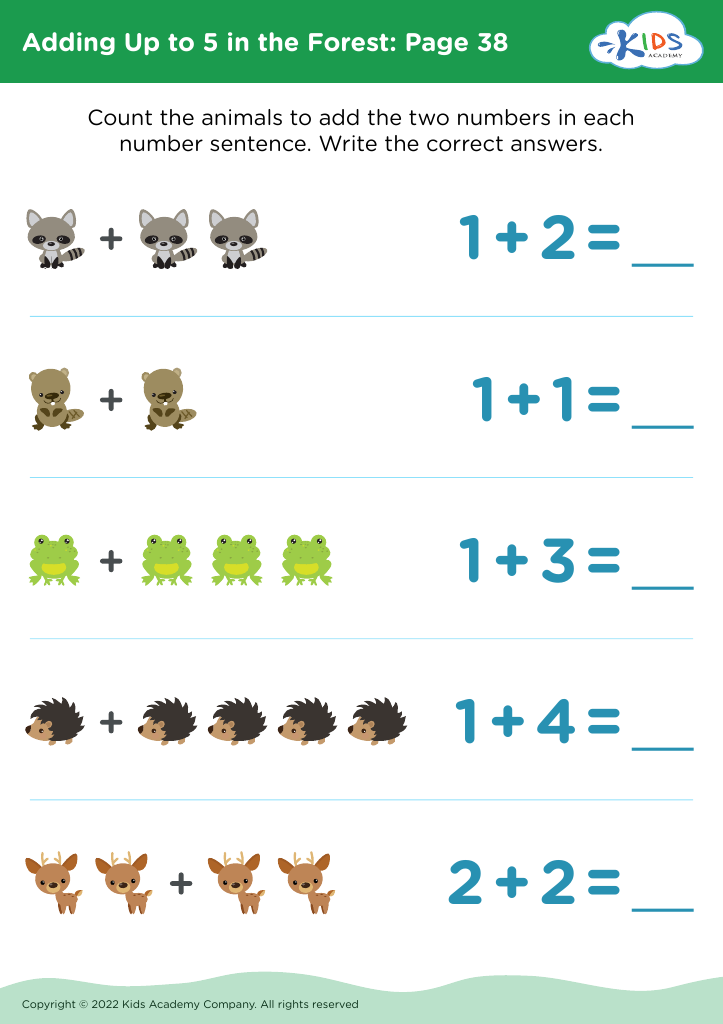
Adding Up to 5 in the Forest: Page 38
Worksheet
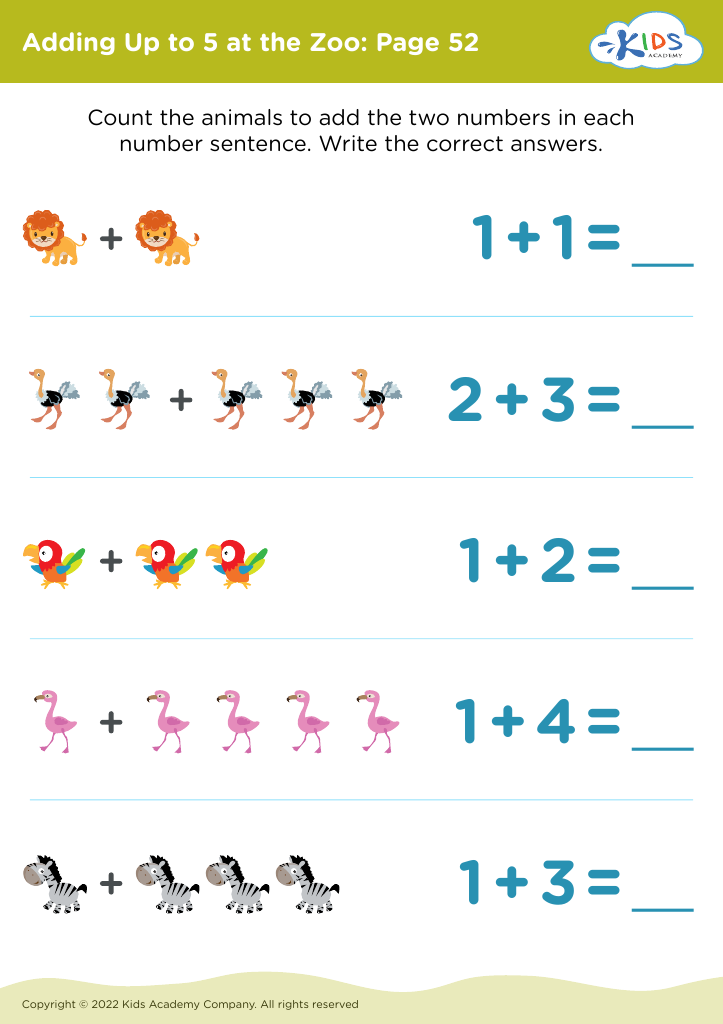
Adding Up to 5 at the Zoo: Page 52
Worksheet


Basic addition skills are foundational for early mathematical understanding and cognitive development in children aged 4-5. At this stage, children are not just learning numbers; they are developing critical thinking and problem-solving abilities that will benefit them throughout their education. Mastering basic addition sets the groundwork for more advanced math concepts, such as subtraction, larger number operations, and even early algebra.

Moreover, encouraging basic addition helps build a child's confidence and enthusiasm for learning. When children successfully grasp these skills, they are more likely to engage with and enjoy math activities, fostering a positive attitude toward the subject. Parents and teachers can use simple, playful strategies such as counting objects, using tangible resources like blocks or toys, and singing songs related to addition to create an enjoyable learning environment.

Additionally, basic addition skills promote fine motor skills and coordination as children manipulate physical objects, thereby integrating various aspects of learning. By prioritizing the development of these skills, parents and teachers lay a strong academic foundation, helping children navigate math more effectively in later grades and become adept problem solvers in everyday life. Thus, supporting young learners in mastering basic addition is crucial for their long-term success.