Basic counting skills Addition Worksheets for Ages 4-5
3 filtered results
-
From - To
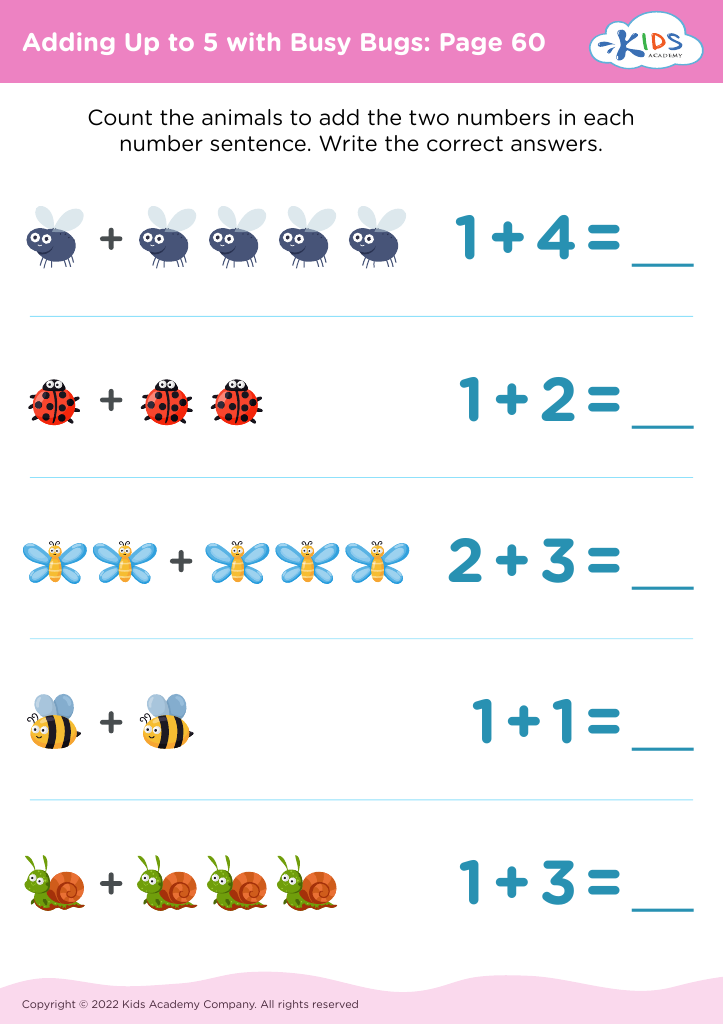
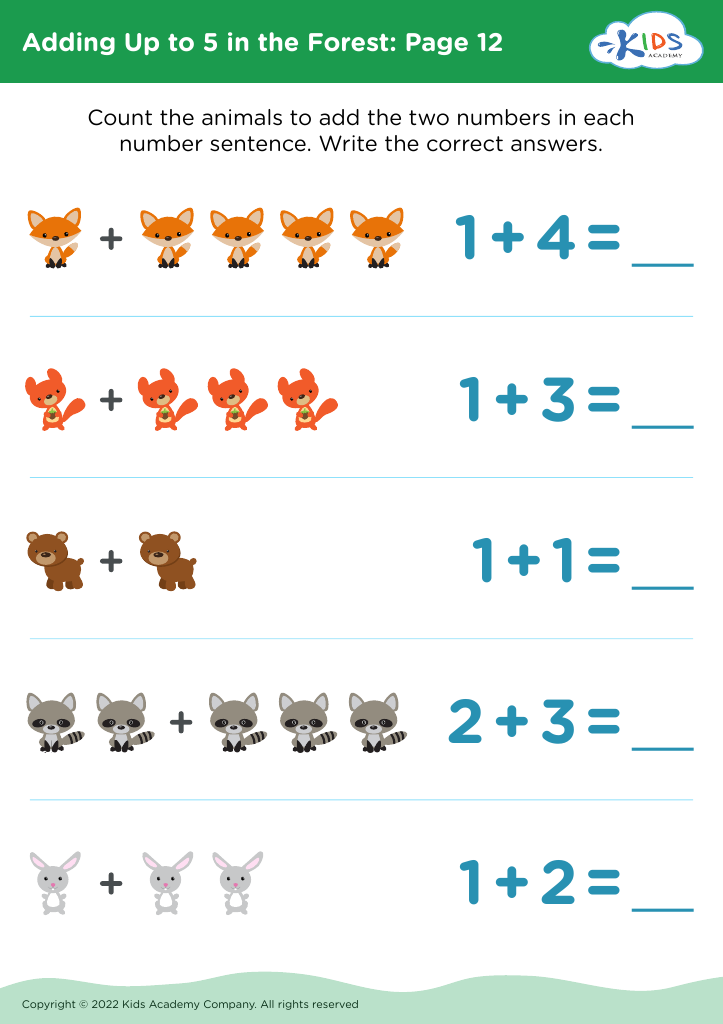
Welcome to our "Basic Counting Skills Addition Worksheets" designed specifically for children aged 4-5! These engaging worksheets provide a fun and interactive way for young learners to develop essential counting skills while mastering addition. With colorful illustrations and age-appropriate exercises, your child will enjoy working through various activities that reinforce number recognition and basic addition concepts. Our worksheets emphasize hands-on learning, enabling kids to practice counting objects and solving simple math problems in an enjoyable format. Perfect for home or classroom use, these resources will help your child build confidence in math as they prepare for future academic success.
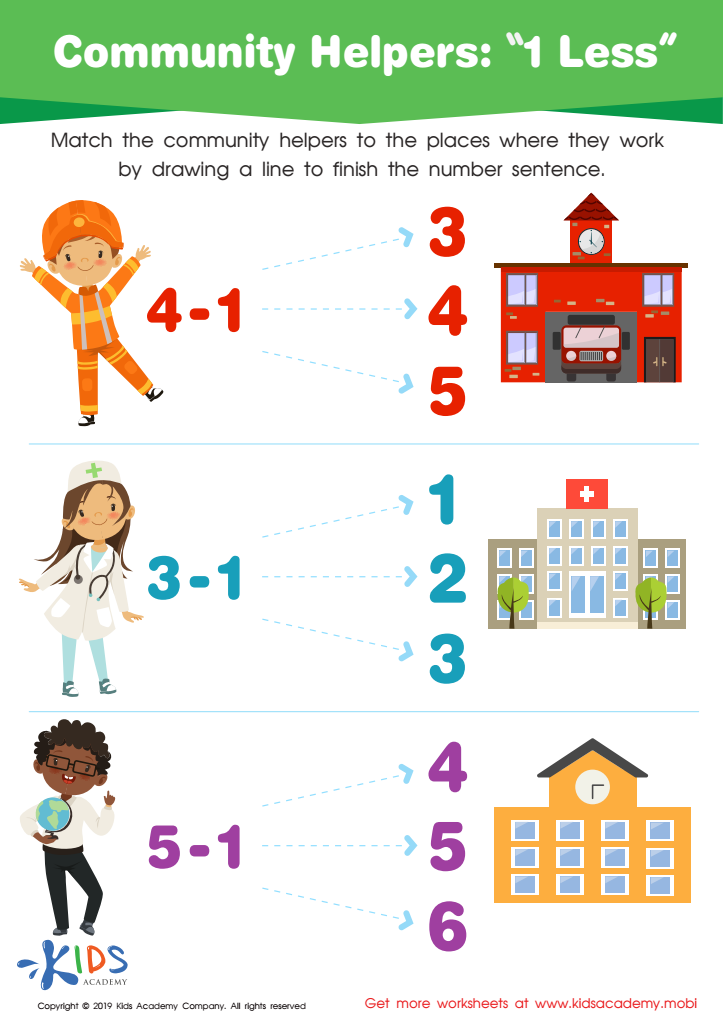
Community Helpers: 1 less Worksheet
 Assign to My Students








Basic counting skills and addition are fundamental building blocks for young children's mathematical understanding, especially for those aged 4 to 5. At this stage, developing these skills fosters logical reasoning and critical thinking. When children learn to count and add, they gain confidence in their ability to engage with numbers, laying the groundwork for more complex mathematics in the future.
Parents and teachers should care about these skills for several reasons. Firstly, counting helps children understand the concept of quantity, enabling them to make sense of the world around them—such as recognizing how many toys they have or how many snacks they are given. Secondly, early exposure to addition aids in the development of problem-solving skills. By grasping simple addition, children learn to navigate everyday situations, like sharing objects or determining total amounts.
Additionally, mastering basic counting and addition creates a strong foundation for literacy and cognitive development. It enhances a child's ability to follow instructions and build resilience through practice and persistence. Ultimately, equipping children with these essential skills not only supports their academic growth but also boosts their self-esteem and promotes a positive attitude toward learning, setting them on a successful path as lifelong learners.








