
Basic Math Skills Addition Worksheets for Ages 4-5
27 filtered results
Difficulty Level
Grade
Age
-
From - To
Subject
Activity
Standards
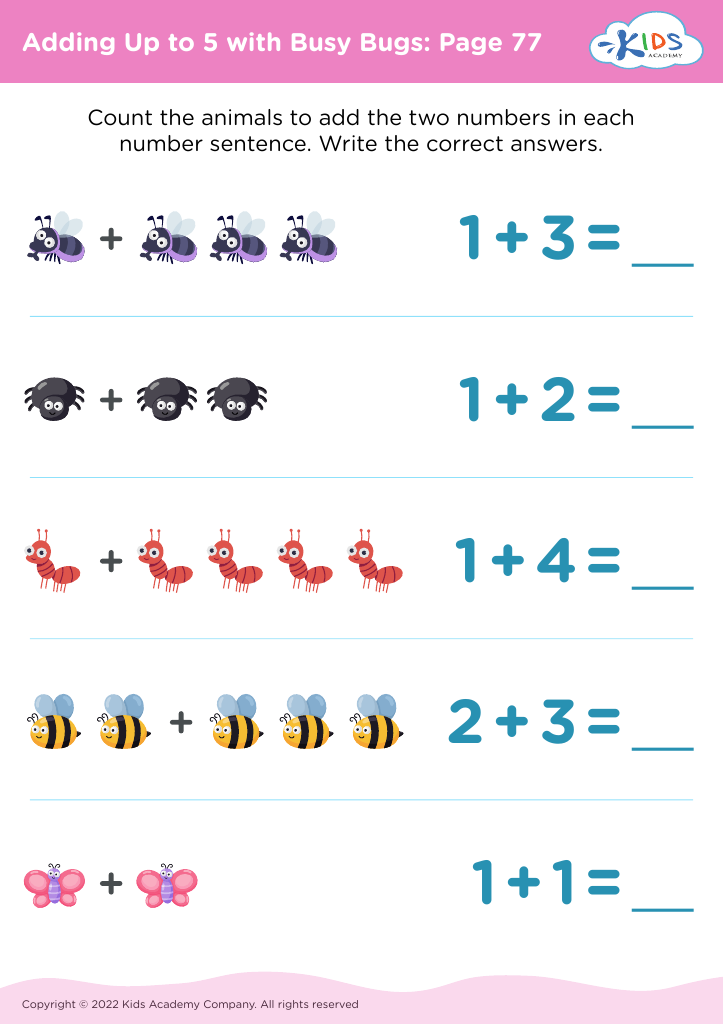
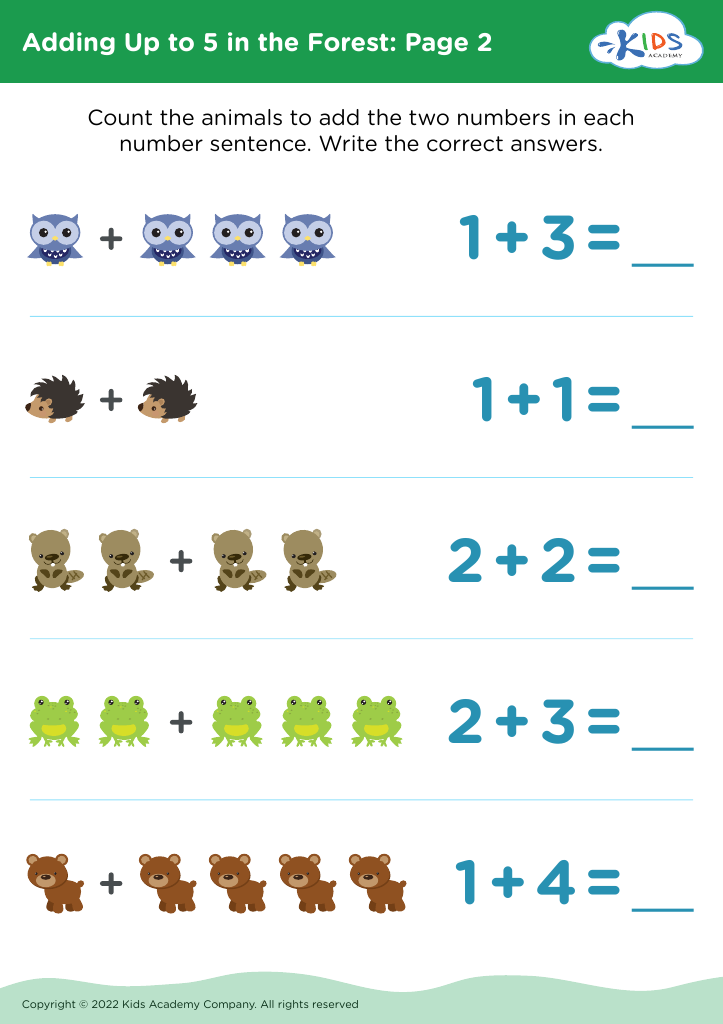
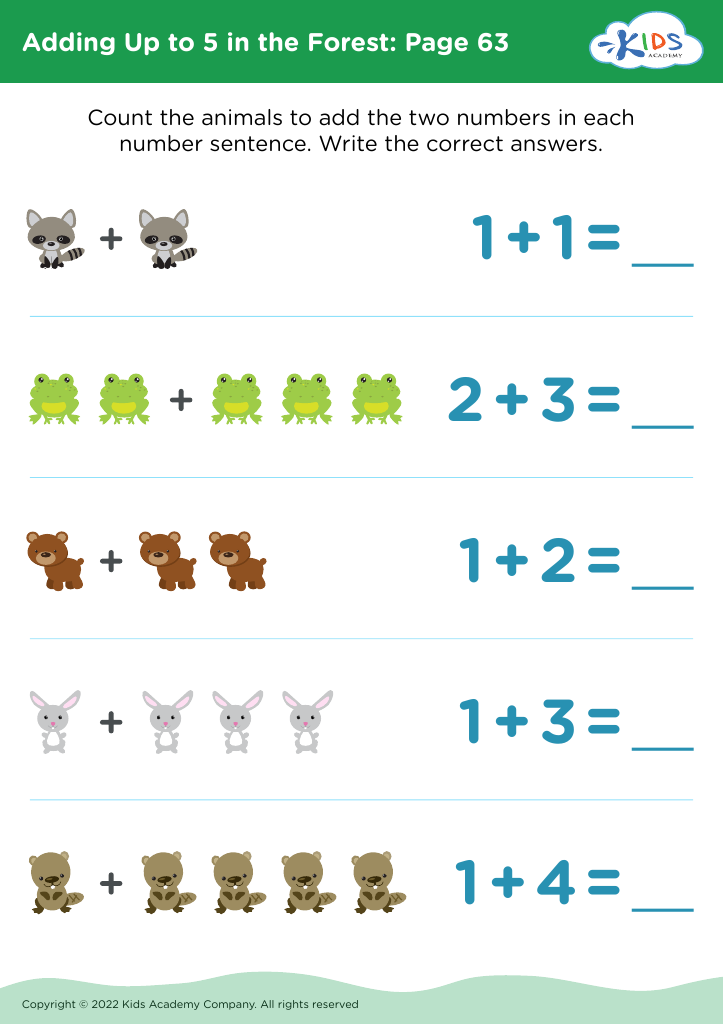
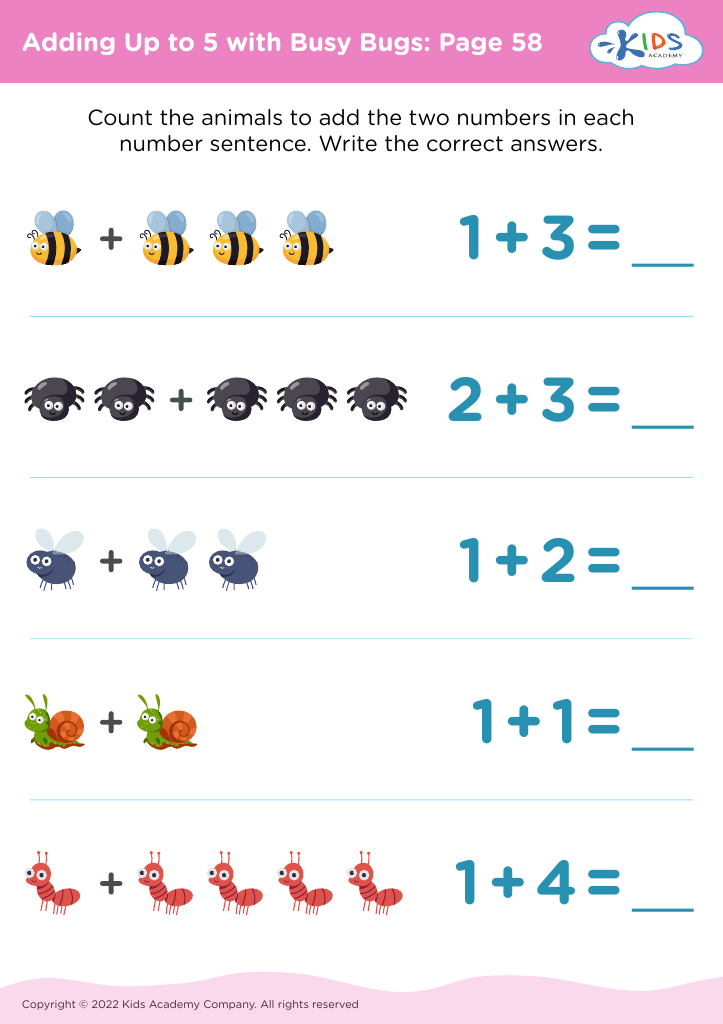
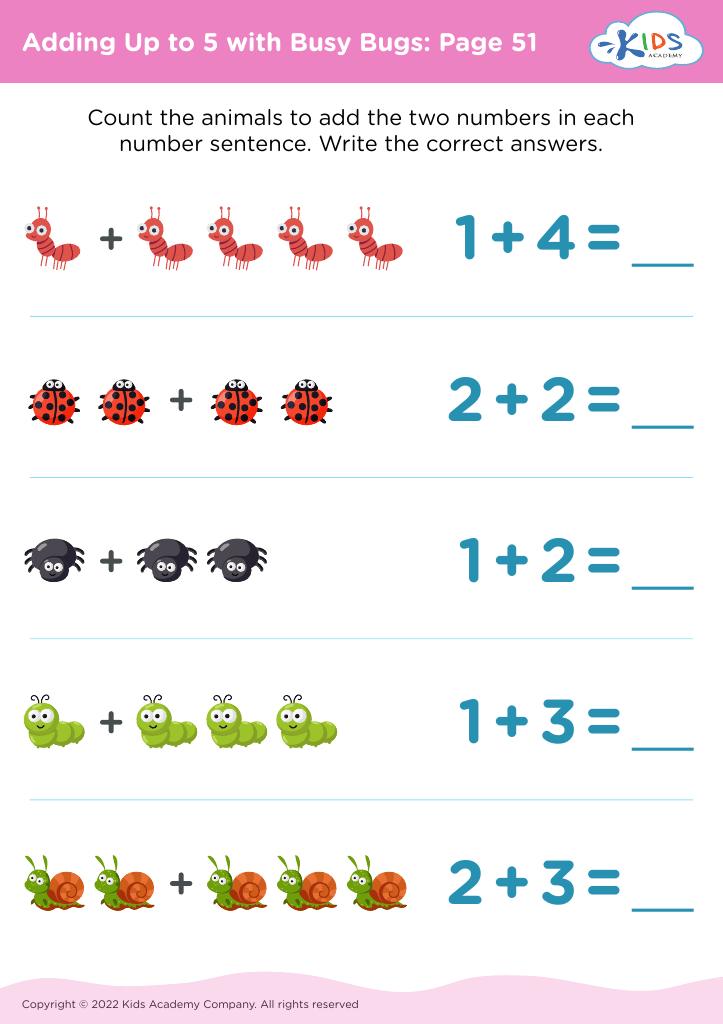
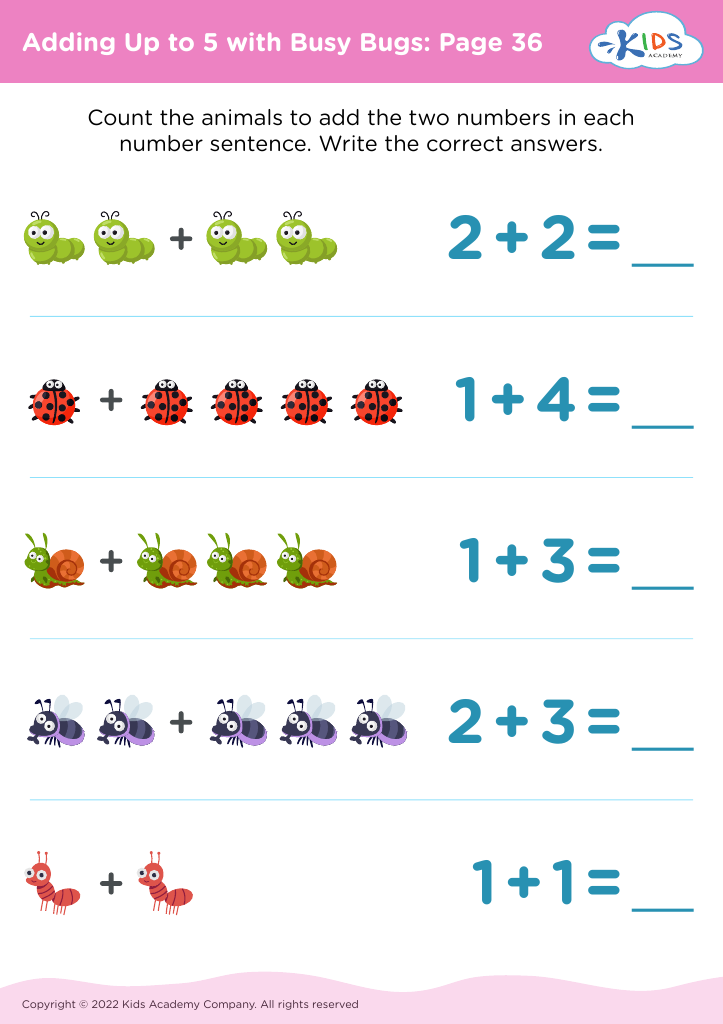
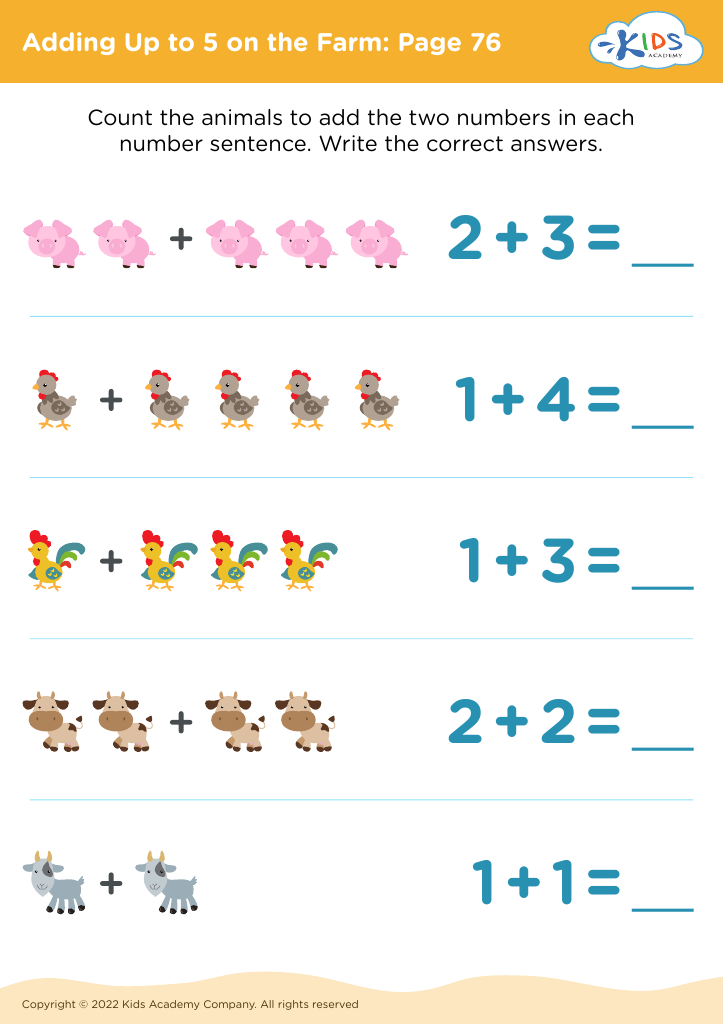
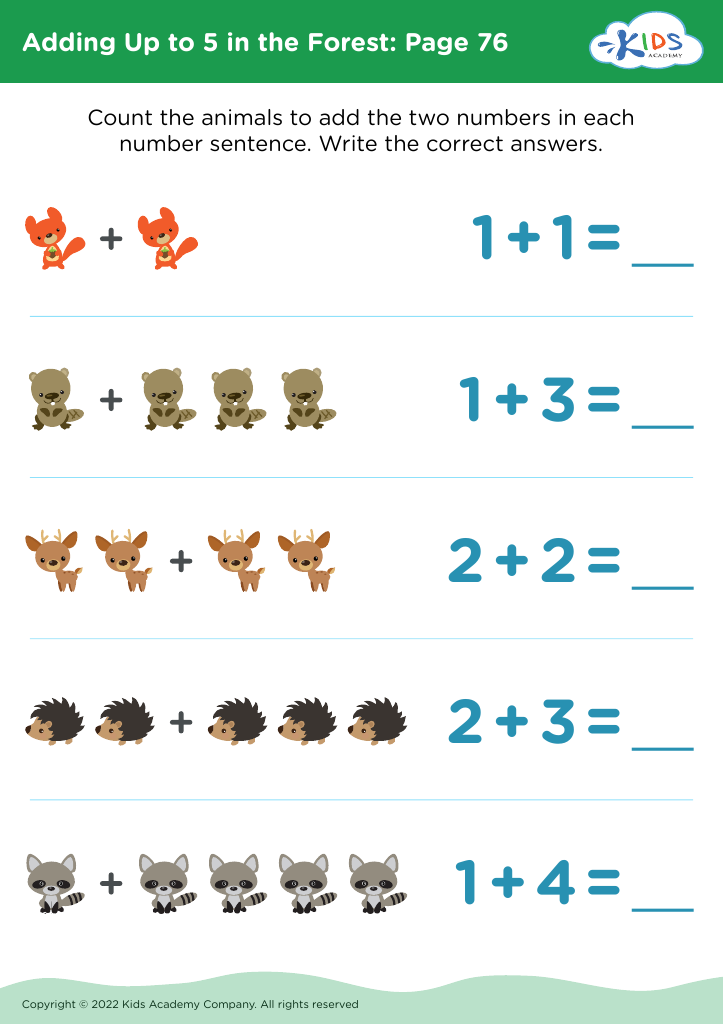
Welcome to our “Basic Math Skills Addition Worksheets” designed for ages 4-5! These engaging and interactive worksheets are perfect for young learners who are just starting their math journey. With colorful illustrations and fun activities, children will practice essential addition skills, improving their understanding of numbers in a playful way. Our worksheets help develop problem-solving abilities and critical thinking, making math enjoyable. Ideal for classrooms and home learning, these resources support early math education while catering to different learning styles. Get your little ones excited about math with our collection of addition worksheets tailored for preschoolers!
Favorites
With answer key
Interactive
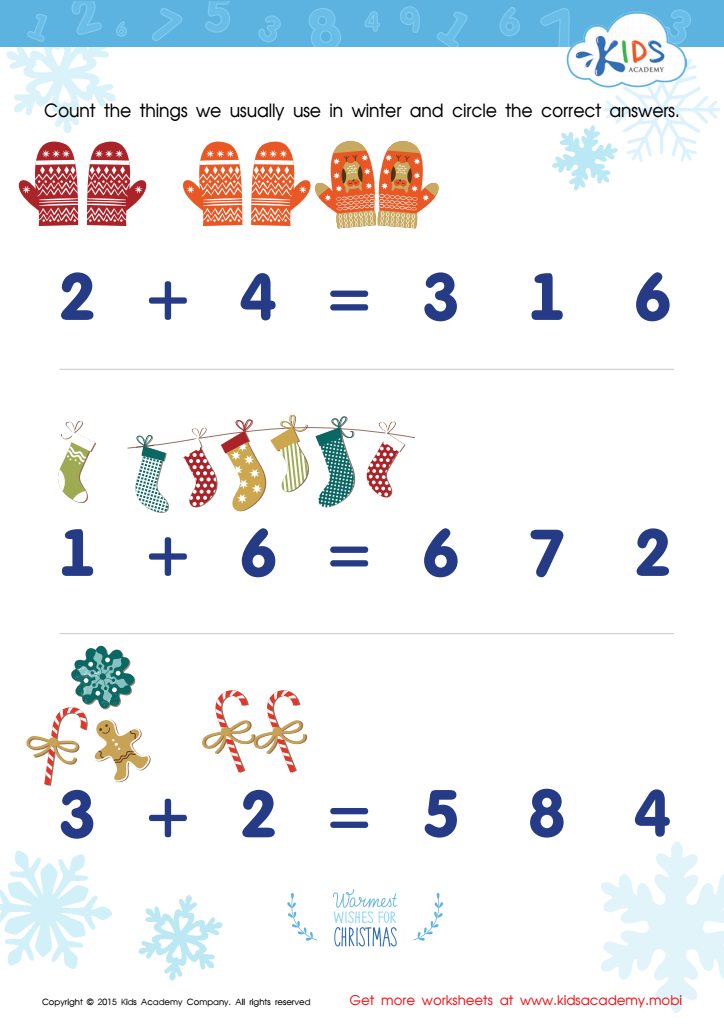
Count Winter Things Worksheet
This chilly winter afternoon, help your kid warm up with Kids Academy's free math worksheet - full of bright pictures and addition practice. Let them count the things and write in the numbers for a great brain training and math head start. Get more free math worksheets here. (80 words)
 Assign to My Students
Count Winter Things Worksheet
Worksheet
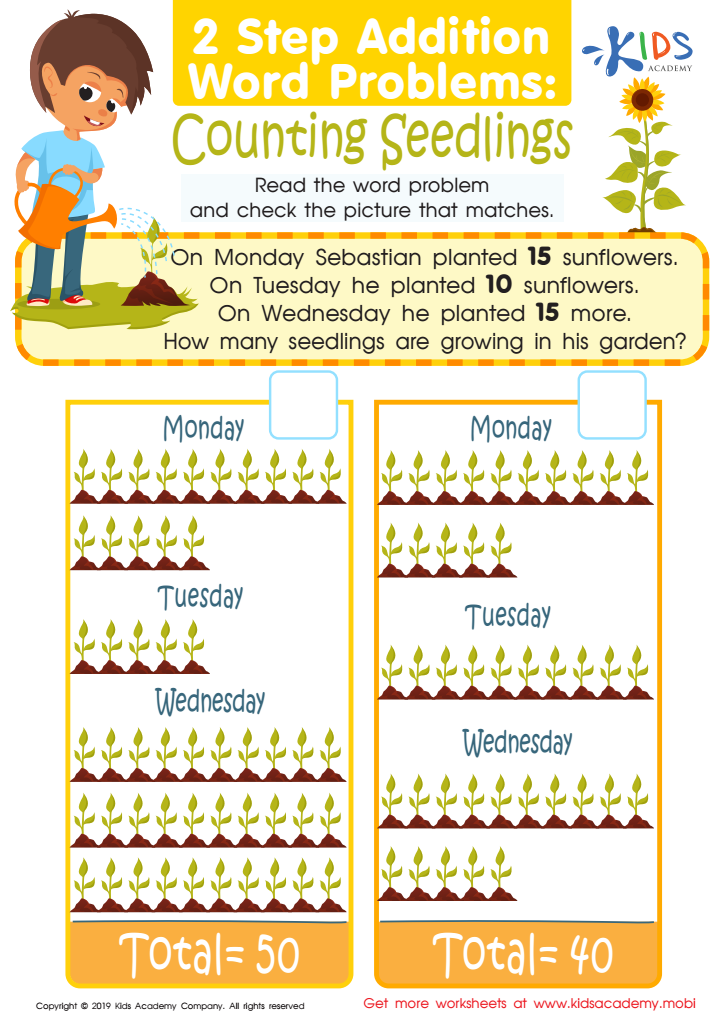
Counting Seedlings Worksheet
Understanding math word problems is key. Multiple steps can prove challenging - this free worksheet provides one-to-one picture representation to help kids solve multi-step addition word problems. Strengthen addition skills by choosing the matching picture to the answer.
Counting Seedlings Worksheet
Worksheet
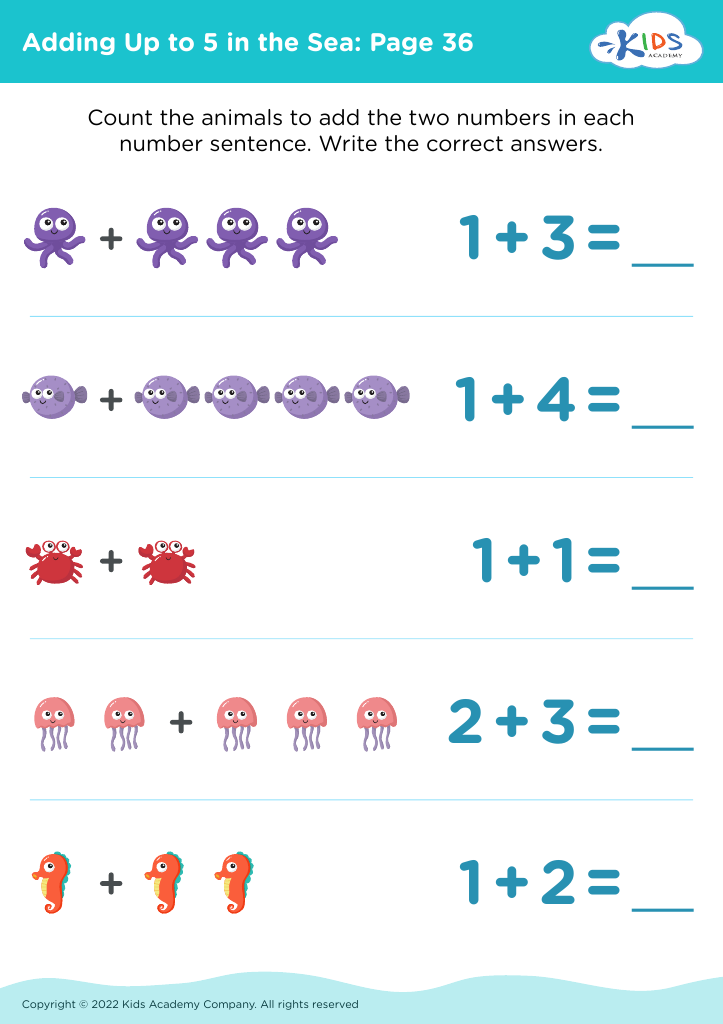
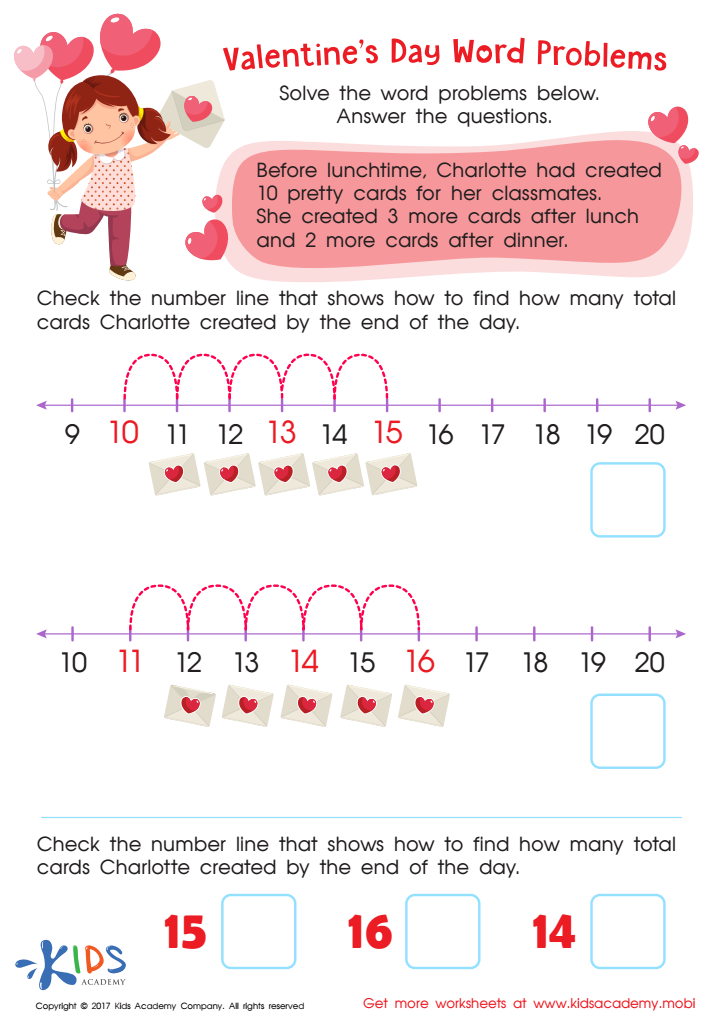
Valentines Day Word Problem Worksheet
This Valentine's Day worksheet will help your child practice using a number line to solve an addition problem. It's a great way to boost confidence and make solving word problems a breeze.
Valentines Day Word Problem Worksheet
Worksheet
Building with 10 Worksheet
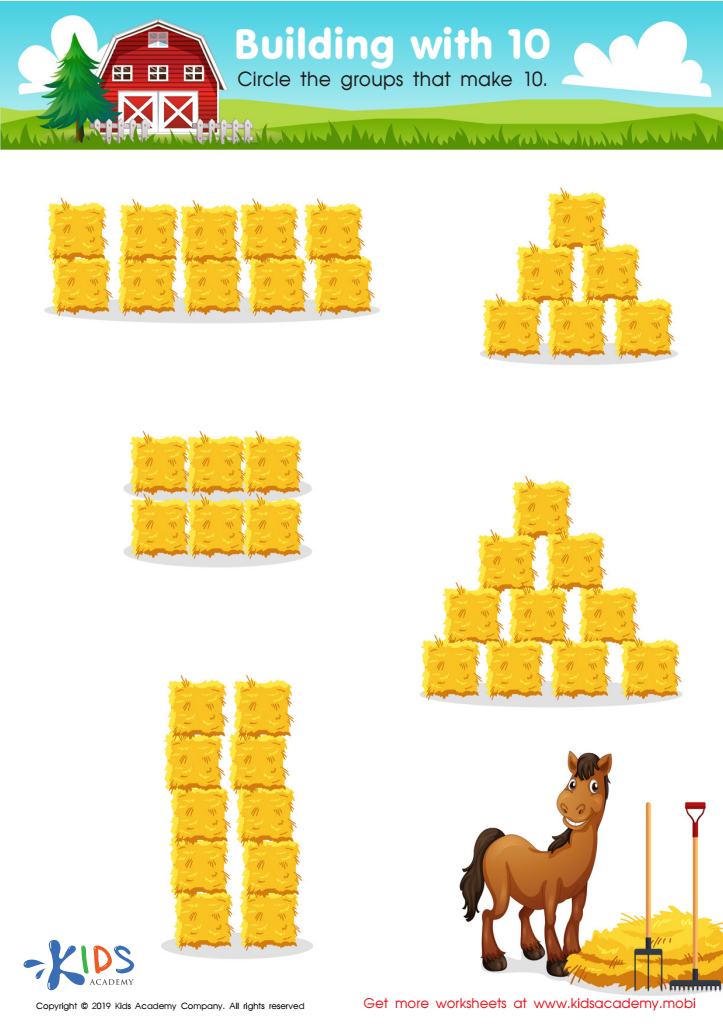
Counting numbers can be simple with this worksheet: Ask your kids to count the stacks of objects, ensure accuracy with your help, then circle the ones of ten. With practice and guidance, your children will soon become counting pros!
Building with 10 Worksheet
Worksheet
Adding up With Water Worksheet
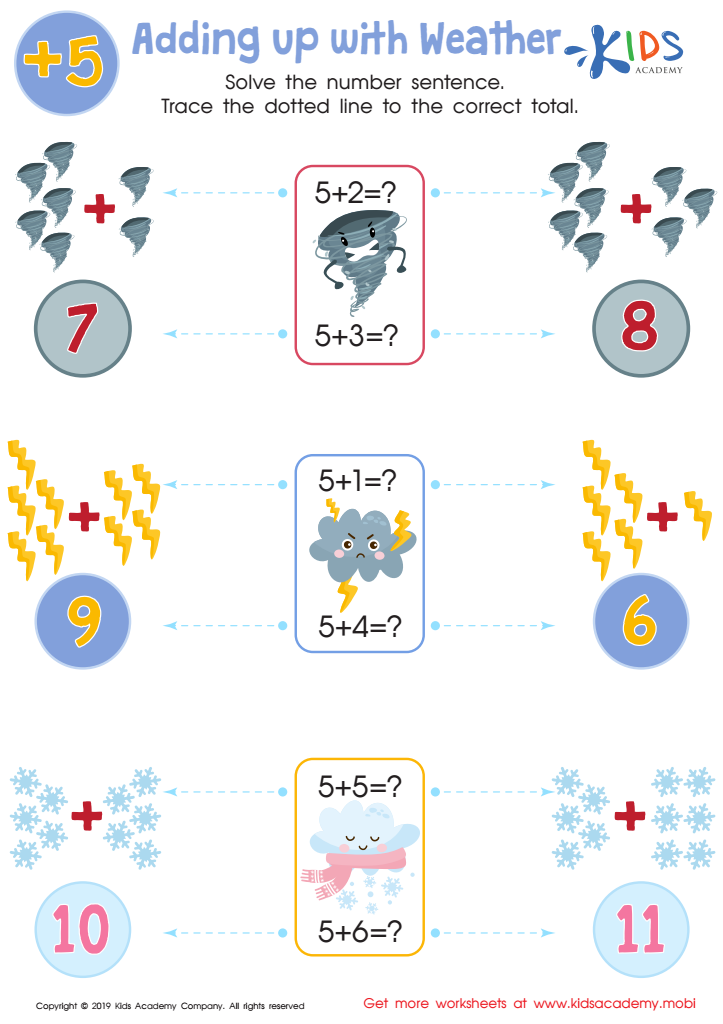
Ask your kids to name different kinds of weather and what it's like outside now. Then, help them solve the number sentences on the worksheet by tracing the dotted line to the correct total.
Adding up With Water Worksheet
Worksheet
Join Kids Academy for Free
Who is primarily going to use this learning content?






.jpg)

Parents and teachers should prioritize basic math skills, particularly addition, for children aged 4-5 because it lays the foundation for future learning and cognitive development. At this age, children's brains are highly receptive to new concepts, and engaging them with basic math helps develop critical thinking and problem-solving skills. Learning addition not only fosters numeracy but also enhances their understanding of everyday situations, such as counting objects, sharing equally, and recognizing patterns.
Moreover, early exposure to math promotes confidence and reduces math anxiety later in life. When children grasp basic addition concepts, they build a sense of achievement, which encourages a positive attitude towards learning. Additionally, math can enhance motor skills; for example, handling counting manipulatives like blocks or beads strengthens fine motor coordination.
Furthermore, strong math skills correlate with better academic performance across subjects. By ensuring children understand addition, parents and teachers give them the tools to succeed both in math and in other critical disciplines. Ultimately, instilling a love for learning and patience in tackling math challenges creates lifelong learners who are prepared to engage with the world around them.








