Basic Math Skills Addition Worksheets for Ages 4-5 - Page 2
27 filtered results
-
From - To
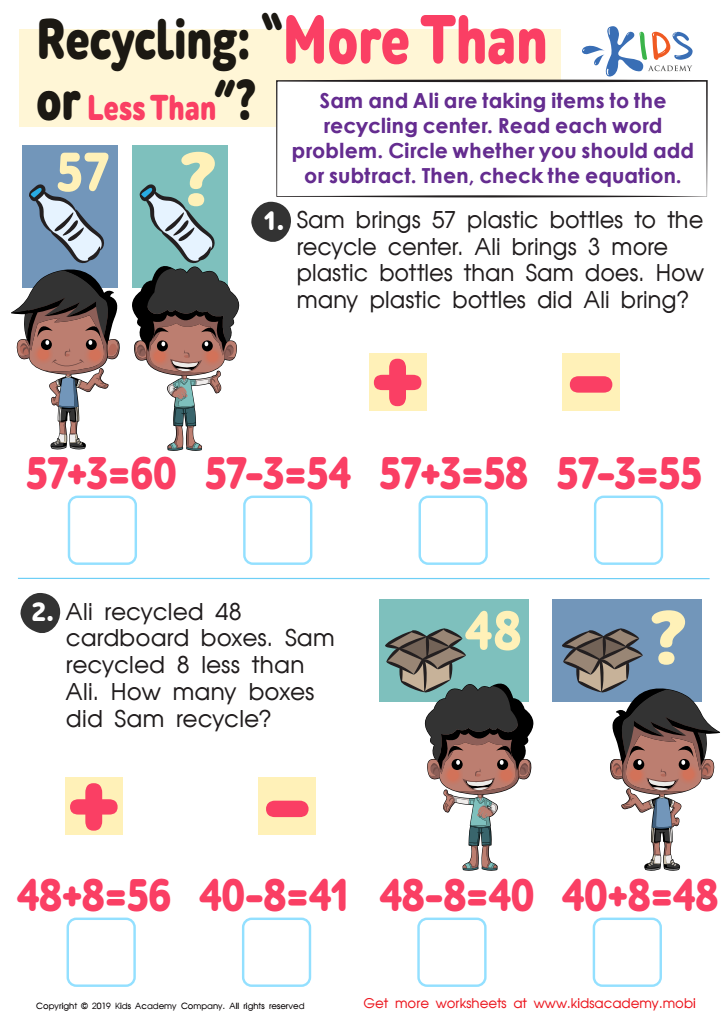
Recycling - More or Less Worksheet
 Assign to My Students
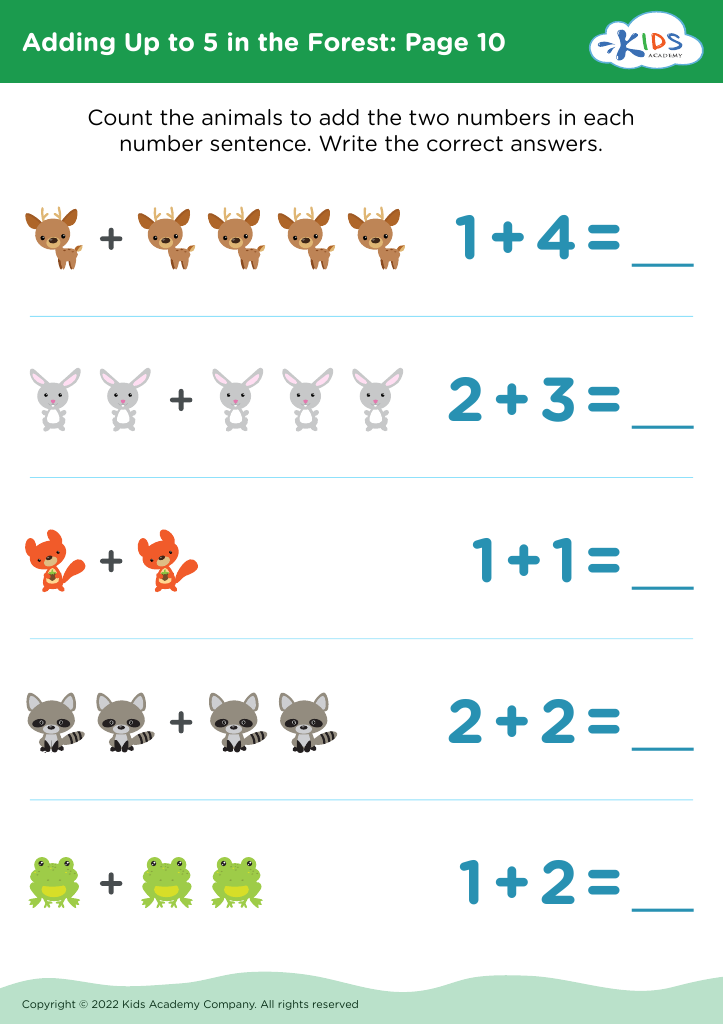
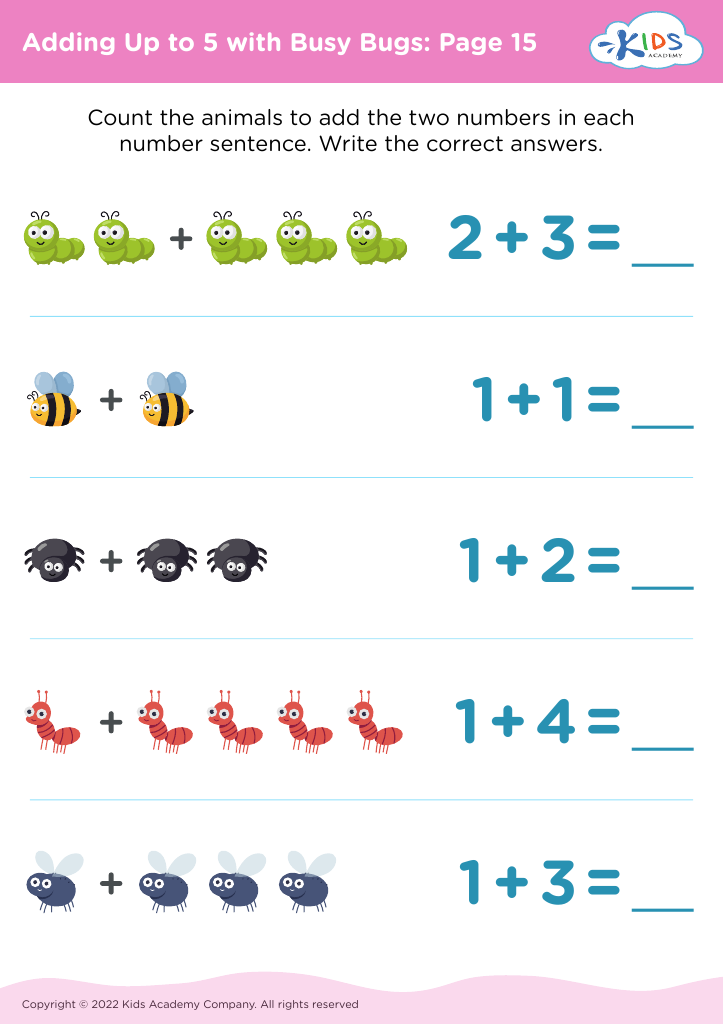








Parents and teachers should prioritize basic math skills, particularly addition, for children aged 4-5 because it lays the foundation for future learning and cognitive development. At this age, children's brains are highly receptive to new concepts, and engaging them with basic math helps develop critical thinking and problem-solving skills. Learning addition not only fosters numeracy but also enhances their understanding of everyday situations, such as counting objects, sharing equally, and recognizing patterns.
Moreover, early exposure to math promotes confidence and reduces math anxiety later in life. When children grasp basic addition concepts, they build a sense of achievement, which encourages a positive attitude towards learning. Additionally, math can enhance motor skills; for example, handling counting manipulatives like blocks or beads strengthens fine motor coordination.
Furthermore, strong math skills correlate with better academic performance across subjects. By ensuring children understand addition, parents and teachers give them the tools to succeed both in math and in other critical disciplines. Ultimately, instilling a love for learning and patience in tackling math challenges creates lifelong learners who are prepared to engage with the world around them.








