Enhances concentration Addition Worksheets for Ages 4-5
4 filtered results
-
From - To
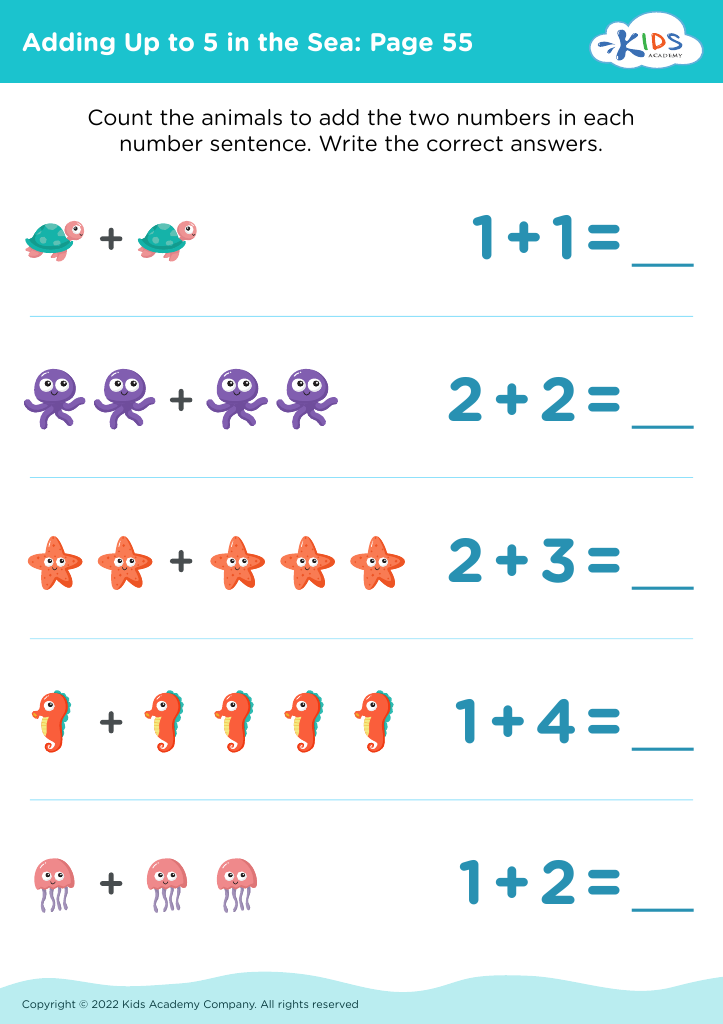
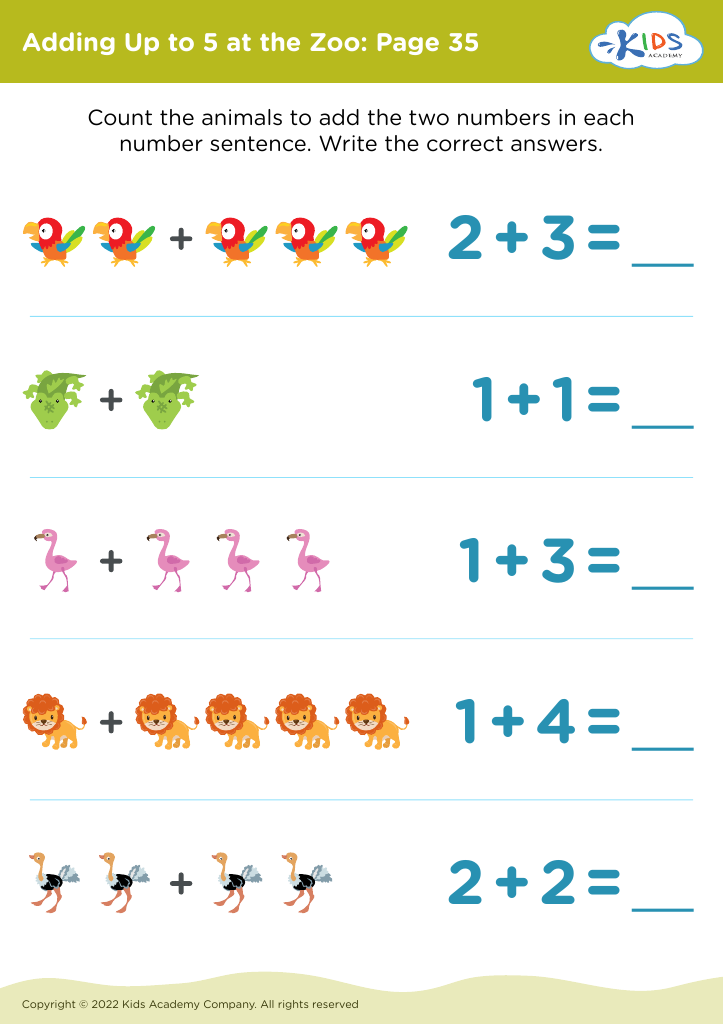
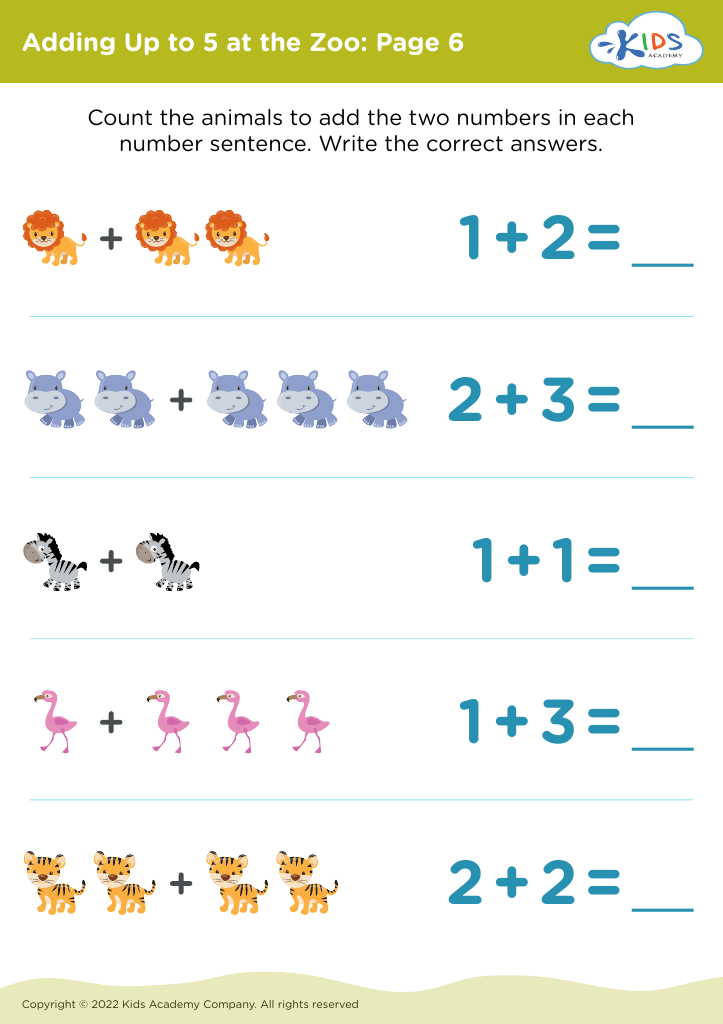
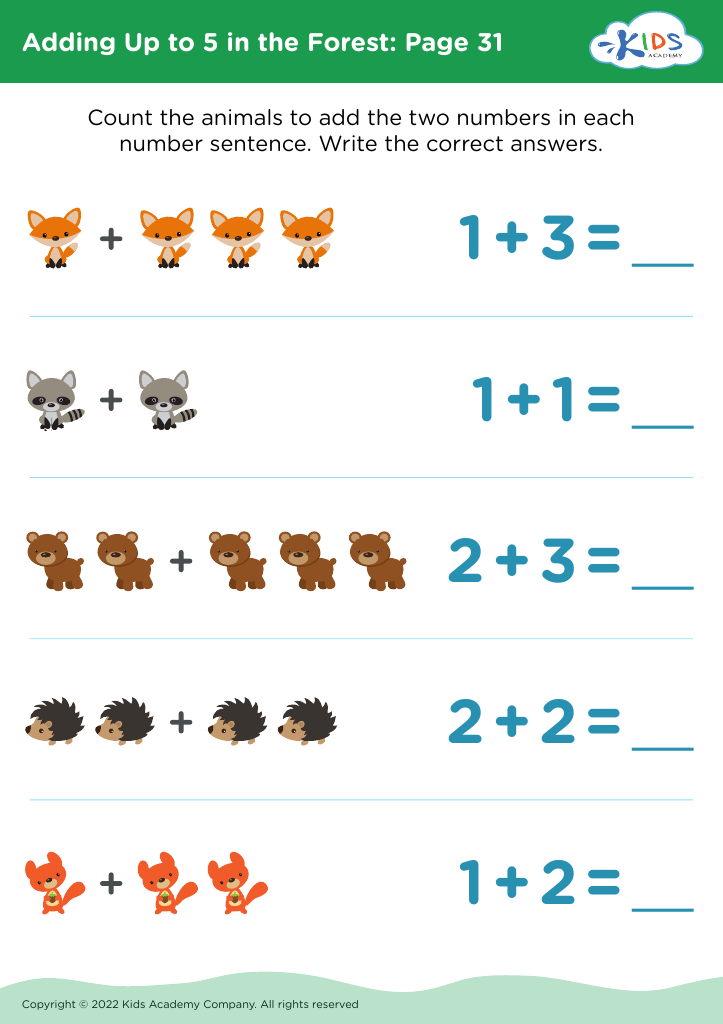
Boost your child's concentration with our engaging "Addition Worksheets for Ages 4-5". Tailored specifically for young learners, these worksheets combine fun visuals with straightforward addition exercises, helping to cultivate essential math skills while focusing their attention. Designed for preschoolers and kindergartners, each worksheet encourages active learning through playful activities that promote focus and retention. Ideal for both classroom and home settings, our resources support early math development and enhance cognitive abilities. Transform learning into an enjoyable adventure while ensuring your child masters basic addition concepts! Download and witness your little one's confidence and concentration grow as they explore the world of numbers.






.jpg)
Enhancing concentration in children aged 4-5 is crucial for their cognitive, emotional, and social development. At this stage, children are beginning to engage more deeply with their environment and learning activities. Focused attention fosters better comprehension, enabling them to absorb essential skills in language, math, and problem-solving.
For parents and teachers, promoting concentration can significantly improve a child’s academic readiness. Through activities such as focused play, storytelling, and interactive learning, educators can create a nurturing atmosphere that captures children's attention, making learning enjoyable and effective. Additionally, helping young children learn to concentrate nurtures self-regulation skills. This empowers them to manage distractions and enhances their ability to follow instructions, paving the way for future success in school and other pursuits.
Moreover, teaching concentration at this age supports emotional well-being. Children who can concentrate are often better equipped to handle frustrations and challenges, leading to healthier interactions with peers and adults. Parents and teachers play a key role in guiding and modeling these skills, ensuring that children develop lifelong habits that promote focus and mindfulness. Investing in concentration techniques not only enriches children's early educational experiences but also lays a solid foundation for their continued learning journey.








