Fine motor development Addition Worksheets for Ages 4-5
3 filtered results
-
From - To
Explore our engaging Fine Motor Development Addition Worksheets designed specifically for children ages 4-5! These printable resources help young learners build essential fine motor skills while mastering basic addition concepts. Each worksheet incorporates fun, interactive activities such as tracing, coloring, and connecting dots, making math an enjoyable experience for early learners. By refining their hand-eye coordination and dexterity, children will be better prepared for more complex tasks ahead. Ideal for home or classroom use, our worksheets empower children to develop confidence in their math abilities and encourage a love for learning. Start your child’s educational journey with our carefully crafted resources today!
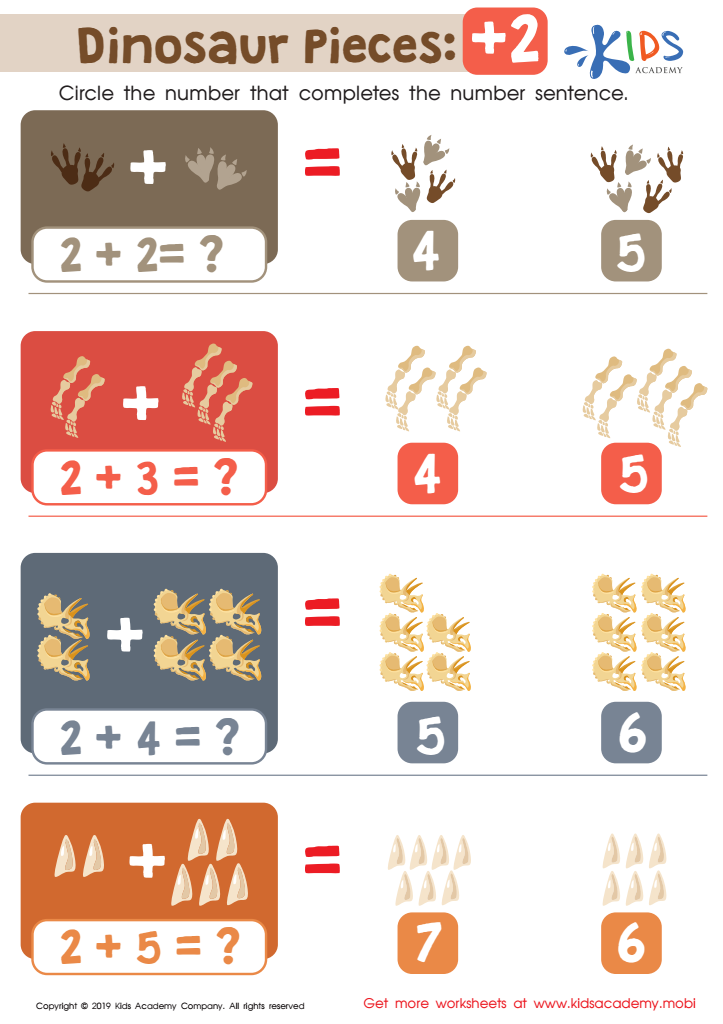
Dinosaur Pieces: +2 Worksheet
 Assign to My Students








Fine motor development is crucial for children aged 4-5 as it lays the foundation for many essential skills they will use throughout their lives. During this stage, children refine their ability to use small muscle groups, particularly in their hands and fingers, which is important for tasks such as writing, cutting, buttoning clothing, and manipulating small objects.
Parents and teachers should care about fine motor development because it directly impacts a child's academic readiness. Proficient fine motor skills enhance a child's ability to write clearly, complete art projects, and participate in classroom activities, fostering independence and confidence. Additionally, fine motor skills are linked to cognitive development, helping children to improve hand-eye coordination, spatial awareness, and problem-solving abilities.
Incorporating activities such as coloring, building with blocks, or playing with clay can significantly enhance fine motor skills. Parents and teachers who understand this importance can create supportive environments that encourage practice and patience, helping children to acquire these vital skills. Ultimately, the attention given to fine motor development will benefit children's overall development, enabling them to thrive academically and socially as they grow.








