Improving concentration Addition Worksheets for Ages 4-5
14 filtered results
-
From - To
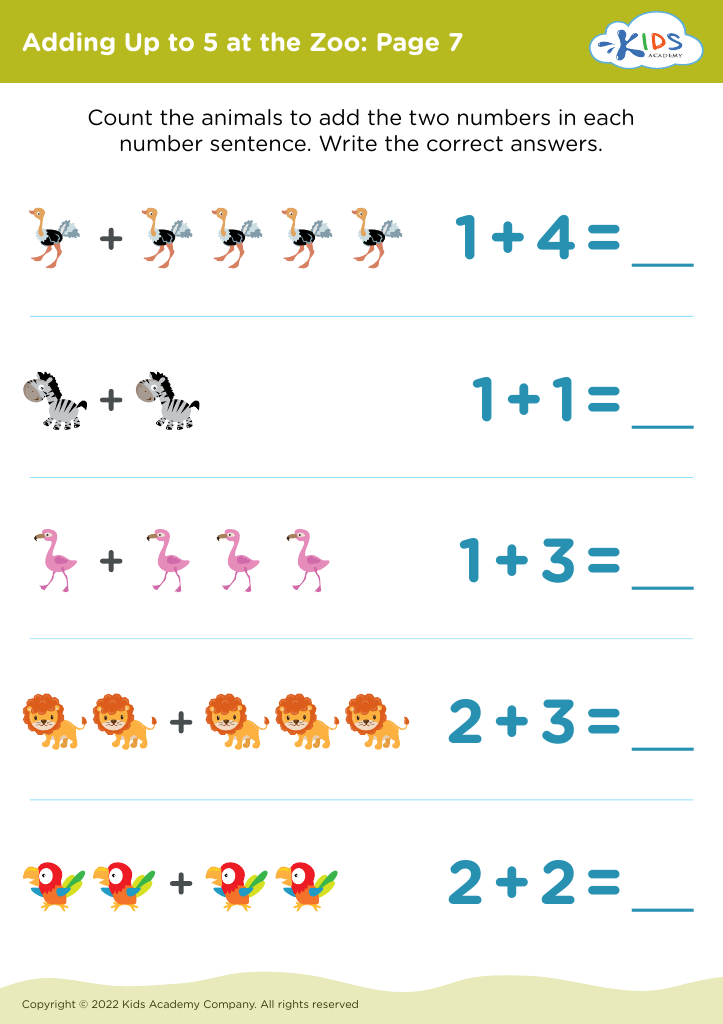
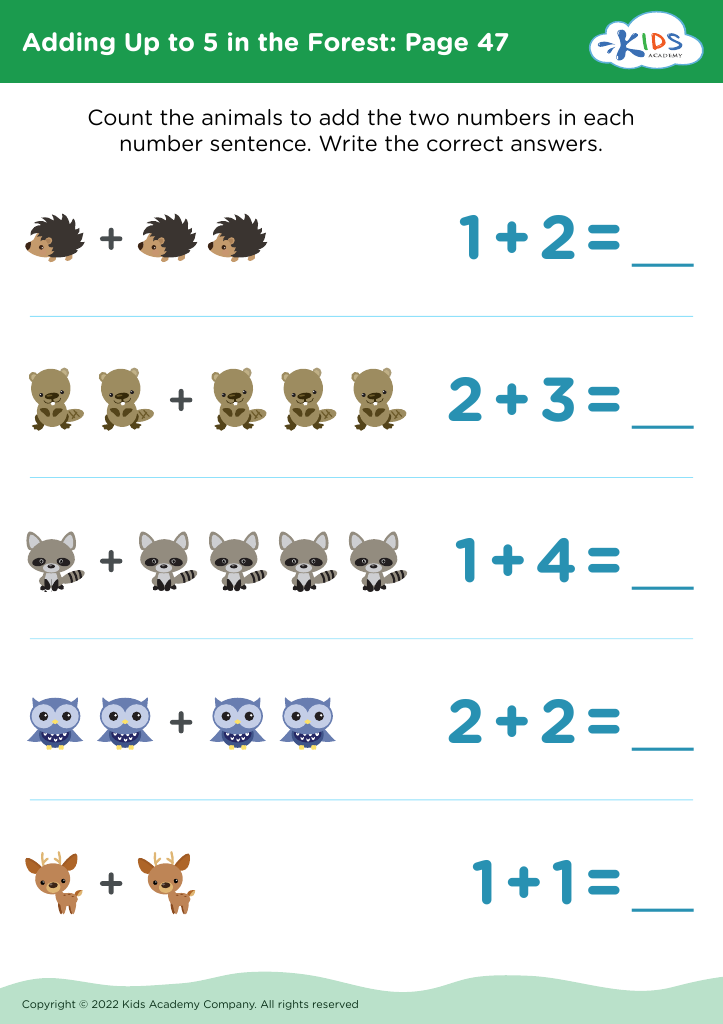
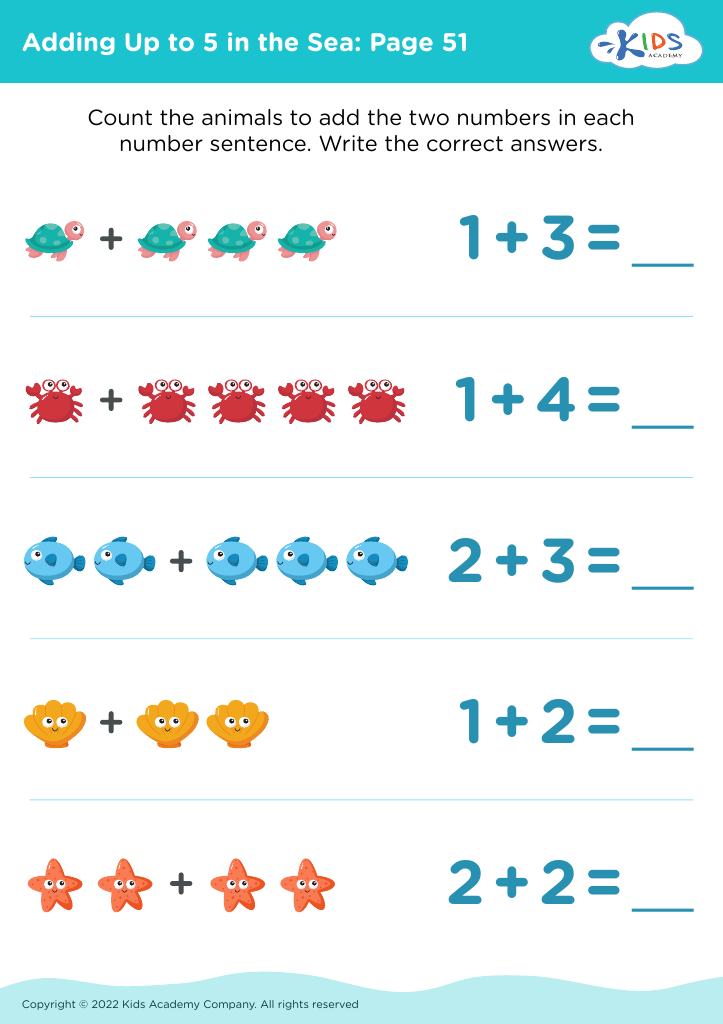
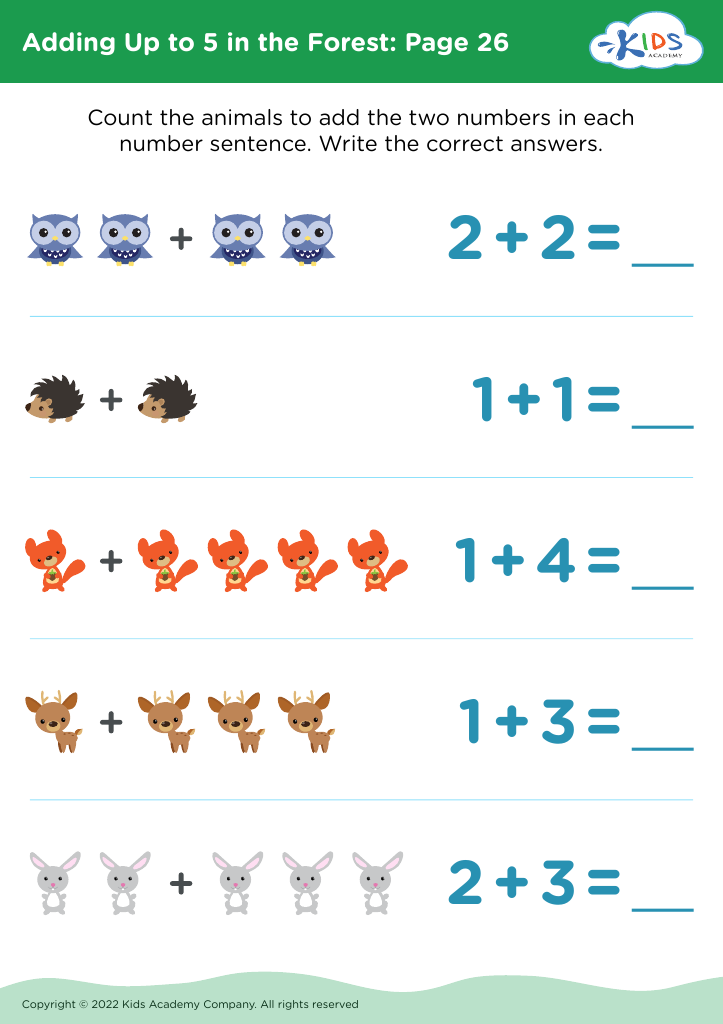
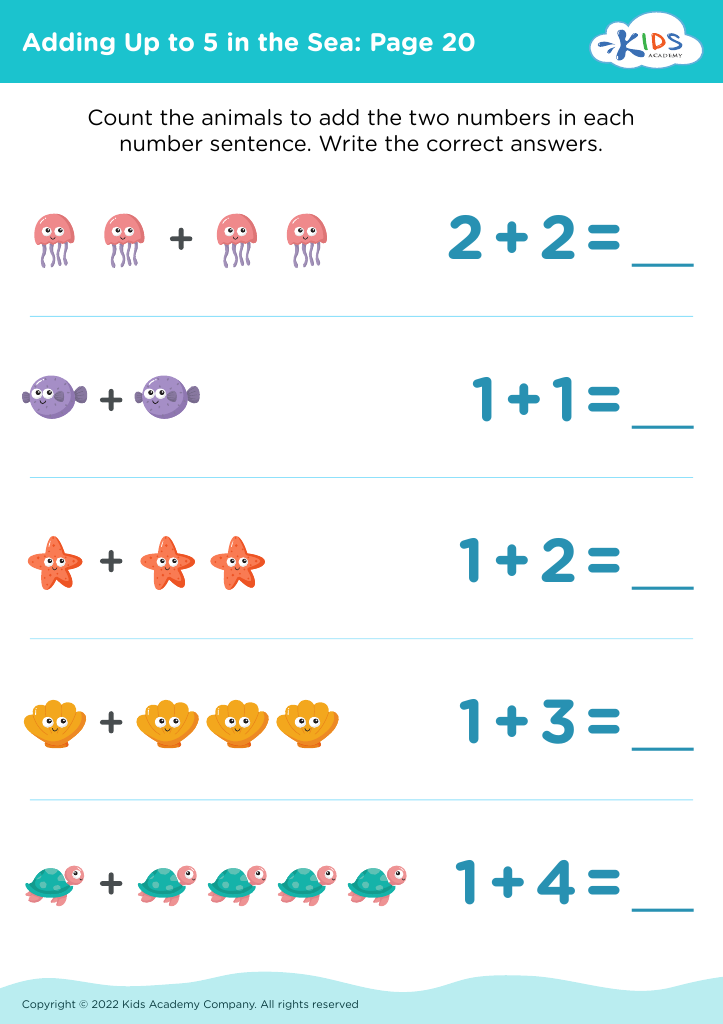
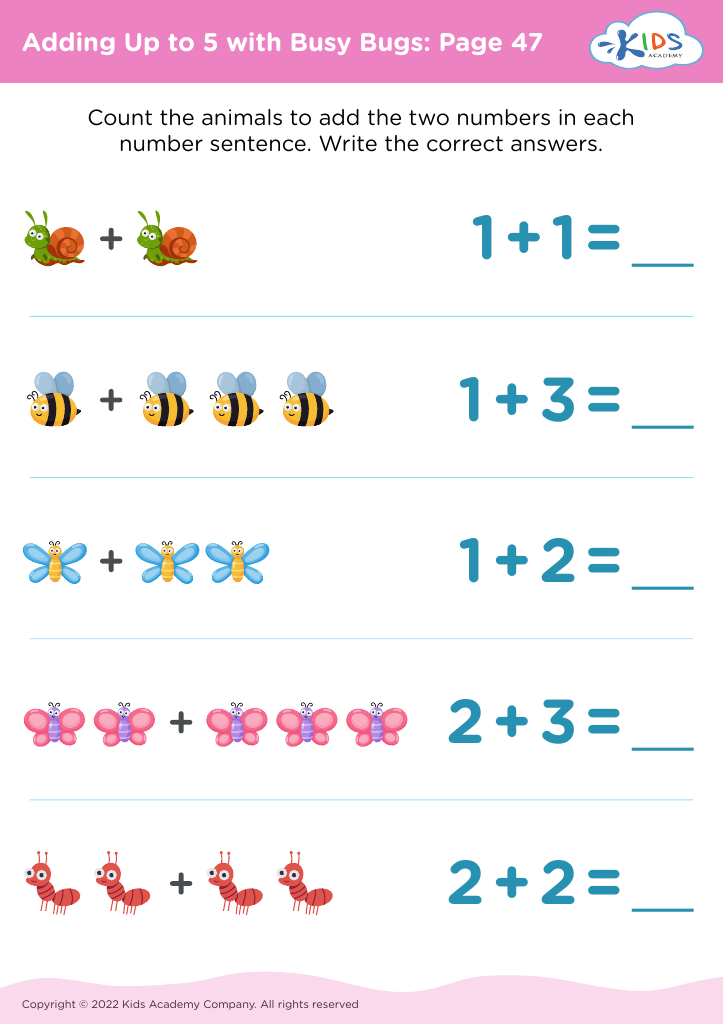
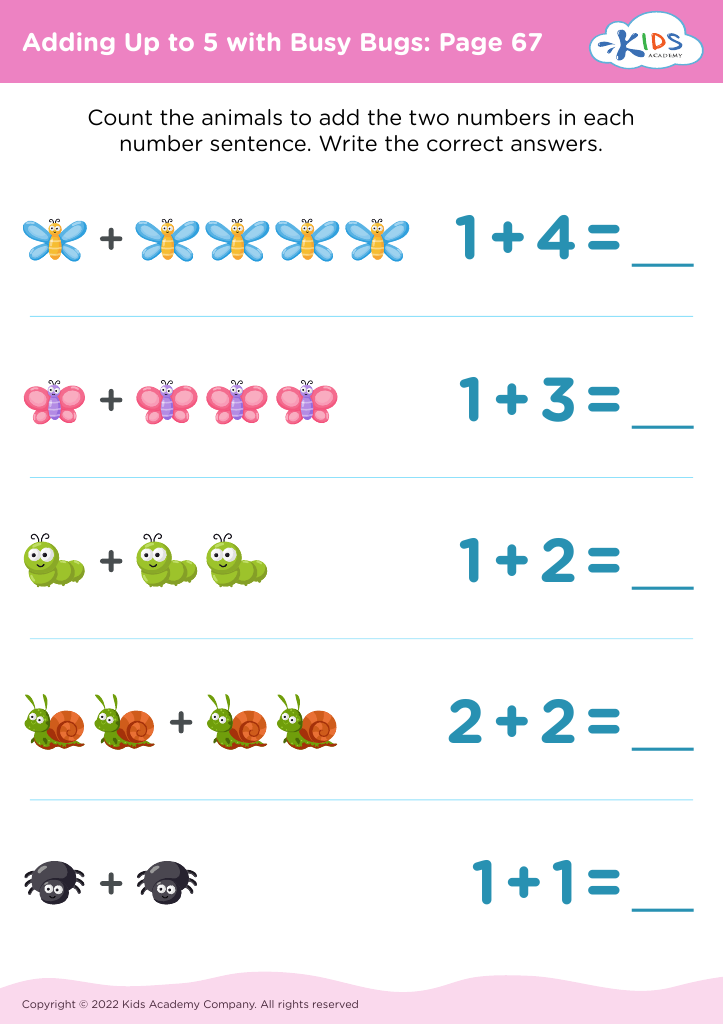
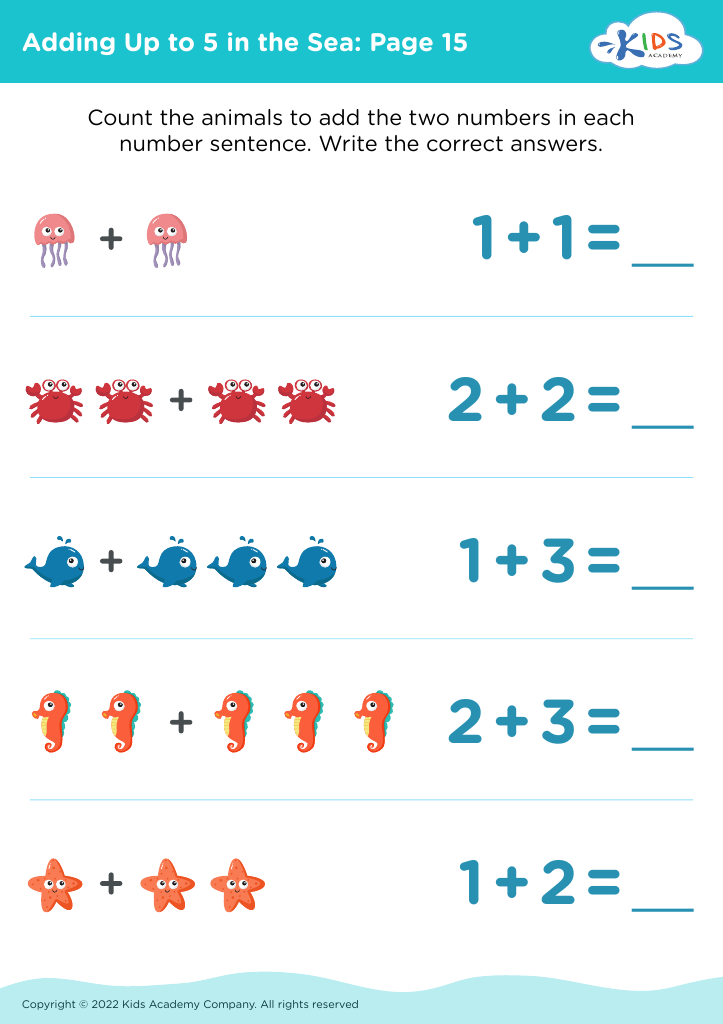
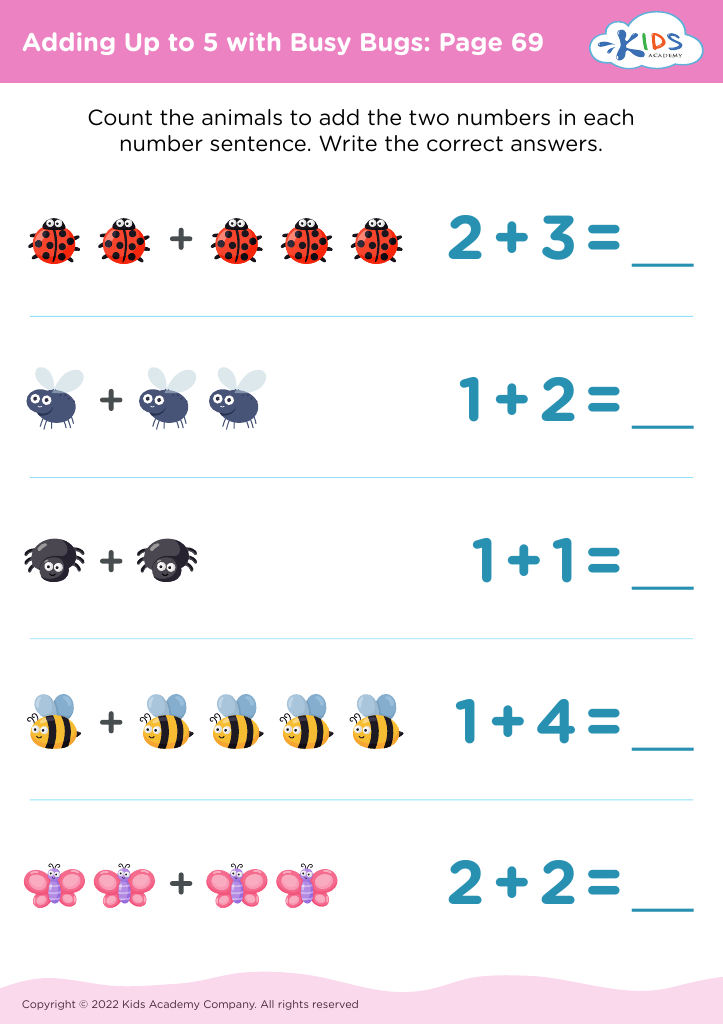
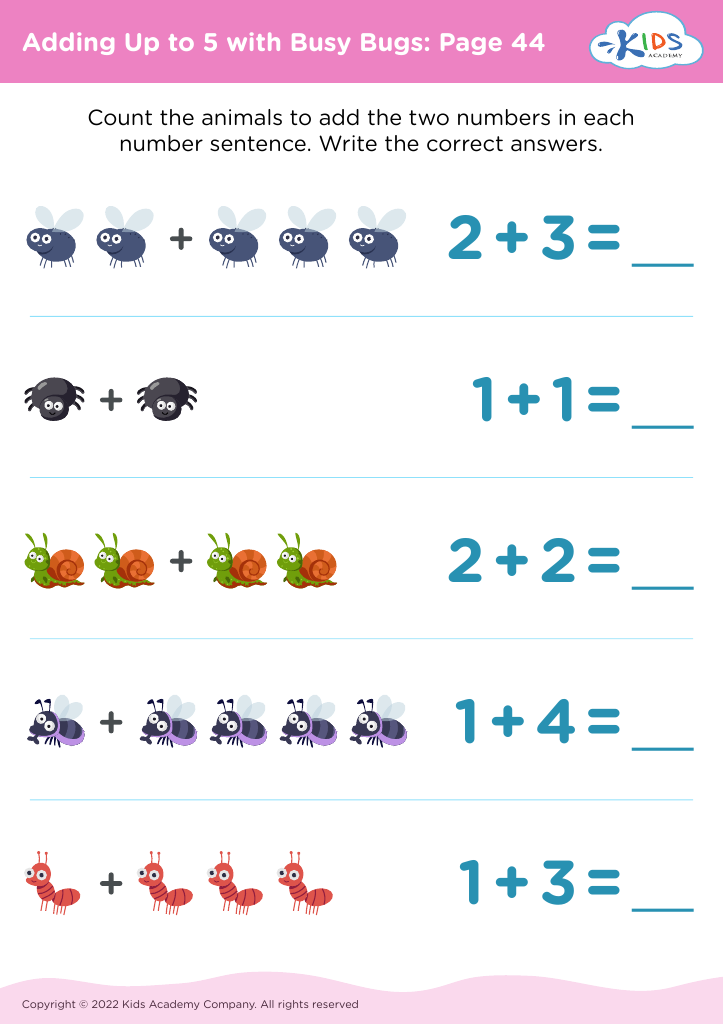
Boost focus and math skills with our "Improving Concentration Addition Worksheets for Ages 4-5." These engaging and thoughtfully designed worksheets help young learners enhance their concentration while practicing addition in a fun, interactive way. Each worksheet features colorful, age-appropriate activities that hold children's attention, fostering both their mathematical abilities and focus. Perfect for home or classroom use, our worksheets cater specifically to the developmental needs of 4-5-year-olds, ensuring they build a strong foundation in math. Discover a delightful mix of challenges and playful learning to keep your child motivated and excited about math.
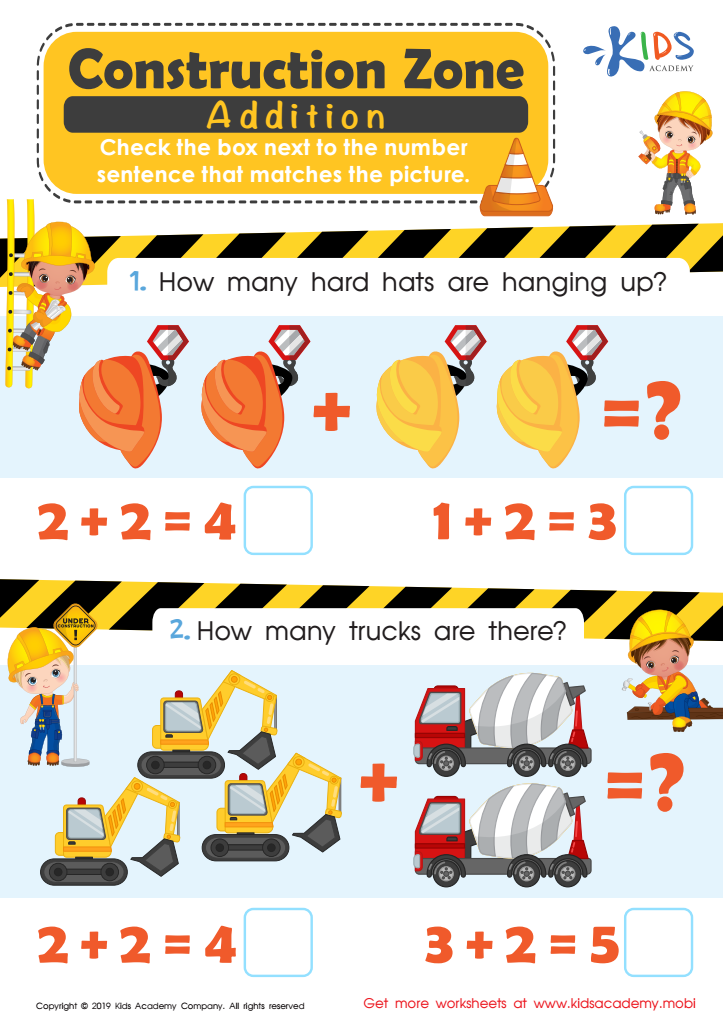
Construction Zone Addition Worksheet
 Assign to My Students







.jpg)
Improving concentration among children aged 4-5 is essential because it lays the foundation for their future learning and development. At this tender age, children are like sponges, absorbing information rapidly, and the ability to concentrate significantly enhances this absorption. When a child learns to focus, they grasp concepts more efficiently, which is vital for mastering basic skills such as counting, reading, and problem-solving. Concentration also fosters patience and perseverance, traits that are crucial for complex tasks requiring sustained effort.
Moreover, good concentration helps in the social development of children. In preschool settings, listening attentively to instructions, participating in group activities, and interacting with peers are deeply linked to how well they can focus. Those with better concentration are more likely to exhibit positive behavior and follow classroom rules, contributing to a harmonious learning environment.
For parents and teachers, nurturing concentration now means fewer academic and behavioral challenges later. Simple activities, such as puzzles, reading time, or sorting games, can significantly bolster a child's attention span. By supporting concentration improvement, parents and teachers help children develop crucial cognitive, social, and emotional skills that form a robust framework for lifelong learning and success.








