
Observational skills Addition Worksheets for Ages 4-5
3 filtered results
Difficulty Level
Grade
Age
-
From - To
Subject
Activity
Standards
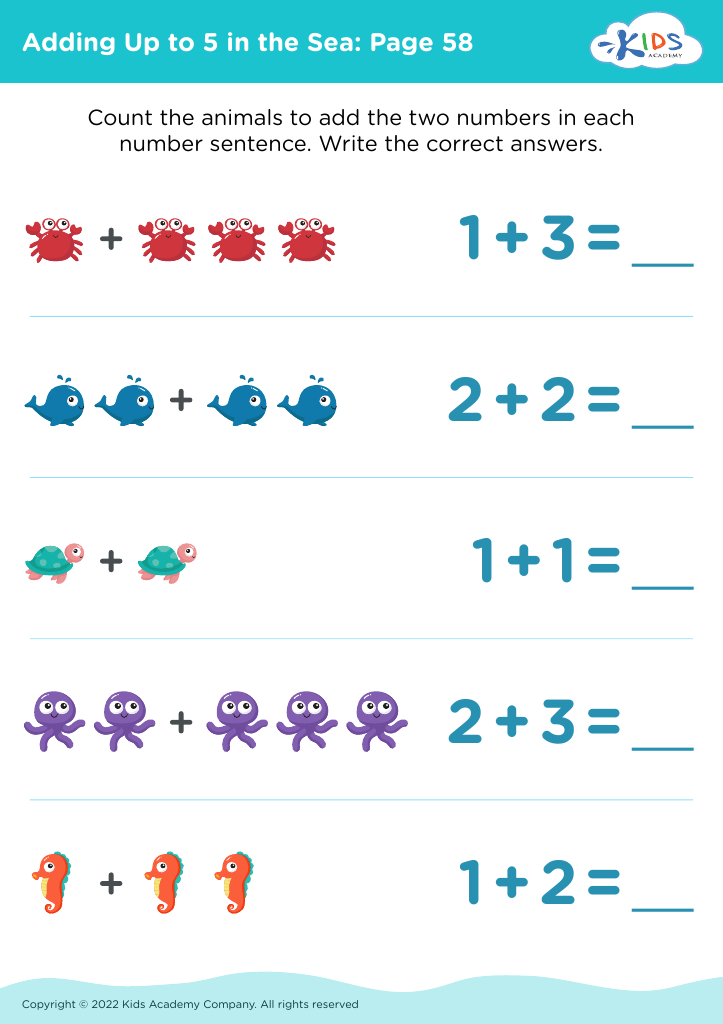
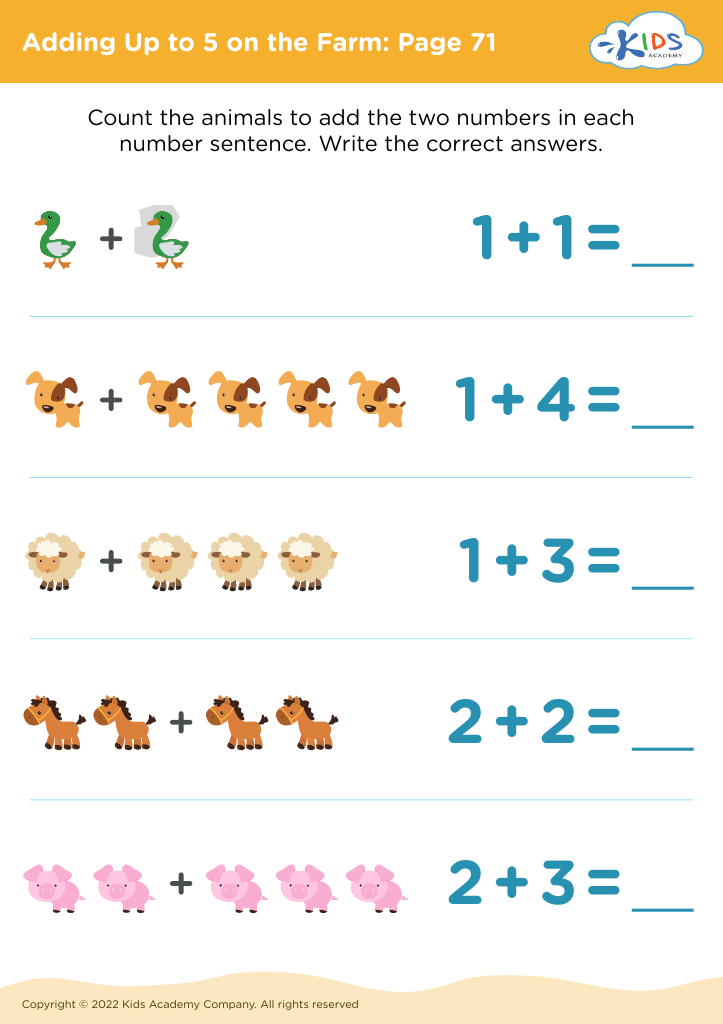
Enhance your child's learning with our Observational Skills Addition Worksheets, specially designed for children ages 4-5. These engaging printable worksheets promote the development of observational skills while introducing foundational addition concepts. Perfect for early learners, they feature colorful visuals and fun activities that encourage children to analyze and interpret various elements. By observing details, counting objects, and solving simple addition problems, kids will build critical thinking and numeracy skills. Foster a love for learning and make math enjoyable with our thoughtfully crafted materials that cater to young minds. Explore our resources and watch your child thrive in their early mathematical journey!
Favorites
With answer key
Interactive
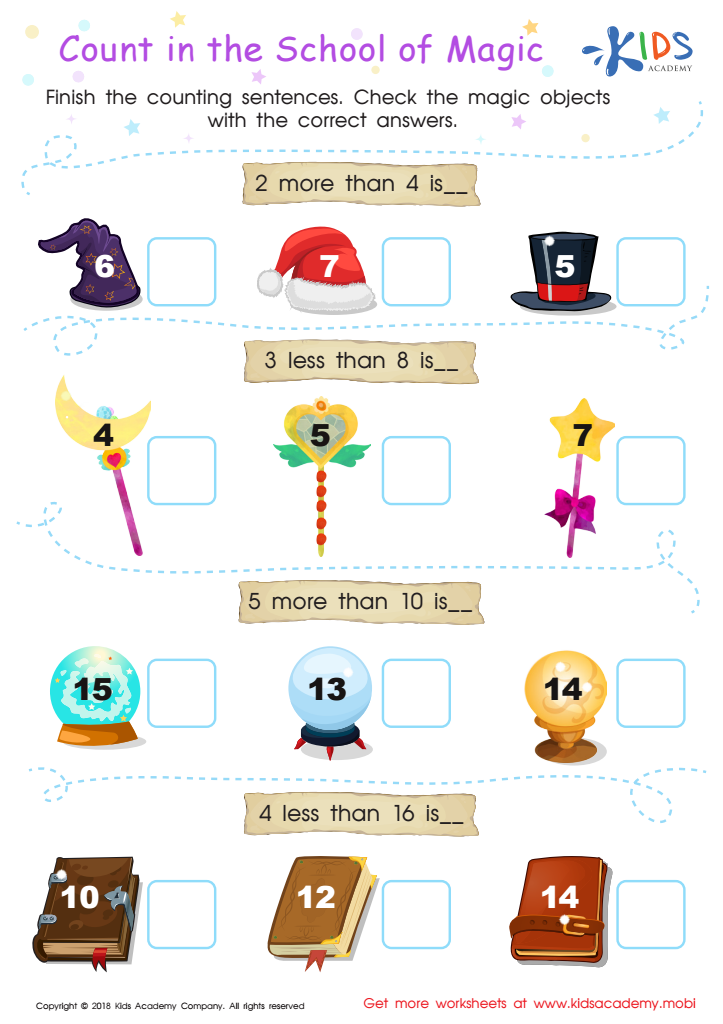
Count in the School of Magic Worksheet
Your math learners can explore the School of Magic with this worksheet. They'll read equations with addition and subtraction numbers under 20, count back and forth to find the answer, then complete the counting sentences. Fun pictures and easy accuracy make it an enjoyable and successful learning experience.
 Assign to My Students
Count in the School of Magic Worksheet
Worksheet
Join Kids Academy for Free
Who is primarily going to use this learning content?




.jpg)



Observational skills are fundamental for the development of young children, particularly in the context of learning addition for ages 4-5. At this developmental stage, children are naturally curious and eager to explore their environment. Encouraging observational skills helps them notice patterns, differences, and quantities in various contexts, which are essential for understanding basic math concepts such as addition.
When parents and teachers prioritize the cultivation of these skills, they foster a playful and interactive learning environment. Activities that involve counting objects, comparing sizes, or identifying shapes enable children to practice addition in real-world scenarios, making abstract concepts more tangible and engaging. This hands-on approach can bolster their confidence and interest in math.
Moreover, strong observational skills support not only mathematical comprehension but also critical thinking, problem-solving, and social skills as children learn to observe and interact with others. When children are adept at observing their surroundings, they are better equipped to ask questions and express curiosity, which is important for lifelong learning.
By recognizing the importance of observational skills in early math education, parents and teachers can significantly impact children's cognitive development and set a solid foundation for future academic success.








