Problem Solving Addition Worksheets for Ages 4-5
12 filtered results
-
From - To
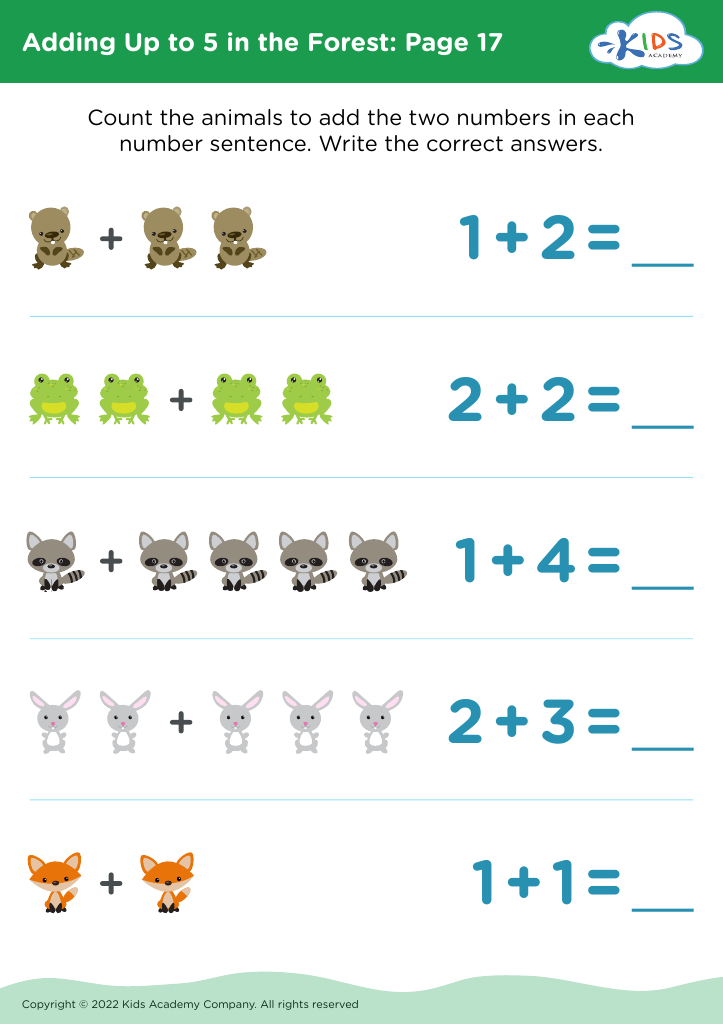
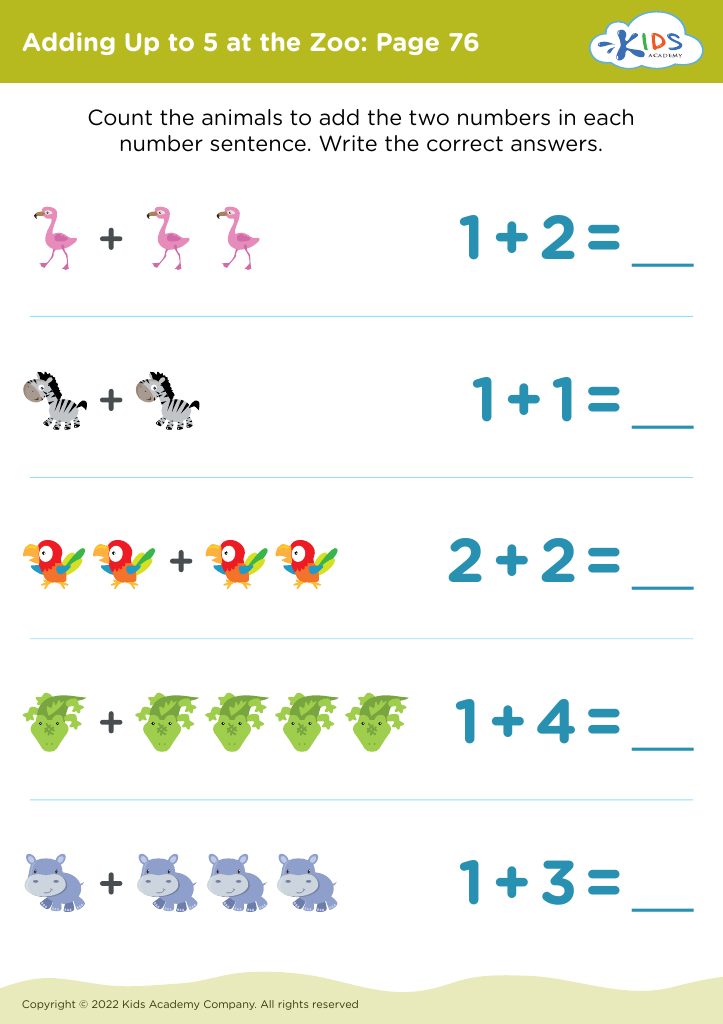
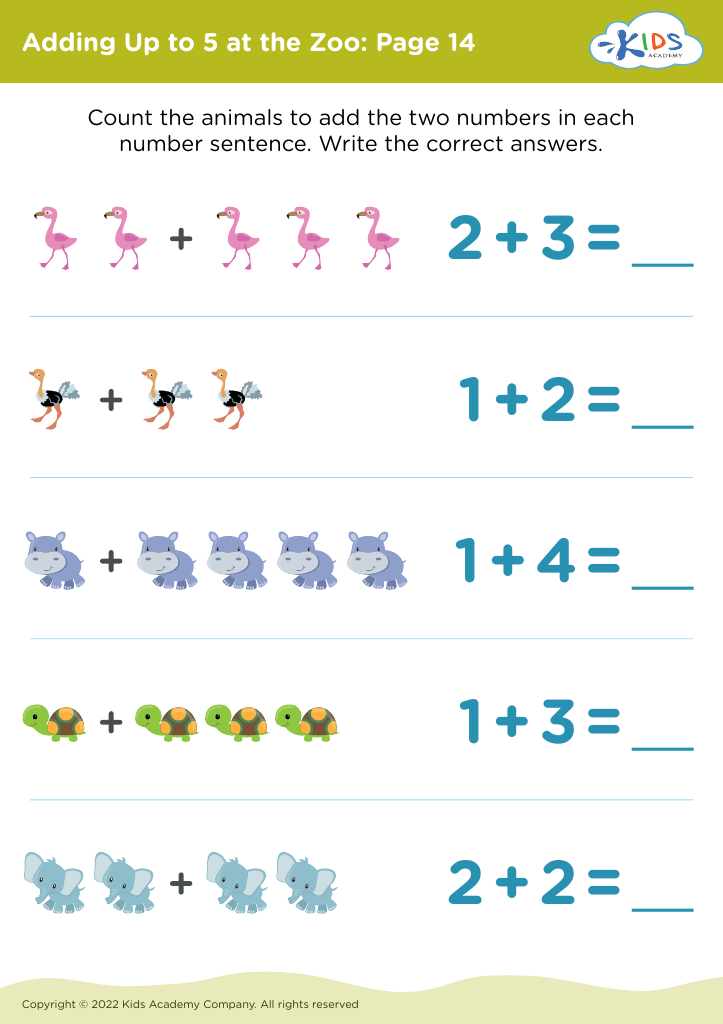
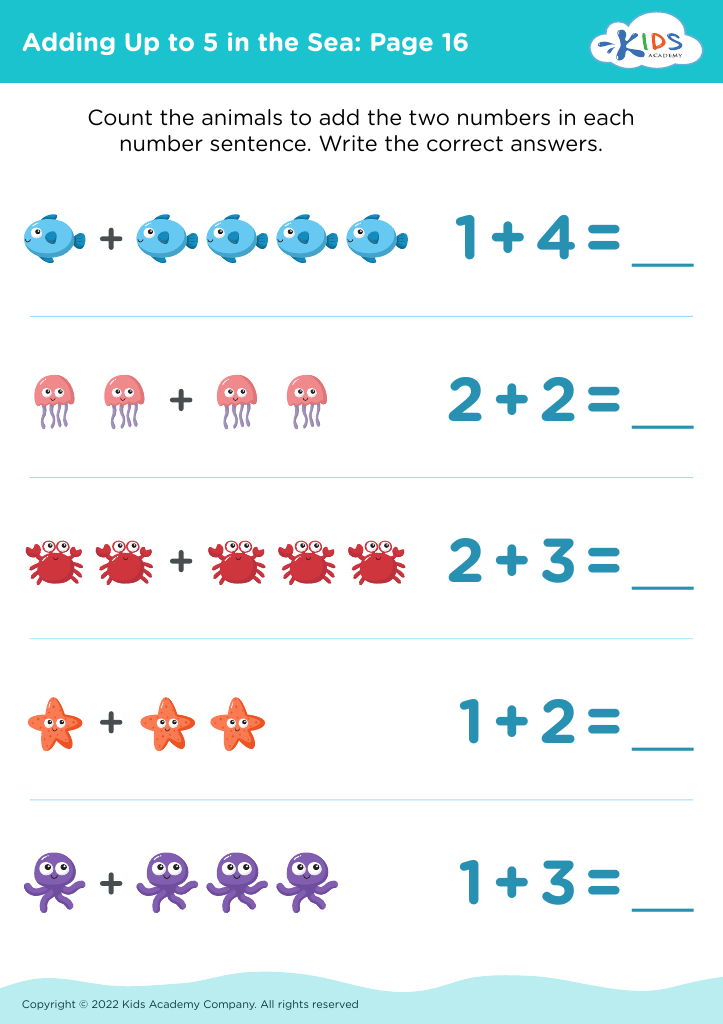
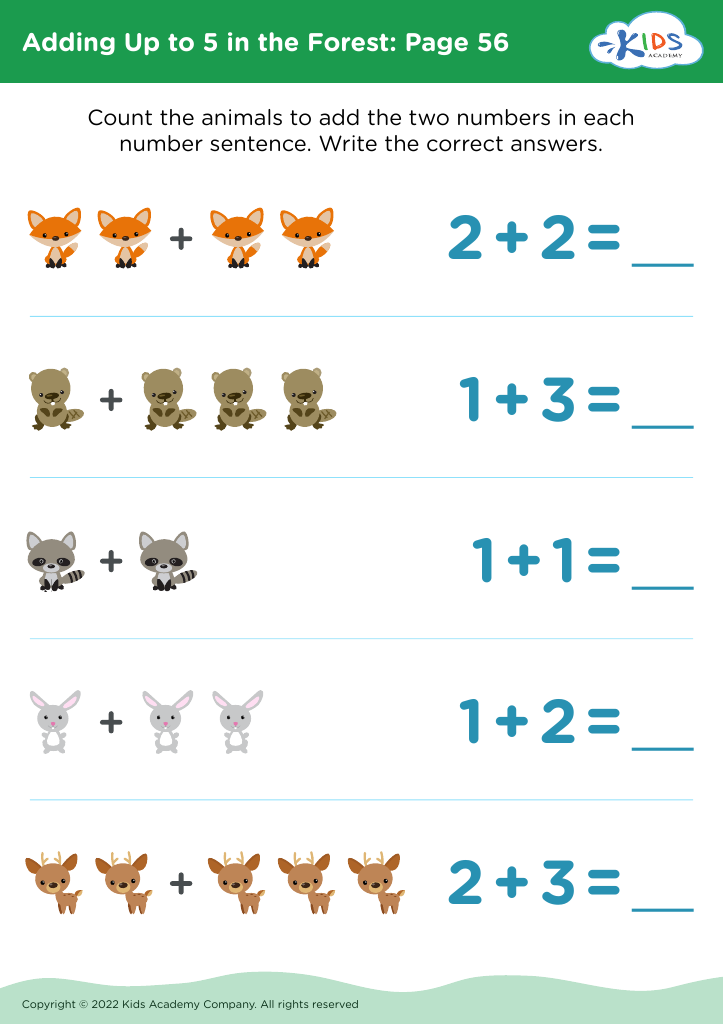
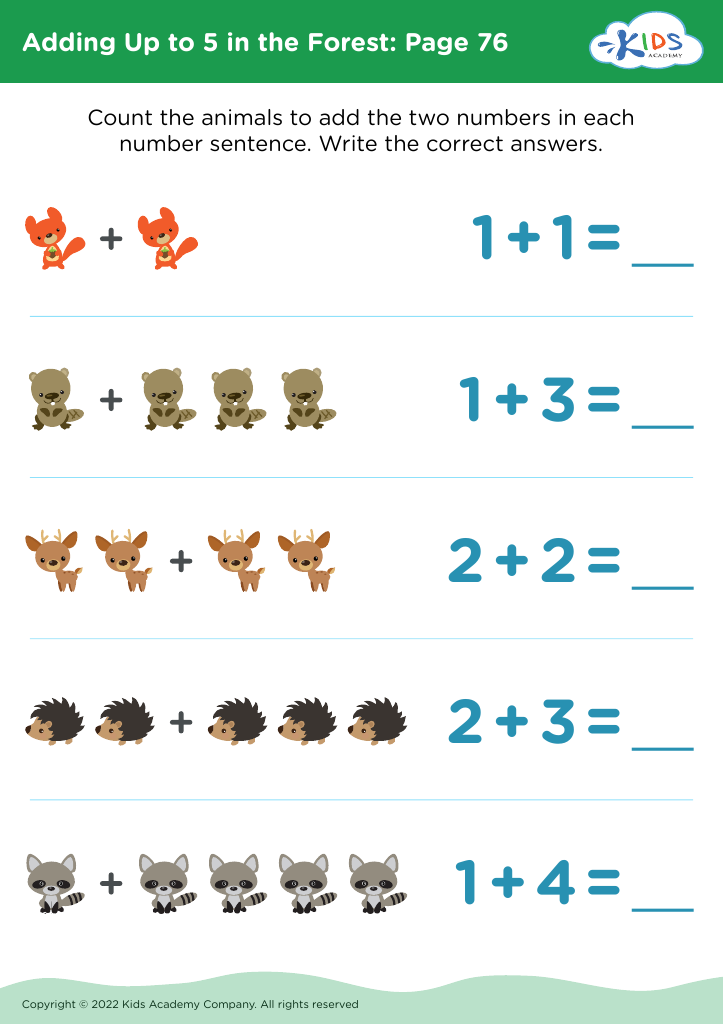
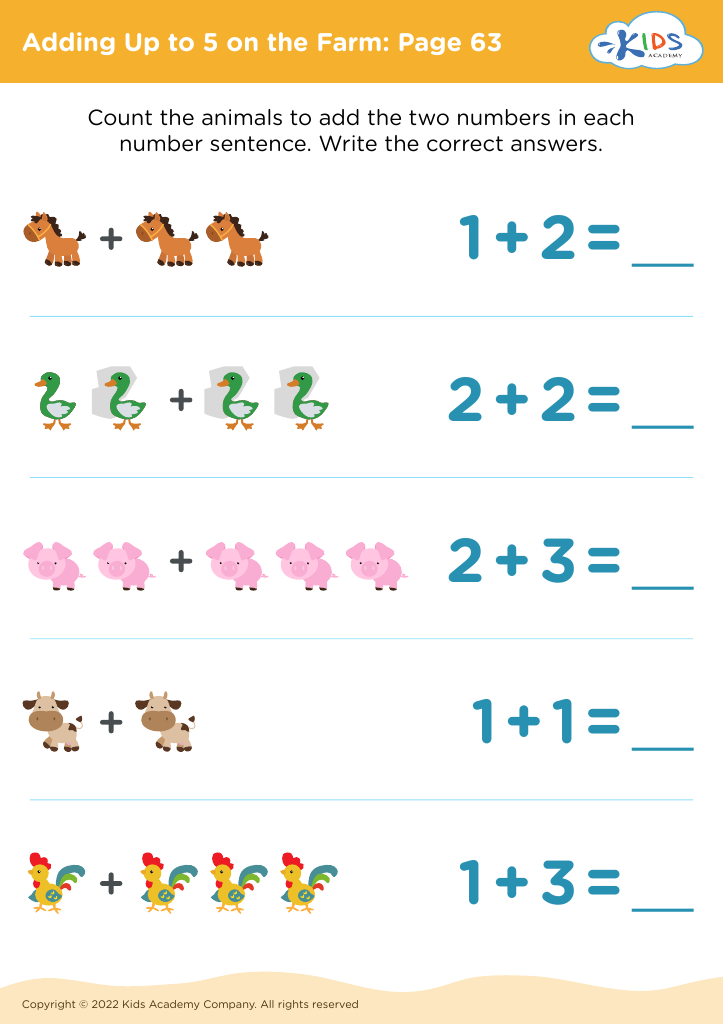
Explore our engaging Problem Solving Addition Worksheets designed specifically for children aged 4-5! These worksheets provide a fun and interactive way for young learners to develop essential math skills through problem-solving activities. With colorful illustrations and age-appropriate questions, kids will enjoy practicing addition while enhancing their critical thinking abilities. Each worksheet encourages creativity and helps children understand basic math concepts in real-world scenarios. Perfect for classroom use or at-home practice, our resources will foster a positive attitude towards math, setting a strong foundation for future learning. Dive into our collection and make learning addition a joyous experience for your little ones!
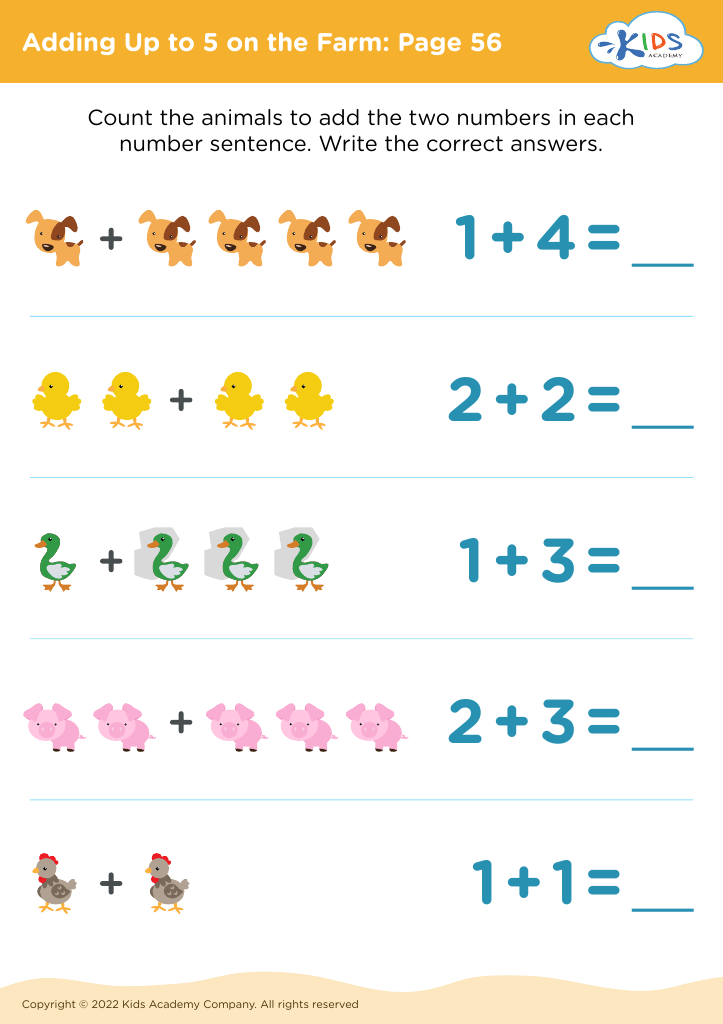
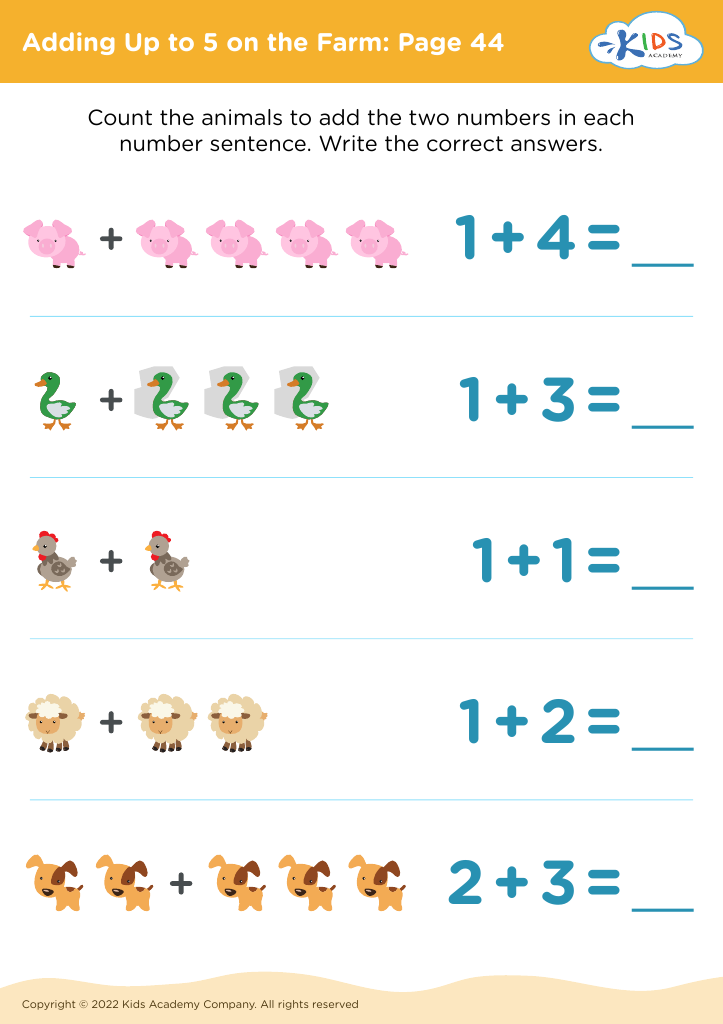
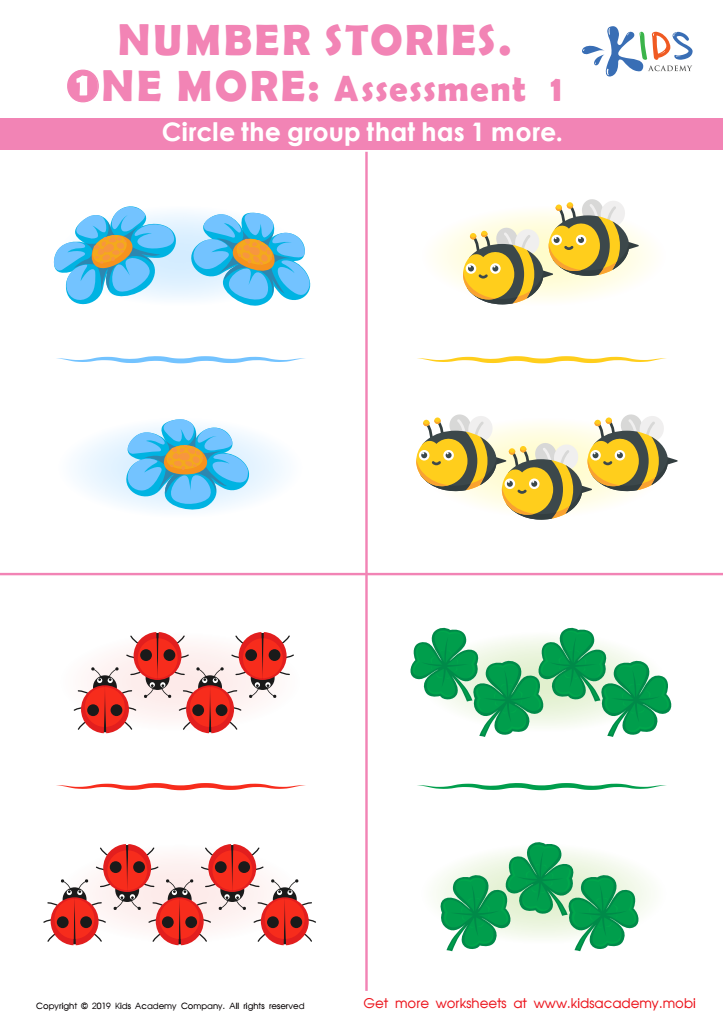
Number Stories One More – Assessment 1 Worksheet
 Assign to My Students
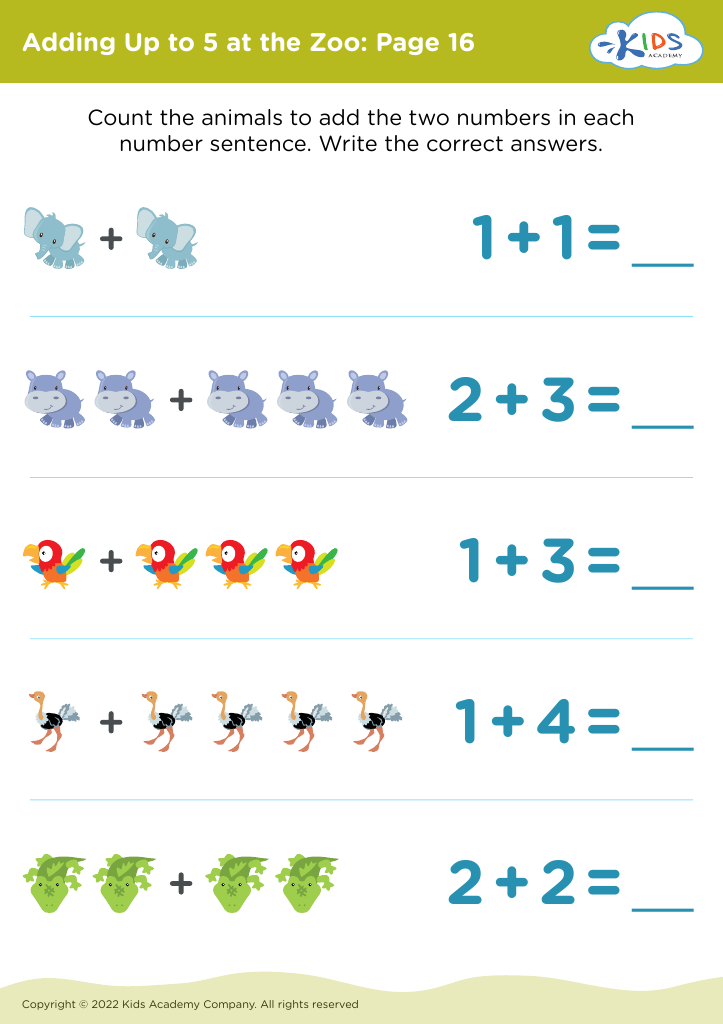
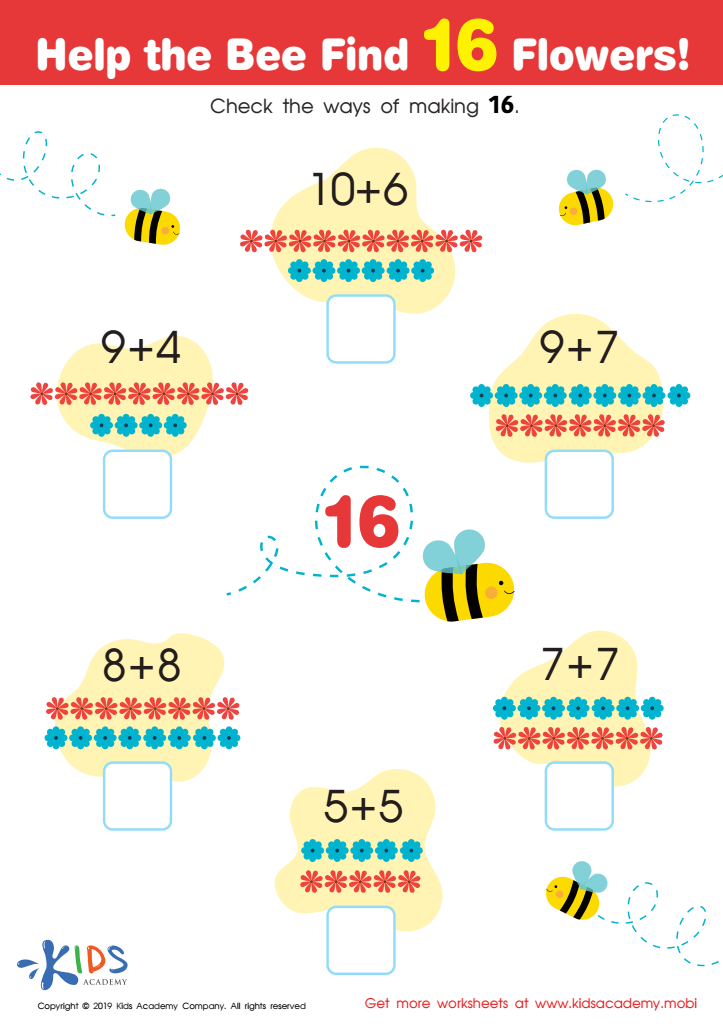
Help the Bee Find 16 Flowers Worksheet








Problem Solving Addition for ages 4-5 is essential for laying the foundational skills in mathematics that young children need as they progress in their education. This age group is at a critical stage of cognitive development where they begin to explore concepts of numbers, quantities, and relationships. Engaging in problem-solving activities fosters critical thinking and promotes logical reasoning, which are essential skills both in math and in everyday life.
By introducing addition through real-world problems, parents and teachers help children see math as a practical tool rather than a set of abstract rules. This approach makes learning relatable and exciting, which can increase a child's motivation and confidence in their abilities. Additionally, it promotes language development as children learn to articulate their thought processes and explain their reasoning.
Moreover, cultivating a strong mathematical foundation in early education can lead to greater academic achievement later on. Children who struggle with basic concepts in early grades often face challenges in advanced mathematical skills. By prioritizing problem-solving addition, parents and teachers not only equip children with the skills needed to succeed in math but also instill a love for learning that can last a lifetime.








