Understanding number values Addition Worksheets for Ages 4-5
3 filtered results
-
From - To
Understanding number values is a fundamental skill for young learners. Our "Understanding Number Values Addition Worksheets for Ages 4-5" help children grasp these essential concepts through engaging, fun activities. Designed to reinforce basic math skills, these printable worksheets encourage kids to master counting and addition. Featuring colorful visuals and interactive exercises, each worksheet provides a solid foundation in number recognition and arithmetic. Perfect for preschoolers and kindergarteners, our resources help ensure early math success, generate confidence, and promote a love for learning. Access these expertly crafted worksheets to support your child’s early math journey effectively!
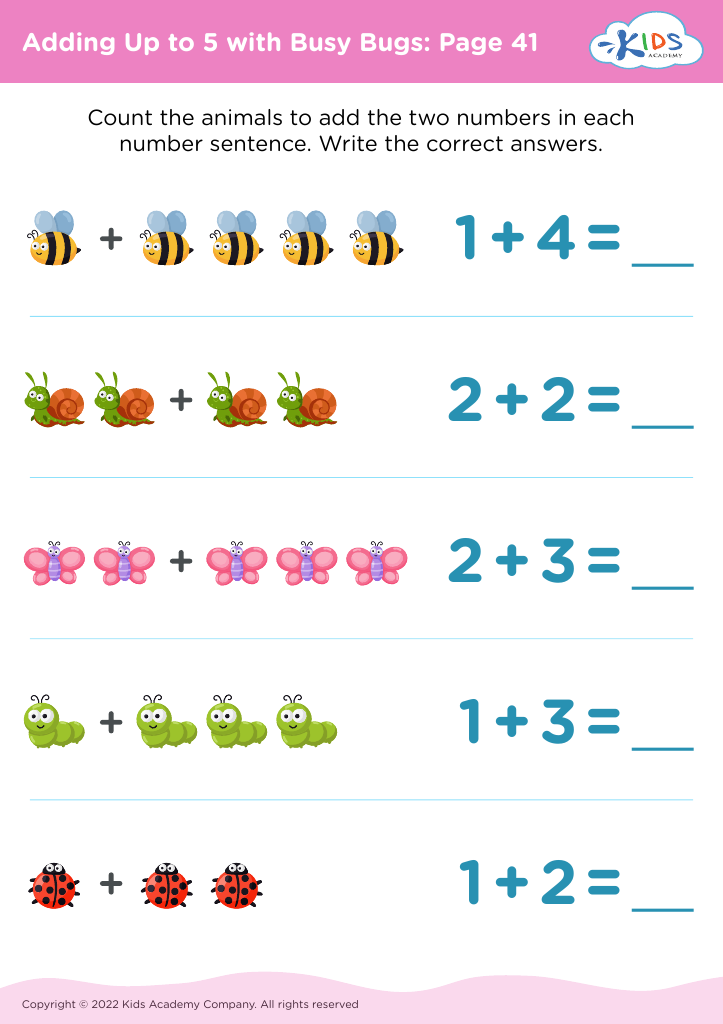
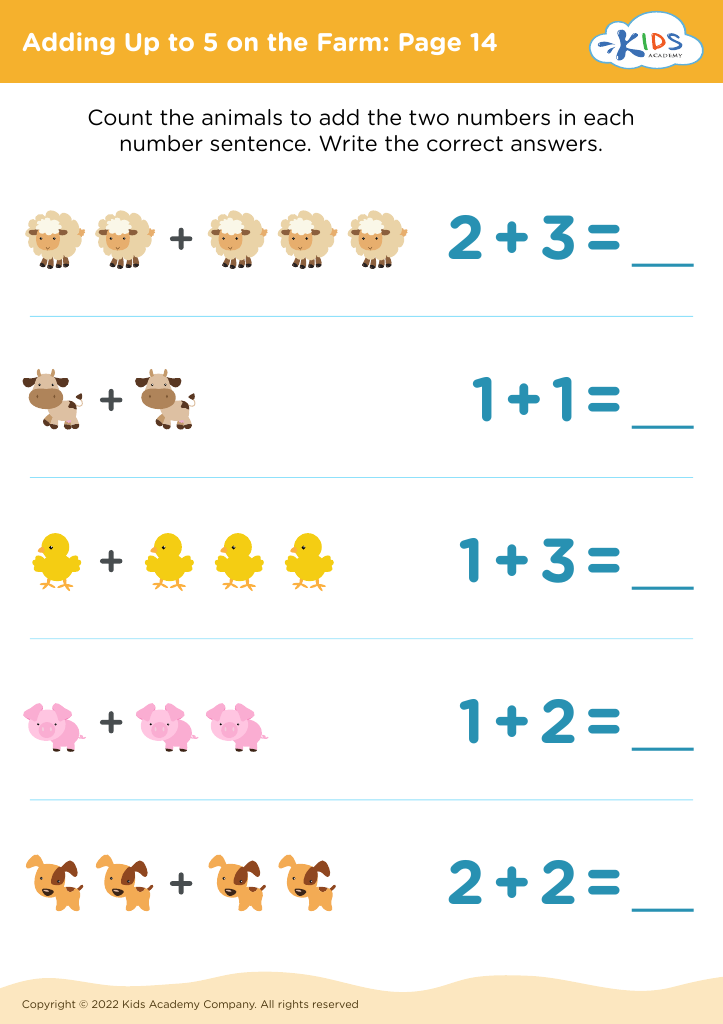
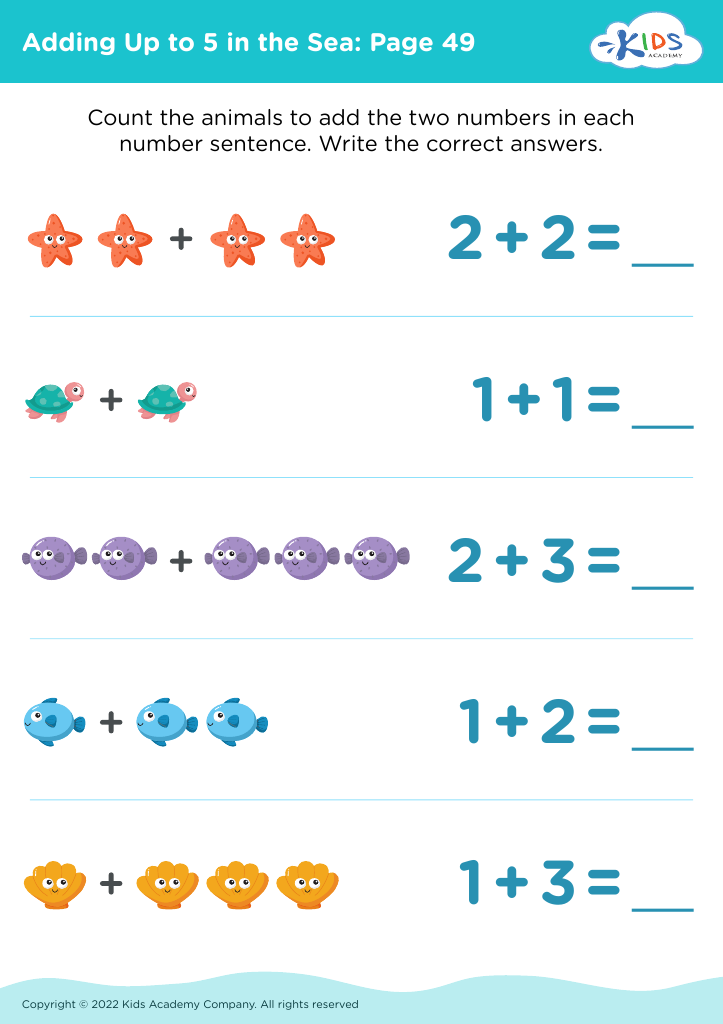








Understanding number values and addition is fundamental for children aged 4-5, forming the basis of their future mathematical abilities. At this age, children are highly receptive to new information and concepts, and comprehending numbers paves the way for more complex mathematical operations later on.
Number values help them make sense of the world. Knowing that ‘3’ is more than ‘2’ gives children a foundation for future learning about size, quantity, and order. It also enhances their ability to problem-solve. For example, if a child has two toys and gets two more, recognizing that they now have four toys is an early problem-solving skill.
Furthermore, mastering basic addition improves cognitive development, such as logical reasoning and analytical thinking. It allows children to approach everyday tasks, like sharing toys or dividing snacks, with fairness and understanding.
Teachers and parents should care because early proficiency with numbers supports future academic achievements, fostering confidence and a positive attitude towards learning. Engaging activities, such as counting games or simple addition exercises, can significantly enhance a child’s grasp of these concepts. Encouraging this foundational knowledge ensures children are well-prepared for their educational journey, reducing potential struggles in their maths-related subjects in future schooling.








