Understanding numerical values Addition Worksheets for Ages 4-5
4 filtered results
-
From - To
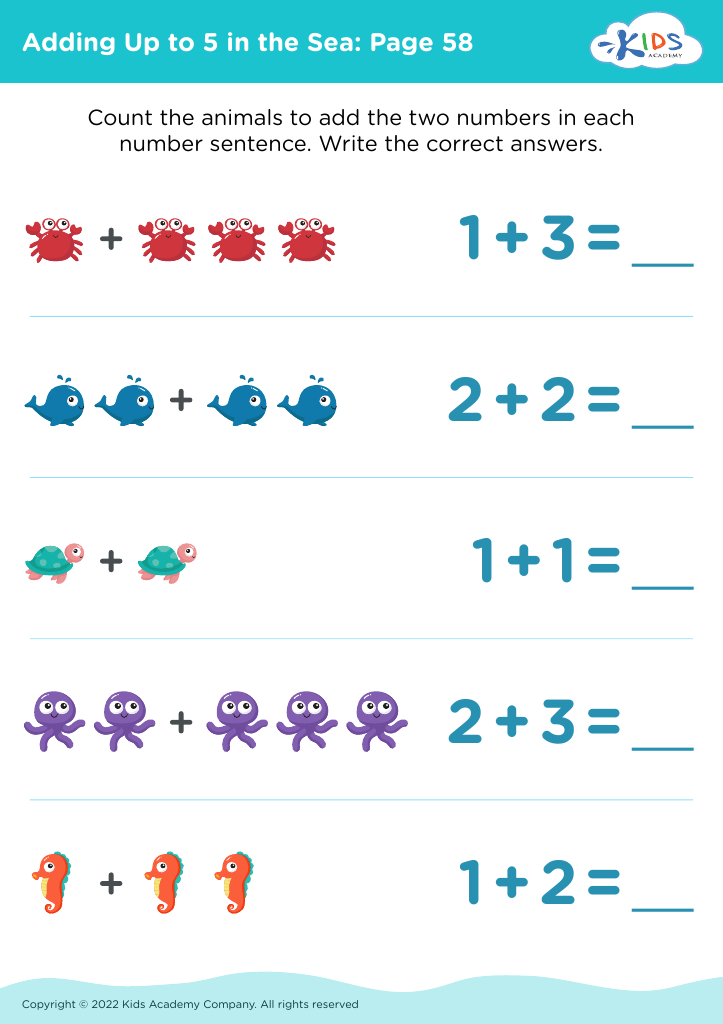
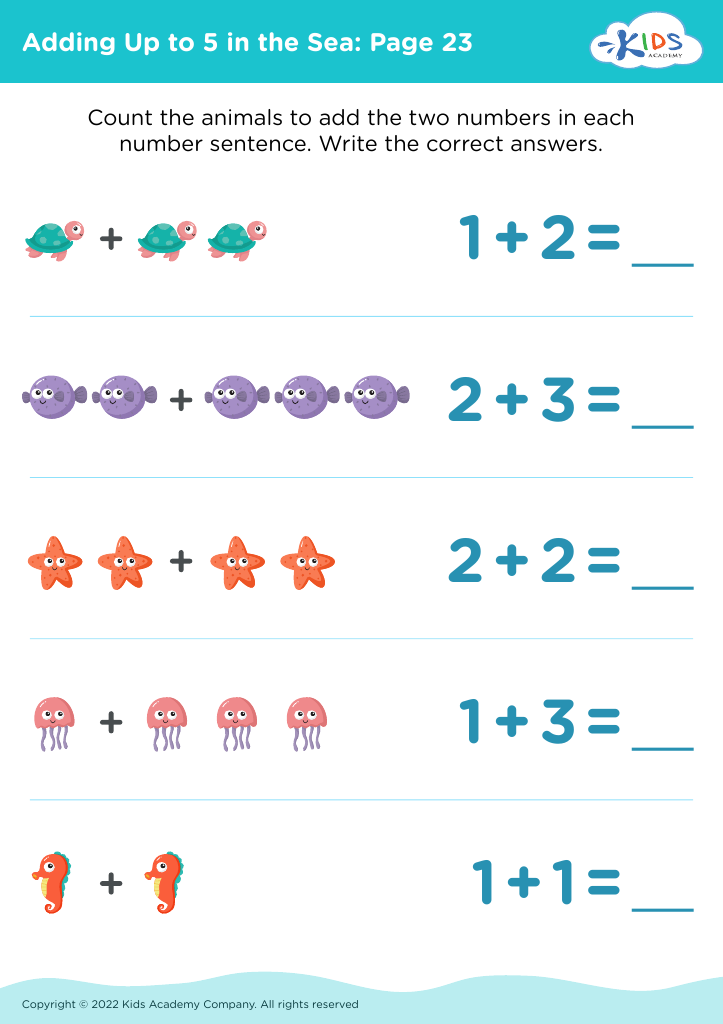
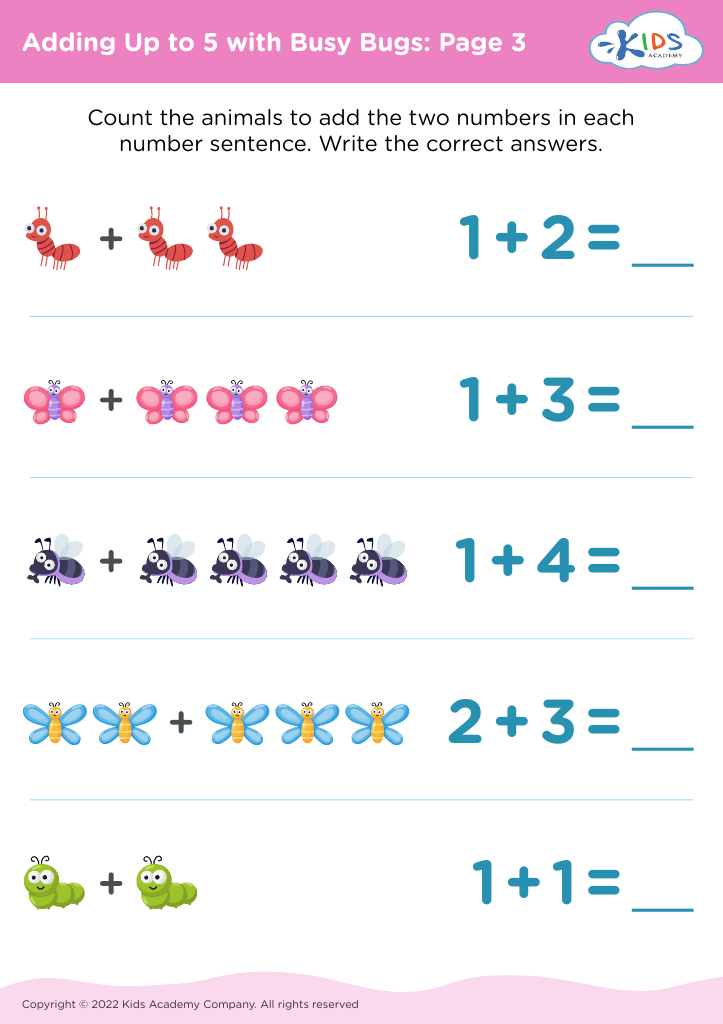
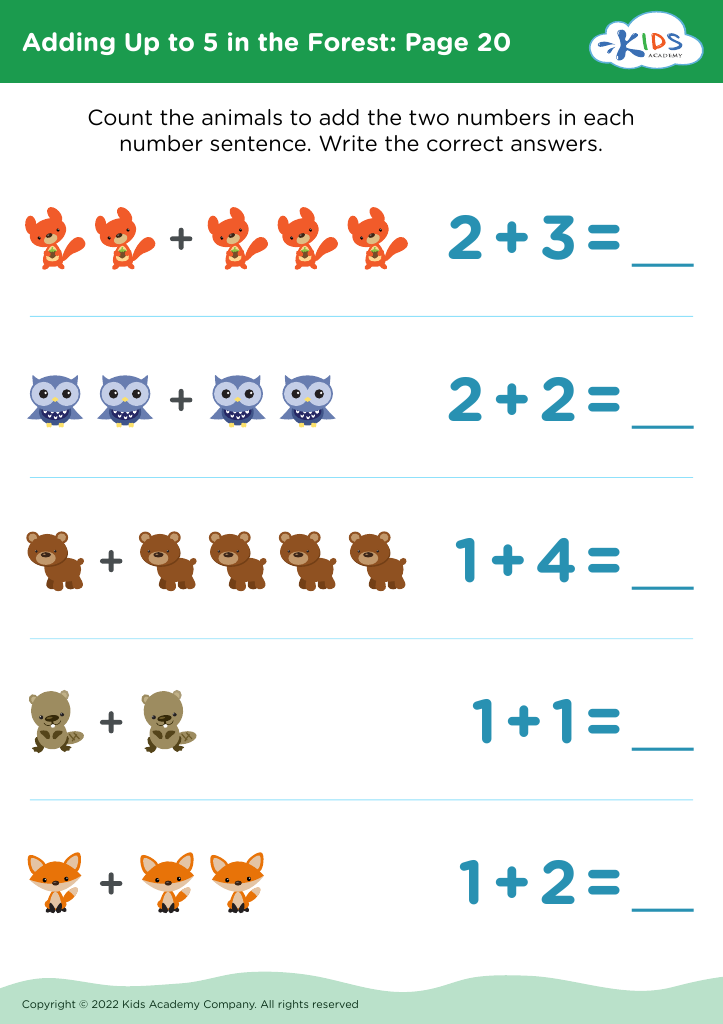
Explore our "Understanding Numerical Values Addition Worksheets" designed for children aged 4-5! These engaging resources help young learners grasp essential math concepts through fun, interactive activities. Each worksheet promotes understanding of numerical values while practicing basic addition skills in a supportive and colorful format. Kids will delight in counting and solving problems with illustrations that spark their imagination. These worksheets encourage exploration and build a strong foundation for arithmetic, making learning both enjoyable and effective. Perfect for parents and educators looking to enhance early math skills, our worksheets will help your little ones confidently navigate the world of numbers. Start the adventure today!








Understanding numerical values and addition is crucial for children aged 4–5 as it lays the foundation for their mathematical learning and cognitive development. At this age, children are naturally curious and eager to learn, making it an ideal time for them to engage with numbers. By mastering basic addition, children develop critical thinking and problem-solving skills essential for everyday life.
Parents and teachers play a vital role in fostering this understanding. Introducing numerical values and simple addition through playful activities, such as counting objects, using blocks, or playing games, helps children visualize concepts and associate them with real-world experiences. This early exposure promotes a positive attitude towards math and eliminates potential future anxieties about the subject.
Moreover, reaching this milestone builds confidence and encourages children to explore more complex mathematical concepts as they progress in their education. It creates a strong groundwork for subjects like subtraction, multiplication, and even later STEM fields. By prioritizing understanding numerical values and addition, parents and teachers not only enhance children's academic readiness but also support their overall cognitive and emotional development, enabling them to thrive in school and beyond.








