Visual learning enhancement Addition Worksheets for Ages 4-5
4 filtered results
-
From - To
Discover our "Visual Learning Enhancement Addition Worksheets for Ages 4-5" designed to make early math fun and engaging. Ideal for young learners, these worksheets combine bright visuals with basic addition problems to captivate and teach effectively. By incorporating images and interactive elements, children develop key math skills while enhancing their visual learning abilities. Each worksheet promotes number recognition, counting, and simple addition, providing a solid foundation for future math success. Start your child's educational journey with our vibrant and thoughtfully crafted worksheets that turn learning into an enjoyable adventure. Download now and watch their curiosity and confidence soar!
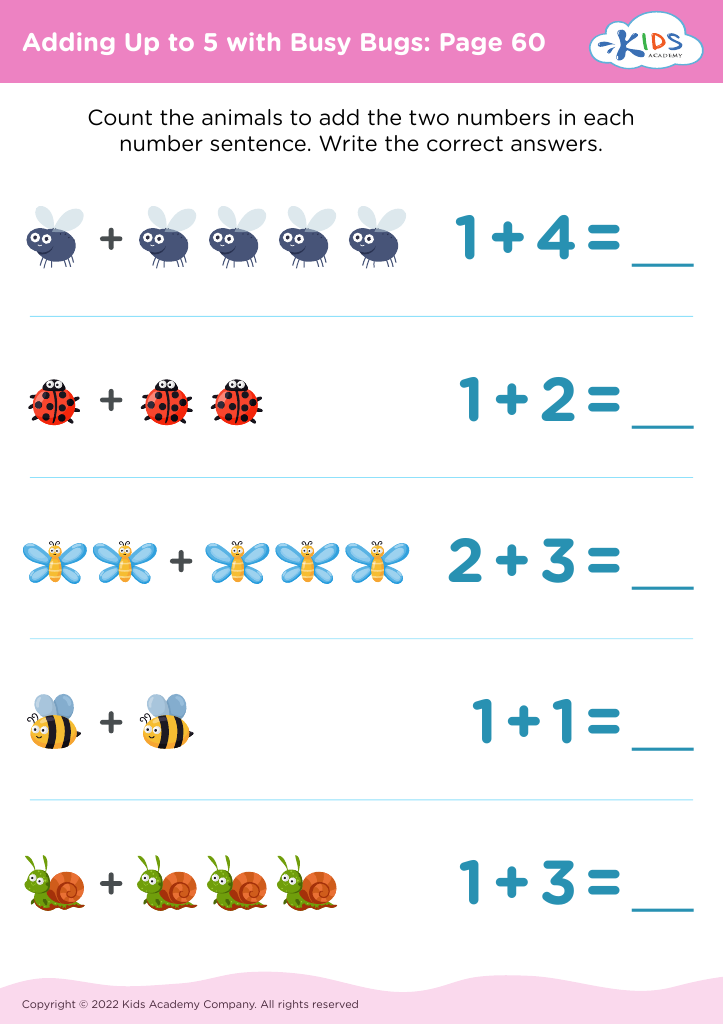
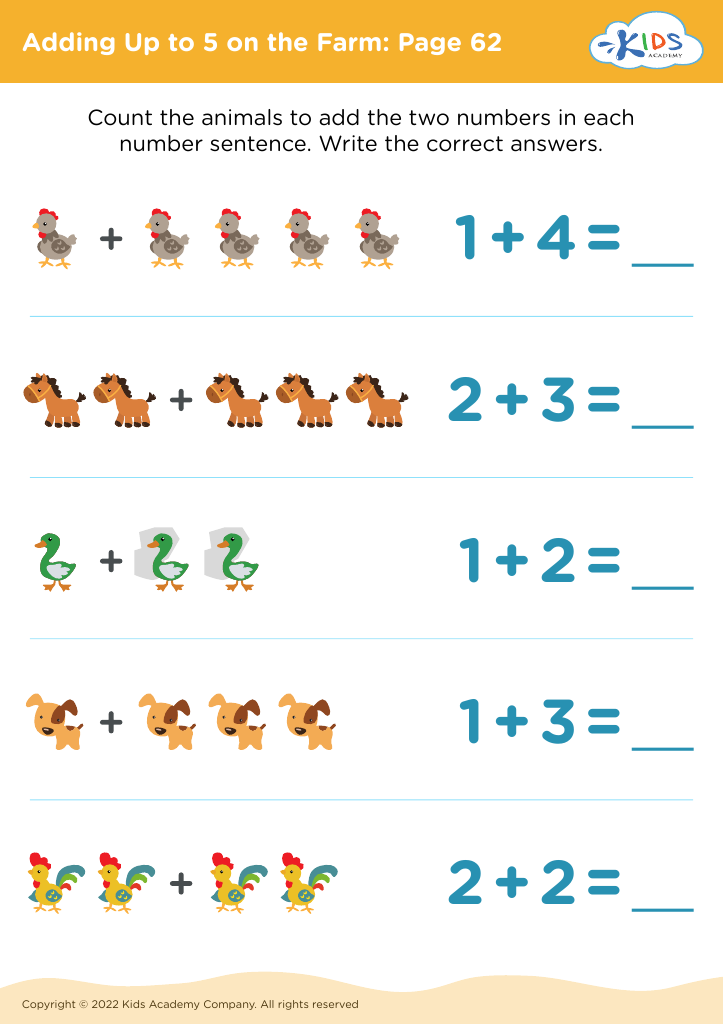
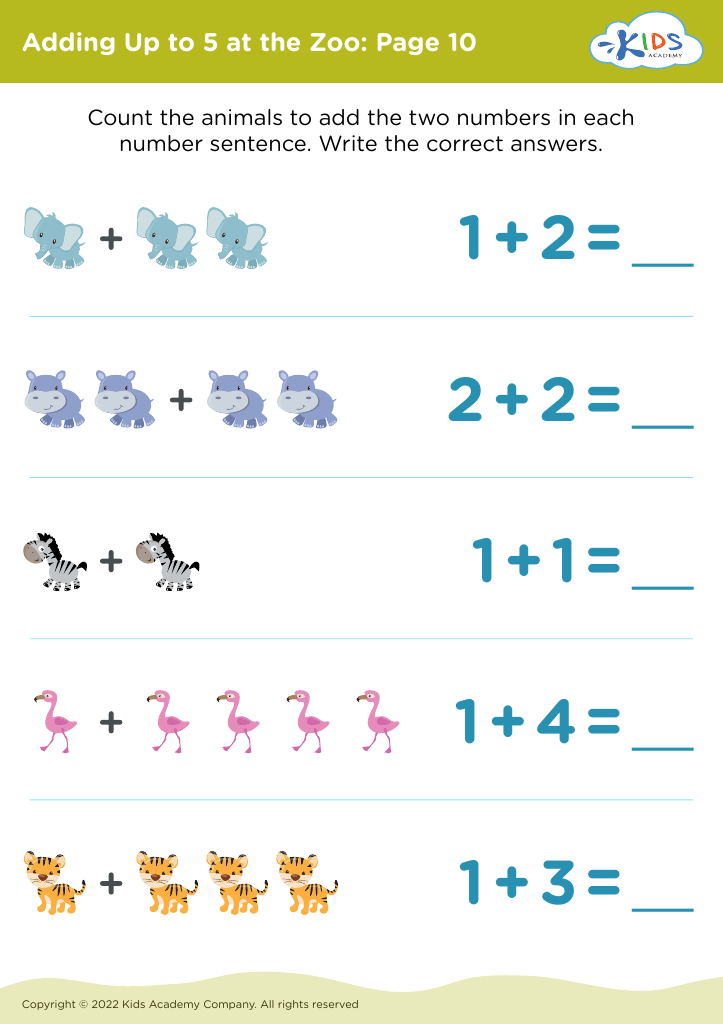
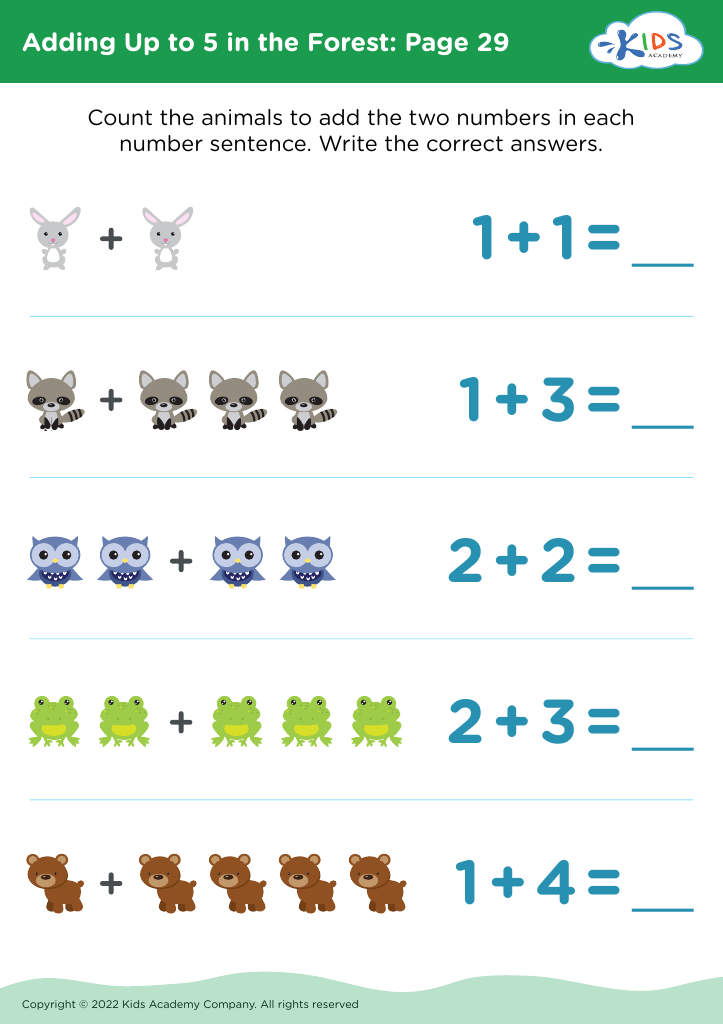








Visual learning enhancement is pivotal for children aged 4-5 due to cognitive development stages and unique learning preferences. At this age, young children are highly visual learners. Their brains process images and visuals much faster than text or speech. Visual aids like pictures, diagrams, and colorful charts capture their attention and spark curiosity, making learning an engaging and enjoyable experience.
Additionally, visual learning helps in understanding complex concepts easily. For example, visual aids in math can simplify abstract concepts such as addition. Using visual tools like number lines, counters, or picture-based stories, children can see the relationship between numbers, providing a concrete understanding to what may seem like an abstract concept.
This age group also benefits from the development of critical thinking and analytical skills through visual learning. When children analyze visual information, they learn to observe, interpret data, and think critically. Furthermore, visual aids support better memory retention. Children remember information more effectively when they associate it with images or visual patterns.
Visual learning techniques align with diverse learning styles, supporting inclusivity in education. By integrating visual learning enhancements, parents and teachers set a strong academic foundation, cultivate an enriched learning environment, and foster a love for learning in young children.








