Visual learning reinforcement Addition Worksheets for Ages 4-5
5 filtered results
-
From - To
Enhance your child’s mathematical journey with our Visual Learning Reinforcement Addition Worksheets, designed specifically for ages 4-5. These engaging and colorful worksheets utilize visual aids to make the concept of addition exciting and accessible for young learners. By integrating vibrant images and playful designs, children can better grasp fundamental math skills while developing a love for learning. Our carefully crafted resources not only reinforce visual understanding but also support fine motor skills through tracing and interaction. Perfect for parents and educators alike, these worksheets create a fun and effective environment for mastering basic addition, ensuring lasting comprehension and confidence in math.
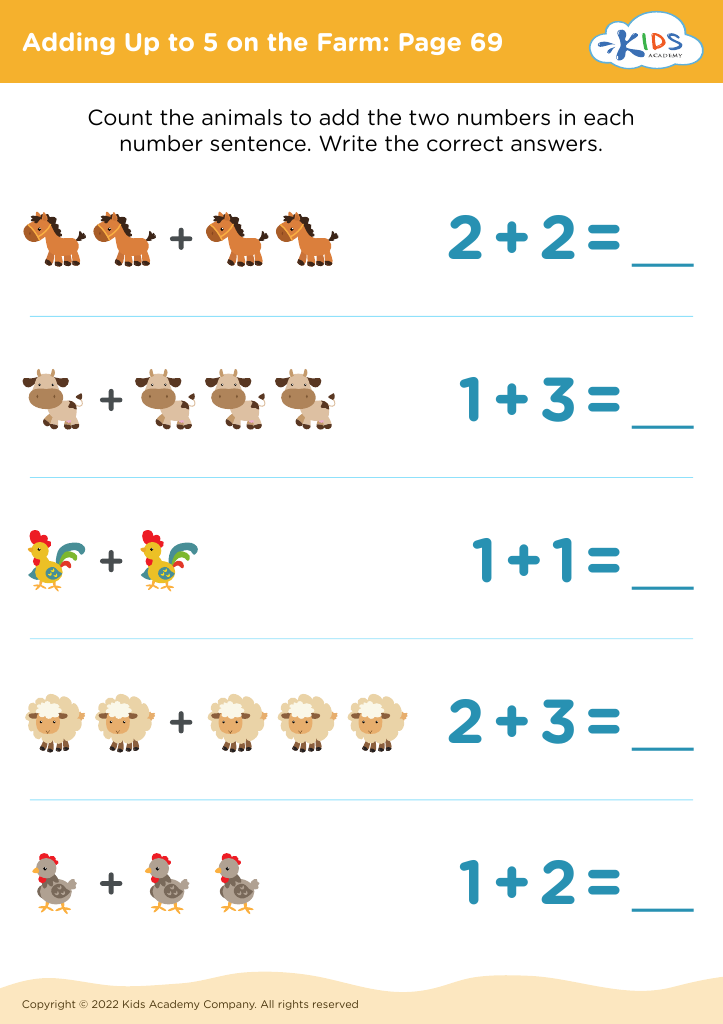
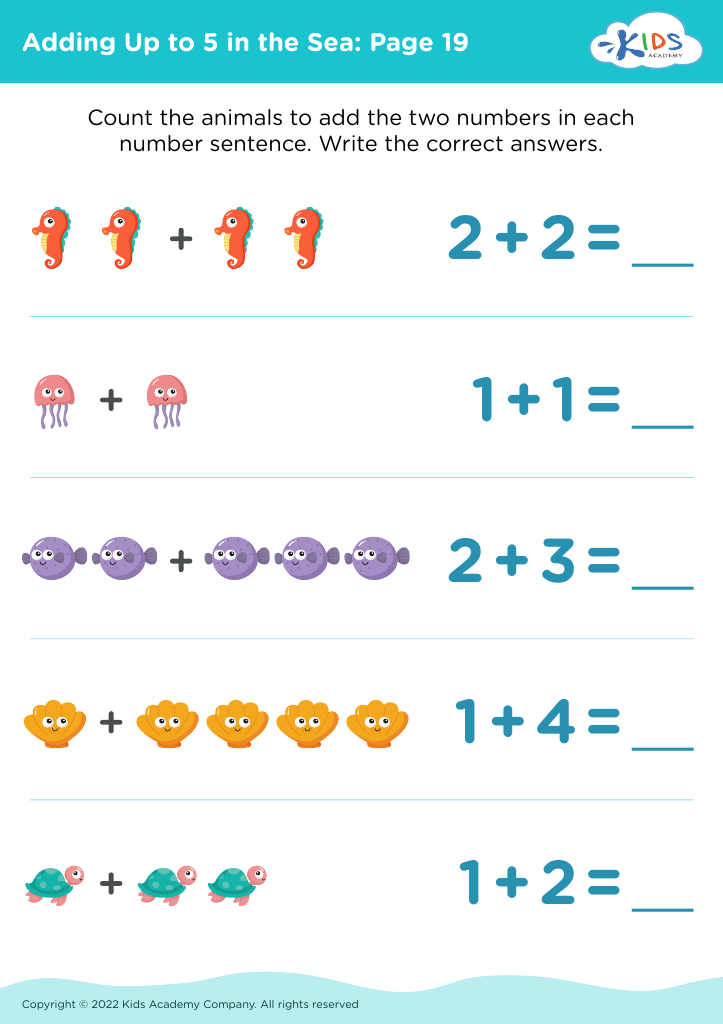
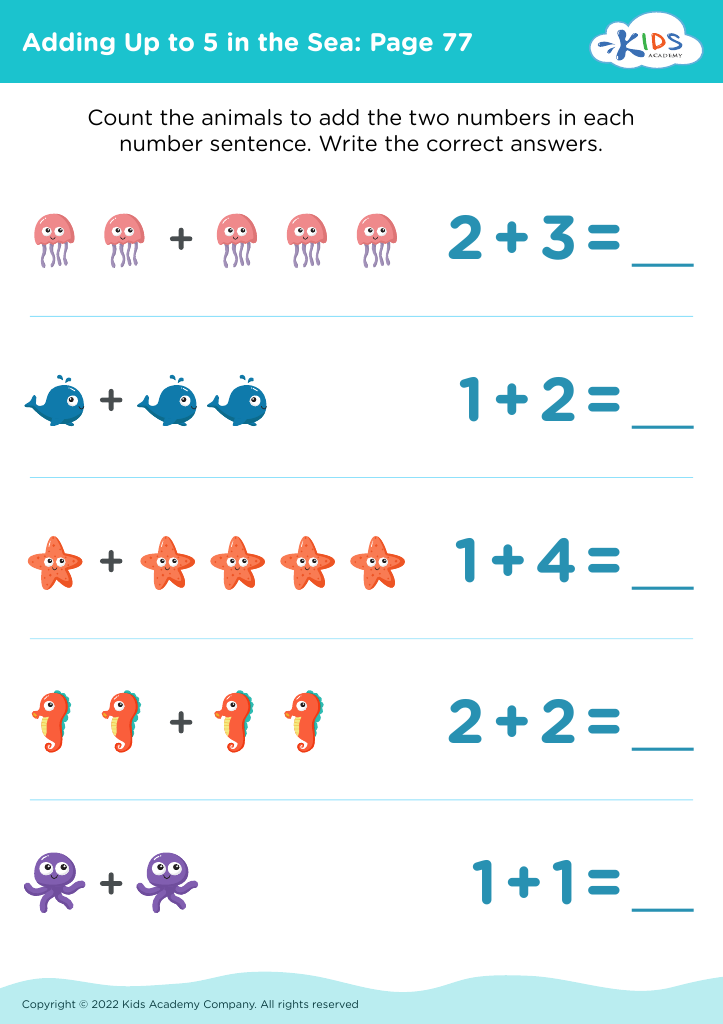
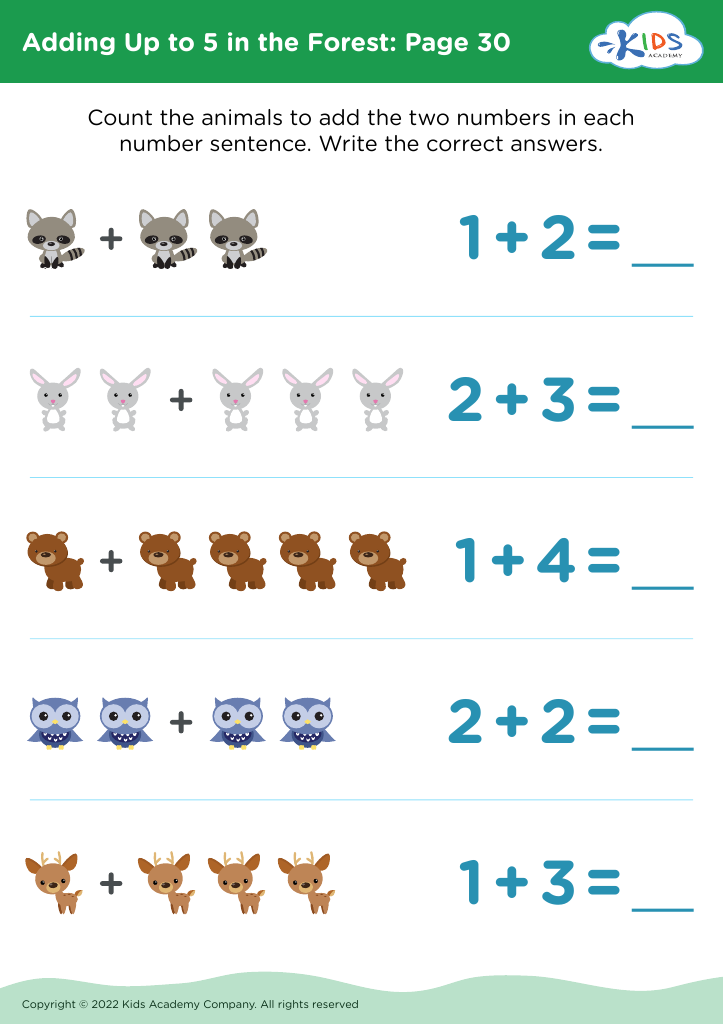
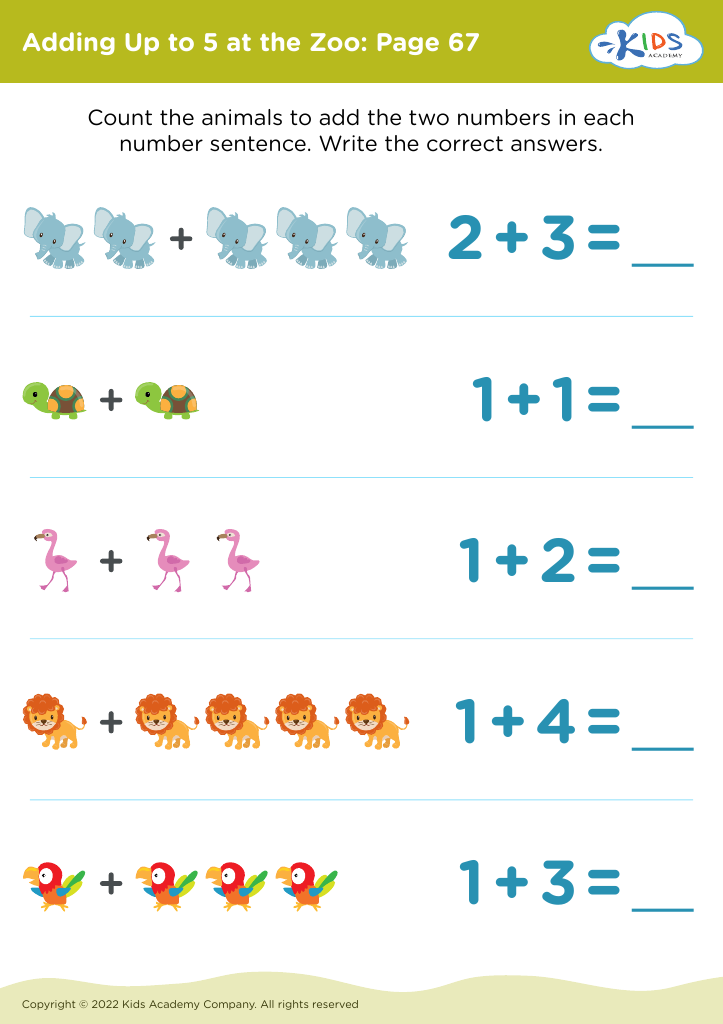








Parents and teachers should care about visual learning reinforcement in addition for ages 4-5 because it plays a crucial role in early cognitive development. At this tender age, children are highly receptive to visual stimuli, making visual learning an effective tool for teaching essential math concepts. By incorporating visual elements such as colorful counters, number charts, or playful illustrations, educators can engage young learners and make abstract concepts like addition more concrete and relatable.
Visual learning not only captivates children’s attention but also enhances comprehension and retention. When children see numbers represented visually, they can better grasp the concept of combining quantities, which lays the foundation for future mathematical skills. Additionally, it caters to various learning styles; some children learn best through seeing rather than listening or touching.
Incorporating visual aids into addition activities can also promote interactive learning, allowing children to explore and manipulate objects, which fosters problem-solving skills and critical thinking. As parents and educators prioritize visual learning reinforcement, they support neurological connections that are essential for effective math understanding, ultimately equipping children with the foundational skills necessary for academic success in later years. Investing in this approach not only nurtures a love for learning but also builds confidence in their mathematical abilities.








