Visual-motor skills Addition Worksheets for Ages 4-5
3 filtered results
-
From - To
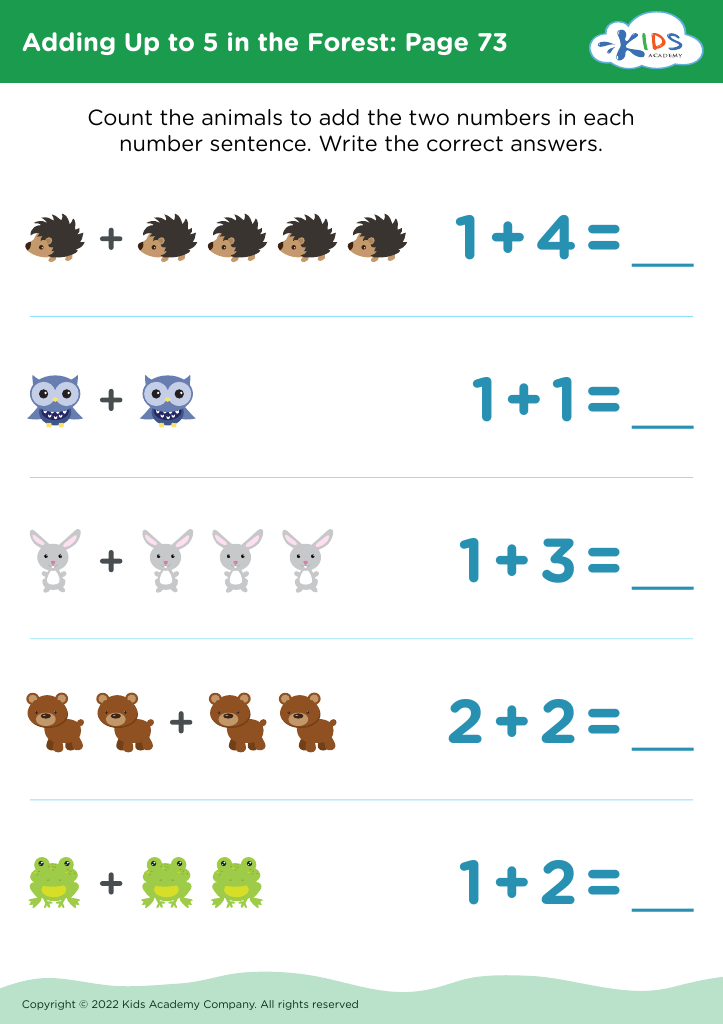
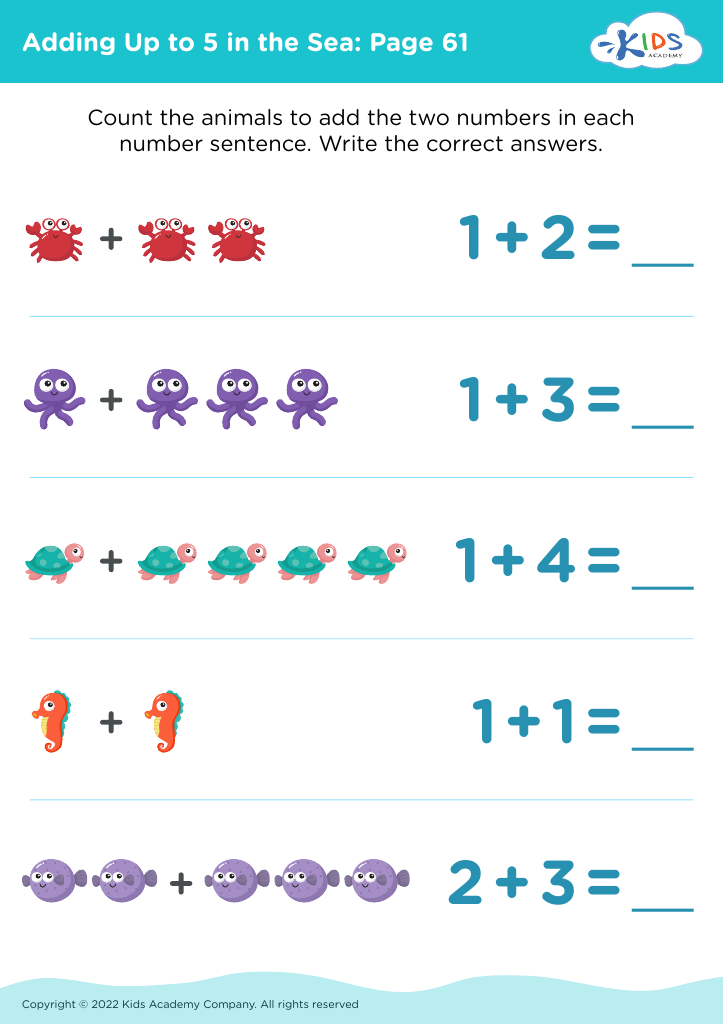
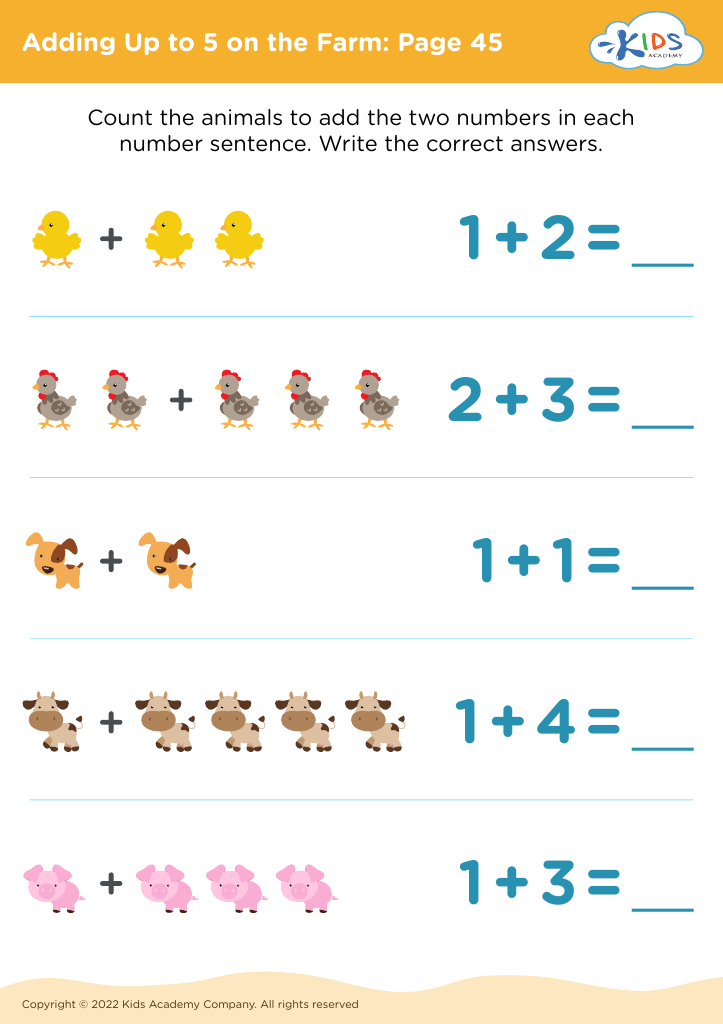
Boost your child's early math skills with our engaging Visual-Motor Skills Addition Worksheets, designed specifically for ages 4-5. These thoughtfully crafted worksheets not only introduce basic addition concepts but also enhance hand-eye coordination through interactive activities. Young learners will enjoy coloring, tracing, and connecting dots as they practice addition in a fun and playful way. By integrating visual-motor skills into math practice, your child will develop crucial cognitive and fine motor abilities essential for their academic growth. Explore our collection of colorful and child-friendly worksheets that make learning addition a delightful experience for your little one! Perfect for home or classroom use.








Visual-motor skills are crucial for children ages 4-5 as they serve as the foundation for many academic and everyday tasks. These skills involve the coordination of visual perception and motor control, enabling children to perform activities such as writing, drawing, cutting with scissors, and even playing sports. As children engage in these activities, they cultivate important hand-eye coordination, spatial awareness, and fine motor skills.
Parents and teachers should care about visual-motor skill development because they directly influence a child's readiness for school and learning success. Children with strong visual-motor skills are better equipped to tackle early literacy tasks, such as writing letters and numbers, which are essential for their educational progression. Additionally, mastering these skills can boost a child’s self-confidence and encourage independent play.
Furthermore, visual-motor skills are interconnected with cognitive development and problem-solving abilities. When children practice these skills, they enhance their ability to analyze and interact with their environment. By providing opportunities and activities that foster visual-motor skill development, parents and teachers play a pivotal role in preparing children for academic challenges, fostering social integration, and promoting lifelong skills. Supporting these skills in early childhood is an investment in a child's future learning and personal growth.








