Basic Arithmetic Numbers Worksheets for Ages 4-5
5 filtered results
-
From - To
Discover engaging Basic Arithmetic Numbers Worksheets for children aged 4-5! Our carefully designed resources help young learners master foundational math concepts through colorful visuals and fun activities. These worksheets make learning to count, add, and subtract both enjoyable and educational. They'll develop essential skills such as number recognition, counting, and simple problem-solving while fostering a love for math from an early age. Parents and educators will appreciate the structured yet playful approach that caters to young minds. Perfect for at-home practice or classroom use, our worksheets encourage interactive learning and build confidence in math. Start your child's arithmetic journey today!
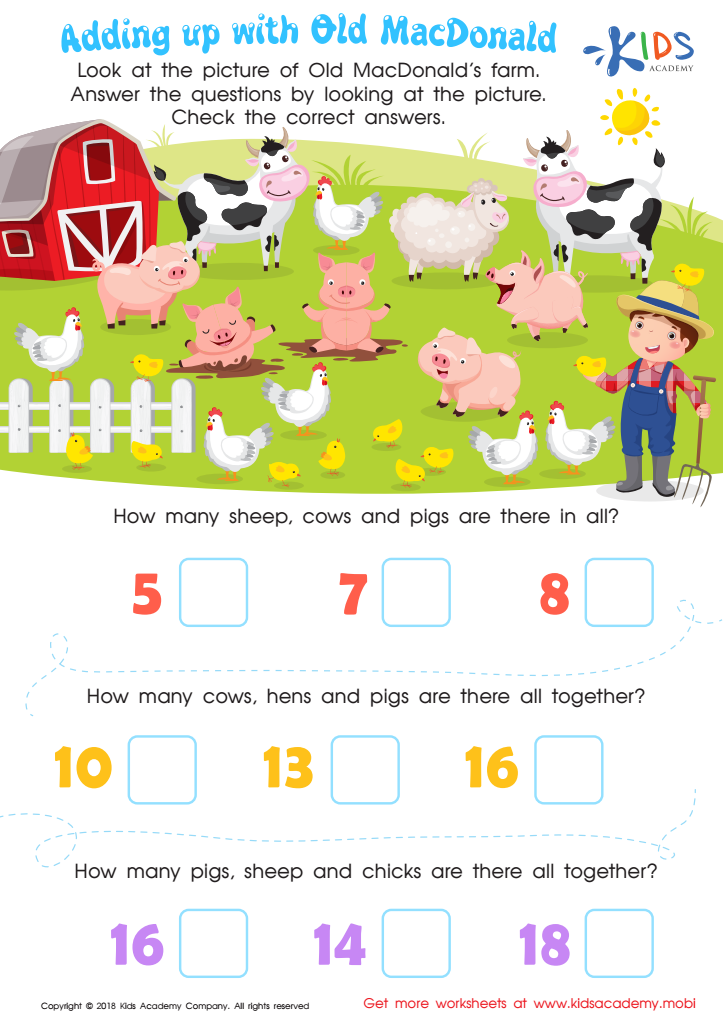
Adding Up with Old MacDonald Worksheet
 Assign to My Students
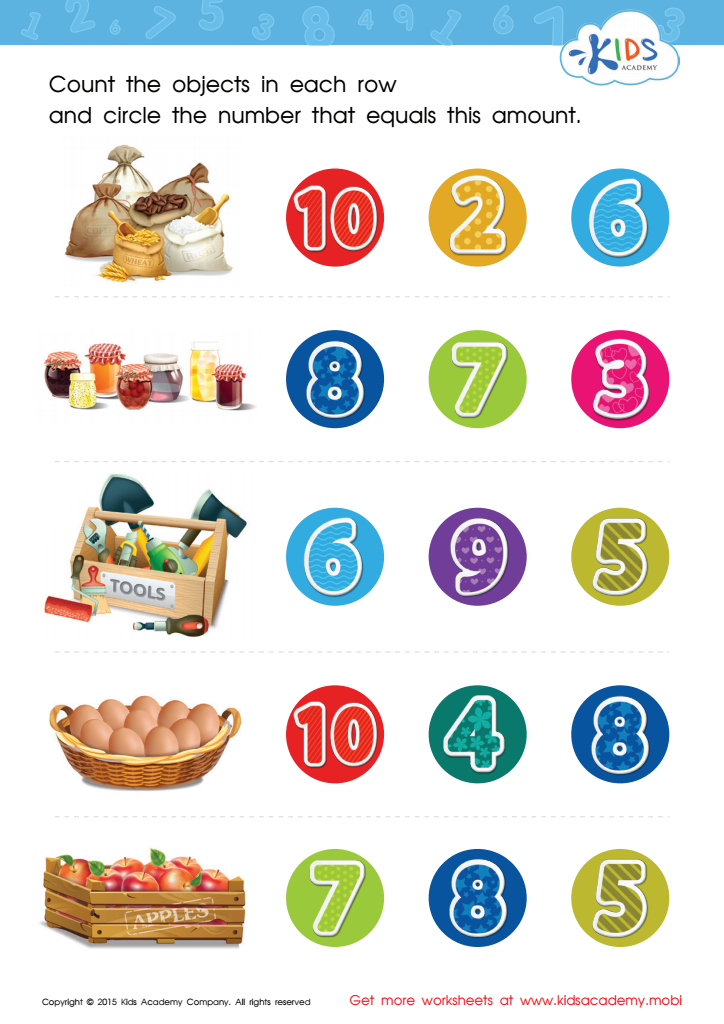
Count and Match 6 – 10 Math Worksheet
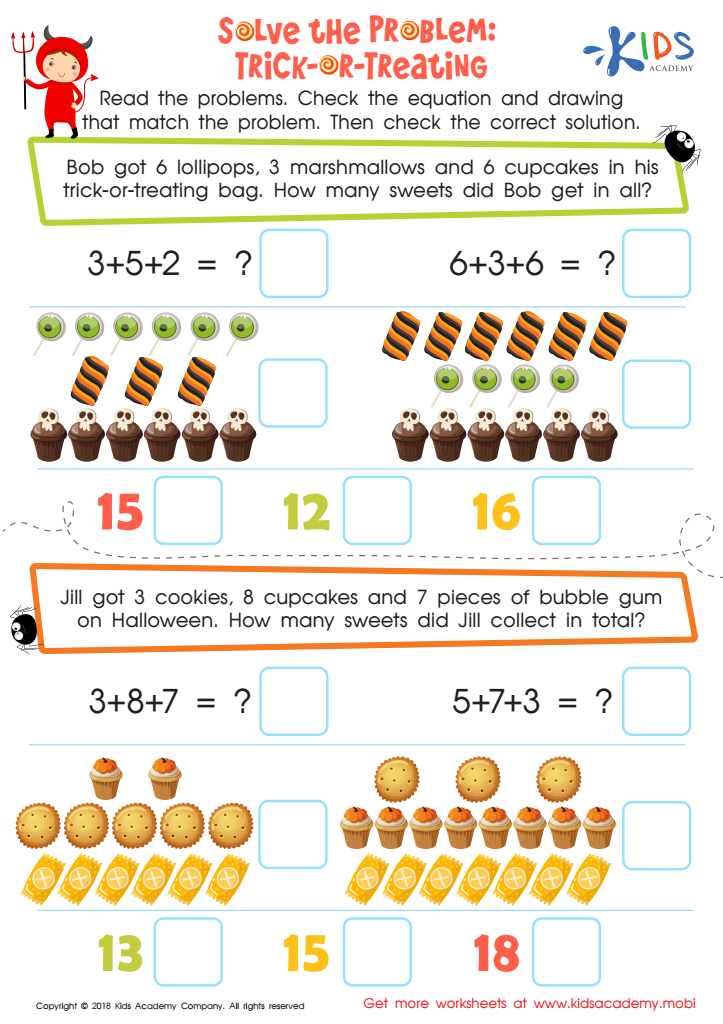
Solve the Problem: Trick–or–treating Worksheet
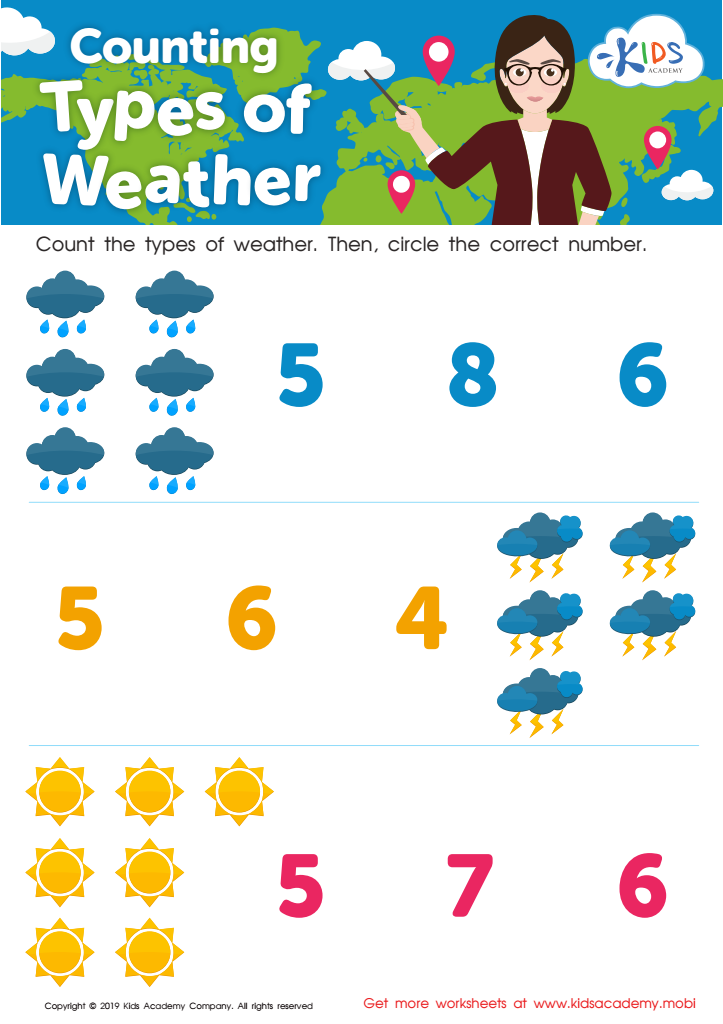
Counting Types of Weather Worksheet
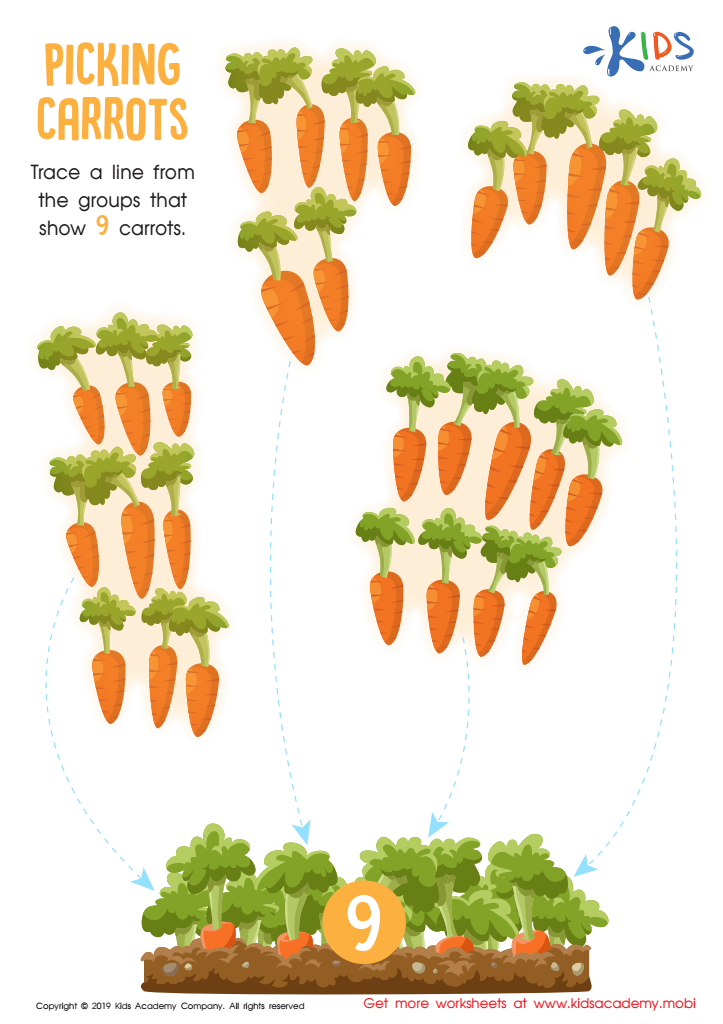
Picking Carrots Worksheet








Teaching basic arithmetic numbers to children aged 4-5 is crucial for several reasons. During these formative years, children develop foundational skills that influence their future learning abilities. Understanding numbers lays the groundwork for more complex mathematical concepts later on.
At this age, children are naturally curious and eager to learn, making it an ideal time to introduce them to counting, number recognition, and simple addition and subtraction. By engaging in basic arithmetic, children enhance their cognitive development, improve problem-solving skills, and boost their confidence. Activities like counting objects, sorting, and simple games make learning interactive and enjoyable, helping children to grasp these concepts more easily.
Moreover, mathematical literacy plays a significant role in daily life. By equipping young learners with fundamental arithmetic skills, parents and teachers prepare them for real-world situations, such as managing money, understanding time, and measuring ingredients while cooking.
Finally, early numeracy skills are strongly linked to academic success in later years. A solid understanding of basic arithmetic encourages a positive attitude toward math, laying the foundation for lifelong learning and critical thinking. Therefore, both parents and teachers play a vital role in nurturing these essential skills in young learners.








