
Comparing lengths Math Worksheets for Ages 4-5
3 filtered results
Difficulty Level
Grade
Age
-
From - To
Subject
Activity
Standards
Explore our engaging "Comparing Lengths Math Worksheets" tailored for ages 4-5! These worksheets provide a fun and interactive way to help young learners understand the concept of length through vibrant visuals and age-appropriate activities. Children will compare different objects, enhancing their observational skills and mathematical reasoning. With a blend of hands-on practice and creative challenges, our worksheets will keep kids motivated as they learn to identify longer, shorter, and equal lengths. Perfect for at-home learning or classroom use, these resources support early math development while fostering a love for learning. Download now to enrich your child’s foundational math skills!
Favorites
With answer key
Interactive
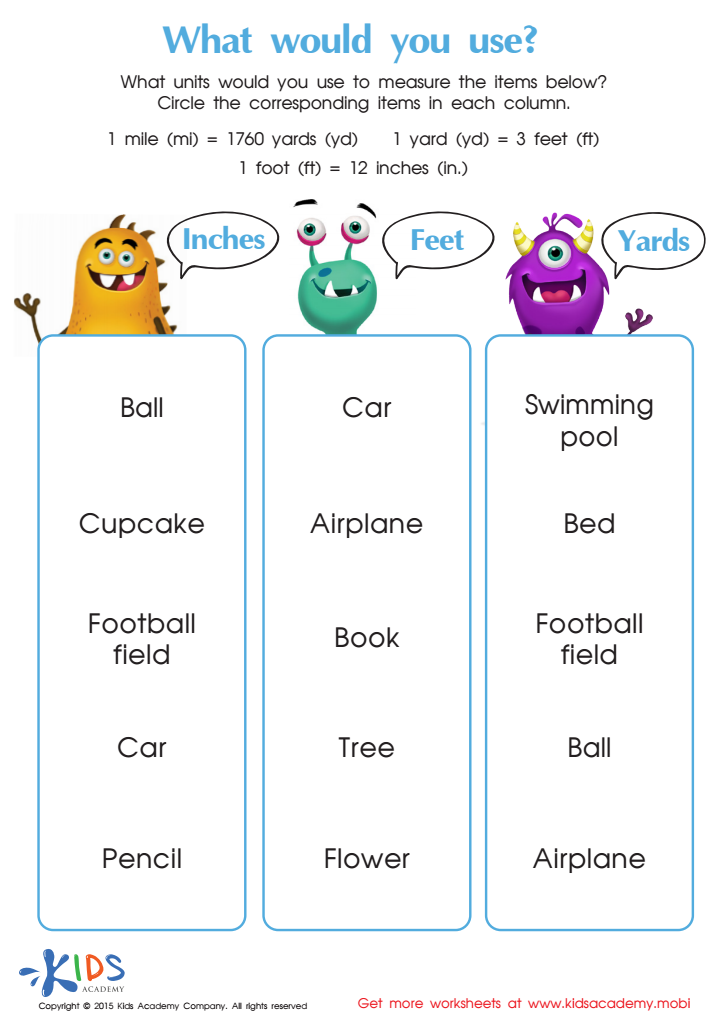
Learning about measuring objects in inches, feet and yards Worksheet
Download, cut and let your preschoolers learn and have fun estimating objects like pencils, airplanes and swimming pools in inches, feet and yards!
 Assign to My Students
Learning about measuring objects in inches, feet and yards Worksheet
Worksheet
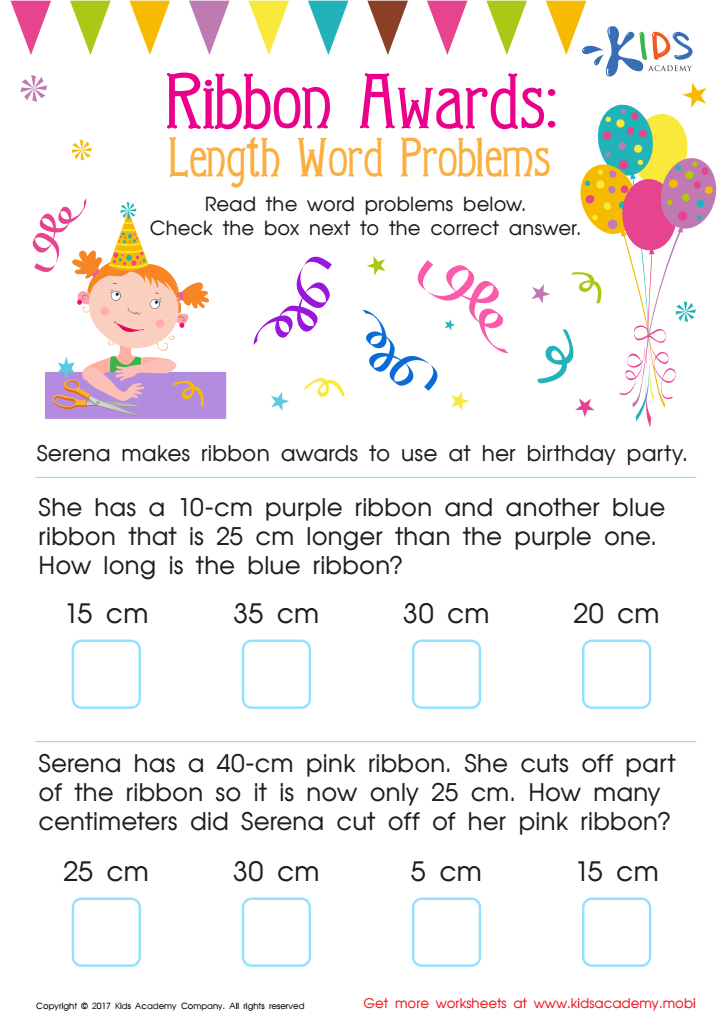
Length Word Problems Worksheet
Word problems help grade 2 students practice measurement using everyday scenarios. This worksheet provides practice in working with centimeters and inches, like measuring ribbon. It's a great way to learn and apply math skills.
Length Word Problems Worksheet
Worksheet
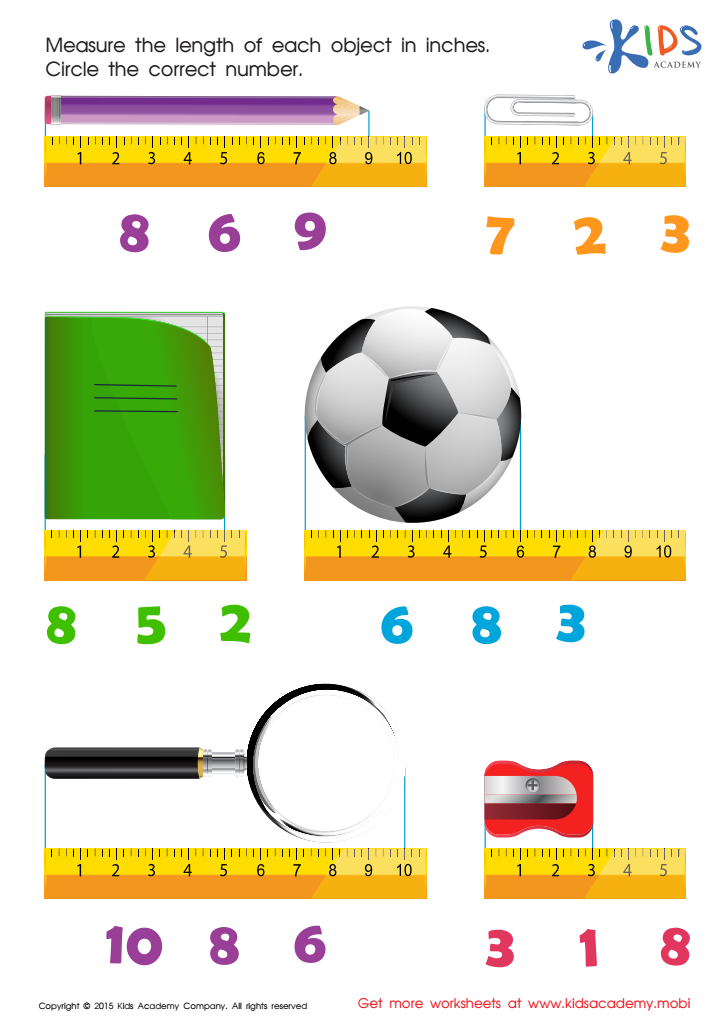
Learning measuring objects in inches Worksheet
Help your little learners gain confidence in using a ruler! Print out our free worksheet, cut out the inch ruler, and let them measure and record objects' width and length. Kids Academy has a variety of math worksheets to make learning math fun! Check out our website for more free printables!
Learning measuring objects in inches Worksheet
Worksheet
Join Kids Academy for Free
Who is primarily going to use this learning content?



.jpg)



Comparing lengths is a fundamental mathematical concept that lays the groundwork for various essential skills in young children aged 4-5. At this stage, children are developing their cognitive abilities, and engaging in activities that involve measuring and comparing lengths enhances their understanding of numbers, relationships, and spatial awareness.
Parents and teachers should care about this foundational skill because it promotes not only mathematical reasoning but also critical thinking. For instance, when children compare the lengths of different objects, they learn to sort and classify based on measurable attributes. This fosters logical thinking and enhances problem-solving skills as they determine which is longer, shorter, or equal in length.
Additionally, comparing lengths is a practical activity that integrates real-world experiences. Whether measuring the height of plants or comparing the length of their toys, children develop observational skills and learn to articulate their findings. This can encourage communication and language skills as they discuss their observations.
Overall, emphasizing comparing lengths at this early stage supports a comprehensive understanding of mathematics and its application in daily life, ensuring children build a strong foundation for future learning in math and science.








